Close Menu

    Subscribe to Updates

    Get the latest creative news from FooBar about art, design and business.

    What's Hot

    How Much Does a 14×60 Mobile Home Typically Weigh?

    May 6, 2026

    What Styles Are Popular in Modern Mexico Homes?

    May 6, 2026

    Why Are Metal Roofs Ideal for Modern Homes?

    May 6, 2026
    Facebook X (Twitter) Instagram
    Facebook X (Twitter) Instagram
    Crazzy Homes
    Button
    • HOME
    • HOME IMPROVEMENT
      • HOME DECOR
      • ARCHITECTURE
      • FURNITURE
      • FLOORING
      • CLEANING
      • INTERIOR
        • BEDROOM
        • BATHROOM
        • DOORS
        • WINDOW
      • EXTERIOR
        • GARDENING
    • CELEBRITY HOME

      Inside Tyra Banks’ Luxurious Home: A Visual Journey

      May 1, 2026

      Inside Jimbo Fisher’s House: A Glimpse of Luxury Living

      May 1, 2026

      Inside Sophie Turner’s House: A Stunning Look at Her Luxury Home

      April 30, 2026

      Inside Kate Walsh’s Stunning House:

      April 30, 2026

      Inside Cynthia Nixon’s House: A Glimpse of Celebrity Life

      April 29, 2026
    • Real Estate
    • PLUMBING
    • KITCHEN
      • APPLIANCES
    • LIFE STYLE
    Crazzy Homes
    Home » Do You Need a Rug Pad for Vinyl Plank Flooring?
    FLOORING

    Do You Need a Rug Pad for Vinyl Plank Flooring?

    Stella VictoriaBy Stella VictoriaApril 30, 2026No Comments18 Mins Read
    Facebook Twitter Pinterest LinkedIn Tumblr Email
    do you need a rug pad on vinyl plank flooring
    Share
    Facebook Twitter LinkedIn Pinterest Email

    In most cases, the answer is yes. A rug pad is not just a small extra item you buy because it seems helpful. On vinyl plank flooring, it can play a very important role. It can help keep your rug in place, protect the floor from scratches, reduce noise, and make the rug feel softer under your feet.

    Vinyl plank flooring, often called LVP (luxury vinyl plank), has become very popular for good reason. It looks like wood, handles daily wear and tear well, and is much easier to care for than many other flooring choices. It is also a smart option for families who want style without constant upkeep.

    Aspect With Rug Pad Without Rug Pad
    Safety Prevents slips/trips High risk of bunching/falls
    Floor Protection Avoids scratches/discoloration Potential damage from friction
    Comfort Adds cushion/insulation Hard surface, less plush
    Recommendation Felt/EVA (vinyl-safe) Not advised for most rugs

    Table of Contents

    Toggle
    • What Is Vinyl Plank Flooring?
    • Why People Love LVP
    • Why Rugs and LVP Need Careful Matching
    • Why Use a Rug Pad on Vinyl Plank Flooring?
    • Slip Prevention Matters More Than People Think
    • Floor Protection Is a Big Benefit
    • Cushioning Makes the Room Feel Better
    • Rug Longevity Improves With a Pad
    • Moisture Control Can Be Helpful
    • Rug With Pad vs. Rug Without Pad
    • Potential Risks Without a Rug Pad
    • Rugs Can Buckle and Create a Fall Risk
    • Dirt Can Get Ground Into the Floor
    • The Wrong Backing Can Discolor Vinyl
    • Warranty Concerns Can Happen Too
    • Real-Life Problems Homeowners Notice
    • Best Rug Pad Materials for Vinyl Plank Flooring
    • Why Rubber and Latex Are Often Avoided
    • Felt Pads
    • Felt and EVA Combinations
    • Natural Fiber Pads
    • Specialty Pads Made for Vinyl Flooring
    • What to Look for in a Vinyl Plank Flooring Rug Pad
    • Thickness Matters
    • Custom Sizing Helps
    • Trim-Ability Is Useful
    • Check for Vinyl-Safe Labels
    • Top Rug Pad Recommendations for Vinyl Plank Flooring
    • Felt and EVA Hybrid Pads
    • LVP-Safe Specialty Pads
    • Low-Profile Felt Pads
    • Washable Low-Profile Pads
    • Custom-Cut Pads
    • Buying Tips to Keep in Mind
    • How to Choose the Right Rug Pad for Your Room
    • Living Room
    • Bedroom
    • Kitchen
    • Hallway or Entryway
    • Children’s Room or Playroom
    • How to install a Rug Pad on Vinyl Plank Flooring
    • Measure the Rug
    • Choose the Right Material
    • Trim if Needed
    • Lay the Pad Flat
    • Add the Rug on Top
    • Test the Surface
    • Maintenance Tips for Rug Pads and Rugs
    • Common Myths About Rug Pads and Vinyl Floors
    • Myth: Non-Slip Rugs Do Not Need Pads
    • Myth: All Rug Pads Are Safe for LVP
    • Myth: Rug Pads Are Only for Thick Rugs
    • Myth: A Heavy Rug Cannot slide
    • When You Might Skip a Rug Pad
    • FAQ: Do You Need a Rug Pad on Vinyl Plank Flooring?
    • Do you need a rug pad on vinyl plank flooring?
    • What is the best rug pad for LVP?
    • Can rubber rug pads damage vinyl flooring?
    • What is the safest rug backing for vinyl floors?
    • Do thin rugs still need pads on vinyl plank flooring?
    • Can I use a rug pad under a heavy rug on LVP?

    What Is Vinyl Plank Flooring?

    do you need a rug pad on vinyl plank flooring

    Before we talk about rug pads, it helps to understand what vinyl plank flooring actually is. Many people love it because it looks like wood without the same level of care or cost.

    Vinyl plank flooring consists of multiple layers. The top layer is usually a wear layer that helps protect the floor from scratches and everyday wear and tear. Under that is a printed layer that gives the floor its wood-like look. Below that is the strong vinyl core, which gives the plank its shape and stability. Many vinyl plank floors also use a click-lock system, which means the planks fit together tightly without glue.

    This construction makes LVP a very practical flooring choice. It is flexible, moisture-resistant, and easier to maintain than natural wood. It also works well in kitchens, living rooms, hallways, and even some bathrooms.

    Why People Love LVP

    There are several reasons vinyl plank flooring has become such a common choice in modern homes.

    • It looks attractive and can mimic wood very well.
    • It is water-resistant, making it useful in busy areas of the home.
    • It is easier to clean than many traditional flooring types.
    • It is more affordable than hardwood.
    • It feels comfortable underfoot and works well in family homes.

    Because of these benefits, many homeowners want to make their LVP feel even warmer and more stylish by adding rugs. That makes sense. Rugs can soften a room, add color, and make the space feel more inviting.

    But that is also where the problem starts.

    Why Rugs and LVP Need Careful Matching

    A rug can improve the look of vinyl plank flooring. Still, it can also cause friction, movement, and wear if it sits directly on the surface without proper support.

    Some rugs have smooth backings that allow them to slide. Others have rubber or latex materials that may react with the vinyl, leaving marks. If the rug is heavy, it can also create pressure points on the floor. If the rug moves around a lot, it may become a safety risk.

    So while LVP is a great floor, it is not a surface you want to treat casually when placing rugs. That is where a vinyl plank flooring rug pad comes in handy.

    Why Use a Rug Pad on Vinyl Plank Flooring?

    If you are still asking, ” Do you need a rug pad on vinyl plank flooring, the practical answer is this: most homes benefit from one.

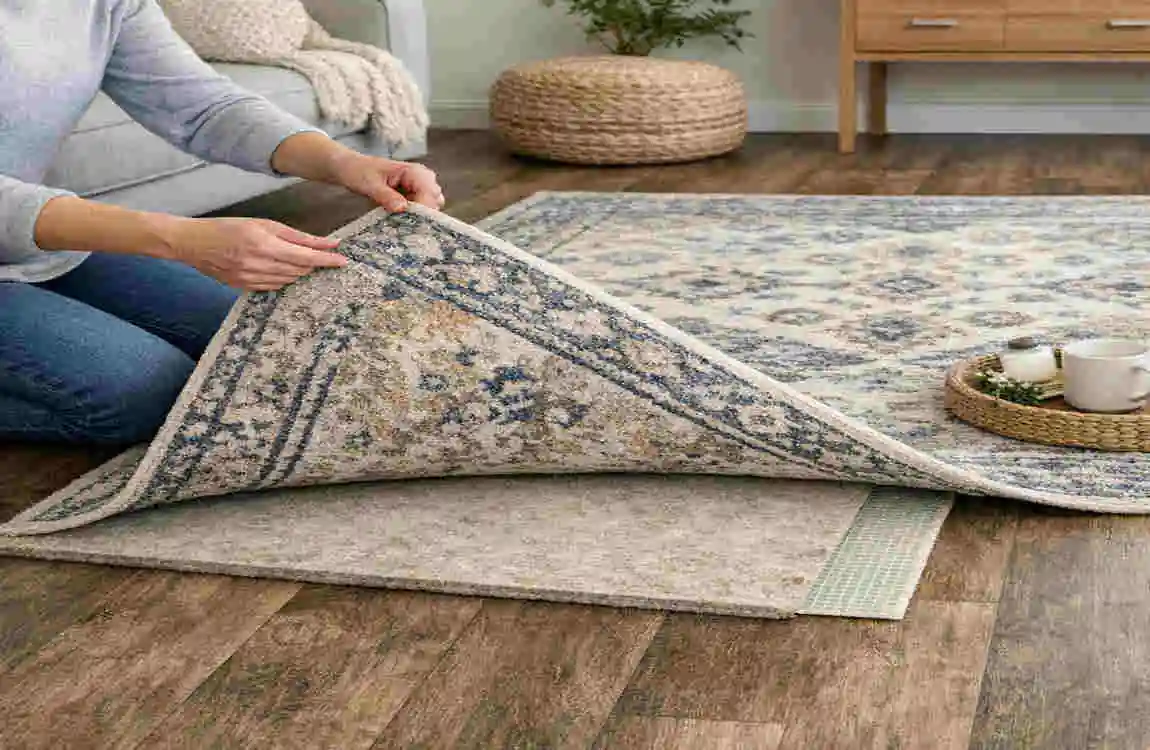
    A rug pad does much more than sit under the rug and disappear. It helps the rug stay in place, protects the floor underneath, and improves how the rug feels and performs over time.

    Slip Prevention Matters More Than People Think

    One of the biggest reasons to use a rug pad is simple: safety.

    Rugs without pads can shift when someone steps on them. That can be a real problem in homes with children, older adults, pets, or high foot traffic. Even a small movement can cause someone to trip.

    You may not notice the danger right away, but over time, a rug that slides just a few inches can become a real hazard. It can curl at the edges, move near a doorway, or shift on a smooth floor during normal use.

    A good rug pad adds grip and helps keep the rug in place. That means fewer slips, fewer awkward bunching problems, and a safer walking surface for everyone in the home.

    Floor Protection Is a Big Benefit

    Vinyl plank flooring is strong, but it can still get scratched, dented, or marked if a rug sits directly on it for too long.

    This is especially true if:

    • The rug has a rough backing
    • The rug moves often
    • Dirt gets trapped underneath
    • Heavy furniture sits on top of the rug
    • The rug backing reacts with the vinyl

    A rug pad acts like a buffer between the rug and the floor. That layer helps reduce rubbing, friction, and pressure. It also helps keep dirt from grinding directly into the floor surface.

    If you want your LVP to keep looking good for years, this protection is a major advantage.

    Cushioning Makes the Room Feel Better

    A rug pad also changes how the rug feels under your feet.

    Without one, a rug may feel thin, hard, or flat. With the right pad, the rug feels more cushioned and comfortable. That matters in living rooms, bedrooms, play areas, and anywhere you spend time standing or walking barefoot.

    The added cushioning can also help reduce noise. If your home has echoing floors, a rug pad can make the room feel quieter and more relaxed.

    This is one of the reasons people often choose a rug pad even when their rug already feels thick. The pad adds a layer of comfort that the rug alone cannot provide.

    Rug Longevity Improves With a Pad

    A rug pad not only helps the floor. It helps the rug, too.

    When a rug slides, its fibers rub against the floor more often. That creates wear. Over time, the rug may thin out, lose shape, or curl at the edges. If people are constantly stepping on moving edges, the damage happens even faster.

    A pad reduces that friction. It gives the rug more support, helps it lie flatter, and makes it last longer.

    So if you have invested in a nice rug, a pad is a smart way to protect that purchase.

    Moisture Control Can Be Helpful

    Some rug pads can help prevent spills or moisture from soaking down into the floor seams. That does not mean a rug pad will make your floor waterproof, but it can add an extra layer of protection.

    This can matter in spaces like:

    • Kitchens
    • Entryways
    • Hallways
    • Dining areas
    • Family rooms where drinks and snacks are common

    If a small spill happens, the pad may help slow the liquid from reaching the floor right away. That extra buffer can be useful, especially if you catch the spill quickly.

    Rug With Pad vs. Rug Without Pad

    Here is a simple comparison to show why the choice matters.

    BenefitWith Rug PadWithout Rug Pad

    Safety Rug stays in place better. Higher trip risk

    Floor protection helps reduce scratches and wear due to more direct contact and friction.

    Comfort Softer and quieter Thinner and noisier

    Rug life , less fiber damage , faster wear, and curling

    Moisture buffer , better spill resistance , no added barrier

    This table makes the choice easy to understand. On vinyl plank floors, a rug pad usually brings more good than harm.

    Potential Risks Without a Rug Pad

    It can be tempting to skip the pad. After all, the rug is already there, and you may feel like one more layer is unnecessary. But that choice can create problems over time.

    Rugs Can Buckle and Create a Fall Risk

    When a rug slides, folds, or bunches, it no longer looks neat. More importantly, it can become dangerous.

    A wrinkled rug edge is one of the easiest places for a person to catch a foot. Even a small corner that lifts can lead to a stumble. In homes with children or elderly family members, that is not a risk worth ignoring.

    Dirt Can Get Ground Into the Floor

    Without a pad, the rug can move more often. That movement may pull in dust and grit from the edges. Over time, that dirt can get ground into the vinyl and wear down the surface finish.

    This kind of slow damage is easy to miss. You may not notice it right away, but over months or years, it can leave the floor looking dull or uneven in high-traffic areas.

    The Wrong Backing Can Discolor Vinyl

    Some rug backings are not safe for vinyl flooring. They may react chemically with the floor surface, leaving behind yellowing, staining, or a sticky residue.

    This is a major reason many flooring experts recommend caution when placing a rug directly on LVP. The wrong backing can cause damage that is hard to fix, expensive, or even impossible to fix.

    Warranty Concerns Can Happen Too

    Some flooring warranties may be affected if an incompatible rug or rug pad damages the floor. That is one more reason to choose materials carefully.

    If your floor is still under warranty, it is smart to check the manufacturer’s care guidelines before placing anything directly on it.

    Real-Life Problems Homeowners Notice

    Many people only realize they need a rug pad after living with the rug for a while.

    They notice the corners curl up. The rug shifts every time the vacuum passes over it. The dog runs across it, sending it sliding. Or they notice the floor beneath the rug looks different from the rest of the room.

    These are all signs that the rug needs more support.

    Best Rug Pad Materials for Vinyl Plank Flooring
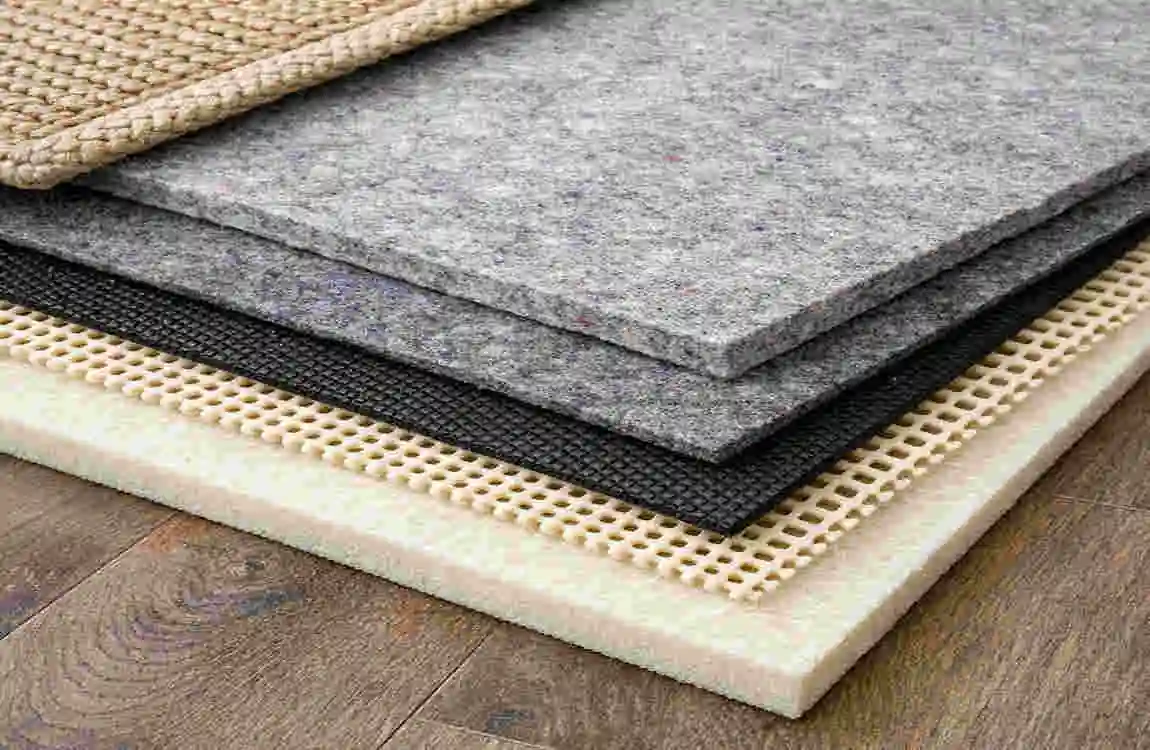
    Not every rug pad is safe for vinyl plank floors. This is where many people make mistakes. A pad might feel sturdy, look good, or claim to be non-slip, but that does not mean it is the right choice for LVP.

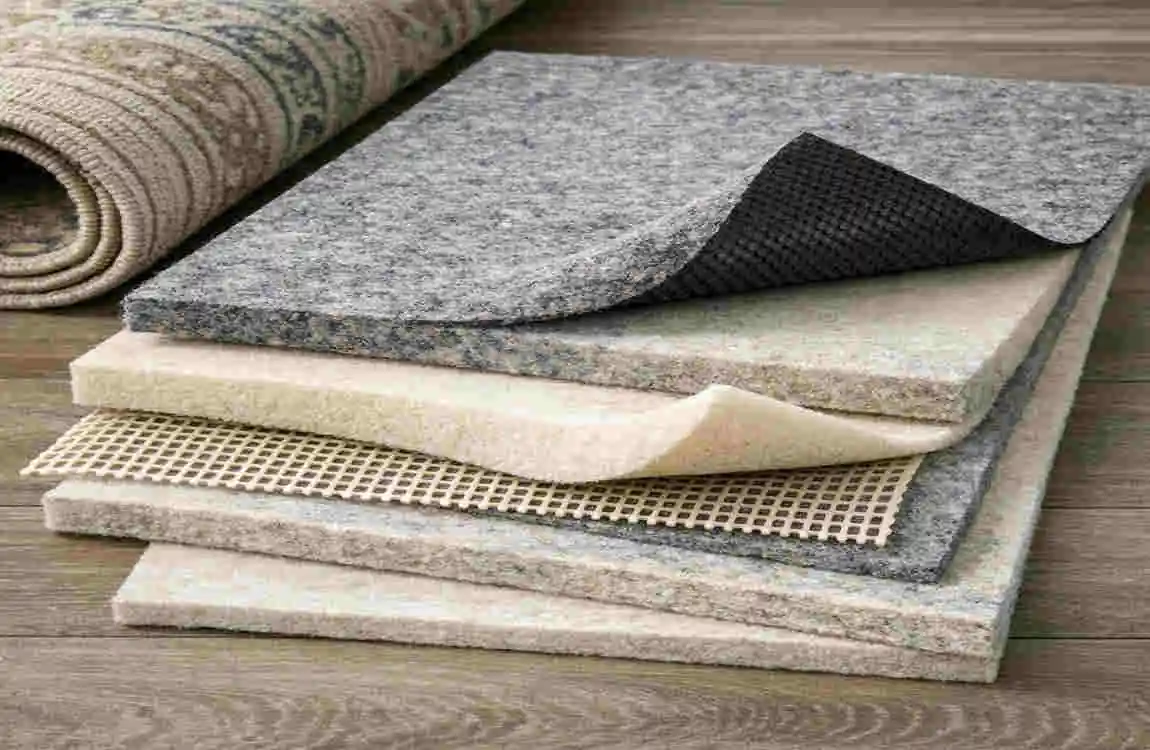
    The safest choices are usually felt-based or felt-and-EVA combinations that are designed for vinyl floors. These give you support without using harmful backing materials.

    Why Rubber and Latex Are Often Avoided

    Rubber and latex are common in rug pads because they can grip well. The problem is that they may react with vinyl flooring, leaving behind discoloration or residue.

    That is why many people avoid them when using rugs on LVP. Even if the pad feels effective at first, the long-term risk is not worth it.

    If you want a safe rug backing for vinyl floors, look for products labeled specifically for vinyl use.

    Felt Pads

    Felt pads are one of the simplest options. They are soft, thick, and gentle on the floor.

    A 100% felt pad can help cushion the rug and reduce pressure on the floor. It may not grip as strongly as some other options, but it works well in many spaces where the rug does not move much.

    Felt pads are a good choice for low-traffic areas or for rugs that already stay fairly stable.

    Felt and EVA Combinations

    This is one of the best choices for many homeowners.

    Felt provides cushioning, while EVA adds grip and support. Together, they create a pad that feels soft, stays in place, and is generally friendlier to vinyl plank flooring.

    If you are looking for one of the best rug pads for LVP, this combination is often at the top of the list.

    Natural Fiber Pads

    Some rug pads use natural materials like wool, cotton, or jute. These can be a good option if you want something more eco-friendly.

    Natural fiber pads are less likely to damage vinyl than some synthetic backings because they are less abrasive. They are also a good fit for people who want breathable materials.

    However, not every natural fiber pad provides a strong grip, so you still need to check whether it is designed for floor stability.

    Specialty Pads Made for Vinyl Flooring

    Some rug pads are made specifically for vinyl floors. These are often marked as LVP-safe, vinyl-friendly, or safe for vinyl plank flooring.

    These pads are worth paying attention to because they are built with this exact concern in mind. That does not mean every specialty pad is perfect, but it does mean the maker has already thought about the flooring issue.

    If you are unsure, this is usually the safest place to start.

    What to Look for in a Vinyl Plank Flooring Rug Pad

    When you shop for a rug pad, look beyond the word “non-slip.” That phrase alone is not enough.

    Thickness Matters

    A good rug pad for vinyl plank flooring is neither too thick nor too thin. Many people do well with a pad in the 1/8-inch to 1/4-inch range.

    If it is too thick, it may create an uneven surface or make doors harder to open. If it is too thin, it may not provide enough support or comfort.

    The right thickness depends on the rug, the room, and how much cushioning you want.

    Custom Sizing Helps

    A pad should fit the rug well. It should not extend too far beyond the edges, because that can create a visible border or a tripping hazard.

    In many cases, trimming the pad slightly smaller than the rug is the best approach. That way, the pad stays hidden while still fully supporting the rug.

    Trim-Ability Is Useful

    If a pad can be trimmed with scissors, installation becomes much easier. Many rug pads are sold in standard sizes, but not every rug fits those sizes perfectly.

    A trim-to-fit pad gives you more control and a cleaner final look.

    Check for Vinyl-Safe Labels

    This is one of the most important steps.

    If the product does not clearly say it is safe for vinyl, do not assume it is. Labels matter. Product descriptions matter. Compatibility notes matter.

    When in doubt, choose a pad that specifically states it is safe for luxury vinyl plank flooring or vinyl floors.

    Top Rug Pad Recommendations for Vinyl Plank Flooring

    If you want a starting point, here are the types of rug pads that many homeowners find useful for LVP. These are not the only options, but they represent the kinds of products that tend to work well.

    Felt and EVA Hybrid Pads

    These are often the most balanced choices. They give you softness, support, and grip without relying on materials that can harm vinyl.

    They work well for living rooms, bedrooms, and dining areas.

    LVP-Safe Specialty Pads

    These are designed specifically for vinyl floors. They are a strong choice if you want a product that already addresses compatibility concerns.

    They are often a smart pick when you want peace of mind.

    Low-Profile Felt Pads

    These are great when you want the rug to stay close to the floor without feeling overly padded.

    They work well under thinner rugs or in lower-traffic rooms.

    Washable Low-Profile Pads

    If you like a clean and low-maintenance home, washable pads can be helpful. They are practical for family rooms, play areas, and spaces where spills are more common.

    Custom-Cut Pads

    If your rug is an unusual size or shape, a custom-cut pad can make a big difference. It gives you a better fit and a cleaner look.

    Buying Tips to Keep in Mind

    Before you buy, make sure you:

    • Measure the rug carefully
    • Check that the pad is vinyl-safe
    • Look at the thickness and grip
    • Avoid rubber or latex if the label does not clearly say it is safe
    • Choose a pad that fits the room’s traffic level

    That small bit of planning can save you from a flooring problem later.

    How to Choose the Right Rug Pad for Your Room

    Not every room needs the same kind of rug pad. The best choice depends on how the room is used.

    Living Room

    A living room usually benefits from a pad that offers both comfort and grip. People often sit, stand, and walk through the area, so the rug should feel stable and soft.

    A felt-and-EVA pad is often a strong choice here.

    Bedroom

    Bedrooms often need more comfort than grip. You may want a pad that feels a little plush underfoot but still keeps the rug from shifting.

    A soft felt pad or a vinyl-safe hybrid pad often works well.

    Kitchen

    Kitchens need easy cleaning and good slip resistance. Since spills are more likely here, choose a pad that is safe for vinyl and easy to maintain.

    A low-profile, moisture-conscious option is usually best.

    Hallway or Entryway

    These are high-traffic spaces. The rug needs to stay firmly in place.

    Choose a rug pad with a stronger grip and a design that will not shift easily when people step on it.

    Children’s Room or Playroom

    In these spaces, safety matters a lot. Rugs need to stay stable, and the pad should offer comfort for sitting and playing on the floor.

    A soft but secure pad is ideal.

    How to install a Rug Pad on Vinyl Plank Flooring

    Installing a rug pad is not hard, but doing it properly matters. A badly placed pad can wrinkle, bunch, or show at the edges.

    Measure the Rug

    Start by measuring the rug carefully. You want the pad to fit underneath without sticking out too much.

    Choose the Right Material

    Make sure the pad is safe for vinyl plank flooring. Do not assume all rug pads are interchangeable.

    Trim if Needed

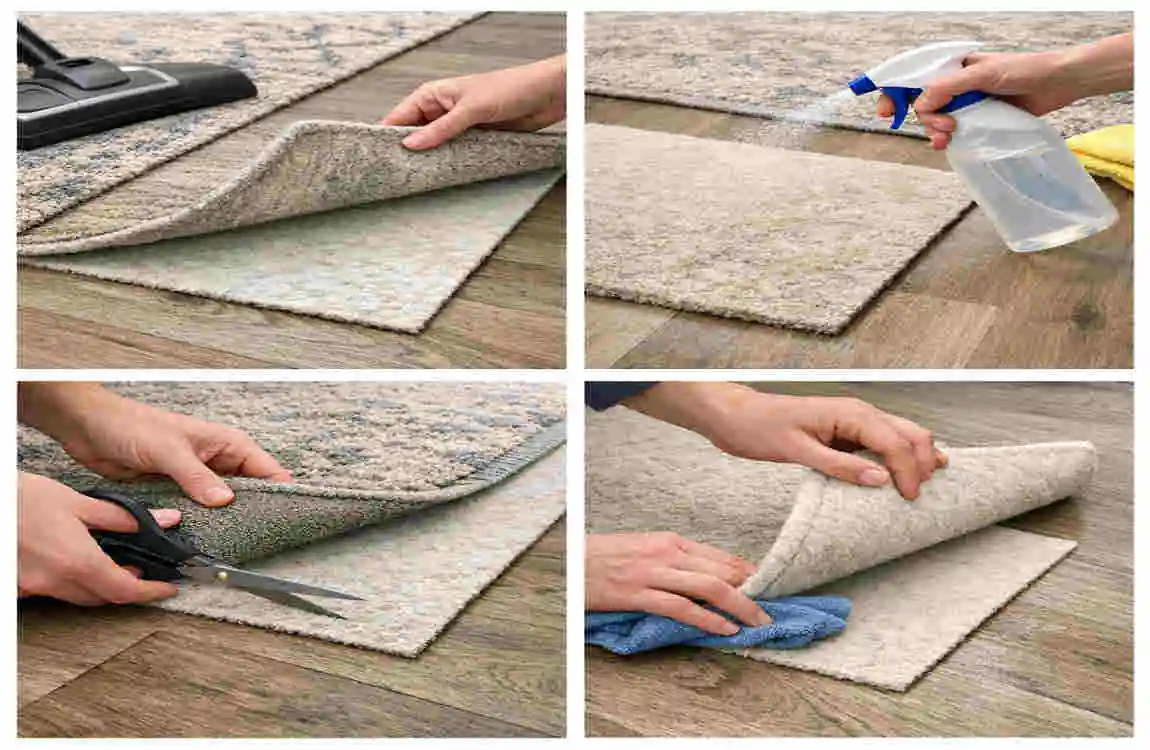
    If the pad is slightly larger than the rug, trim it with sharp scissors so it sits just inside the edges.

    This creates a neater look and keeps the pad hidden.

    Lay the Pad Flat

    Place the pad directly on the floor and smooth out any folds or bumps before adding the rug.

    If the pad is wrinkled, the rug will not lie flat either.

    Add the Rug on Top

    Carefully place the rug over the pad. Adjust it until it lines up the way you want.

    Test the Surface

    Walk across it. Step near the edges. Check whether it moves.

    If it still slides, the pad may not be the right type, or the rug may need a different size.

    Maintenance Tips for Rug Pads and Rugs

    A rug pad is not a “set it and forget it” item. It needs some basic care too.

    • Vacuum under the rug when possible
    • Check the pad every few months
    • Replace worn pads when they lose grip
    • Clean spills quickly
    • Lift and re-center the rug if it starts to move

    These simple habits help protect both the rug and the vinyl floor underneath.

    Common Myths About Rug Pads and Vinyl Floors

    do you need a rug pad on vinyl plank flooring

    There is a lot of confusion around this topic. Let’s clear up a few common myths.

    Myth: Non-Slip Rugs Do Not Need Pads

    Fact: Even if a rug has some grip, a pad can still help with safety, comfort, and floor protection. The rug alone may not be enough.

    Myth: All Rug Pads Are Safe for LVP

    Fact: Many pads are not safe for vinyl plank flooring. Some materials can stain or damage the surface.

    Myth: Rug Pads Are Only for Thick Rugs

    Fact: Even thin rugs can move, wrinkle, and cause wear. A pad can still be useful under lightweight rugs.

    Myth: A Heavy Rug Cannot slide

    Fact: Heavy rugs can still shift, especially on smooth flooring like vinyl plank. Weight does not always solve the problem.

    When You Might Skip a Rug Pad

    There are a few situations where a pad may not be necessary, but they are limited.

    You might skip one if:

    • The rug is very small and does not move
    • The rug already has a vinyl-safe grip backing
    • The area gets almost no foot traffic
    • The rug is only temporary and will be removed soon

    Even then, it’s worth checking whether the rug would benefit from a pad. In most homes, some pad is still the better choice.

    FAQ: Do You Need a Rug Pad on Vinyl Plank Flooring?

    Do you need a rug pad on vinyl plank flooring?

    Yes, in most cases you do. A rug pad helps prevent slipping, protects the floor, and adds comfort.

    What is the best rug pad for LVP?

    The best choices are usually felt and EVA combinations or other pads labeled safe for vinyl plank flooring.

    Can rubber rug pads damage vinyl flooring?

    Yes, rubber pads can sometimes discolor or damage vinyl. It is usually best to avoid them unless the maker clearly says they are vinyl-safe.

    What is the safest rug backing for vinyl floors?

    The safest options are usually felt, felt-EVA hybrids, or specialty vinyl-safe pads. Always check the product label before buying.

    Do thin rugs still need pads on vinyl plank flooring?

    Yes, they can. Even a thin rug can slide or wear the floor over time. A pad still adds value.

    Can I use a rug pad under a heavy rug on LVP?

    Yes, but choose a vinyl-safe pad that supports the rug without damaging the floor. Heavy rugs still benefit from protection and grip.

    Share. Facebook Twitter Pinterest LinkedIn Tumblr Email
    Stella Victoria

    Related Posts

    What Are the Signs of Vinyl Flooring Separation?

    April 25, 2026

    What Is Karndean Flooring and Why Choose It?

    April 24, 2026

    Step-by-Step Guide to Installing Dream Home Laminate Flooring in Your House

    April 21, 2026
    Leave A Reply Cancel Reply

    Top Posts

    Blueface House costs how much?

    May 24, 2024

    How Much Does a 14×60 Mobile Home Typically Weigh?

    May 6, 2026

    Unveiling the Secret of Luke Combs House in Nashville

    June 16, 2024
    Stay In Touch
    • Facebook
    • YouTube
    • TikTok
    • WhatsApp
    • Twitter
    • Instagram
    Latest Reviews

    Stay Connected

    Fill the form below and get early updates.

    Most Popular

    Blueface House costs how much?

    May 24, 2024

    How Much Does a 14×60 Mobile Home Typically Weigh?

    May 6, 2026

    Unveiling the Secret of Luke Combs House in Nashville

    June 16, 2024
    Latest Posts

    How Much Does a 14×60 Mobile Home Typically Weigh?

    May 6, 2026

    What Styles Are Popular in Modern Mexico Homes?

    May 6, 2026

    Why Are Metal Roofs Ideal for Modern Homes?

    May 6, 2026

    Did we make a mistake?

    Submit a correction suggestion and help us fix it!

    Facebook X (Twitter) Instagram Pinterest
    • About us
    • Contact us
    • Privacy Policy
    • Disclaimer
    • Terms And Conditions
    © 2026 ThemeSphere. Designed by ThemeSphere.

    Type above and press Enter to search. Press Esc to cancel.