
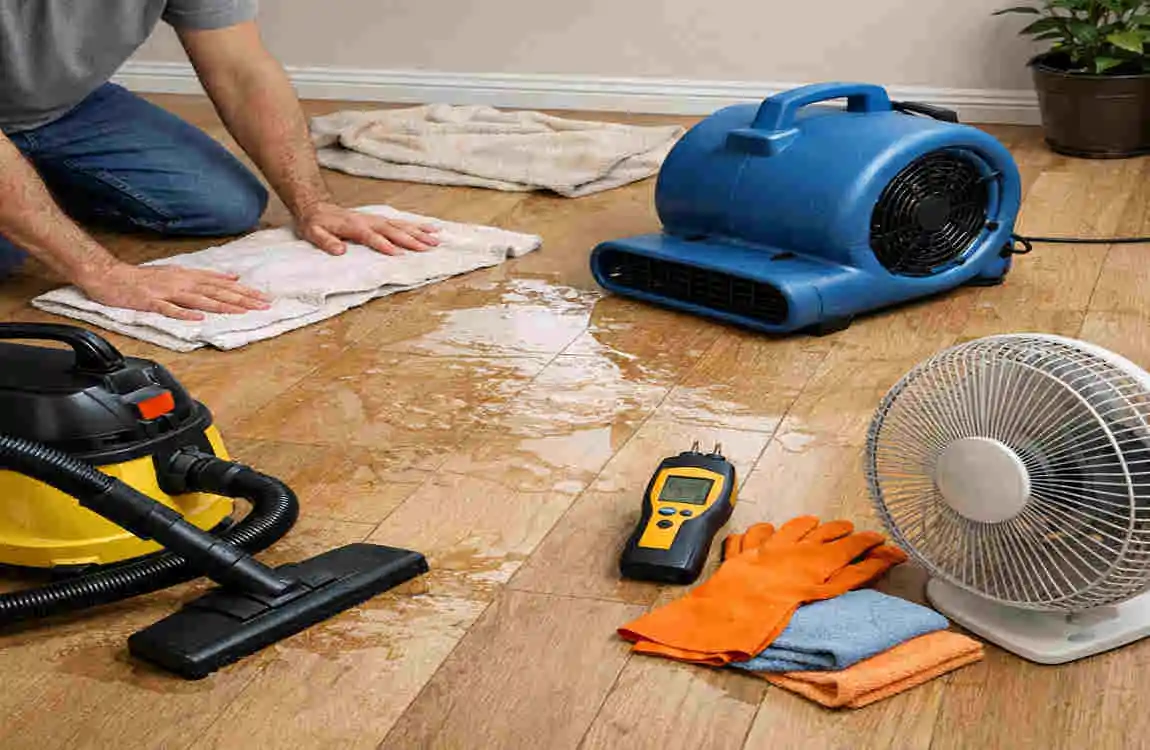
Laminate flooring looks great, but it does not like water. Even a small spill can cause trouble if you leave it too long. The surface may look fine at first, but moisture can move into the seams and reach the core board underneath.
That is why learning how to dry laminate flooring quickly matters so much. If you act fast, you can often prevent damage from becoming serious. If you wait too long, the floor may swell, warp, or even grow mould.
What Happens When Laminate Flooring Gets Wet?
How Laminate Flooring Is Constructed
Laminate flooring is made of several layers, each with a job.
- The wear layer protects the surface from scratches.
- The decorative layer gives the floor its wood-like look.
- The fiberboard core is the most sensitive part because it can absorb water.
- The backing layer helps keep the plank stable.
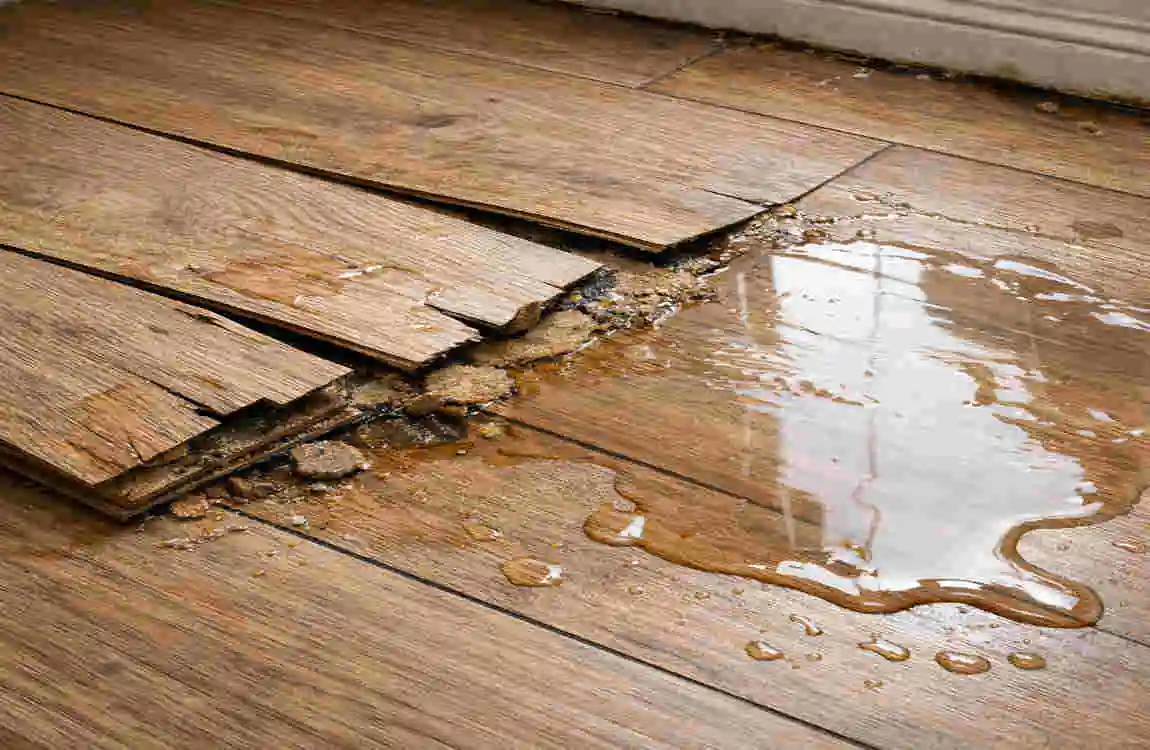
The problem is the core. Once water gets into it, the plank can start to expand. That is why laminate needs quick cleanup after any spill or leak.
Signs of Water Damage
If your laminate floor has gotten wet, look for these warning signs:
- Swollen edges
- Bubbling
- Warping
- Soft spots
- A damp or mouldy smell
These signs usually mean moisture has already entered the plank. The sooner you catch them, the better your chance of saving the floor.
What to Do Immediately After Water Spills
Stop the Water Source
If the water is still coming in, stop it right away. Turn off the valve, fix the leak, or move the water source away from the floor.
Remove Standing Water
Use a towel, mop, or wet/dry vacuum to remove any puddles. Do not let water sit on the surface, even for a short time.
Dry the Surface with Towels
After removing the water, press dry towels onto the floor. Focus on the seams and edges, because water often slips into those areas first.
Move Furniture and Rugs
Move rugs, chairs, and furniture off the wet area. This helps the floor dry faster and prevents stains or extra pressure on damp planks.
How to Dry Laminate Flooring Step by Step
Increase Air Circulation
Good airflow is one of the easiest ways to help laminate flooring dry.
Open windows if the weather is dry. Use ceiling fans if you have them. The more air moving across the floor, the faster moisture will leave the surface.
Use Floor Fans
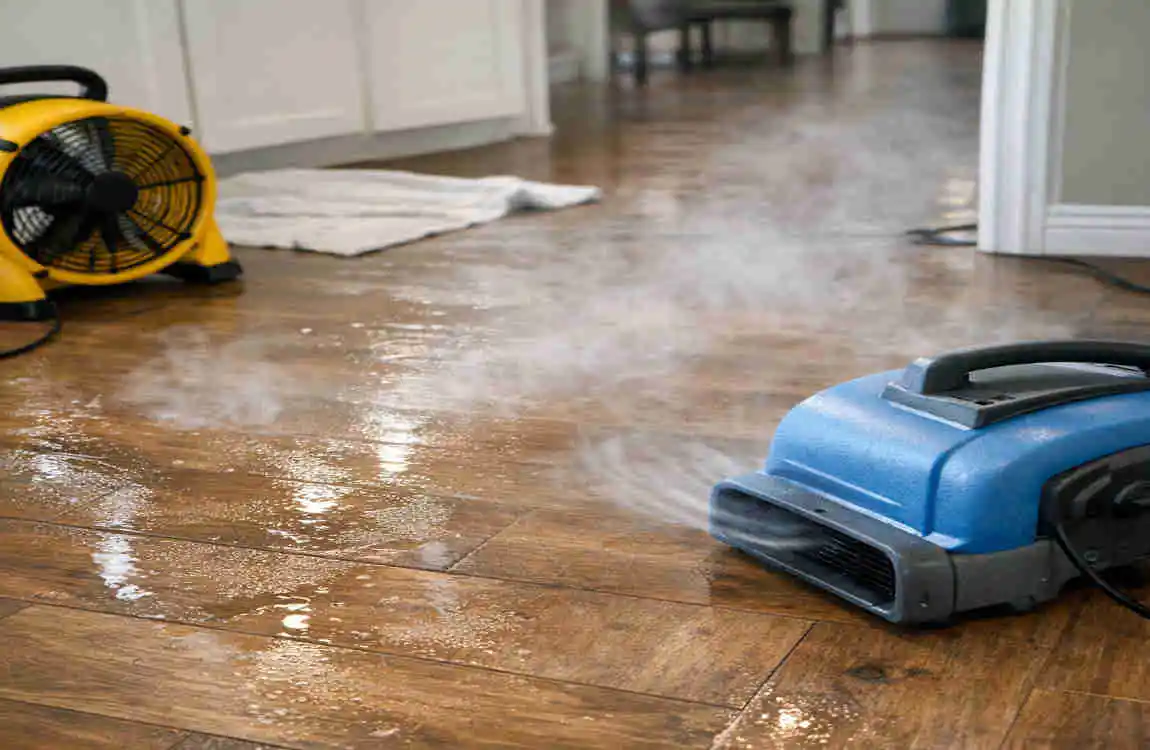
Place floor fans so they blow directly across the wet area. This helps pull moisture out of the room and speeds up drying.
If the damage covers a large area, use more than one fan. Try to keep the air moving all day if possible.
Run a Dehumidifier
A dehumidifier removes extra moisture from the air. This is very helpful because wet air slows the drying process.
If the room feels damp or sticky, a dehumidifier can make a big difference. It also helps prevent mould from forming under the floor.
Control Indoor Humidity
Keep the indoor humidity as low as you reasonably can. A drier room helps laminate flooring dry faster and more evenly.
If the weather outside is humid, close the windows and rely more on fans and dehumidifiers.
Lift Baseboards if Needed
If water has gone under the floor near the wall, you may need to lift the baseboards carefully. This can help trapped moisture escape.
Do this only if needed, and only if you are comfortable with it. If the water spread widely, a professional may handle this better.
Dry the Underlayment
Sometimes the laminate surface looks dry, but moisture is still trapped beneath. That is why the underlayment matters.
If water got underneath the planks, you may need extra drying time. Use fans and dehumidifiers longer than you think is necessary.
Tools Needed to Dry Laminate Flooring
ToolPurpose
Microfiber towels Absorb surface water
Wet/Dry vacuum Remove standing water
Floor fans Speed up drying
Dehumidifier Reduce moisture
Moisture meter Check moisture levels
Gloves Safe cleanup
These tools are simple, but they can save your floor if you use them quickly.
How Long Does Laminate Flooring Take to Dry?
Small Water Spill
A small spill may dry within 24 hours if you clean it quickly and keep the area well-ventilated.
Moderate Water Exposure
If the floor stayed wet longer, it may take one to three days or more. The exact time depends on how much water entered the seams.
Flood Damage
If the floor was exposed to a large amount of water, drying may take several days. In some cases, the planks may not recover at all.
Factors That Affect Drying Time
Drying time depends on:
- How much water was present
- How long the floor stayed wet
- Room temperature
- Airflow
- Humidity levels
- Whether water reached the underlayment
The faster you start, the better the result.
Common Mistakes to Avoid
Leaving Water Overnight
This is one of the worst mistakes. Even a small amount of standing water can seep into seams and cause swelling.
Using Excessive Heat
Do not use a hair dryer, heat gun, or strong heater directly on the floor. Too much heat can damage the laminate surface and worsen the planks.
Ignoring Moisture Under the Floor
A floor can look dry on top while moisture stays hidden underneath. If you skip this step, mould or warping may appear later.
Waiting Too Long to Dry
Time matters. The longer the water sits, the greater the chance of permanent damage.
Can Swollen Laminate Flooring Be Saved?
When It Can Be Repaired
If the swelling is very light and you catch it early, the floor may improve as it dries. Minor edge swelling sometimes becomes less noticeable.
When Replacement Is Necessary
If the planks are badly warped, soft, or bubbling, they usually need to be replaced. Once the core board is damaged, it rarely goes back to normal.
How to Replace Damaged Planks
In many cases, a damaged plank can be removed and replaced with a matching one. If the area is large, it is better to have a flooring professional do the work.
Preventing Future Water Damage
Clean Spills Immediately
The best protection is fast action. Wipe up spills as soon as they happen, even small ones.
Use Waterproof Mats
Place mats near sinks, doors, and other wet areas. This helps protect the floor from everyday moisture.
Maintain Indoor Humidity
Keep humidity under control. Too much moisture in the air can slowly affect laminate flooring over time.
Inspect Plumbing Regularly
Check for leaks under sinks, near appliances, and around pipes. A hidden leak can cause major damage before you notice it.
Seal Expansion Gaps Properly
Make sure the expansion gaps around the room are installed correctly. Poor installation can worsen moisture problems.
Best Places to Install Laminate Flooring
Laminate works best in areas that stay fairly dry.
Good places include:
- Living rooms
- Bedrooms
- Hallways
- Home offices
Areas to Avoid
Avoid using laminate in places with a lot of moisture, such as:
- Bathrooms
- Laundry rooms
- Basements with moisture issues
If you want flooring for those spaces, choose a more water-resistant option.
Laminate Flooring Maintenance Tips
Daily Cleaning
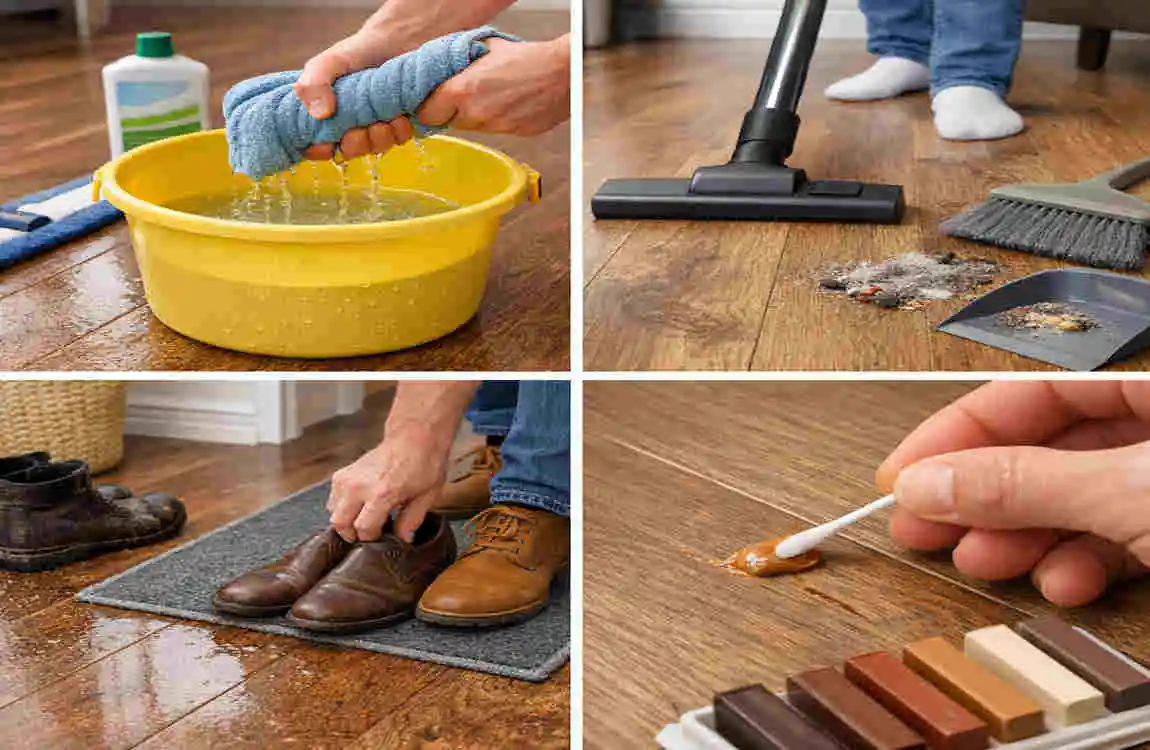
Sweep or vacuum often to keep dirt from scratching the surface. Use a dry mop for light cleaning.
Weekly Maintenance
Wipe the floor with a slightly damp microfiber mop. Never soak the floor with water.
Seasonal Inspection
Check for gaps, lifting edges, or signs of moisture a few times a year. Catching problems early can save money later.
Recommended Cleaning Products
Use cleaning products designed for laminate floors. Avoid harsh chemicals and strong scrubbing tools.
When to Call a Professional
Severe Flooding
If the floor was flooded, a professional can help dry it properly and decide whether planks should be removed.
Mold Growth
If you smell mould or see it forming, do not wait. Mould can spread under the floor and become a bigger problem.
Large Warped Areas
When a large section has swelled or curled, repair may be more complicated than simple drying alone.
Insurance Claims
If the water damage came from a major leak or flood, you may need photos and documentation for an insurance claim.
Frequently Asked Questions
How do you dry laminate flooring after water damage?
Use towels to remove water, increase airflow with fans, run a dehumidifier, and dry the area as quickly as possible.
How long does laminate flooring take to dry?
Minor spills may dry within 24 hours, while major water damage may take several days.
Can laminate flooring recover after getting wet?
Sometimes, yes. If the water is cleaned up quickly, the floor may recover. Swollen or warped planks often need to be replaced.
Is it safe to use a hair dryer on laminate flooring?
No. High heat can damage the floor. Use fans and a dehumidifier instead.
Will mould grow under wet laminate flooring?
Yes, if moisture stays trapped under the floor. That is why quick drying is so important.
Can a wet vacuum help dry laminate flooring?
Yes. A wet/dry vacuum is very useful for removing standing water before using fans and dehumidifiers.
| Topic | Details |
|---|---|
| Purpose | Remove moisture quickly to prevent swelling, warping, and mold growth. |
| First Step | Wipe up standing water immediately with towels or a microfiber cloth. |
| Best Drying Method | Use fans, open windows, and a dehumidifier to speed up drying. |
| Avoid Excess Heat | Do not use high-heat dryers or heaters directly on the floor, as they may cause cracking or expansion. |
| Lift Moisture | If possible, remove baseboards to improve airflow beneath the flooring edges. |
| Cleaning After Drying | Use a laminate-safe cleaner once the floor is completely dry. |
| Signs of Damage | Raised edges, bubbling, discoloration, soft spots, or warped planks. |
| Drying Time | Minor spills usually dry within 24–48 hours; larger water exposure may take several days. |
| When to Replace Planks | Replace boards that remain swollen, warped, or moldy after drying. |
| Prevention Tips | Clean spills immediately, use waterproof mats, maintain indoor humidity between 35–55%, and avoid excessive water during cleaning. |
