
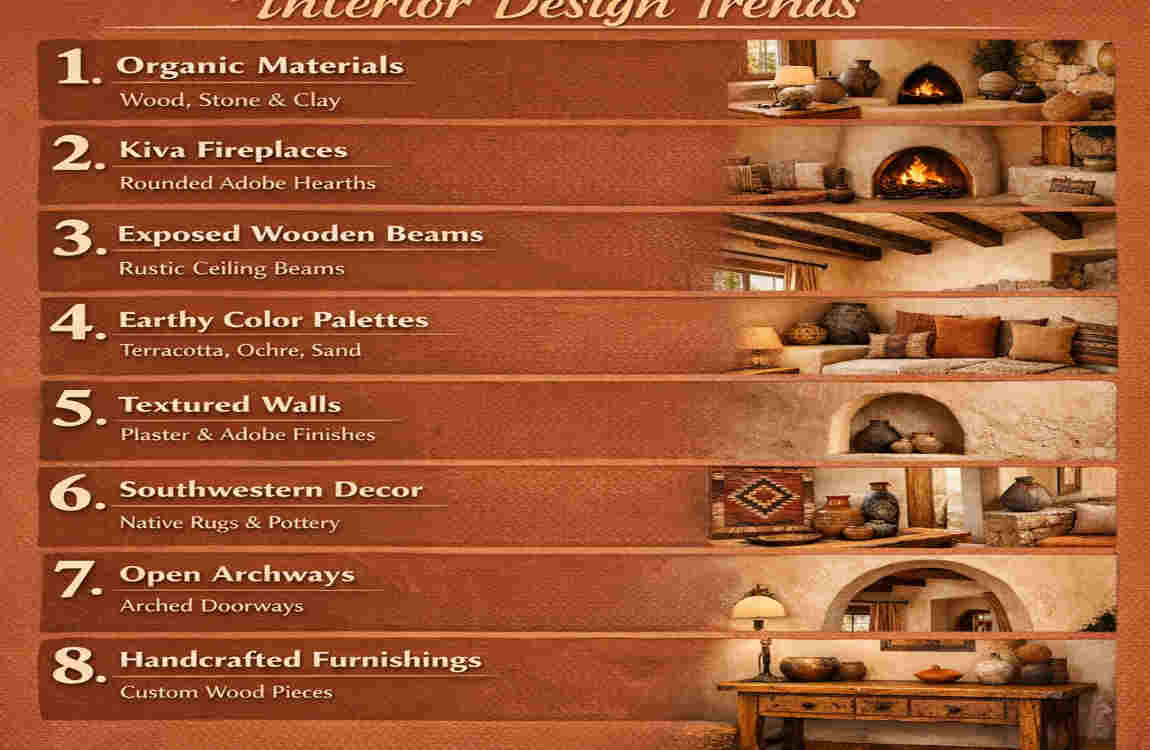
In 2026, adobe-style homes are experiencing a remarkable resurgence, capturing the hearts of homeowners who crave a balance of sustainability, warmth, and timeless appeal. As modern minimalist trends dominate, Adobe house interior design offers a refreshing contrast. Its use of natural materials, earthy textures, and warm neutrals creates a serene, inviting atmosphere that feels both grounded and luxurious.
At its core, it’s a design style rooted in sun-dried adobe bricks, thick walls, and exposed beamed ceilings. These features not only provide thermal efficiency but also exude rustic elegance, making this style irresistible for those who love the charm of the Southwestern aesthetic.
Adobe Style Basics
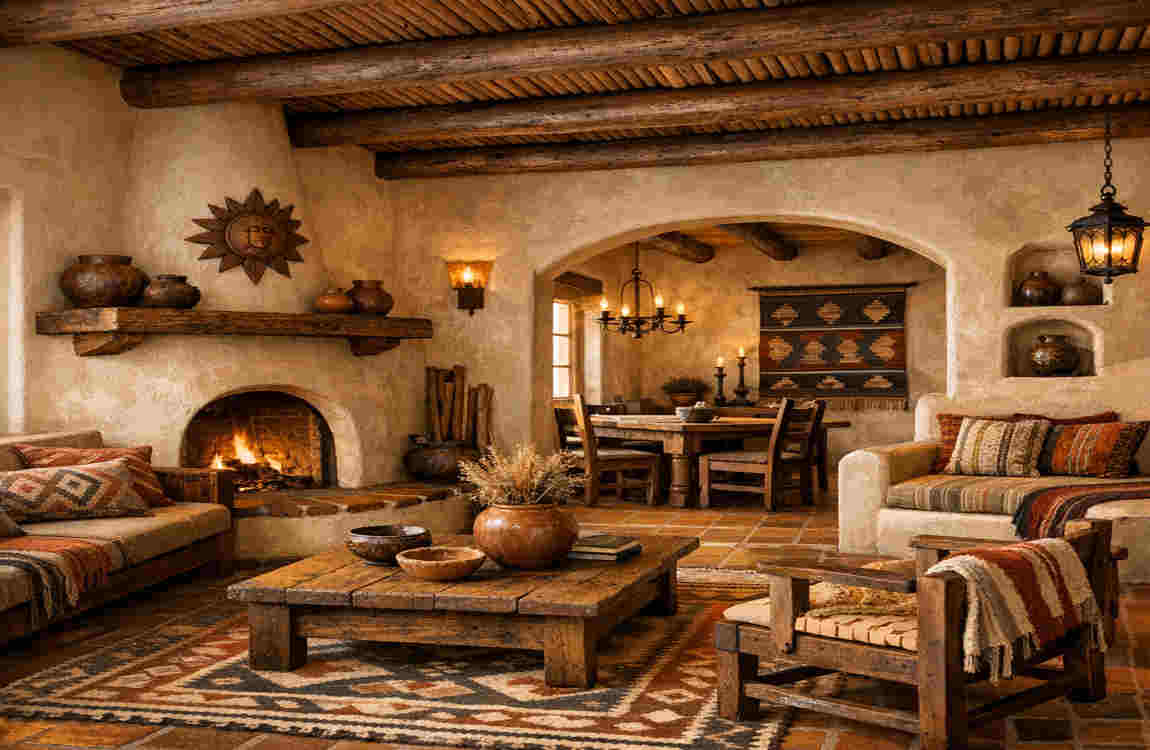
A Look Back at History
Adobe design traces its roots to ancient civilisations, particularly the Pueblo tribes of the American Southwest. These communities mastered the art of using sun-dried clay bricks to construct homes that could withstand harsh desert climates. Over time, this style evolved, blending influences from Spanish colonial architecture and modern-day design sensibilities.
One of the key reasons for Adobe’s enduring appeal is its thermal mass properties. Thick adobe walls absorb heat during the day and release it at night, naturally regulating indoor temperatures. This makes Adobe house interior design not only beautiful but also energy-efficient—an essential feature in today’s eco-conscious world.
Key Elements of Adobe Design
To truly capture the Adobe aesthetic, it’s important to understand its defining characteristics:
- Rounded Corners: Smooth and curved edges lend a sense of softness and flow to the space.
- Exposed Vigas (Wood Beams): These structural wooden elements add rustic charm and architectural interest.
- Saltillo Tile Floors: Terracotta-colored tiles bring warmth and an earthy tone to the flooring.
- Earth-Toned Palettes: Think sandy beiges, terracottas, creamy whites, and muted rusts that reflect the natural beauty of the desert.
Adobe house interior design is particularly well-suited for hot climates like Lahore, where natural cooling mechanisms are a welcome respite from scorching summers. Thick walls and earthy materials work together to create a cool and tranquil environment.
Top Trends in Adobe House Interior Design for 2026
The year 2026 is shaping up to be an exciting one for Adobe Interiors. Let’s explore the top trends that are redefining this timeless design style.
Earthy Neutrals Dominate
Warm, grounding colours like sand, terracotta, and soft taupe are making waves in Adobe interiors. These shades provide the perfect backdrop for furniture and decor, allowing you to mix and match textures without overwhelming the space. Pairing earthy tones with unlacquered brass accents adds a touch of sophistication while maintaining a natural aesthetic.
Textured Walls Shine
Gone are the days of flat, lifeless walls. In 2026, hand-troweled plaster and limewash finishes are making a comeback. These techniques create subtle undulations and depth, giving walls a tactile, organic feel. The beauty of textured walls lies in their ability to catch light at different times of day, adding a dynamic visual element to your adobe home.
Rustic Wood Accents
Whether it’s exposed beams, reclaimed wood furniture, or rustic cabinetry, wooden elements are at the forefront of adobe design trends. In 2026, the focus is on finishes that showcase natural patinas and imperfections. Think antique-style furniture, vintage wooden doors, and warm-toned wood that complements the earthiness of adobe interiors.
Colour Palettes for Adobe House Interior Design
Choosing the right colour palette is essential to achieving an authentic Adobe look. Here’s a breakdown of the primary and accent colours that work beautifully in this design style:
Primary Colors
- Earthy Neutrals: Beige, ochre, terracotta, and rust form the foundation of adobe interiors. These hues create a warm and inviting atmosphere that feels grounded and timeless.
Accent Colors
- Muted Greens: A nod to nature, soft sage or olive green accents can be incorporated through plants, textiles, or decor.
- Soft Blues: Evoking the open skies of the Southwest, pale blue tones add a touch of serenity.
Pro Tip: Always test paint samples in natural light to ensure the colours reflect the warm glow that’s iconic to Adobe house interior design.
Furniture Choices
The furniture in Adobe interiors should feel handcrafted, inviting, and full of character. Here are some key furniture options to consider:
- Leather Sofas: Opt for oversized, comfortable leather sofas in rich caramel or chocolate tones.
- Iron-Framed Tables: Incorporate wrought iron or antique metal-framed tables for a rustic touch.
- Linen Armchairs: Upholstered chairs in natural fabrics like linen or cotton maintain a casual, cosy vibe.
Mixing Materials
Combine vintage wood pieces with modern woven elements, such as rattan or jute. Avoid sleek, shiny metals, as they can feel out of place in an adobe setting. Instead, lean into materials that have imperfections and character.
Lighting Ideas
Lighting is crucial in bringing out the warmth and depth of adobe interiors. Layering different types of lighting can transform the ambience of your space.
- Ambient Lighting: install recessed lights or wrought-iron chandeliers for a rustic look.
- Task Lighting: Use table lamps with mica or fabric shades for focused illumination.
- Natural Light: Maximise sunlight with clerestory windows or large openings to highlight the textures and colours of your adobe-inspired design.
Textiles and Decor
The right textiles and decor can add layers of personality to your adobe house interior design.
Must-Have Textiles
- Woven Rugs: Choose rugs with traditional patterns or neutral tones to anchor your room.
- Cowhides and Throws: Add cosy layers with cowhide rugs and handwoven wool throws.
- Sustainable Fabrics: As 2026 focuses on eco-friendly living, look for textiles made from organic cotton or recycled materials.
Decor Accents
Incorporate the following to complete your Adobe-inspired look:
- Pottery: Clay or terracotta pots add an artisanal feel.
- Murals: Hand-painted wall art can become a focal point.
- Woven Baskets: These serve both as functional storage and as decorative pieces.
Room-by-Room Guide
Here’s a breakdown of how to apply Adobe house interior design principles to different rooms in your home:
RoomKey Features Must-Have Trends
Living Room Beamed ceilings, plaster walls, large windows Oversized leather seating, terracotta floors, layered rugs
Kitchen Saltillo tiles, open shelving, wood cabinets , Farmhouse sinks, herb walls, brass hardware
Bedroom Textured walls, wood vigas, soft linens Canopy beds, mural accents, dimmable sconces
Bathroom : Arched niches, pebble floors, vessel sinks , natural stone, linen curtains, candlelit vanities
Budget Tips
Designing an Adobe-inspired home doesn’t have to break the bank. Here are some tips to keep costs down:
- Source Materials Locally: Purchase vigas or Saltillo tiles from local vendors to reduce transportation costs.
- DIY Projects: Use tutorials to create plaster wall textures or faux adobe finishes for an authentic look.
- Thrift Finds: Scour thrift stores for vintage furniture and decor, saving up to 30% compared to new items.
Common Mistakes to Avoid
- Over-Modernising: Avoid glossy finishes or overly sleek furniture, which can clash with Adobe’s rustic aesthetic.
- Ignoring Scale: Ensure furniture pieces match the scale of thick adobe walls—oversized pieces work best.
Implementation Steps
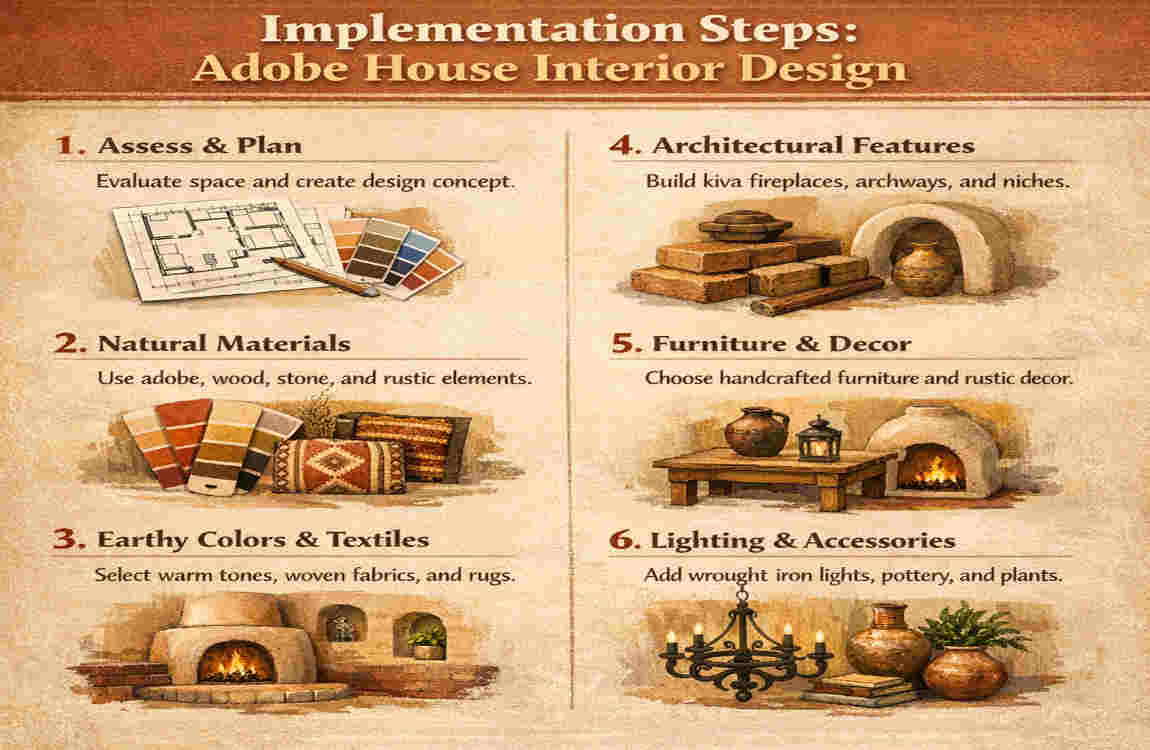
- Assess your space for Adobe compatibility.
- Gather materials like adobe bricks, wooden beams, and textiles.
- Incorporate trends gradually, layering elements over time.
- Style and photograph your space to document the transformation.
FAQs
- What defines Adobe house interior design?
- Earthy materials, rounded corners, and rustic textures define Adobe interiors.
- What are the best colours for Adobe interiors?
- Stick to neutrals like beige and rust, with accents of muted green or soft blue.
- Can Adobe Design work in modern homes?
- Yes, by incorporating biophilic touches like vertical gardens and sustainable materials.
| Trend | Key Features | Why It Works |
|---|---|---|
| Earthy Neutrals | Warm sands, terracottas, soft taupes | Creates serene, timeless backdrops that enhance natural light. |
| Textured Plaster Walls | Hand-troweled limewash, subtle undulations | Adds depth and mimics adobe’s organic feel without overwhelming. |
| Exposed Wooden Vigas | Reclaimed beams, patinated finishes | Brings rustic warmth and architectural interest to ceilings. |
| Saltillo Tile Flooring | Terracotta tiles, sealed for durability | Grounds spaces with authentic Southwestern texture and glow. |
| Woven Textiles | Wool rugs, handwoven throws, cowhides | Layers coziness and cultural nods for lived-in appeal. |
| Biophilic Accents | Potted cacti, vertical gardens | Ties to desert origins while boosting 2026 sustainability vibes . |
