
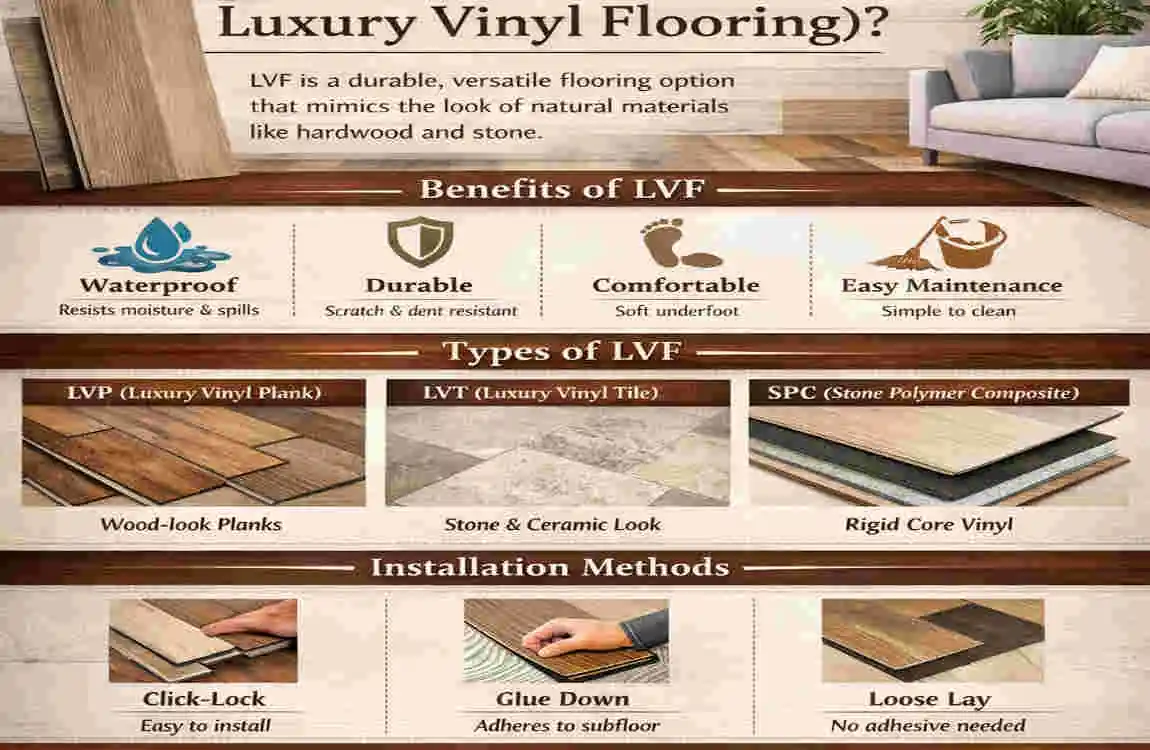
If you are wondering what LVF flooring is, the simple answer is this: it is a modern flooring option that looks like wood, stone, or tile, while being easier to care for and often more affordable.
LVF has become popular because it gives homes a stylish look without the high cost or heavy upkeep of some traditional floors. It works well in busy homes, pet-friendly spaces, and rooms where moisture is a concern.
What Is LVF Flooring?
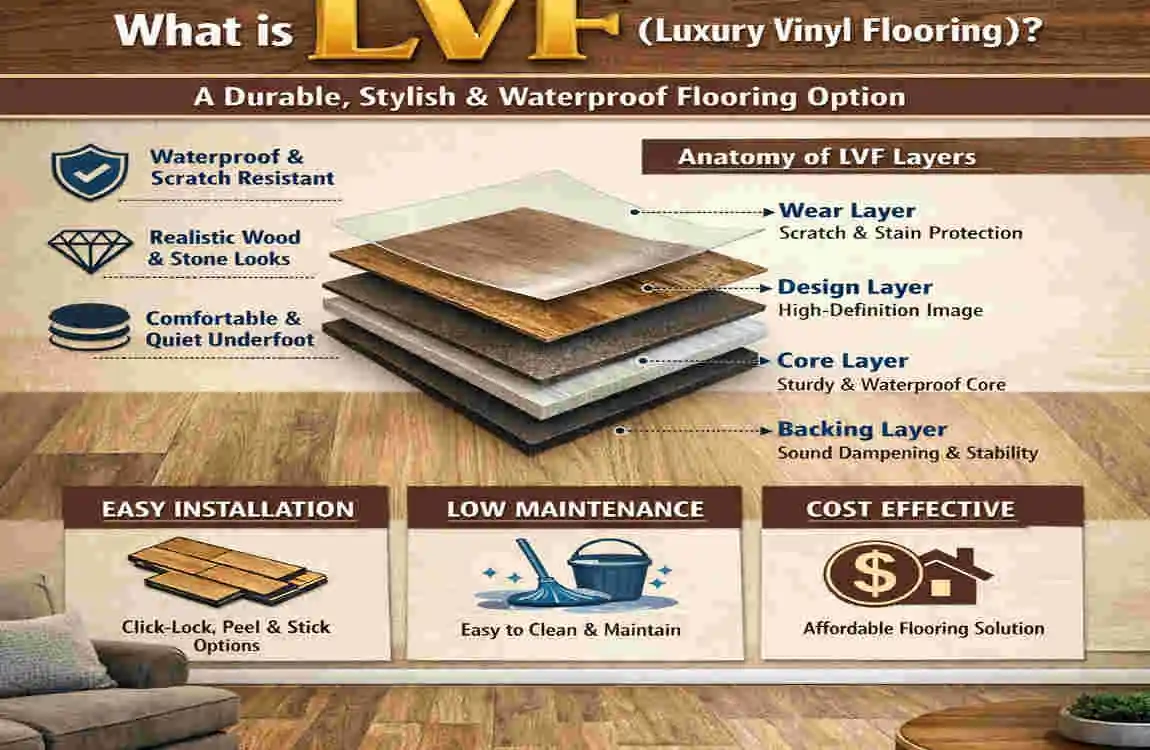
Definition of LVF Flooring
LVF flooring means Luxury Vinyl Flooring. It is a strong vinyl-based floor designed to replicate the look of natural materials such as hardwood, stone, or ceramic tile.
The main difference between standard vinyl and luxury vinyl is the quality. LVF usually looks more realistic, feels better underfoot, and lasts longer.
How LVF Flooring Is Made
LVF flooring is usually built in layers:
- Wear layer: The top layer that helps protect against scratches and stains
- Decorative layer: The printed design that gives the floor its look
- Core layer: The main body that adds strength and support
- Backing layer: The bottom layer that adds stability and comfort
This layered structure is one reason LVF flooring performs so well in daily use.
Why Homeowners Prefer LVF Flooring
Many homeowners choose LVF because it offers a nice balance of style, comfort, and practicality. It looks attractive, handles spills better than many other floors, and usually costs less than hardwood or tile.
Different Types of LVF Flooring
Luxury Vinyl Plank (LVP)
LVP is shaped like long planks and is made to look like wood flooring. It is one of the most popular choices for living rooms and bedrooms.
Luxury Vinyl Tile (LVT)
LVT looks like stone or ceramic tile. It is often used in bathrooms, kitchens, and laundry rooms because it gives a clean, polished look.
Rigid Core Vinyl Flooring
Rigid core vinyl has a strong inner layer that makes it more stable and durable. It is a good choice for homes that need extra strength.
WPC Flooring
WPC stands for wood-plastic composite. It has a softer feel and is often chosen for comfort in bedrooms and family spaces.
SPC Flooring
SPC stands for stone-plastic composite. It is very dense, very stable, and highly water-resistant, which makes it ideal for busy homes.
TypeLooks LikeWater ResistantBest For
LVP Hardwood Yes Living Rooms
LVT Stone/Tile Yes Bathrooms
WPC Wood 100% Waterproof Bedrooms
SPC Stone 100% Waterproof Kitchens
Benefits of LVF Flooring
Waterproof Performance
One of the biggest reasons people ask what LVF flooring is is that they want a floor that can handle water better than wood. Many LVF products are highly water resistant, and some are fully waterproof.
Realistic Wood Appearance
LVF can look very close to real hardwood. This makes it a smart choice if you want a natural style without the cost and upkeep of real wood.
Durable Surface
LVF is designed for everyday wear. It handles foot traffic, spills, and active family life well.
Scratch Resistance
The top wear layer helps protect the floor from light scratches, which is useful if you have kids or pets.
Comfortable Underfoot
Compared to tile, LVF often feels warmer and softer. That can make a big difference in comfort.
Easy Maintenance
You do not need special cleaners or difficult care routines. Regular sweeping and gentle mopping are usually enough.
Affordable Compared to Hardwood
LVF is often much cheaper than hardwood while still giving a similar look.
Suitable for Pets and Children
Because it is easy to clean and handles moisture well, LVF is a practical choice for family homes.
Where Can You Install LVF Flooring?
Living Room
LVF works well in living rooms because it looks stylish and withstands daily use.
Bedroom
It creates a warm, comfortable feel in bedrooms, especially with WPC styles.
Kitchen
Kitchens often deal with spills, so water resistance makes LVF a smart option.
Bathroom
Many LVF products are suitable for bathrooms because they handle moisture better than wood.
Basement
Basements can be tricky because of dampness. LVF is often a better choice than many wood-based floors.
Laundry Room
This is another room where water resistance really matters.
Commercial Spaces
Some businesses use LVF because it is durable, attractive, and fairly easy to maintain.
How LVF Flooring Is Installed
Click-Lock Installation
This type of LVF clicks together at the edges. It is popular because it is faster and easier to install.
Glue-Down Installation
In this method, the floor is attached with adhesive. It creates a strong bond and works well in some spaces.
Loose-Lay Installation
Loose-lay flooring does not always need glue or locking edges. It depends on the product and the room.
Floating Floor System
A floating floor sits over the subfloor without being fully glued down. This makes installation simpler in many homes.
Step-by-Step Installation Process
- Prepare the subfloor
- Measure the room
- Install underlayment if needed
- Lay the flooring
- Trim the edges
- Finish with moulding
A clean and level subfloor is very important. If the base is uneven, the finished floor may not sit properly.
LVF Flooring vs Other Flooring Types
LVF vs Hardwood
Hardwood looks beautiful, but it is more expensive and needs more care. LVF is easier to maintain and handles moisture better.
LVF vs Laminate
Laminate can be cheaper, but LVF usually offers better water resistance and stronger performance in wet areas.
LVF vs Tile
Tile is very durable, but it can feel cold and hard. LVF is usually softer and easier to install.
LVF vs Engineered Wood
Engineered wood offers a real wood surface, but LVF is usually more affordable and easier to clean.
FeatureLVFHardwoodLaminateTile
Waterproof Yes No Limited Yes
Cost Medium High Low High
Maintenance Easy Moderate Easy Moderate
Durability High High Medium High
Cost of LVF Flooring
Material Costs
The cost depends on quality, thickness, and style. Basic LVF is usually cheaper, while premium products cost more.
Installation Costs
Installation can add to the total price, especially if your subfloor needs work first.
Factors Affecting Price
- Brand
- Thickness
- Wear layer
- Room size
- Installation method
In simple terms, better quality usually means a higher price, but also better long-term value.
How to Maintain LVF Flooring
Daily Cleaning
Sweep or vacuum regularly to remove dirt and dust.
Weekly Maintenance
Use a damp mop with a mild cleaner. Avoid soaking the floor.
Removing Stains
Clean spills quickly so they do not leave marks.
Preventing Scratches
Use furniture pads and avoid dragging heavy items across the floor.
Cleaning Products to Avoid
Do not use harsh chemicals, abrasive scrubbers, or strong wax products unless the manufacturer says it is safe.
Common Problems with LVF Flooring
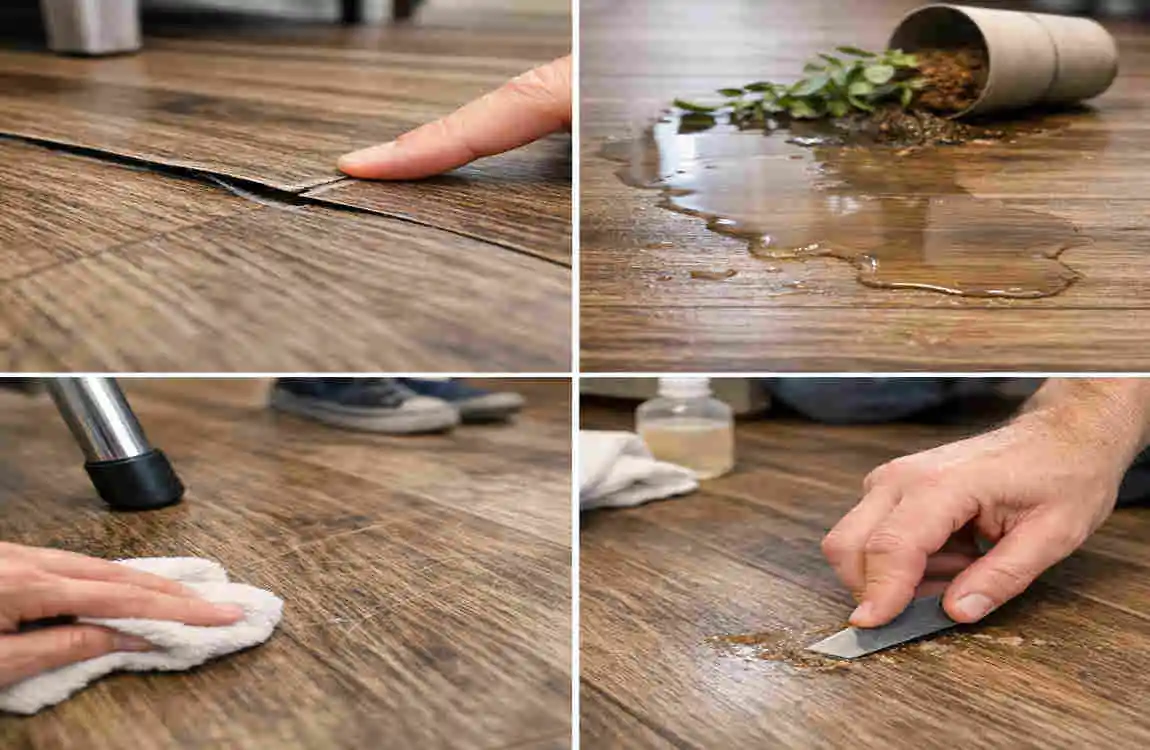
Expansion Issues
If the floor does not have enough space to expand, it may buckle or lift.
Fading
Direct sunlight can cause some floors to fade over time.
Denting
Heavy furniture can leave marks on softer floors or unprotected surfaces.
Loose Planks
Poor installation can cause planks to shift or separate.
Moisture Problems
Although LVF handles moisture well, standing water for long periods can still cause trouble in some products.
Is LVF Flooring Safe?
Indoor Air Quality
Good-quality LVF products are made to meet safety standards for indoor use.
VOC Levels
Some products release very low levels of chemicals called VOCs. Choosing low-VOC flooring is a smart move.
Slip Resistance
Many LVF floors offer decent grip, but finish and texture matter.
Pet Safety
LVF is usually safe for pets and works well in homes with dogs and cats.
How Long Does LVF Flooring Last?
A quality LVF floor can last 15 to 25 years with proper care.
Residential Use
In homes, it often lasts longer because traffic is lighter than in commercial spaces.
Commercial Use
In busy business areas, wear may happen faster.
Factors Affecting Durability
- Product quality
- Installation quality
- Foot traffic
- Moisture exposure
- Cleaning habits
Is LVF Flooring Worth It?
Pros
- Waterproof
- Durable
- Stylish
- Budget-friendly
- Low maintenance
Cons
- Cannot be refinished
- May dent under heavy furniture
- Lower resale value than hardwood
For many homeowners, the benefits outweigh the limits. It is especially useful if you want a floor that looks good and is easy to live with.
Buying Guide for LVF Flooring
Choose the Right Thickness
Thicker flooring often feels better and lasts longer.
Check Wear Layer
A stronger wear layer usually means better protection against scratches and scuffs.
Select the Right Finish
Pick a style and texture that matches your room and lifestyle.
Compare Brands
Different brands offer different quality levels, so compare carefully.
Review Warranty
A good warranty can give you extra peace of mind.
Mistakes to Avoid When Buying LVF Flooring
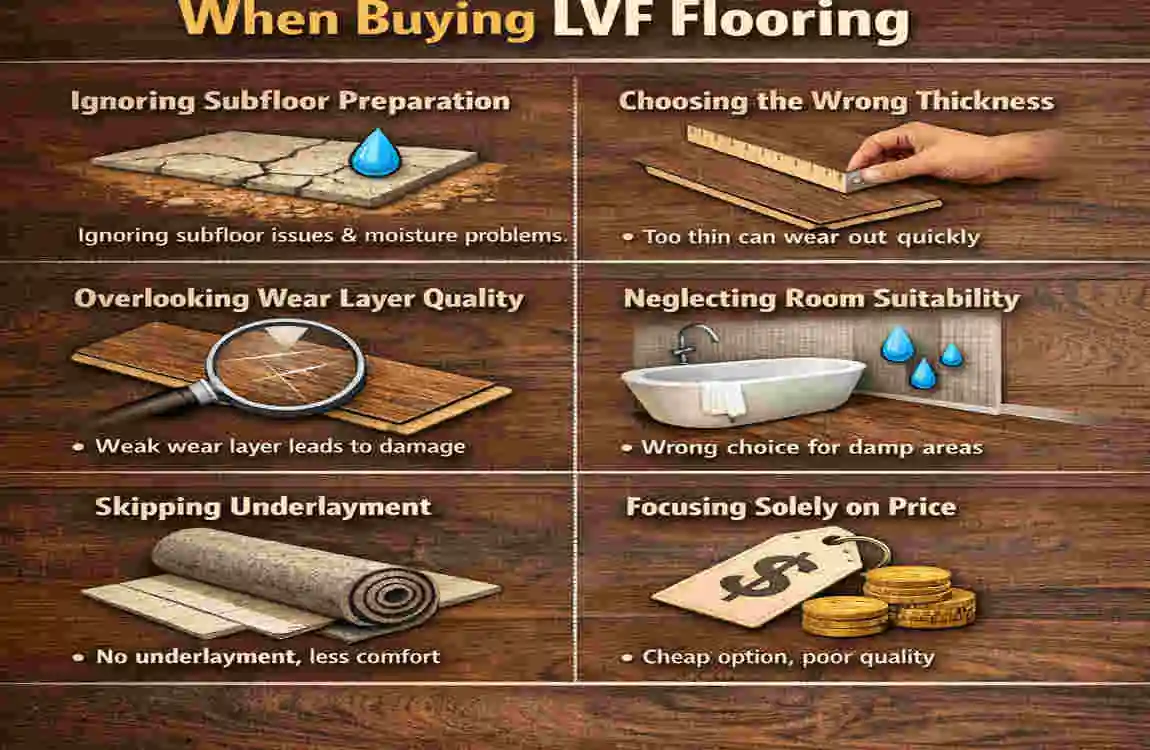
- Choosing the wrong thickness
- Ignoring wear layer ratings
- Poor subfloor preparation
- Buying based only on price
- Skipping warranty details
Taking time to compare options can save you money and stress later.
Frequently Asked Questions
What is LVF flooring?
LVF, or Luxury Vinyl Flooring, is a durable, water-resistant flooring material that resembles wood, stone, or tile.
Is LVF flooring waterproof?
Yes, most modern LVF products are waterproof or highly water-resistant.
How long does LVF flooring last?
Quality LVF flooring usually lasts 15–25 years with proper care.
Is LVF better than laminate flooring?
LVF usually performs better in wet areas because it has stronger water resistance.
Can LVF flooring be installed over existing floors?
Yes, in many cases, it can be installed over clean, level surfaces.
| Topic | Information |
|---|---|
| What Is LVF Flooring? | LVF (Luxury Vinyl Flooring) is a durable synthetic flooring material designed to replicate the appearance of hardwood, stone, or ceramic tile at a lower cost. |
| Common Materials | PVC (polyvinyl chloride), fiberglass backing, vinyl core, wear layer, and decorative printed layer. |
| Main Types | Luxury Vinyl Plank (LVP), Luxury Vinyl Tile (LVT), Rigid Core (SPC), and Wood Plastic Composite (WPC). |
| Appearance | Available in realistic wood, stone, marble, slate, and tile designs with various textures and finishes. |
| Key Benefits | Water-resistant, highly durable, scratch-resistant, affordable, low maintenance, and comfortable underfoot. |
