
If you are planning a flooring update, one of the first things you probably want to know is how long it takes to replace flooring. That is a smart question to ask before you start. Flooring projects can feel simple at first, but the time needed depends on the room size, the material, the condition of the subfloor, and whether you hire a pro or do it yourself.
In general, some floors can be finished in one day, while others may take several days or even longer. The good news is that once you understand the process, it becomes much easier to plan your time, budget, and schedule.
Average Time to Replace Flooring

Typical Timeline by Project Size
The size of the area makes a big difference.
- Single room: Often 1 to 2 days
- Apartment: Usually 2 to 4 days
- Whole house: Commonly 3 to 7 days or more
- Commercial spaces: Can take longer because of larger areas and added planning
A small bedroom is usually quick. A whole-home job is more extensive because each room may require different preparation.
Average Duration at a Glance
Flooring TypeAverage TimeDrying/Curing Needed
Vinyl Plank 1–2 days No
Laminate 1–2 days No
Hardwood 3–7 days Sometimes
Engineered Hardwood 2–4 days Sometimes
Tile 3–5 days Yes
Carpet 1 day No
This table gives you a quick idea, but remember that real projects often take a little more or less time depending on the room.
Factors That Affect How Long It Takes to Replace Flooring
Size of the Area
A larger room naturally takes longer. More square footage means more material, more cutting, and more installation time.
Type of Flooring Material
Some materials are faster to install than others. Carpet, laminate, and vinyl plank are usually quicker. Tile and hardwood often take longer because they require more careful work.
Removing Existing Flooring
If old flooring must come out first, that adds time. Removing glued-down carpet, tile, or damaged wood can slow the job down.
Subfloor Repairs
If the surface underneath is not level, cracked, or damaged, repairs will be needed before the new floor goes in. This is one of the most common reasons for delays.
Furniture Removal
A room must be cleared before the work begins. If you move furniture yourself, the project may start faster. If the crew handles it, that may add time.
Pattern Complexity
Simple flooring patterns go faster. Custom layouts, borders, or diagonal designs take extra time because they need more cuts and more care.
Drying and Curing Time
Some flooring types need drying time for glue, grout, or sealant. That means the room may not be ready for full use right away.
Professional vs DIY Installation
A professional team usually works faster because they have the right tools and experience. DIY installation can save money, but it often takes longer, especially if it is your first time.
Flooring Installation Timeline by Material
Hardwood Flooring
Hardwood floors usually take 3 to 7 days. If the wood needs sanding or finishing on site, the project can take even longer. It gives a beautiful result, but it is not the fastest option.
Laminate Flooring
Laminate is often quicker, usually 1 to 2 days. Click-lock laminate is popular because it installs fast and cleanly.
Luxury Vinyl Plank (LVP)
LVP is one of the easiest flooring types to install. Many projects can be finished in 1 to 2 days, which makes it a favorite for busy homes.
Vinyl Sheet Flooring
Vinyl sheet flooring can also be installed quickly, especially in smaller rooms. The surface must be prepared well for the best result.
Tile Flooring
Tile takes longer, usually 3 to 5 days or more, because it involves layout, cutting, setting, and curing time. Bathrooms and kitchens often need tile work done carefully.
Carpet Installation
Carpet is one of the fastest choices. In many cases, it can be done in one day, especially in standard-sized rooms.
Engineered Wood Flooring
Engineered wood often takes 2 to 4 days. It is usually faster than solid hardwood and still gives a warm, natural look.
Cork and Bamboo Flooring
These flooring types vary, but many projects take 1 to 3 days. The exact time depends on the product and the room conditions.
Step-by-Step Flooring Replacement Process
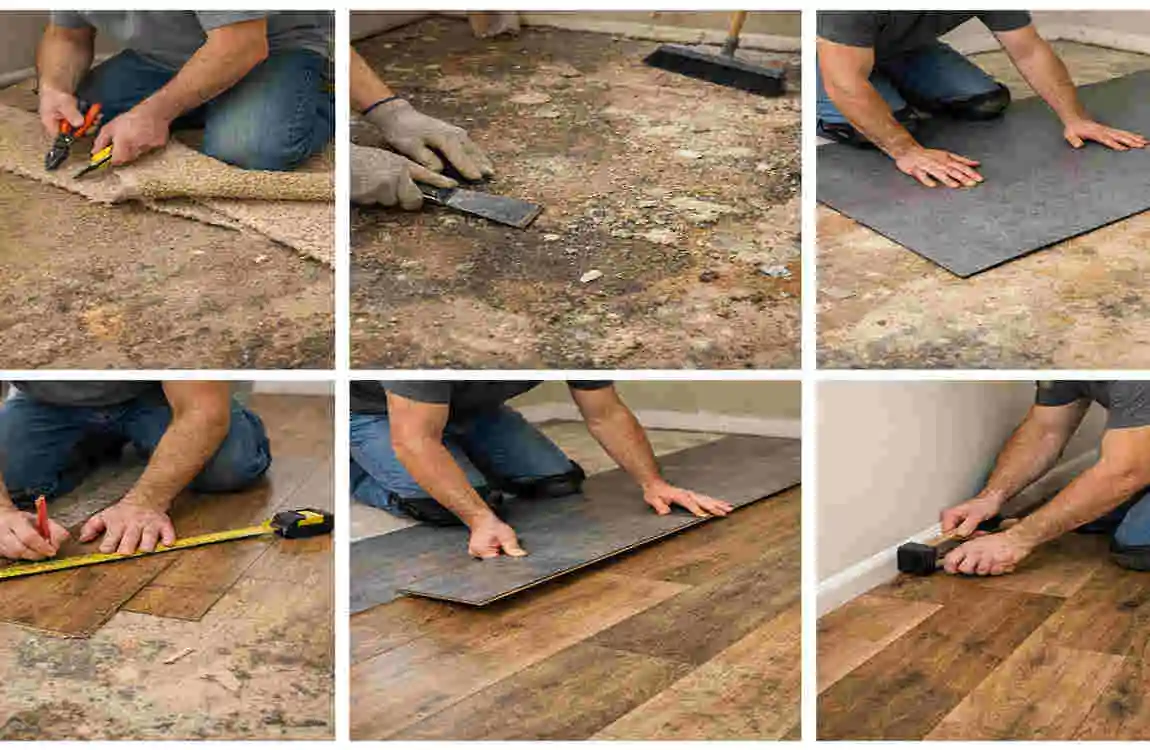
Preparing the Room
First, the room should be emptied as much as possible. This helps installers move freely and work safely.
Removing Old Flooring
The old floor is taken out if needed. This step can be very quick or take a long time, depending on the material.
Inspecting the Subfloor
Once the surface is exposed, the subfloor is checked for damage, moisture, or uneven spots.
Making Necessary Repairs
If anything is wrong, repairs must be made before the new flooring is installed. This step protects the final result.
Installing Underlayment
Some floors need underlayment for comfort, sound control, or moisture protection.
Installing New Flooring
This is the main stage. The floor is measured, cut, and placed carefully.
Finishing Touches
Trim, baseboards, and transitions are added at the end for a clean finish.
Cleaning and Moving Furniture Back
After installation, the room is cleaned, and furniture is returned. Some floors can be used right away, while others need time before heavy use.
Room-by-Room Installation Time
Bedroom
A bedroom is often one of the easiest spaces. It may take 1 day for vinyl, laminate, or carpet.
Living Room
A living room can take 1 to 2 days or more, especially if the space is large or has many edges and corners.
Kitchen
Kitchens often take longer because appliances may need to be moved and the floor must fit around cabinets.
Bathroom
Bathrooms usually need careful work because of moisture and tight spaces. Tile can take several days due to drying time.
Basement
Basements can be quick or slow depending on moisture issues and subfloor condition. If repairs are needed, the timeline grows.
Hallway
Hallways may seem small, but they can take time because of trim, doors, and lots of cuts.
Can Flooring Be Replaced in One Day?
Yes, some flooring can be replaced in one day.
Projects That Can Be Finished in One Day
- Carpet in a small room
- Click-lock vinyl plank
- Simple laminate in one room
Projects That Usually Take Several Days
- Tile flooring
- Hardwood with finishing work
- Rooms with major subfloor repairs
- Large homes with multiple rooms
When Same-Day Installation Is Possible
Same-day work is more likely when the room is small, the floor is easy to install, and the subfloor is already in good shape.
Common Reasons Flooring Projects Take Longer
A project often slows down because of problems that were not obvious at first.
- Hidden moisture problems
- Uneven subfloors
- Damaged plywood
- Special cuts around cabinets
- Stair installations
- Custom patterns
- Weather and humidity
These issues are normal, but they need time to fix. That is why it helps to plan for a little extra time.
Tips to Speed Up Flooring Replacement
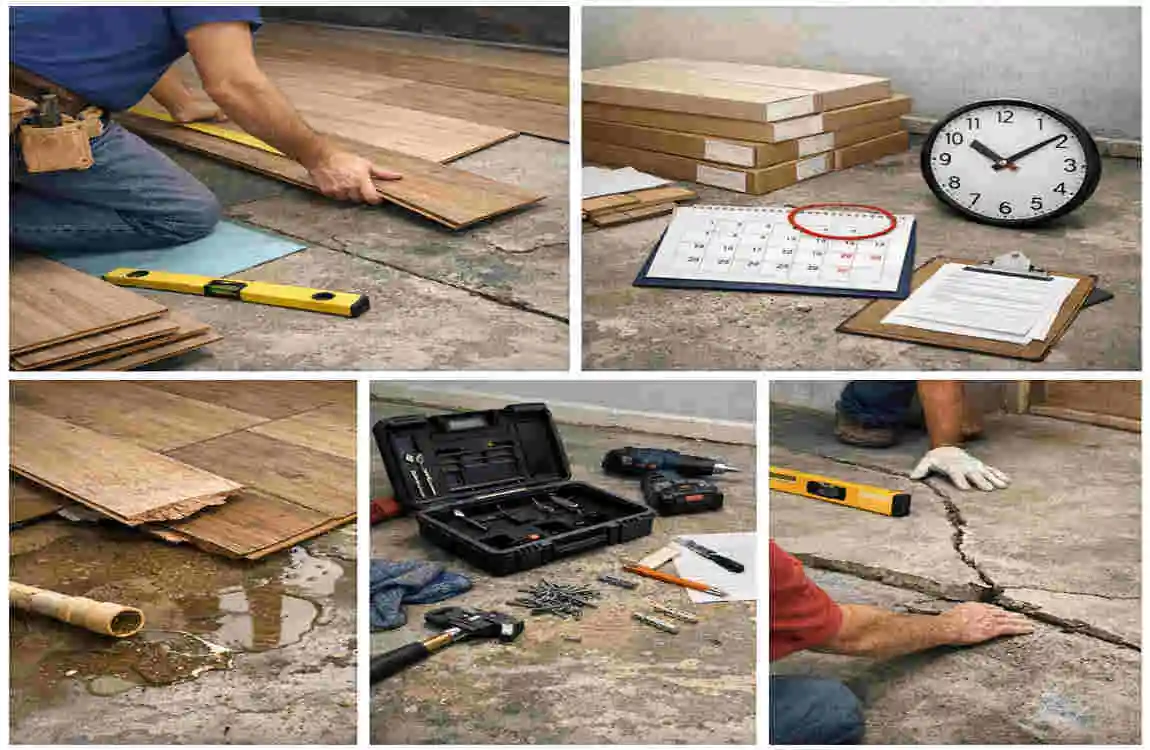
Here are a few simple ways to keep your project moving:
- Remove furniture before installers arrive
- Order materials early
- Choose click-lock flooring
- Fix subfloor problems ahead of time
- Hire experienced installers
- Schedule work during dry weather
Small steps like these can save hours or even days.
Professional Installation vs DIY
FeatureProfessionalDIY
Speed Faster Slower
Cost Higher Lower
Quality High Depends on skill
Warranty Usually included Limited
Risk of Mistakes Low Moderate to High
If you want the job done quickly and cleanly, a professional is usually the better choice. If your budget is tight and the room is simple, DIY may work well.
Cost vs Time Considerations
Is Faster Installation More Expensive?
Sometimes, yes. Faster work often means paying skilled labor or choosing easier materials that install quickly.
When Paying Professionals Saves Time
If you need the room floor finished fast, professionals can be worth the cost. They usually have the tools and experience to avoid delays.
Balancing Budget and Project Speed
The best choice depends on your situation. If time matters most, go with faster materials and professional help. If saving money matters most, DIY may be enough.
Frequently Asked Questions
How long does it take to replace flooring in one room?
Usually 1 to 2 days, depending on the material and room condition.
How long does it take to replace flooring in an entire house?
A whole house may take 3 to 7 days or more.
Can new flooring be installed over existing flooring?
Sometimes yes, but it depends on the old floor type and whether the surface is flat and stable.
Which flooring type is the fastest to install?
Carpet, laminate, and vinyl plank are usually the fastest.
Does replacing flooring require removing baseboards?
Not always, but it often helps create a cleaner finish.
How long before you can walk on new flooring?
Some floors are ready right away, while others need drying or curing time.
| Aspect | Details |
|---|---|
| Average Replacement Time | Most flooring projects take 1–5 days, depending on the flooring type and room size. |
| Small Room (100–200 sq. ft.) | Usually completed in 1 day if the subfloor is in good condition. |
| Whole House | Replacing flooring throughout a home typically takes 3–7 days. |
| Vinyl Plank Flooring | One of the fastest options—often installed in 1–2 days. |
| Laminate Flooring | Usually takes 1–3 days for an average-sized home. |
| Hardwood Flooring | Installation takes 3–5 days, plus extra time if sanding and finishing are required. |
| Tile Flooring | Generally requires 2–5 days, including drying and grout curing time. |
| Carpet Installation | Often completed within a few hours to 1 day. |
| Factors That Affect Time | Room size, flooring material, furniture removal, old floor removal, subfloor repairs, and installation method. |
| How to Speed Up the Process | Clear furniture beforehand, choose click-lock flooring, and ensure the subfloor is clean and level. |
