
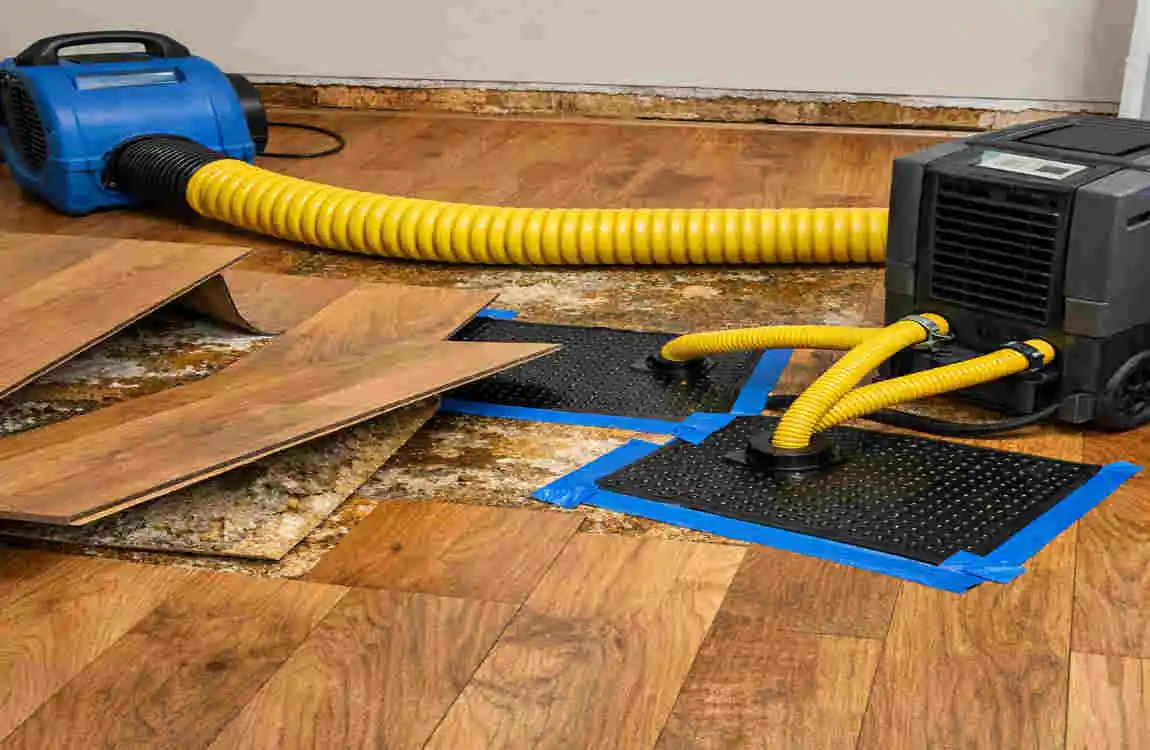
Water under laminate flooring is a serious problem because it can spread where you cannot see it. A small spill may look harmless at first, but trapped moisture can quickly lead to swelling, buckling, mould, bad odours, and permanent floor damage.
That is why fast action matters. If you deal with a leak, overflow, or flood early, you have a much better chance of saving the floor and avoiding costly repairs.
Knowing how to dry water under laminate flooring quickly can help prevent long-term damage and protect your home investment. The good news is that with the right steps, many floors can be dried before the damage gets worse.
Why Water Gets Under Laminate Flooring
Common Causes of Water Under Laminate Floors
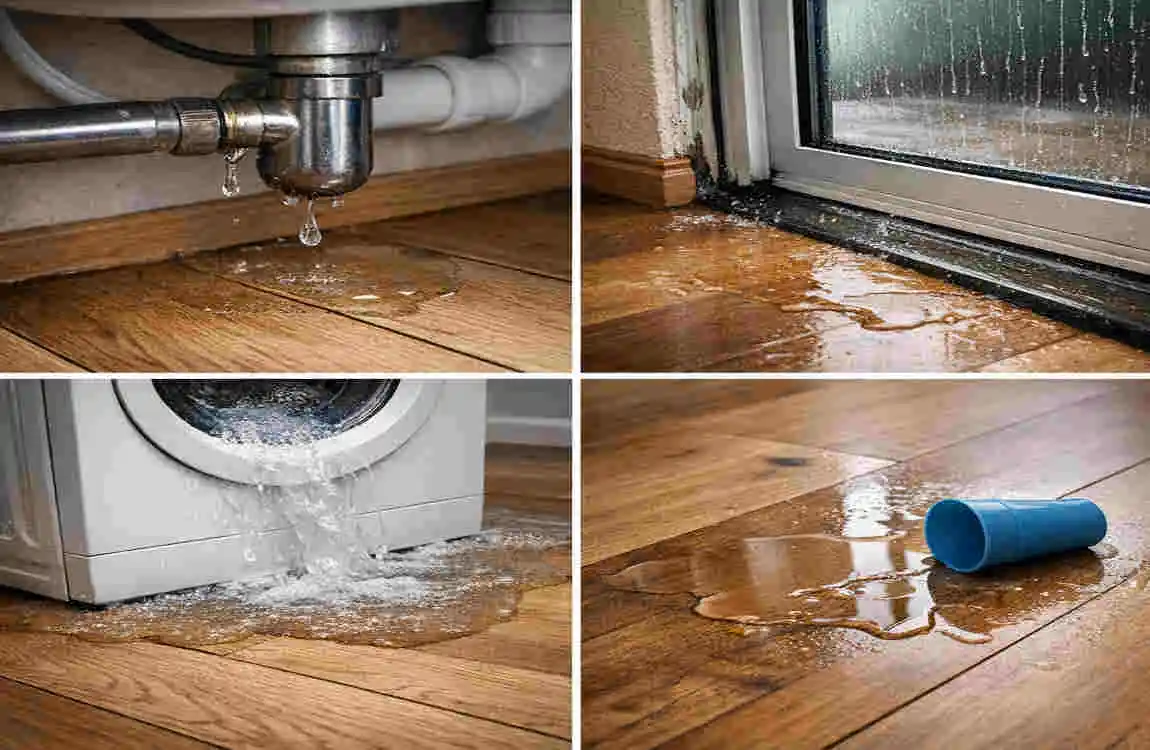
Water usually gets under laminate through a few common problems. Some are small and sudden. Others are slow and easy to miss.
Typical causes include:
- Plumbing leaks
- Dishwasher, washing machine, or refrigerator leaks
- Bathroom overflow
- Roof leaks
- Flooding
- Poor moisture protection
Even a tiny leak can move under the boards and stay trapped for days.
Why Laminate Flooring Is Sensitive to Water
Laminate flooring has a compressed wood core. That means it reacts badly to moisture. When water enters the material, the boards can expand and lose their shape.
The biggest issue is that water underneath the floor does not dry easily. Since it is trapped, it may stay there much longer than you expect.
Signs You Have Water Under Laminate Flooring
Watch for these warning signs:
- Soft or spongy areas
- Raised edges
- Warped boards
- Dark stains
- Musty smell
- Cracking sounds when walking
If you notice even one of these signs, act quickly.
How to Dry Water Under Laminate Flooring Fast
Stop the Water Source Immediately
Before you dry anything, stop the leak. If the source is still active, the floor will keep getting wet.
Turn off leaking appliances if needed. If the problem comes from plumbing, shut off the main water supply.
This step is important because drying the floor without fixing the source will not solve the real problem.
Remove Surface Water Quickly
Once the source is under control, remove visible water right away. The less water sitting on the floor, the less chance it has to soak in.
Use:
- Towels
- Microfiber cloths
- A wet/dry vacuum
- A mop for the final cleanup
Do not wait too long. Quick cleanup can make a big difference.
Remove Damaged Laminate Boards
If water has been trapped for hours or the boards have started to swell, you may need to remove some planks.
This is often necessary when:
- The floor feels uneven
- Boards are lifting
- Moisture has spread under a large area
Carefully remove the baseboards first. Then lift the affected planks and check the underlayment and subfloor. These layers need to dry completely before the flooring goes back down.
Improve Air Circulation
Air movement helps moisture evaporate faster. Open windows and doors if the weather allows it. Then place fans near the wet area.
For best results, point the fans toward the damp spot and keep them running continuously. Good airflow can speed up drying more than people expect.
Use a Dehumidifier
A dehumidifier pulls moisture out of the air. This is very helpful when water is trapped under flooring.
It works especially well in closed rooms where the humidity stays high. Run it for several days if needed, and empty the water tank often.
If you want to understand how to dry water under laminate flooring properly, dehumidifiers are one of the most useful tools.
Use Heat Carefully
Warm air can help dry the area faster, but too much heat can damage laminate.
Use gentle heat only. Avoid direct high heat, such as placing a heater too close to the floor. That can cause more warping or make the damage worse.
Tools Needed to Dry Water Under Laminate Flooring
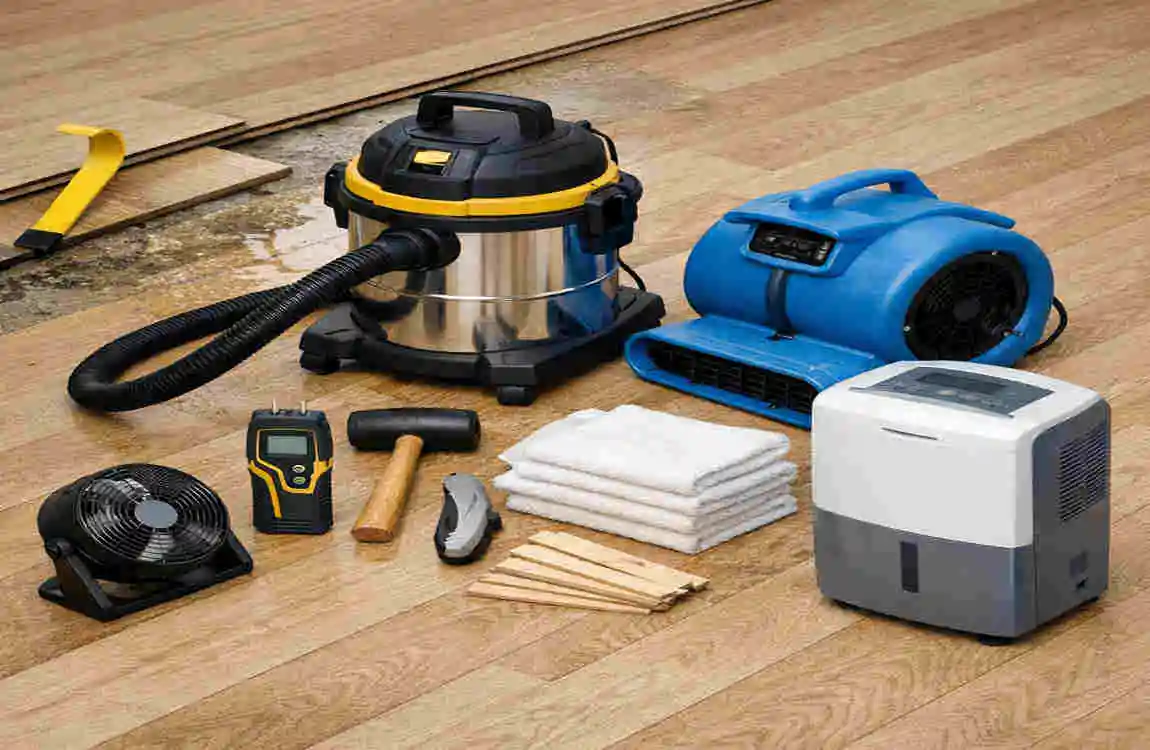
Here is a quick look at the most helpful tools:
ToolPurpose
Wet/Dry Vacuum Removes standing water
Fans Improves airflow
Dehumidifier Removes moisture from air
Towels Absorbs surface water
Moisture Meter Detects hidden water
Pry Bar Removes damaged planks
Most homeowners can use the basic tools at home. For bigger leaks or flooding, professional drying equipment may be needed.
How Long Does It Take for Water to Dry Under Laminate Flooring?
Drying time depends on how much water entered the floor and how fast you respond.
Situation Approximate Drying Time
Small spill 24–48 hours
Minor leak 2–5 days
Heavy water damage Several days to weeks
A few things affect drying time:
- Amount of water
- Room ventilation
- Type of underlayment
- Weather conditions
- How long the water sat there
The faster you start, the better your chances of saving the floor.
Can You Save Laminate Flooring After Water Damage?
Situations Where Laminate Can Be Saved
Yes, sometimes you can save it.
Laminate has a better chance of recovery when:
- Water was removed quickly
- Boards are not swollen
- Moisture did not reach the core
If the damage is small, drying may be enough.
Situations Where Replacement Is Needed
Sometimes the damage is too serious. In those cases, drying alone will not fix the floor.
Replacement is usually needed when you see:
- Severe warping
- Mold growth
- Crumbling edges
- Permanent swelling
If the boards do not return to shape after drying, replacing them is usually the safest choice.
Common Mistakes When Drying Water Under Laminate Floors
Waiting Too Long
Delay is one of the biggest mistakes. The longer water sits, the deeper it spreads.
Even if the surface looks fine, hidden moisture can still damage the floor underneath.
Drying Only the Surface
A clean surface does not always mean the floor is dry below. Water can remain trapped under the planks and continue to cause damage.
That is why airflow, dehumidifiers, and moisture checks matter.
Using Too Much Heat
Strong heat can make laminate worse. It may warp the boards or stress the material.
Gentle drying works better than rushing with intense heat.
Installing New Flooring Before Drying Completely
Never install new laminate over a damp subfloor. If you do, moisture can stay trapped and create mould or more warping later.
Make sure everything is fully dry first.
How to Prevent Water Damage Under Laminate Flooring
Seal Areas Around Water Sources
Bathroom and kitchen areas need extra protection. Use waterproof sealants where needed, especially around sinks, appliances, and edges.
Fix Plumbing Problems Quickly
Small leaks can become big flooring problems. Repair dripping pipes, loose connections, and faulty appliances as soon as you notice them.
Choose Water-Resistant Laminate Options
If you are installing new flooring, look for modern water-resistant or waterproof laminate choices. These products handle moisture better than standard options.
Use Mats and Rugs
Mats help protect the floor in busy or wet areas. Good places to use them include:
- Entryways
- Kitchens
- Bathrooms
They do not stop all water damage, but they can help reduce daily wear.
When Should You Call a Water Damage Professional?
Sometimes the problem is too large for a simple DIY fix. Call a professional if you have:
- Large flooding
- Mold concerns
- Water under a wide area
- Structural damage
- Persistent moisture
Professionals use tools like industrial fans, moisture meters, and commercial dehumidifiers. They can also check whether the subfloor is damaged.
Cost of Repairing Water-Damaged Laminate Flooring
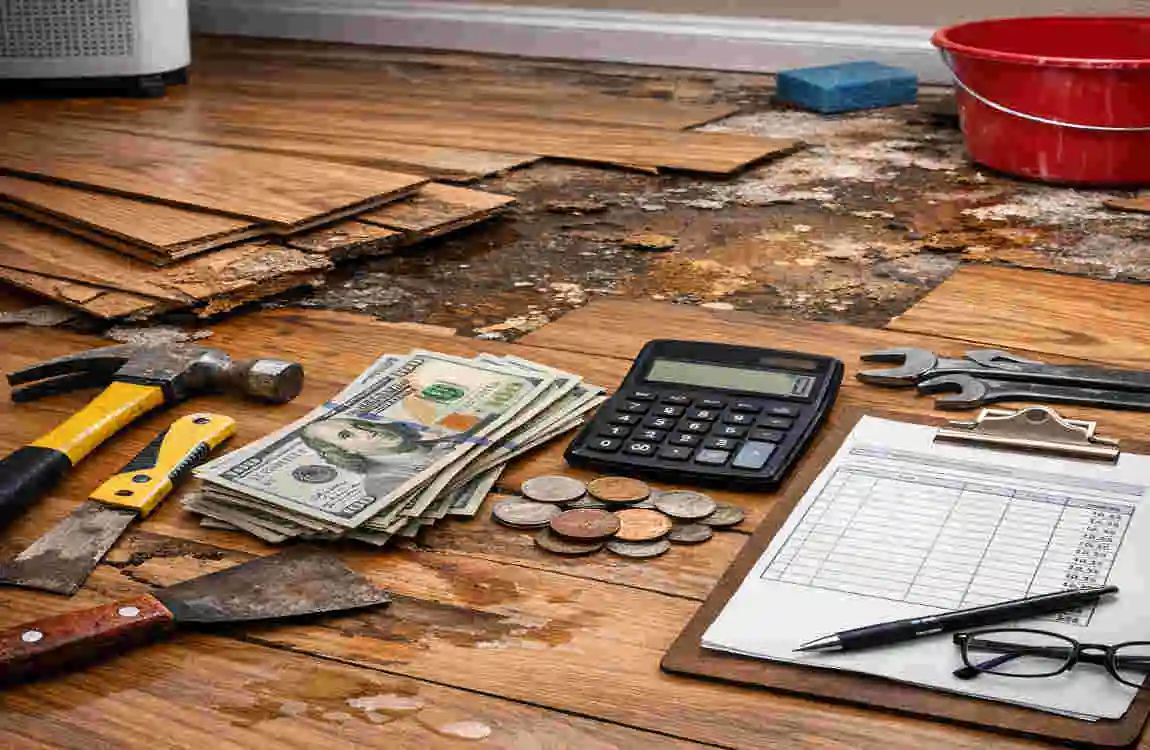
Repair costs vary depending on the severity of the damage.
Repair Type Estimated Cost
Drying equipment rental $50–$200+
Replacing laminate boards Varies by material
Professional water restoration $500+ depending on damage
The sooner you dry the floor, the more money you may save.
Frequently Asked Questions
Can water under laminate flooring dry on its own?
Small amounts of moisture may disappear over time, but trapped water usually needs airflow and dehumidification to dry properly.
How do you get water out from under laminate flooring?
Start by removing surface water, then use fans and a dehumidifier. If the boards are swollen, you may need to lift them.
How long does water damage take to ruin laminate flooring?
It can start causing damage within hours or days, depending on how much water is present and how long it stays there.
Can you dry laminate flooring without removing it?
For minor moisture, maybe yes. For serious water damage, removing the affected boards is often necessary.
Will a dehumidifier dry water under laminate flooring?
Yes. A dehumidifier helps remove moisture from the air and speeds up the drying process.
How do I know if there is water under my laminate floor?
Look for swelling, soft spots, warped boards, stains, cracking sounds, or musty smells.
| Step | Method | Quick Tips |
|---|---|---|
| Remove Standing Water | Use towels, mops, or a wet/dry vacuum to remove water quickly. | Act within the first 24–48 hours to reduce damage. |
| Remove Affected Boards | Carefully lift damaged laminate planks if water is trapped underneath. | Wet laminate often swells and may need replacement. |
| Improve Airflow | Open windows and use fans to circulate air. | Place fans toward the wet area for faster drying. |
| Use a Dehumidifier | Reduce moisture levels in the room and under the flooring. | Run continuously until the area is completely dry. |
| Check the Subfloor | Inspect the surface beneath laminate for dampness or mold signs. | A moisture meter helps confirm dryness. |
| Dry Small Gaps | Use heaters or gentle warm air to remove hidden moisture. | Avoid excessive heat that can warp laminate. |
| Prevent Future Damage | Fix leaks and consider moisture barriers under laminate. | Regular inspections help protect your flooring. |
