
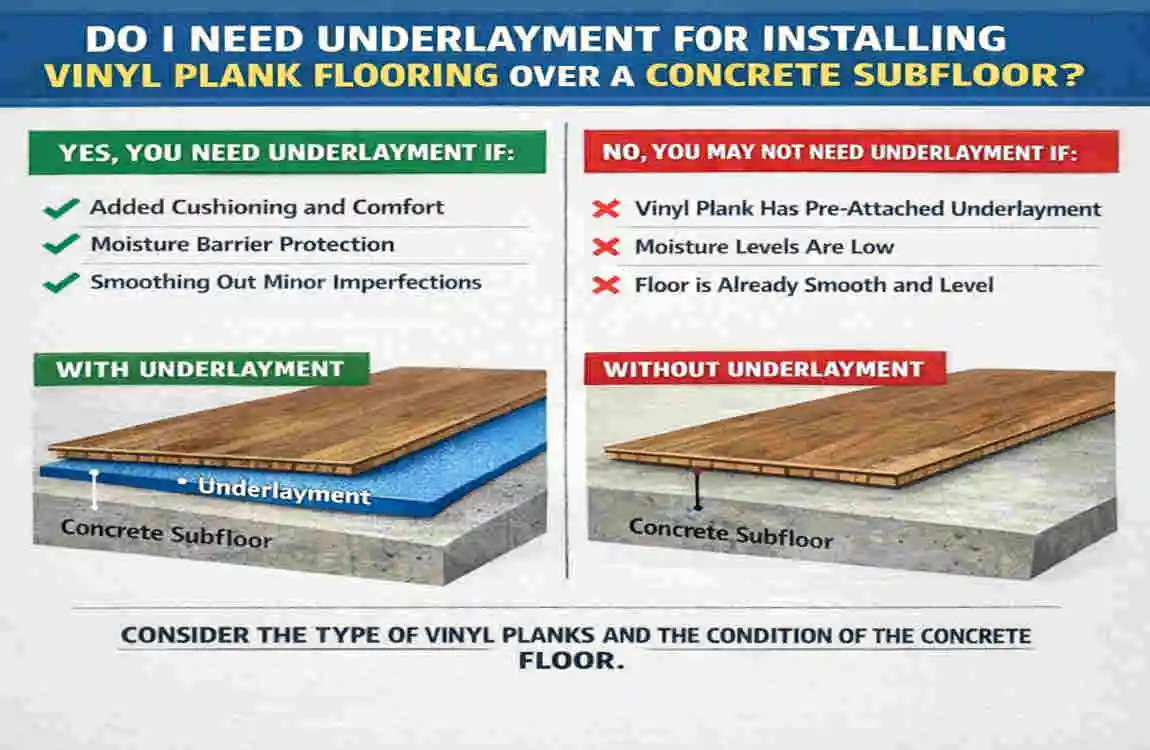
If you are planning to install vinyl planks over concrete, one big question usually comes up: do I need underlayment for vinyl flooring on concrete?
The short answer is: sometimes yes, sometimes no. It depends on the type of vinyl flooring, whether it already has attached padding, the condition of the concrete, and the installer’s guide from the product maker.
Concrete is strong, but it can also hold moisture, feel cold, and have small bumps or low spots. That is why underlayment, moisture protection, and good surface prep can matter so much.
Do You Need Underlayment for Vinyl Flooring on Concrete?
What is underlayment?
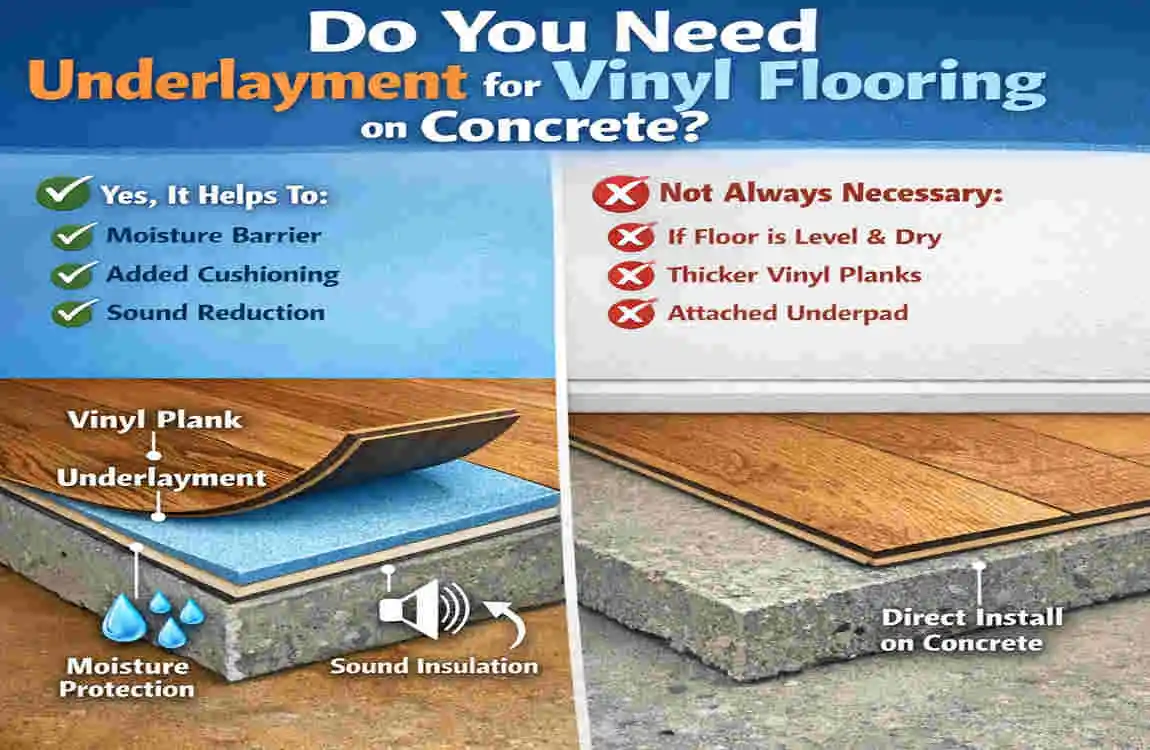
Underlayment is a thin layer placed between the concrete and the vinyl flooring. It can help with comfort, sound, and sometimes moisture control.
Think of it as a support layer. It is not the floor itself, but it can improve how the floor feels and performs.
Is underlayment always necessary?
No, not always.
Many modern vinyl planks, especially luxury vinyl plank (LVP) products, already come with attached backing. In those cases, adding another layer may not be needed and could even cause problems if the product does not allow it.
That is why the manufacturer’s instructions are so important. Some vinyl floors are made to go directly over concrete, while others need a special underlayment or moisture barrier.
Why concrete is different
Concrete may look solid and dry, but it can still release moisture over time. This is especially common in basements and ground-level rooms.
Concrete also tends to be hard and sometimes uneven. That means vinyl flooring may need a very flat surface to lock together properly and stay in good shape.
Benefits of Using Underlayment Under Vinyl Planks
Moisture protection
One of the biggest reasons people use underlayment or a separate moisture layer is to help protect the floor from moisture coming through the concrete.
This is important, but remember: underlayment is not a magic fix. If the concrete has a real moisture problem, that should be tested and addressed first.
Sound reduction
Vinyl flooring can be a little noisy when installed over a hard surface like concrete. Underlayment can help soften footsteps and reduce sound transfer.
This is useful in apartments, upstairs rooms, and busy family homes.
Added comfort
A thin support layer can make the floor feel a little softer underfoot. That can matter a lot in rooms where you stand for long periods, like kitchens.
Minor surface protection
Underlayment may help with very small imperfections, but it will not hide major dips, cracks, or bumps. Concrete still needs to be as smooth and level as possible.
When You May Not Need Underlayment
Vinyl planks with attached padding
Many vinyl planks already include a built-in pad. In that case, you often do not need extra underlayment.
Adding another layer can create too much movement and may affect the locking system.
Manufacturer requirements
Every flooring product is a little different. Some brands do not allow extra underlayment at all. Others only allow certain approved products.
If you use the wrong one, you could create installation problems or even affect the warranty.
Smooth, dry concrete
If the concrete is flat, clean, and dry, and the flooring is designed for direct installation, you may be able to install the planks right on top of it.
That is why prep matters so much. A good concrete base can remove the need for extra layers.
Click-lock vs. glue-down vinyl
Click-lock vinyl often has specific rules about padding and underlayment because the planks need to sit evenly and connect properly.
Glue-down vinyl usually has different requirements, since it is bonded directly to the floor. In many cases, glue-down systems do not use underlayment the same way floating floors do.
Choosing the Right Underlayment for Concrete
Vapour or moisture barrier
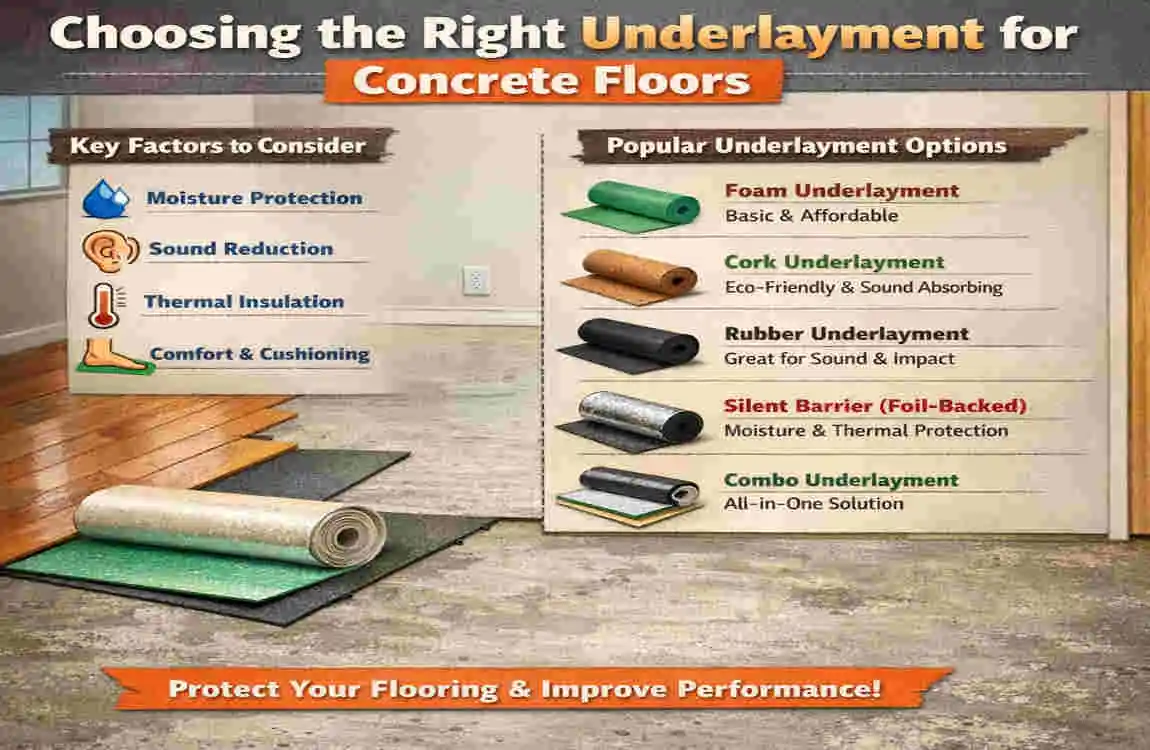
A moisture barrier helps prevent moisture from rising through the concrete. This is not the same as regular underlayment.
If the room is below grade or the slab may hold moisture, this layer can be very important.
Foam underlayment
Foam underlayment is common because it is lightweight and easy to use. It can help with comfort and sound, but it is not always the best choice for every vinyl floor.
Some vinyl products need a firmer base than foam can provide.
Cork underlayment
Cork can offer good sound control and a natural feel. It may work in some situations, but again, only if the flooring maker approves it.
Manufacturer-approved products
The safest choice is always a product approved for your specific vinyl flooring. That protects the floor, the lock system, and the warranty.
What to avoid
- Extra-thick underlayment
- Very soft padding
- Layers that move too much
- Unapproved products
- Double layers of padding
Too much cushion can make vinyl planks shift, separate, or fail over time.
How to Prepare Concrete Before Installing Vinyl Flooring
Clean the concrete
Start by removing dust, dirt, grease, paint flakes, and any loose material from the surface. Vinyl flooring needs a clean base to sit properly.
Check for moisture
Moisture testing is very important. Concrete can seem dry on the surface while still holding hidden moisture underneath.
Pay special attention to basements, garages, and slab-on-grade rooms.
Check the surface level.
Vinyl planks need a reasonably flat floor. Small flaws may be fine, but major unevenness can cause the planks to lift, gap, or click apart.
Repair problems first
Use patching or levelling compounds if needed. Do not try to hide large floor problems with underlayment. That usually creates more trouble later.
How to Install Vinyl Planks Over Concrete
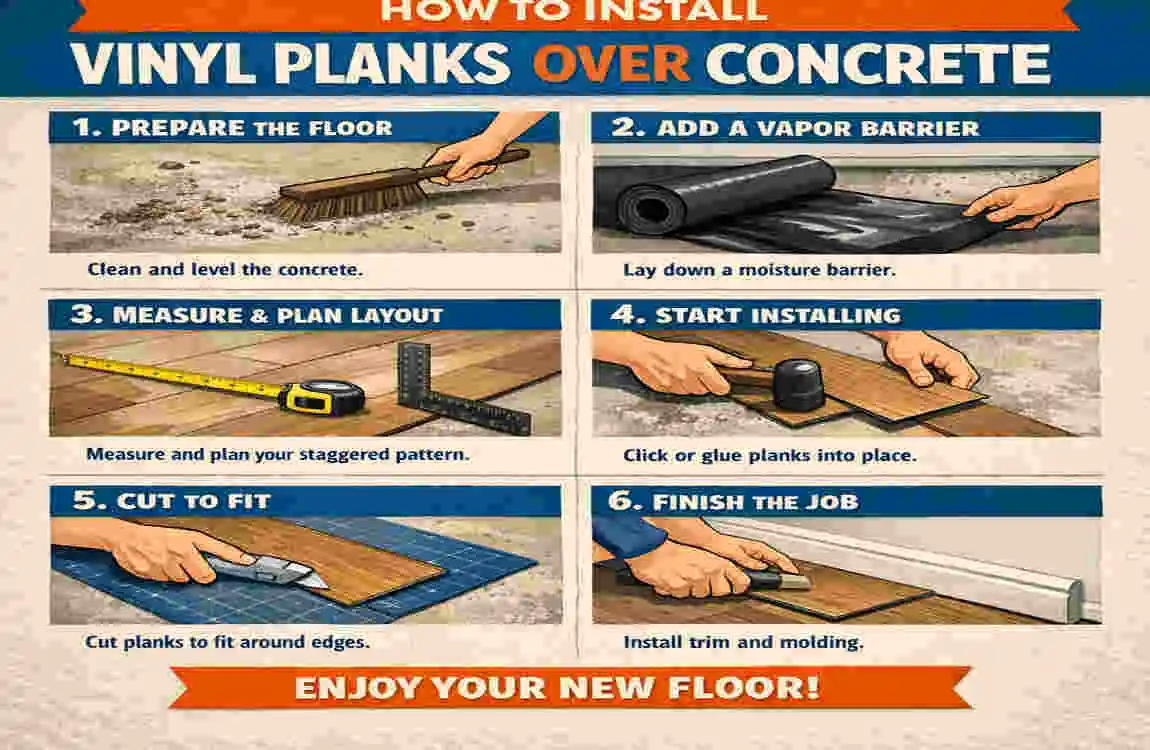
Basic installation steps
- Inspect the concrete
- Test for moisture
- Fix cracks and low spots
- Install approved moisture protection or underlayment if required
- Let flooring acclimate if the manufacturer asks for it
- Plan the plank layout
- Install the planks according to the instructions
- Leave expansion gaps where needed
- Add trim or transitions to finish the job
Common installation mistakes
- Installing on damp concrete
- Using the wrong underlayment
- Adding too many layers
- Ignoring uneven areas
- Skipping the product instructions
Many vinyl flooring problems stem from rushed prep work.
FAQ: Vinyl Flooring Underlayment on Concrete
Do I need underlayment for vinyl flooring on concrete?
It depends. The flooring type, the condition of the concrete, and the manufacturer’s instructions determine the answer.
Can vinyl plank flooring be installed directly over concrete?
Yes, if the concrete is dry, smooth, and approved for direct installation by the flooring maker.
Do I need a moisture barrier under vinyl flooring on concrete?
Often yes, especially in damp areas or below-grade spaces. Still, always follow the product guide.
Can I use foam underlayment under vinyl plank flooring?
Sometimes, but not always. Foam must be compatible with the vinyl product and the installation method.
What happens if you don’t use underlayment under vinyl plank flooring?
If the floor is designed for direct install, nothing bad may happen. But if underlayment is needed, you could lose comfort, sound control, or moisture protection.
Does luxury vinyl plank need underlayment over concrete?
Many LVP products already have attached padding, so extra underlayment is often not needed.
Can underlayment fix an uneven concrete floor?
No. Underlayment cannot replace proper levelling or concrete repair.
| Question | Short Answer |
|---|---|
| Is underlayment always needed? | No. Many vinyl planks have attached underlayment. |
| Concrete subfloor | The concrete should be clean, dry, level, and smooth. |
| Moisture protection | A moisture barrier may be needed, depending on the flooring manufacturer’s instructions. |
| Attached underlayment | If planks already have a backing layer, adding another layer may cause problems. |
| Without attached backing | Some products allow a separate underlayment for comfort, sound reduction, or moisture protection. |
| Best approach | Always check the manufacturer’s installation requirements before installing. |
