
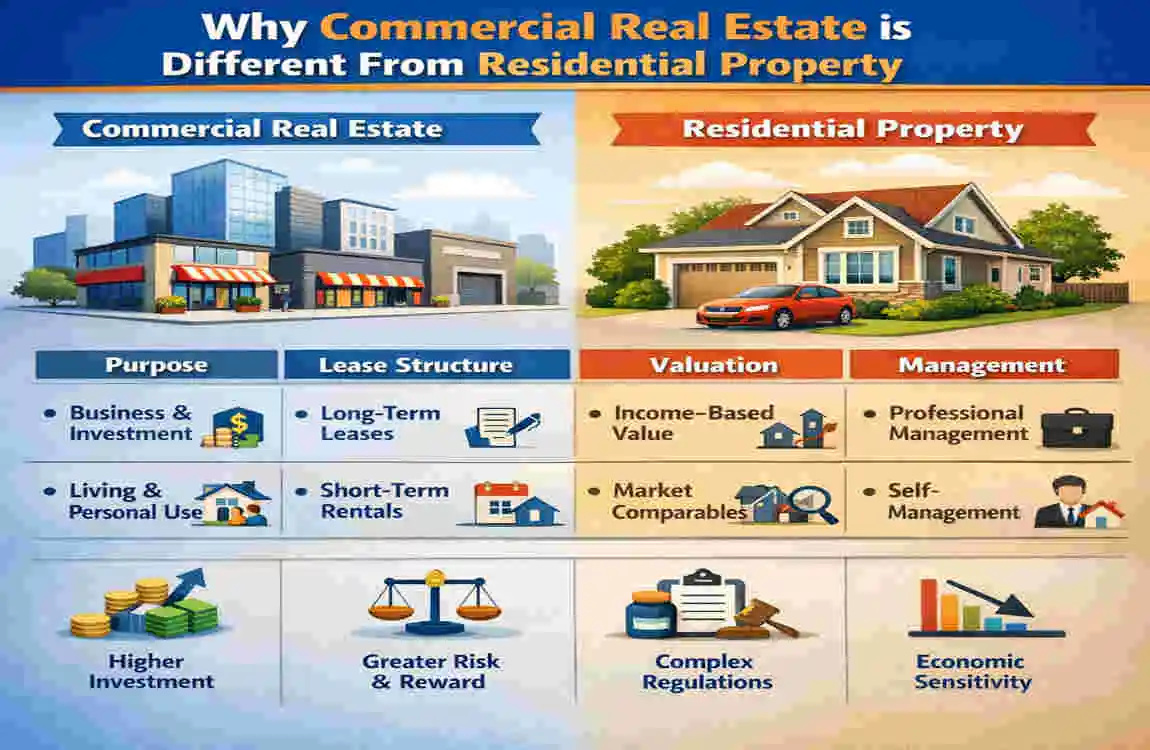
Commercial and residential real estate may look similar at first glance, but they work in very different ways. If you are trying to understand why commercial real estate behaves differently from a house or apartment you live in, the answer comes down to purpose, financing, leases, valuation, risk, and income.
Residential property is usually about living space. Commercial property is about business use and income generation. That one difference changes almost everything else.
What Is Commercial Real Estate?
Definition of Commercial Property
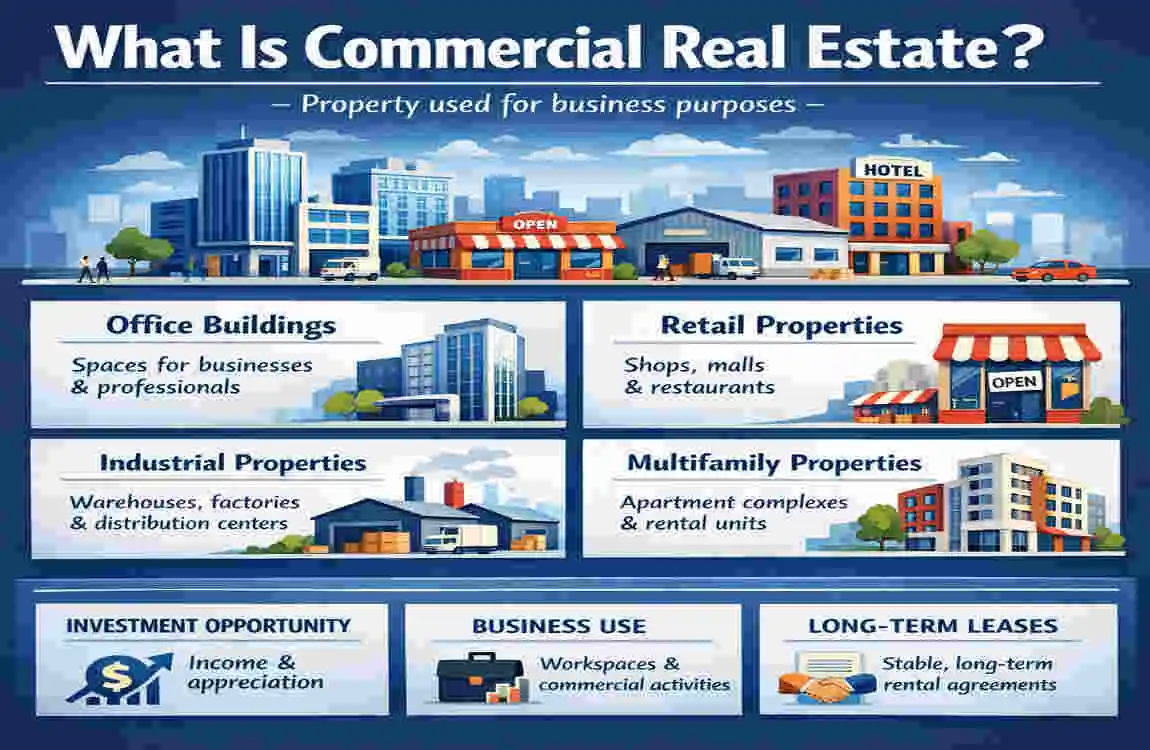
Commercial real estate is property used mainly for business activity. It is bought, sold, or leased to make money from operations, rent, or both.
Common examples include:
- Office buildings
- Retail stores
- Warehouses
- Industrial buildings
- Hotels
- Multifamily properties with several rental units
These properties are not just places to live. They are working assets. A company may lease space in an office building, or a business may use a warehouse to store products. In both cases, the property supports income-producing activity.
What Is Residential Real Estate?
Residential real estate is property used for living. It includes:
- Houses
- Apartments
- Condos
- Townhomes
The main goal of residential property is shelter and comfort. A person or family uses it as a home, even if it is also an investment property. That is a major reason why commercial vs residential real estate feels so different in practice.
Commercial vs. Residential Property at a Glance
Here is a simple comparison.
FactorCommercial PropertyResidential Property
Main purpose Business use and income Living space
Typical buyers Investors, businesses, companies Homeowners, landlords, small investors
Financing More detailed and stricter Usually simpler
Lease terms Often longer and more complex Usually shorter and simpler
Property valuation Income-based Comparable sales-based
Risk level Often higher and more market-driven Often easier to predict
Income potential Can be higher Usually more stable but smaller per unit
This table gives you the big picture. But the real differences go deeper.
Why Commercial Real Estate Works Differently
The Main Purpose Is Business Income
The biggest reason why commercial real estate works differently is simple: it is usually tied to business income.
A store, office, or warehouse is not just a building. It is part of a business model. The owner may earn income from rent, or use the building directly to run a company.
That changes how buyers think. In residential real estate, people often focus on comfort, location, school districts, and resale value. In commercial real estate, people often focus on:
- Rental income
- Operating income
- Tenant quality
- Business demand
- Long-term return
A commercial property may be a strong investment even if it does not look “pretty,” as long as it produces reliable income.
Commercial Leases Are Usually More Complex
Commercial leases are usually more detailed than residential leases. That is because businesses often negotiate terms based on how they use the space.
A residential lease is often short and fairly simple. A commercial lease may include:
- Longer lease periods
- Scheduled rent increases
- Maintenance responsibilities
- Operating expense sharing
- Use restrictions
- Renewal options
You may also hear terms like:
- Gross lease – the landlord covers many or most expenses
- Net lease – the tenant pays part of the expenses
- Triple-net lease – the tenant pays rent plus taxes, insurance, and maintenance in many cases
These lease types matter because they change how much cash the owner actually keeps. That is a huge part of how commercial property works.
Location and Business Activity Matter More
Location matters in residential real estate too. But in commercial property, location often directly affects customer traffic and business success.
A retail store near heavy foot traffic may do much better than one on a quiet street. A warehouse near highways or shipping routes may be worth more because it supports logistics. An office building near transit and business centers may attract better tenants.
Commercial value can depend on:
- Visibility
- Accessibility
- Parking
- Nearby businesses
- Customer demand
- Traffic flow
- Zoning rules
So when people ask how commercial real estate works, location is always part of the answer.
Key Financial Differences Between Commercial and Residential Real Estate
Commercial Property Financing
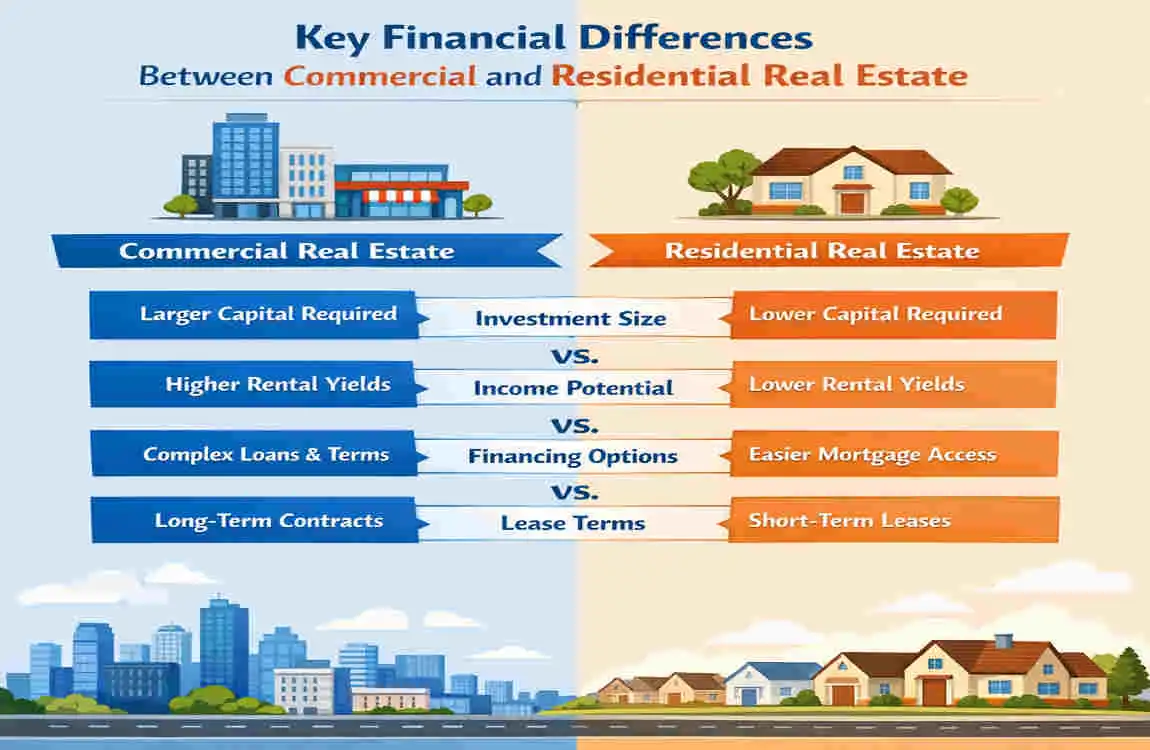
Commercial loans are often more complex than home loans. Lenders usually look at both the property and the borrower in greater detail.
They may review:
- Business income
- Rental income
- Credit history
- Debt levels
- Experience with property management
- Property cash flow
Commercial financing often comes with:
- Larger down payments
- Higher interest rates
- Shorter loan terms
- More detailed approval process
This is one reason commercial real estate can feel harder to enter. The numbers matter, and lenders want more proof that the property can support itself.
How Commercial Properties Are Valued
Residential homes are often valued by comparing nearby home sales. Commercial properties are usually valued more by income.
Two terms are especially important:
Net Operating Income
Net Operating Income (NOI) is the income left after operating expenses are subtracted from revenue. It helps show how much money the property really produces.
If a property brings in strong rent but also has high expenses, the NOI may be lower than expected.
Capitalization Rate
The cap rate is a simple way to compare income to price. Investors use it to estimate return.
In simple terms, the cap rate helps answer this question:
“If I buy this property, how much income is it producing compared with its cost?”
That is very different from residential pricing, which usually focuses more on comparable sales and local home values.
Operating Costs and Maintenance
Commercial properties often have more moving parts. That means more expenses to track.
Common costs include:
- Property taxes
- Insurance
- Repairs
- Utilities
- Property management
- Common-area maintenance
In some commercial setups, tenants pay some of these costs. In others, the owner pays more. Either way, you need to understand the full cost picture before buying.
This is another major reason commercial real estate investment requires careful planning.
Risks and Rewards of Commercial Real Estate
Potential Benefits
Commercial property can offer strong rewards if it is managed well.
Some possible benefits include:
- Rental income
- Longer lease terms
- Property appreciation
- Multiple tenants
- Room to improve value
A strong tenant on a long lease can create steady cash flow. In some cases, commercial property can also rise in value if the area grows or the building is improved.
That is why many investors are drawn to it.
Common Risks
Commercial property can also carry more risk than many residential investments.
Common risks include:
- Vacant units
- Tenant turnover
- Economic downturns
- Higher repair costs
- Loan pressure
- Changes in local business demand
A vacant commercial space can stay empty longer than a home rental, especially if the market is weak or the property is specialized. A storefront, office, or warehouse may need the right type of tenant, not just any tenant.
That means the risks of investing in commercial property can be more serious if you do not plan carefully.
Why Due Diligence Is Important
Before buying, you need to do your homework. This is called due diligence, and it matters a lot in commercial deals.
You should review:
- Lease agreements
- Tenant payment history
- Financial statements
- Property condition
- Zoning rules
- Location demand
- Existing debt
- Operating expenses
You should also inspect the building carefully. Small problems can become expensive very quickly in commercial properties.
Commercial Real Estate vs. Residential Property: Which Is Right for You?
When Residential Property May Be Better
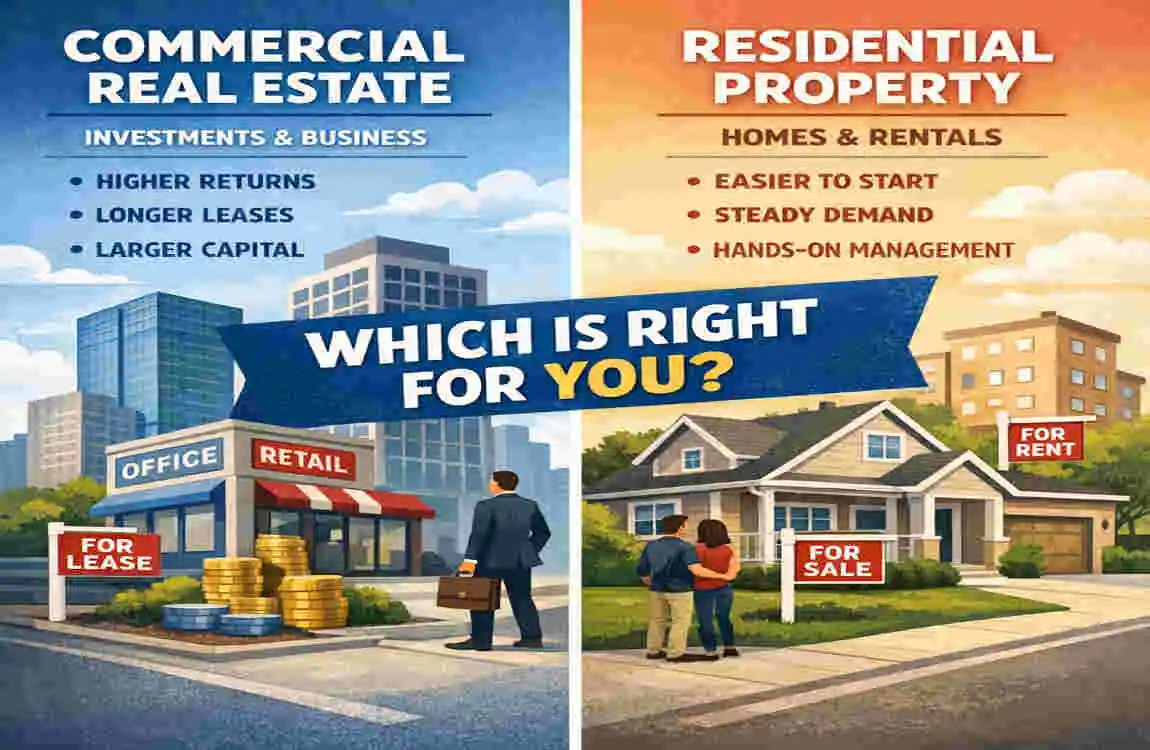
Residential property may be the better choice if you want something easier to understand and manage.
It may fit you better if:
- You want lower entry costs in some markets
- You prefer a simpler rental model
- You want steady housing demand
- You are new to real estate investing
Many beginners start with residential property because it feels more familiar. People understand housing needs more easily than business leases.
When Commercial Real Estate May Be Better
Commercial real estate may be a better fit if you want a more business-focused investment.
It may suit you if:
- You understand tenants and leases
- You can handle larger transactions
- You want longer lease periods
- You are comfortable with more detailed financial analysis
- You want possible higher income potential
Commercial property can be a strong choice for investors who think like business owners. But it demands more planning.
FAQ About Why Commercial Real Estate Is Different
Why is commercial real estate different from residential property?
Commercial real estate is different because it is built around business use and income, while residential property is built around living space. That changes financing, leases, valuation, management, and risk.
Is commercial real estate more profitable than residential real estate?
It can be, but not always. Profit depends on the property, location, tenants, financing, and property management. Some commercial deals produce excellent returns, while others do not.
Is commercial real estate harder to finance?
Yes, often it is. Lenders usually ask for more financial detail, larger down payments, and stronger proof that the property can generate income.
Are commercial leases longer than residential leases?
Usually, yes. Commercial leases often run longer because businesses want stability, and landlords want reliable occupancy.
How is commercial real estate valued?
Commercial real estate is often valued using NOI, cap rates, and income potential. Comparable properties can also matter, but income usually plays a much bigger role than in residential pricing.
What are the biggest risks of commercial real estate?
The biggest risks include vacancies, tenant issues, economic shifts, rising costs, and financing pressures. Because the property is tied to business demand, it can be more sensitive to market changes.
| Feature | Commercial Real Estate | Residential Property |
|---|---|---|
| Main Purpose | Used for businesses, offices, retail, or industry | Used mainly for living |
| Property Types | Offices, warehouses, shopping centers, hotels | Houses, apartments, condos |
| Investment Size | Usually requires a larger investment | Often more affordable |
| Income Source | Mainly generated through business tenants | Usually rent from residents |
| Lease Terms | Often longer and more complex | Generally shorter and simpler |
| Risk Level | Can have higher business and market risks | Usually more stable demand |
