
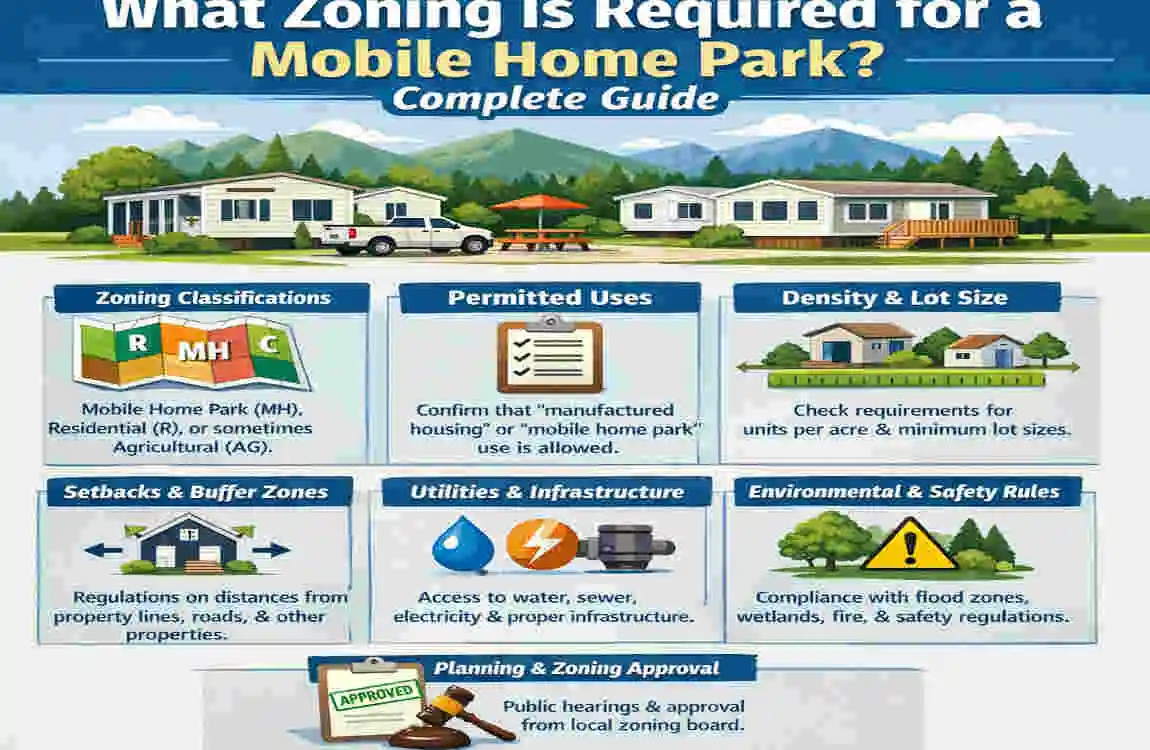
Mobile home parks are popular because they offer affordable housing and practical living options for many families. They can also be a strong real estate investment when planned properly. But before anyone buys land or starts building, one thing matters more than almost anything else: zoning.
If you are wondering what zoning is required for a mobile home park, the answer depends on the rules of your city, county, and state. In most cases, the land must be zoned for mobile home park use, manufactured housing, special use, or a similar residential category. Without the right zoning, a project can be delayed, denied, or become very expensive to fix.
What Is Zoning for a Mobile Home Park?
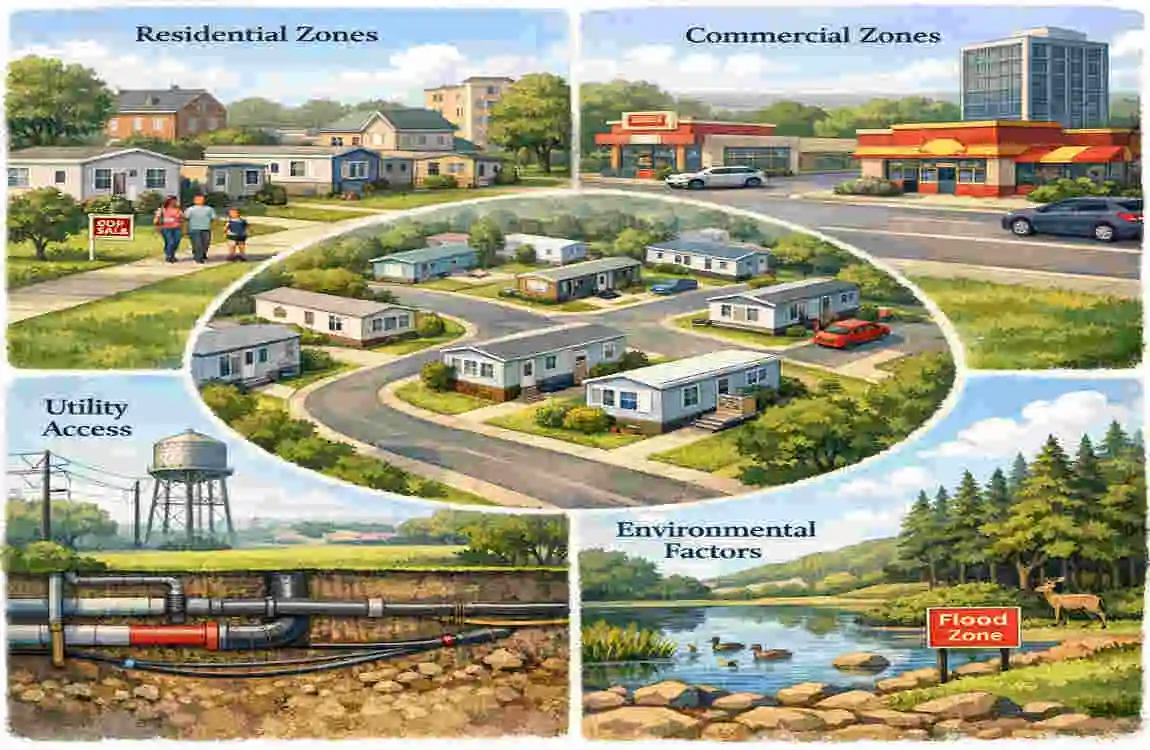
Understanding Zoning Regulations
Zoning is a set of local land rules that tells people how property can be used. Local governments use zoning to organize land, control development, and protect neighborhoods.
For example, some land may be set aside for homes, some for stores, some for farms, and some for mixed use. A mobile home park must fit into one of the allowed categories before it can be built.
Zoning helps manage traffic, noise, safety, density, and utility needs. It also helps the city or county make sure new developments match the area around them.
Why Mobile Home Parks Need Specific Zoning Approval
Mobile home parks are often treated differently from standard single-family homes. That is because they usually involve multiple homes on one parcel of land, along with roads, parking, water, sewer, and shared spaces.
Local officials often look closely at:
- Density
- Infrastructure
- Fire access
- Lot spacing
- Community impact
If you are planning a park, always check the zoning before buying land. That one step can save you from major problems later.
What Zoning Is Required for a Mobile Home Park?
Common Zoning Categories for Mobile Home Parks
The exact zoning name changes by location, but these are the most common types:
Zoning Type Description
Mobile Home Park (MHP) Zoning Specifically designed for manufactured housing communities
Residential Multifamily Zoning May allow multiple housing units
Mixed-Use Zoning Allows residential and commercial combinations
Special Use Zoning Requires additional approval
Planned Development Zoning Flexible zoning for larger projects
In many areas, mobile home park zoning requirements are outlined in a manufactured housing or special residential section. If the land is not already zoned for this use, a rezoning or conditional use permit may be needed.
Mobile Home Park Zoning Requirements by Location
There is no single national rule. The answer to what zoning is required for a mobile home park depends on local zoning maps, planning boards, and land use codes.
Some areas are more flexible. Others are strict. A county may allow mobile homes in one district but not another. A city may require a special permit even if the land is already residential.
That is why developers must check city rules, county rules, state laws, and development plans before moving forward.
Factors That Determine Mobile Home Park Zoning Approval
Land Use Compatibility
Officials want to know whether the park fits the surrounding area. If nearby land is mostly homes, a mobile home park may be easier to approve. If the area is commercial or agricultural, approval may be harder.
They also look at nearby schools, roads, and neighborhood character. A project that matches the area is usually more likely to be approved.
Property Size Requirements
A mobile home park needs enough land for more than just homes. You also need room for:
- Roads
- Parking
- Utility lines
- Drainage
- Recreation or open space
Many areas have minimum acreage rules. A small site may not work if it cannot fit the layout safely and legally.
Density Requirements
Density refers to how many homes can fit on a given amount of land. Local governments use density rules to avoid overcrowding.
They may also require space between homes, open areas, and buffer zones. These rules help keep the park safer and more comfortable.
Important Requirements Before Building a Mobile Home Park
Site Plan Approval
A site plan is a drawing that shows how the park will be built. It usually includes lot placement, roads, utilities, drainage, and shared spaces.
This is one of the most important parts of the approval process. A weak site plan can delay the project or result in denial.
Utility and Infrastructure Requirements
Mobile home parks need proper infrastructure. That means:
- Water supply
- Sewer or septic systems
- Electric service
- Stormwater drainage
- Waste collection
If the land does not have access to these services, the project may become much more expensive.
Road and Parking Regulations
Local rules often require roads wide enough for cars, delivery trucks, and emergency vehicles. Parking spaces may also be required for each home or lot.
These details matter because they affect safety, traffic flow, and daily use.
How to Check Zoning Requirements for a Mobile Home Park
Contact the Local Zoning Department
Start with the local planning or zoning office. Ask for the zoning map and the land use rules for the property you are considering.
You can usually learn:
- What the current zoning is
- What uses are allowed
- Whether a special permit is needed
- What setbacks or height rules apply
Review Local Zoning Ordinances
Zoning ordinances tell you the details. Look for rules about permitted uses, building codes, setbacks, lot size, and parking.
This step is important because the zoning name alone does not tell the full story. Two properties may both be “residential,” but only one may allow a mobile home park.
Consult a Land Use Professional
A zoning consultant, real estate attorney, civil engineer, or developer can help you understand the approval path.
This is especially useful if you are dealing with rezoning, public hearings, or environmental issues.
Permits Needed for a Mobile Home Park
Common Permits Required
Most parks need several approvals, such as:
- Zoning approval
- Land-use permit
- Building permits
- Environmental permits
- Utility permits
- Health department approval
Special Permits and Variances
Sometimes the land does not fully meet the local rules. In that case, you may need a conditional use permit, a zoning variance, or an appeal.
These extra steps can take time, but they may make the project possible if the land is otherwise suitable.
Mobile Home Park Development Rules and Regulations
Setback Requirements
Setbacks are the required distances between buildings and property lines. They also control the space between homes.
These rules help with privacy, safety, fire access, and general layout.
Landscaping and Community Requirements
Some areas require green space, trees, fences, or buffer zones. These rules help the park blend into the surrounding area and improve appearance.
Safety Regulations
Safety rules may include fire protection, emergency access, flood protection, and accessibility standards.
These are not just paper rules. They help protect residents and reduce risk.
Can You Build a Mobile Home Park on Residential Land?
When Residential Zoning Allows Mobile Homes
In some places, yes. Some residential zones allow manufactured homes or mobile home communities.
But you should never assume. Always check the exact local rule before buying land.
Changing Zoning for a Mobile Home Park
If the land is not zoned correctly, you may need rezoning. That process can include hearings, public notices, and approval by local officials.
It can take weeks or months, so plan.
Common Zoning Challenges for Mobile Home Park Developers
Zoning Restrictions
Some areas do not allow mobile home parks. This is one of the biggest challenges developers face.
Environmental Issues
Wetlands, flood zones, and poor soil can all make development harder or more expensive.
Neighbor Concerns
Nearby residents may worry about traffic, noise, or property values. Public comments can affect the approval process.
Steps to Get Approval for a Mobile Home Park
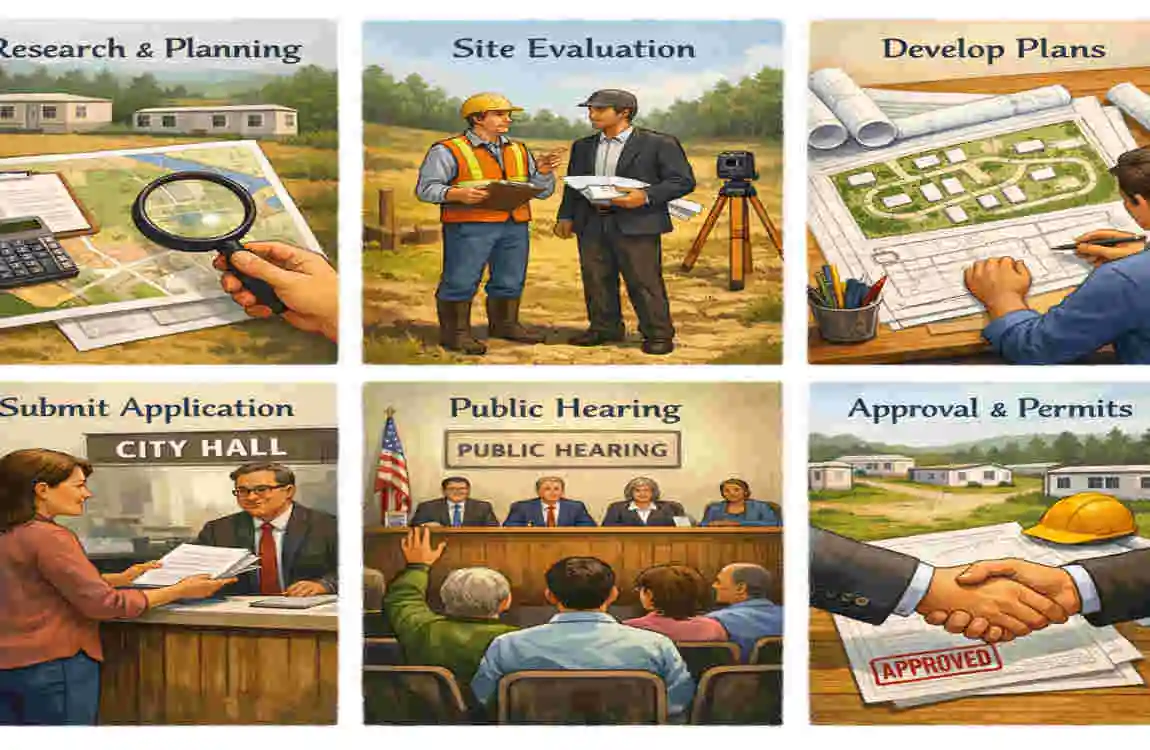
- Research local zoning laws
- Buy land only after confirming allowed use
- Create a development plan
- Apply for all required permits
- Complete inspections before opening
Taking these steps in order helps you avoid costly mistakes.
How Much Land Is Needed for a Mobile Home Park?
The land needed depends on the size of the park and local spacing rules.
Park Size Approximate Land Needed
Small Community 5–10 acres
Medium Park 10–50 acres
Large Community 50+ acres
You will need extra space for roads, utilities, parking, and open areas, not just the home lots themselves.
Benefits of Proper Mobile Home Park Zoning
Easier Development Approval
Good zoning reduces legal problems and makes the project easier to move through the approval process.
Better Investment Protection
When land is zoned correctly, you lower the risk of delay, denial, or expensive redesigns.
Improved Community Planning
Proper zoning helps create safer, cleaner, and more organized living spaces for residents.
Common Mistakes to Avoid When Developing a Mobile Home Park
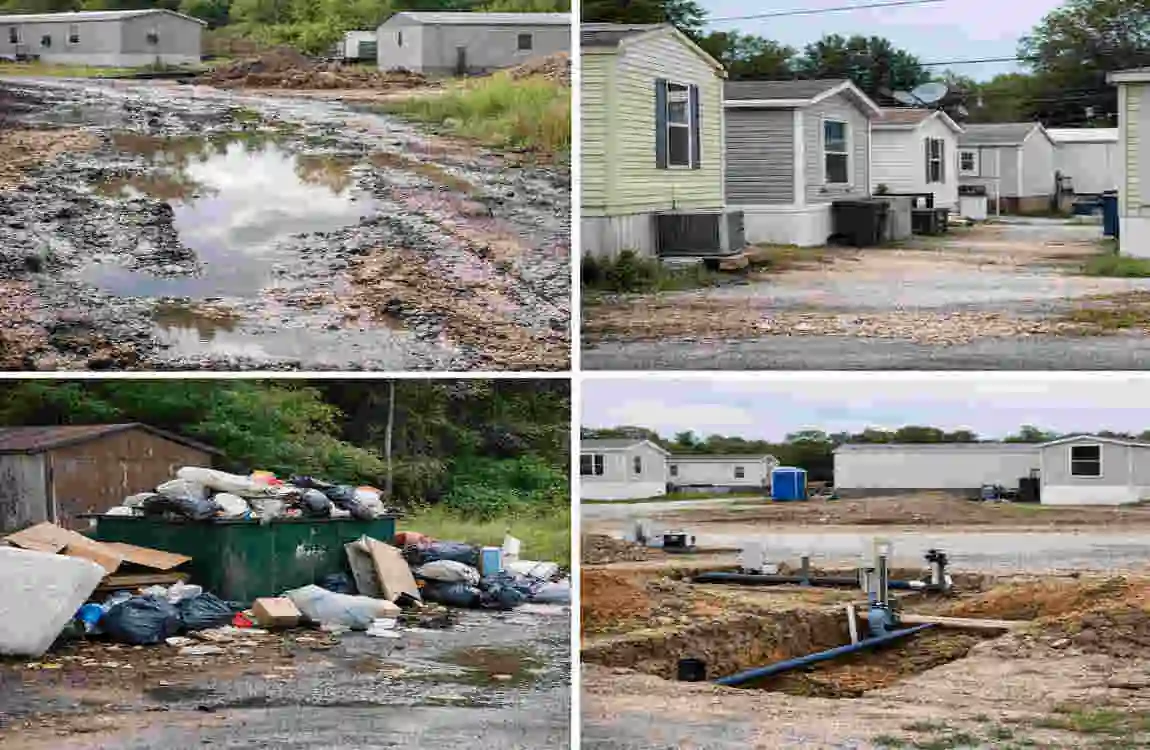
- Buying land without checking zoning
- Ignoring infrastructure costs
- Not reviewing local regulations
- Skipping professional advice
- Underestimating permit timelines
These mistakes can slow down the project or stop it completely.
Frequently Asked Questions
Q: What zoning is required for a mobile home park?
Most mobile home parks require specific manufactured housing, residential, special-use, or planned development zoning depending on local rules.
Q: Can I build a mobile home park on agricultural land?
It depends on local zoning laws. Some areas may require rezoning or special approval.
Q: How many acres do you need for a mobile home park?
It varies, but many parks need several acres for homes, roads, utilities, and shared spaces.
Q: Do mobile home parks need building permits?
Yes. Most locations require permits for site work, utilities, and home installation.
Q: How long does mobile home park zoning approval take?
It can take several weeks to many months, depending on the location and approval process.
| Zoning Requirement | Details |
|---|---|
| Residential Mobile Home Zoning | Most areas require a specific mobile home park (MHP) or manufactured housing zoning district that allows multiple manufactured homes on one property. |
| Land Use Approval | The property must be approved for multi-family residential or manufactured home community use before development begins. |
| Minimum Lot Size | Local zoning rules may set minimum acreage requirements to ensure enough space for homes, roads, parking, and shared facilities. |
| Setback Requirements | Homes, roads, and buildings usually must maintain required distances from property lines, streets, and neighboring properties. |
| Density Rules | Zoning may limit how many mobile homes can be placed per acre to control spacing and community layout. |
