

Choosing between a first home and an investment property is a big decision. For many buyers, this is the first major money choice they will make, and it can shape their future for years.
A first home gives you a place to live, build stability, and create personal comfort. An investment property, on the other hand, focuses more on income, growth, and long-term wealth. Both can be smart moves, but they serve very different goals.
Understanding the Difference Between a First Home and an Investment Property

What Is a First Home?
A first home is the property you buy to live in yourself. It becomes your main residence, so it is about comfort, stability, and everyday life.
For many people, a first home is where they build routines, family memories, and personal security. It also gives you more freedom to decorate, improve, and settle in over time.
What Is an Investment Property?
An investment property is a home you buy to earn money, usually through rent or future resale value. You may not live in it yourself, and your goal is more financial than personal.
This kind of property can create rental income and may grow in value over time. But it also comes with more responsibility, more risk, and often stricter lending rules.
Key Differences at a Glance
FeatureFirst HomeInvestment Property
Purpose Personal living Rental income
Financing Easier approval Stricter lending
Tax Benefits Limited More deductions
Emotional Value High Low
Income Potential No Yes
This table gives a quick view of how different these two choices really are.
Should I Buy an Investment Property or First Home?
Questions to Ask Yourself
Before you decide, pause and ask a few honest questions:
- What are my financial goals?
- Do I plan to stay in one place for several years?
- Can I handle rental management?
- Do I have emergency savings?
Your answers will point you in the right direction.
Who Should Buy a First Home?
A first home often makes sense for people who want stable housing and plan to stay put for a while. It is a strong choice for families, steady employees, and buyers who value comfort over cash flow.
If you want a place to call your own, a first home may be the better fit.
Who Should Buy an Investment Property?
An investment property may suit people who already have stronger finances and want to build income. It can be a good choice for investors, high-income earners, or buyers focused on long-term wealth.
If you are ready to deal with tenants, repairs, and market risk, this path may work well for you.
Pros of Buying Your First Home
Building Equity
When you pay down your mortgage, you slowly build equity. That means you own more of the home over time.
This can become a major financial asset later.
Stable Monthly Housing Costs
With a fixed-rate mortgage, your payment stays more predictable than rent. That can make budgeting easier.
Freedom to Customise
You can paint, remodel, decorate, and improve the home the way you want. That freedom is one of the biggest joys of owning your own place.
Emotional Security
A home of your own can feel safe and grounding. That emotional value matters more than many people realise.
Government Assistance Programs
Some first-time buyers may qualify for help with down payments or special mortgage options. That can make the first-home path more reachable.
Advantages of Buying an Investment Property First
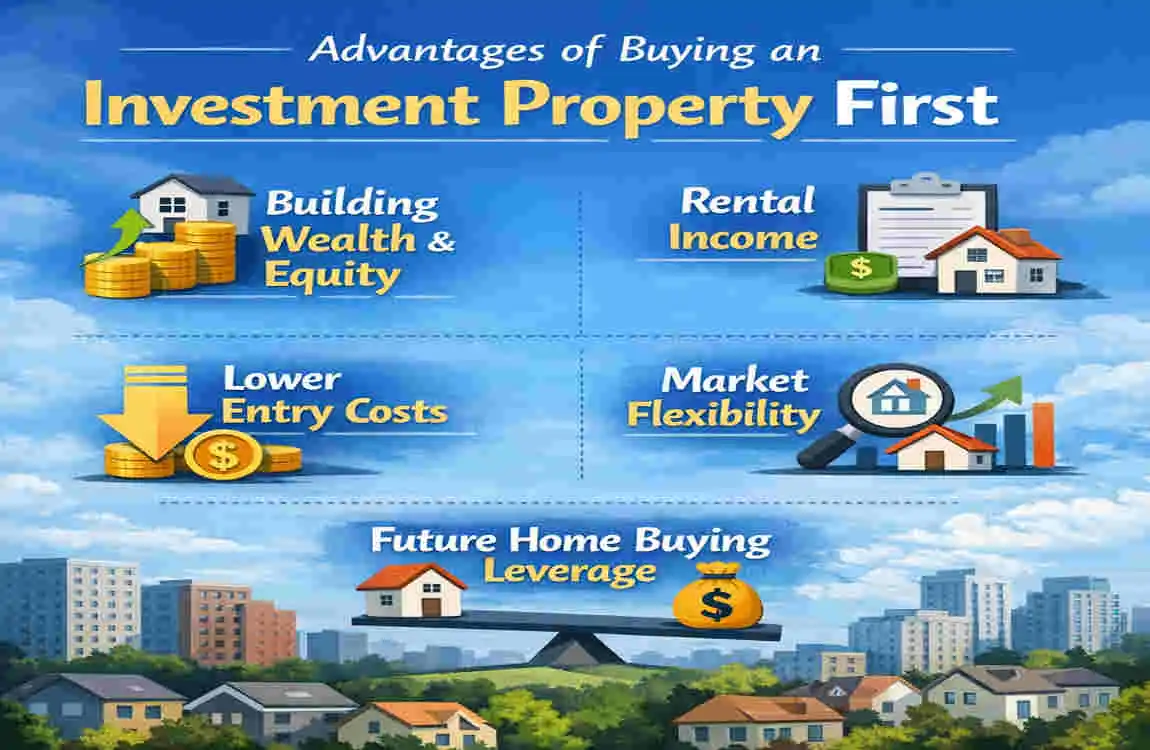
Rental Income
Rent can help cover the mortgage and other costs. In some cases, it may even create positive cash flow.
Long-Term Wealth Building
Real estate can grow in value over time. If the property performs well, it may become a strong long-term asset.
Property Appreciation
If the market rises, your property may increase in value. That can lead to profit when you sell later.
Tax Advantages
Investment properties often come with more possible deductions than a primary home. These may include certain operating costs and depreciation.
Portfolio Diversification
Owning an investment property gives you another type of asset. That can help reduce your dependence on one income source.
Potential Risks of Each Option
Risks of Buying a First Home
A first home can still bring costs and stress. Repairs, taxes, and market changes can affect your budget.
You may also feel less flexible if your job or life situation changes.
Risks of Investment Property
An investment property comes with more moving parts. You may face vacant months, problem tenants, repair bills, and management stress.
It also usually requires a bigger down payment and stronger credit.
Financing Differences You Should Know
Mortgage Requirements
First homes usually have easier lending rules. Investment properties often need stronger income proof and a better financial profile.
Down Payment Comparison
A first home may need a lower down payment. An investment property often requires more money upfront.
Interest Rates
Lenders often view investment properties as riskier. Because of that, the rate may be higher than a mortgage for a primary home.
Credit Score Expectations
A stronger credit score helps in both cases, but it matters even more for investment property approval.
Cost Comparison
Upfront Costs
No matter which one you choose, buying property involves several starting costs:
- Down payment
- Closing costs
- Inspection
- Insurance
Ongoing Costs
Owning a property means more than just the mortgage. You may also pay for:
- Property taxes
- Repairs
- HOA fees
- Maintenance
- Utilities, depending on the property
An investment property can bring income, but it can also bring more expenses.
Which Option Builds Wealth Faster?
Equity Growth
A first home builds equity slowly and steadily. That can still be powerful over time.
Rental Income
An investment property can create cash flow, which may speed up wealth building if managed well.
Appreciation Potential
Both types of property may rise in value, but investment property has the added benefit of income.
Long-Term Returns
If your goal is pure investing, an investment property may offer stronger returns. If your goal is safety and stability, a first home may be the smarter move.
Lifestyle Considerations
Family Plans
If you plan to start or grow a family, stability may matter more than income potential.
Job Stability
A steady job makes it easier to handle mortgage payments and other housing costs.
Relocation Possibilities
If you may move soon for work or personal reasons, buying a first home may be risky. In that case, an investment property or renting might make more sense.
Time Commitment
Investment properties need more time and attention. If you do not want to manage tenants or repairs, a first home may be simpler.
Common Mistakes First-Time Buyers Make
Some buyers rush in without thinking long term. That can lead to trouble later.
Common mistakes include:
- Buying beyond budget
- Ignoring maintenance costs
- Underestimating rental responsibilities
- Skipping inspections
- Not researching the local market
A careful plan can save you from expensive problems.
Expert Tips Before Making Your Decision
Here are a few smart steps to take before you buy:
- Build an emergency fund
- Improve your credit score
- Compare mortgage offers
- Calculate total ownership costs
- Think long-term
- Speak with financial professionals
These simple steps can make your choice much safer and clearer.
First Home vs Investment Property Comparison

FactorFirst HomeInvestment Property
Monthly Cash Flow Expense Income Potential
Emotional Value High Low
Maintenance Personal Tenant-related
Tax Benefits Moderate Higher
Financing Easier More Difficult
Risk Level Moderate Higher
Wealth Potential Good Excellent (Long-Term)
This table shows the tradeoff clearly. A first home offers comfort. An investment property offers more financial upside, but also more risk.
Frequently Asked Questions
Should I buy an investment property or first home first?
If you need a place to live and want stability, a first home is often the better first step.
Is buying an investment property more profitable than buying a home?
It can be, but only if the rental income and property value growth outweigh the costs and risks.
Can I live in my investment property later?
Yes, many owners do this later if their plans change.
Is it harder to get a mortgage for an investment property?
Yes, lenders usually apply stricter rules for investment property loans.
What credit score is recommended for an investment property?
A higher credit score is always better, but exact requirements vary by lender.
Which option has better tax benefits?
Investment properties usually offer more tax advantages than first homes.
| Feature | First Home | Investment Property |
|---|---|---|
| Main Purpose | Personal residence | Generate rental income and long-term returns |
| Financing | May qualify for first-time buyer benefits | Often requires a larger down payment and stricter lending criteria |
| Location Priority | Near work, schools, and amenities | Areas with strong rental demand and growth potential |
| Monthly Costs | Mortgage, utilities, maintenance | Mortgage, maintenance, insurance, taxes, and vacancy costs |
| Income Potential | No direct income | Rental income can help cover expenses |
| Tax Benefits | Limited, depending on local laws | Potential deductions for mortgage interest, repairs, and depreciation (varies by country) |
| Risk Level | Lower financial risk for most buyers | Higher risk due to market fluctuations and tenant management |
| Best For | First-time buyers seeking stability | Buyers focused on building wealth and passive income |
| Long-Term Goal | Homeownership and lifestyle | Investment growth and portfolio expansion |
