

If your roof gets damaged, it can be stressful very quickly. You may need to act fast, decide whether to file a claim, and figure out what the repair will cost. One of the biggest questions homeowners ask is whether home insurance goes up after a roof claim.
The short answer is sometimes yes. A roof claim can raise your premium, but not always. It depends on the type of damage, how big the claim is, your past claim history, and your insurance company’s rules.
In some cases, especially after major storms, your rate may stay the same or rise only a little. In other cases, a claim can lead to a clear increase. Let’s break it down in simple terms so you can make the best decision for your home and budget.
Understanding Roof Insurance Claims

What Is a Roof Insurance Claim?
A roof insurance claim is a request you make to your insurance company when your roof is damaged, and you believe your policy covers the damage.
People usually file these claims after events like:
- A strong storm
- Hail damage
- Wind damage
- A fallen tree
- Fire damage
You report the damage, an adjuster checks the roof, and the insurer decides whether to pay for repair or replacement.
What Types of Roof Damage Are Usually Covered?
Most homeowners insurance policies cover sudden and accidental damage. That means the damage happened unexpectedly, not because the roof slowly wore out over time.
Common covered causes include:
- Storm damage
- Hail
- Wind
- Fallen trees or branches
- Fire
If a storm tears off shingles or a tree crashes through the roof, your policy may help pay for the damage.
What Roof Damage Is Usually Not Covered?
Insurance usually does not cover damage caused by neglect or normal aging.
That includes:
- Wear and tear
- Lack of maintenance
- Poor installation
- Old age
- Slow leaks that were ignored
For example, if your roof has been failing for years and you never repaired it, insurance may deny the claim. That is why maintenance matters so much.
Does Home Insurance Go Up After a Roof Claim?
The Short Answer
Yes, home insurance can go up after a roof claim, but it does not happen in every situation.
Some claims lead to a rate increase because the insurer sees your home as a bigger risk. Other claims may have little effect, especially if the damage came from a major weather event that affected many homes in your area.
Factors That Affect Premium Increases
Several things can influence whether your premium rises after a claim:
- Claim amount: Bigger claims often create a larger impact.
- Claim history: If you have filed claims before, the insurer may see more risk.
- Cause of damage: Weather-related claims may be treated differently from other claims.
- Insurance company policies: Each company handles claims differently.
- Location and weather risks: If you live in a storm-prone area, rates may already be higher.
So the answer is not the same for every homeowner. Your personal situation matters a lot.
How Much Can Premiums Increase?
There is no single fixed amount. Some homeowners may see a small increase, while others may see a larger jump after a serious claim.
A few things affect the size of the increase:
- The size of the roof repair or replacement
- Whether the claim was your first one
- How many claims you have filed in recent years
- Whether your area has frequent storms or hail
This is why two neighbors can file similar claims and still see different results.
When a Roof Claim May Not Increase Your Premium
Severe Weather Claims
If a big storm hits your neighborhood, your claim may not affect your premium as much. That is because the damage is seen as a community-wide event, not a personal risk problem.
For example, if many homes in your city suffer hail damage, insurers may spread the risk across a large group. In that case, your rate may stay stable or rise only slightly.
First-Time Claims
If this is your first claim, your insurer may be more forgiving. A single claim does not always mean trouble, especially if you have a long record of responsible homeownership.
A clean claim history can work in your favor.
Claim-Free Discounts
Some insurance companies reward homeowners who go many years without filing claims. These are often called claim-free discounts.
If you file a claim, you may lose that discount. That does not always mean your full rate increases significantly, but it can still affect what you pay.
Factors Insurance Companies Consider
Age of Your Roof
Older roofs are a bigger concern for insurers. If your roof is already near the end of its life, the company may believe more problems are likely in the future.
A newer roof usually gives insurers more confidence.
Roof Material
The material on your roof matters too.
Some roofing types hold up better against weather damage than others. For example, impact-resistant shingles may help lower risk, while older or weaker materials may raise concern.
Previous Claims
If you have filed several claims before, your insurer may see your home as more likely to need future payouts.
That does not always mean a huge increase, but it can make a difference.
Home Location
Where you live plays a big role. Homes in areas with:
- Frequent hail
- High winds
- Hurricanes
- Heavy snow
- Wildfire risk
may already cost more to insure. A roof claim in one of these areas may have a bigger effect.
Replacement Cost
If your roof is expensive to repair or replace, the insurer may treat the claim more seriously. A larger payout often entails greater risk for the company.
Roof Repair vs. Roof Replacement
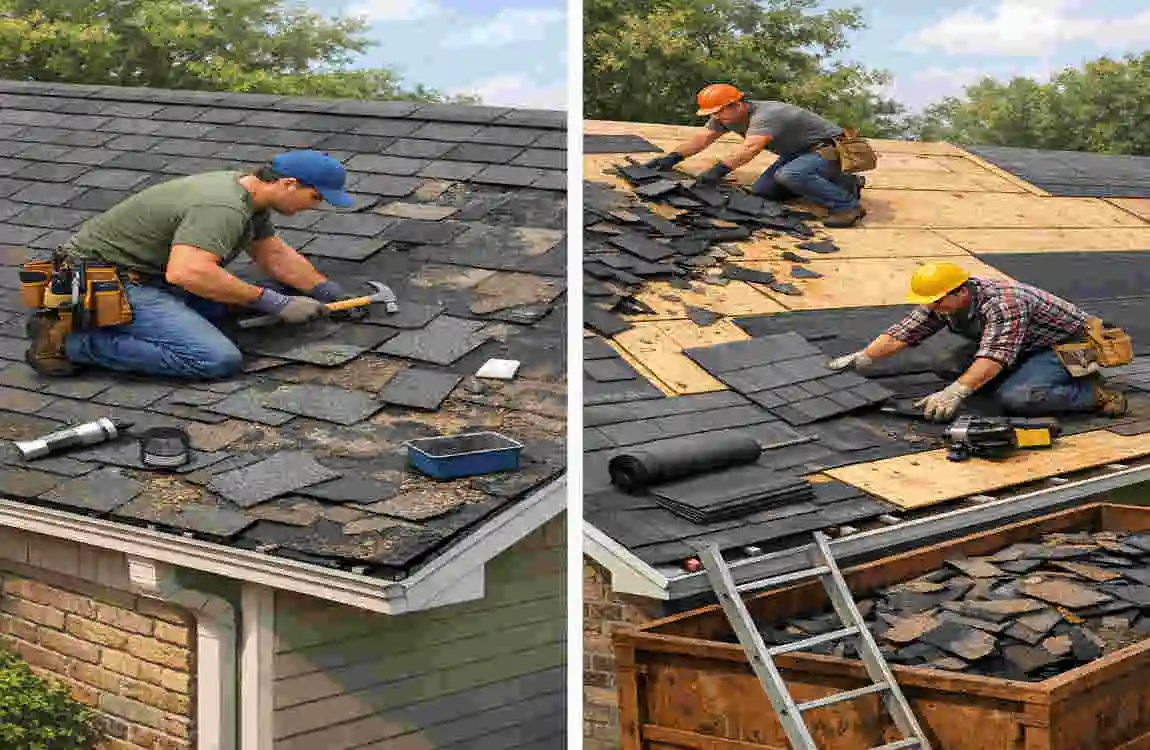
When Repair Is Enough
Sometimes the damage is small and only a section of the roof needs fixing. A repair may be enough if:
- Only a few shingles are missing
- The leak is limited
- The damage is local and not widespread
A smaller repair may lead to a smaller claim and possibly less impact on your premium.
When Full Replacement Is Necessary
A full replacement may be needed if:
- The roof is old
- The damage is spread across the roof
- The structure has been weakened
- The cost of repair is too close to the cost of replacement
A full replacement usually costs more, so it may have a bigger effect on insurance.
Insurance Differences
Insurance companies look at both the size of the claim and the reason for the work. A full replacement caused by a covered storm may be treated differently from a replacement caused by long-term wear.
Tips to Reduce Insurance Costs After a Roof Claim
Maintain Your Roof
Regular roof care can help lower future problems. Check for:
- Loose shingles
- Small leaks
- Damaged flashing
- Clogged gutters
A well-maintained roof gives insurers less reason to worry.
Upgrade to Impact-Resistant Roofing
If you need a new roof, consider impact-resistant materials. These are built to handle hail and harsh weather better.
That can improve your home’s protection and may even help you qualify for discounts.
Increase Your Deductible
A higher deductible can lower your monthly premium. Just make sure you can afford the out-of-pocket cost if you need to file a claim later.
Compare Insurance Quotes
Not all insurers treat roof claims the same way. If your rate rises after a claim, it may be worth comparing other providers.
Bundle Home and Auto Insurance
Many companies offer discounts when you combine policies. This can help balance out higher home insurance costs.
Avoid Filing Small Claims
If the damage is minor, it may be smarter to pay for the repair yourself. Too many small claims can make you look like a higher risk.
Mistakes to Avoid When Filing a Roof Claim
- Waiting too long to report damage
- Missing photos or documents
- Skipping temporary repairs
- Filing a claim for very small damage
- Hiring unlicensed contractors
These mistakes can slow down your claim or make the process harder than it needs to be.
Signs You Should File a Roof Claim
You should think seriously about filing a claim if you notice:
- Major storm damage
- Missing shingles
- Roof leaks
- Structural damage
- A tree hit your roof
If the damage is severe, do not wait too long. Delays can make the situation worse.
Benefits of Keeping Your Roof in Good Condition

A healthy roof helps you in more ways than one.
- Lower insurance costs
- Better home value
- Longer roof life
- Fewer repairs
- Improved safety
In simple terms, good maintenance protects both your home and your wallet.
Roof Claim Impact at a Glance
Factor Effect on Insurance Premium
Small claim Usually little impact
Large claim Higher chance of increase
Multiple claims Greater premium increase
Storm-related claim May have limited impact
Older roof Higher insurance risk
New roof May qualify for discounts
This table shows why roof claims do not always lead to the same result.
Frequently Asked Questions
Does home insurance go up after a roof claim?
Usually yes, but the increase depends on the claim, your insurer, and your history.
Will one roof claim affect my insurance?
A single claim may have little effect, especially if it is caused by weather.
How long does a roof claim stay on my insurance record?
Usually 3 to 7 years, depending on the insurer and your location.
Does homeowners insurance cover roof replacement?
Yes, if a covered event like hail, wind, or fire causes the damage.
Should I pay for minor roof repairs myself?
Many homeowners do, especially if the repair is small and not worth filing a claim.
Can a new roof lower home insurance premiums?
Yes. A new roof or impact-resistant roof may help lower your costs.
| Factor | Impact on Home Insurance Costs |
|---|---|
| Premium Increase | Filing a roof claim may lead to higher insurance premiums, especially if multiple claims are made. |
| Claim Type | Weather-related claims often have less impact than claims caused by poor maintenance or neglect. |
| Claim History | Several claims within a few years can classify you as a higher-risk homeowner. |
| Roof Age | Older roofs are more likely to increase premiums after a claim due to greater future risk. |
| Roof Replacement | Installing a new, durable roof may help lower future insurance costs or qualify for discounts. |
| Deductible | You must pay your policy deductible before insurance covers the remaining repair costs. |
| Coverage Renewal | Insurers may change your coverage terms or require roof repairs before renewing your policy. |
| Insurance Company Policies | Every insurer evaluates roof claims differently, so premium changes vary by provider. |
