
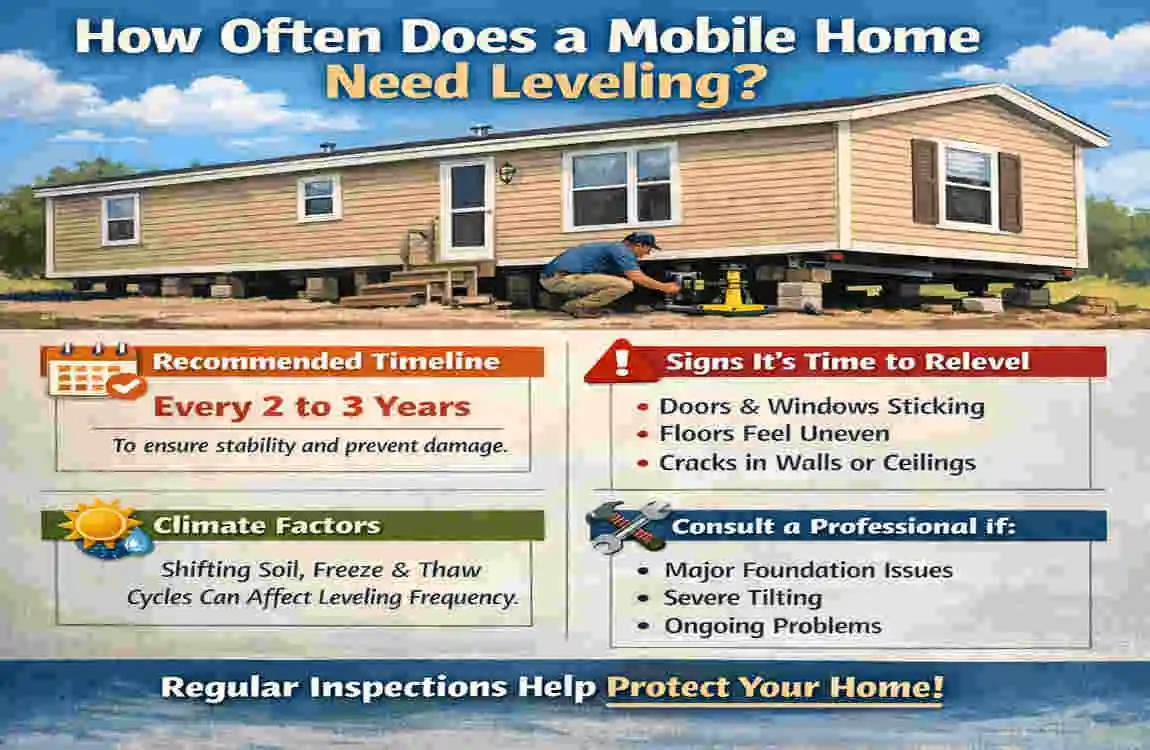
A mobile home does not stay perfectly level forever. Over time, the ground beneath it can shift, sink, or move due to weather, soil conditions, and age. That is why leveling matters so much. It helps protect your home, keeps daily life comfortable, and reduces the chance of bigger repair problems later.
If you are asking how often a mobile home should be leveled, the simple answer is this: most homes should be checked every 3 to 5 years. Some may need attention sooner if the soil moves a lot or if the home shows clear signs of settling.
What Does Leveling a Mobile Home Mean?
Understanding Mobile Home Leveling
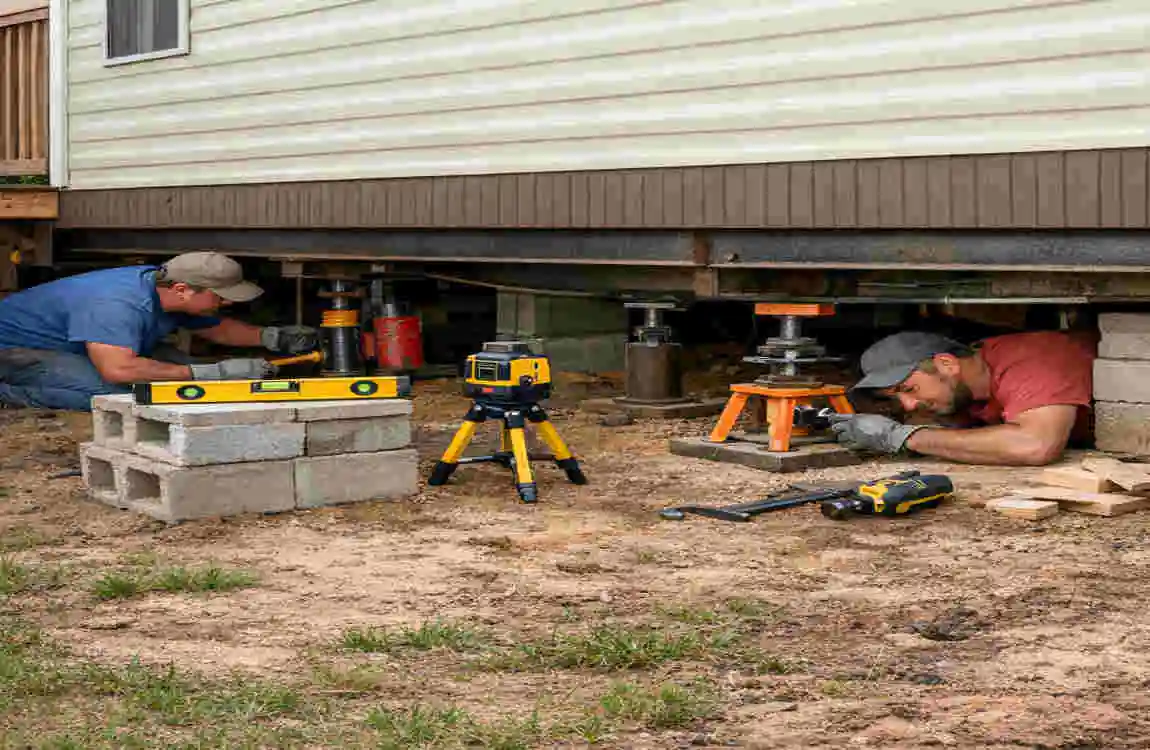
Leveling a mobile home means adjusting the home so it sits evenly on its support system. A home can shift over time, even if it looked fine when it was first installed.
A professional usually checks and adjusts the following:
- Pier and beam supports
- Shims
- Anchoring systems
- Foundation points
The goal is to bring the home back into balance so it sits correctly on its base.
Why Mobile Homes Need Leveling
Mobile homes need leveling for a few simple but important reasons.
First, it helps prevent structural damage. When one side of the home settles more than the other, stress builds up in the frame.
Second, it keeps doors and windows working properly. If the home shifts too much, the frames can become misaligned.
Third, it reduces strain on plumbing and electrical systems. Pipes and wires do not like movement.
Finally, it improves comfort. A level home feels safer, smoother, and easier to live in.
How Often Should a Mobile Home Be Leveled?
Recommended Mobile Home Leveling Schedule
Most manufactured homes should be inspected and leveled every 3 to 5 years. That is the general rule many homeowners follow.
But some homes need more frequent checks. If your area has shifting soil, heavy rain, or freezing weather, the home may settle faster. Newer homes may also need more frequent attention during the first few years after setup.
Regular inspections are important because leveling problems often start small. If you catch them early, repairs are usually easier and less expensive.
Factors That Affect How Often a Mobile Home Needs Leveling
Soil Conditions
The ground under your home has a big impact on how often it needs leveling.
Expansive clay soil expands when wet and shrinks when dry. That movement can push supports around.
Sandy or loose soil may shift more easily, which can make the home settle unevenly.
Ground settling can also occur when the soil beneath the home was not compacted well enough.
Weather and Climate
Weather plays a major role in mobile home stability.
Heavy rainfall can soften the soil and cause support points to sink.
Flooding may wash away soil and weaken the base.
Freezing temperatures can make the ground expand and contract.
Extreme heat can dry the soil and create movement as well.
Age of the Mobile Home
Older homes often need more frequent leveling because the structure and supports have been in place longer. Wear builds up over time.
New homes can also shift during the first few years. This is normal settlement, but it still needs to be watched.
Foundation Type
Different support systems settle in different ways.
A permanent foundation may stay stable longer, but it still needs checks.
A pier and beam system often requires more frequent adjustments because it relies on support points beneath the home.
Concrete supports can also shift if the ground beneath them changes.
Signs Your Mobile Home Needs Leveling
Doors and Windows Are Hard to Open
One of the easiest signs to notice is a door or window that sticks. If frames shift even a little, things stop lining up correctly.
Uneven Floors or Soft Spots
If the floor feels sloped, bouncy, or soft in certain areas, your home may be out of level. This is one of the clearest signs a mobile home needs leveling.
Cracks Appearing Inside the Home
Cracks in walls or ceilings often show that the structure is moving.
You may also notice:
- Trim pulling away
- Small gaps near corners
- Visible separation around joints
Plumbing Problems
When a home shifts, plumbing lines can move too. That can cause slow drains, leaks, or weak water pressure.
Visible Gaps Around the Home
Look for gaps between walls, ceilings, floors, or siding. These spaces can indicate that the home is no longer level.
What Happens If You Do Not Level a Mobile Home?
Increased Structural Damage
If you ignore the problem, small shifts can lead to major repairs. What starts as a minor settling issue may later affect walls, floors, and framing.
Damage to Plumbing and Electrical Systems
Pipes and wires can only handle so much movement. When the home shifts, those systems can become stressed or damaged.
Reduced Home Value
A home that looks uneven or has clear foundation issues may be harder to sell. Buyers often notice these problems quickly.
Comfort and Safety Problems
Uneven floors, misaligned doors, and visible cracks can make the home feel unsafe or uncomfortable.
How Is a Mobile Home Leveled?
Inspect the Home
A professional starts by checking the current level with proper tools. This shows where the home has shifted.
Identify Low and High Areas
The technician then finds the areas that need adjustment. Some parts may need support raised, while others may need pressure released.
Adjust Supports
This may include:
- Adding or removing shims
- Adjusting piers
- Repairing damaged supports
Recheck the Level
After the adjustments, the home is measured again to make sure it sits correctly.
How Much Does Mobile Home Leveling Cost?

Average Cost Range
The cost of leveling a mobile home varies with the home’s size and the amount of work required.
Service Average Cost
Basic leveling adjustment $500–$1,500
Extensive leveling repairs $2,000+
Foundation repairs Varies by damage
Factors That Change the Cost
Several things can raise or lower the price:
- Home size
- Amount of settling
- Accessibility
- Foundation condition
- Local labor costs
A simple adjustment costs less than major repair work. If supports are damaged, the price can rise quickly.
Can You Level a Mobile Home Yourself?
DIY Mobile Home Leveling Basics
Some small adjustments may be possible for experienced homeowners. But this is not a casual weekend project.
You need the right tools, a clear understanding of support points, and strong safety awareness. If the work is done wrong, the home can shift more.
When to Hire a Professional
It is better to call a professional if:
- the home is very uneven
- supports are damaged
- the home is older
- you suspect manufactured home foundation problems
A trained technician can do the job more safely and accurately.
How to Prevent Frequent Mobile Home Leveling Problems
Maintain Proper Drainage
Keep water away from the foundation. Clean gutters, direct runoff away from the luxury home, and make sure water does not pool underneath.
Inspect Supports Regularly
Check under the home for shifted or damaged piers. Even a small change can lead to bigger problems later.
Monitor Changes Inside the Home
Pay attention to warning signs like cracks, sloping floors, or sticky doors. These are often the first clues.
Control Moisture Around the Home
Too much water causes soil movement. Keeping the area dry helps the supports stay stable longer.
Mobile Home Leveling vs Foundation Repair: What Is the Difference?
Mobile Home Leveling
Leveling adjusts the current support system so the home sits evenly again.
Foundation Repair
Foundation repair fixes damaged or failing parts of the base itself. This is a deeper structural fix.
Knowing Which Service You Need
If the home only needs a small adjustment, leveling may be enough. If supports are broken, sinking, or severely damaged, you may need to repair them instead.
How Long Does Mobile Home Leveling Last?

Average Lifespan After Leveling
A proper leveling job can last several years, especially if the soil stays stable and drainage is good home.
Factors That Reduce Longevity
Some things can make the home go out of level again sooner:
- Soil movement
- Poor drainage
- Extreme weather
- Damaged supports
That is why regular checks are so important.
Frequently Asked Questions
Q: How often should a mobile home be leveled?
Most mobile homes should be inspected and leveled every 3 to 5 years, though some need it sooner.
Q: What are signs that my mobile home is not level?
Common signs include uneven floors, sticky doors, cracked walls, and gaps around windows or siding.
Q: How long does mobile home leveling take?
Most jobs take a few hours to a full day, depending on the size and condition of the home.
Q: Can a mobile home become unlevel again after leveling?
Yes. Soil movement, moisture, and weather changes can cause settling again.
Q: Does insurance cover mobile home leveling?
It depends on your policy and the cause of the problem.
| Factor | Recommended Leveling Frequency | Details |
|---|---|---|
| Average Mobile Home | Every 3–5 years | Most manufactured homes need routine leveling checks to keep floors, doors, and windows working properly. |
| Older Mobile Homes | Every 1–2 years | Older homes may shift faster due to aging supports and foundation issues. |
| Newly Installed Homes | After 6–12 months, then as needed | Initial settling can cause the home to become slightly uneven. |
| After Severe Weather | Check after floods, storms, or heavy rain | Soil movement and moisture changes can affect the foundation. |
| Uneven Floors or Sticking Doors | Level immediately | These are common signs that the home may have shifted. |
| Soft or Unstable Soil Areas | More frequent inspections | Expanding, shrinking, or wet soil can increase leveling needs. |
| Regular Maintenance Check | Inspect yearly | Annual checks help catch small problems before major repairs are needed. |
