
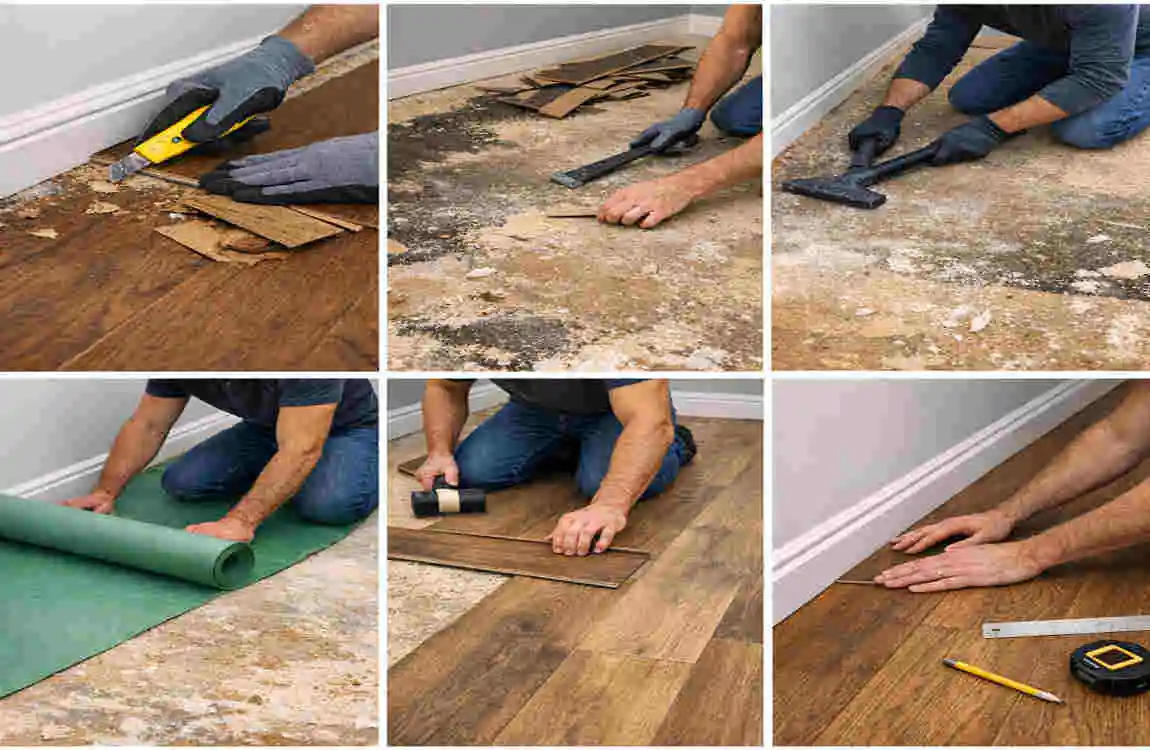
Old laminate flooring can start looking tired after years of use. Scratches, stains, water damage, loose boards, and outdated colors are common reasons homeowners want a change. If you are thinking about what to do with old laminate flooring and converting to new flooring, the good news is that the process is very doable with the right plan.
Replacing laminate is not just about pulling up the old boards and installing new ones. Subfloor preparation matters a lot. If the surface underneath is damaged, uneven, or damp, your new floor may not last as long as it should.
What to Do With Old Laminate Flooring and Convert New Flooring
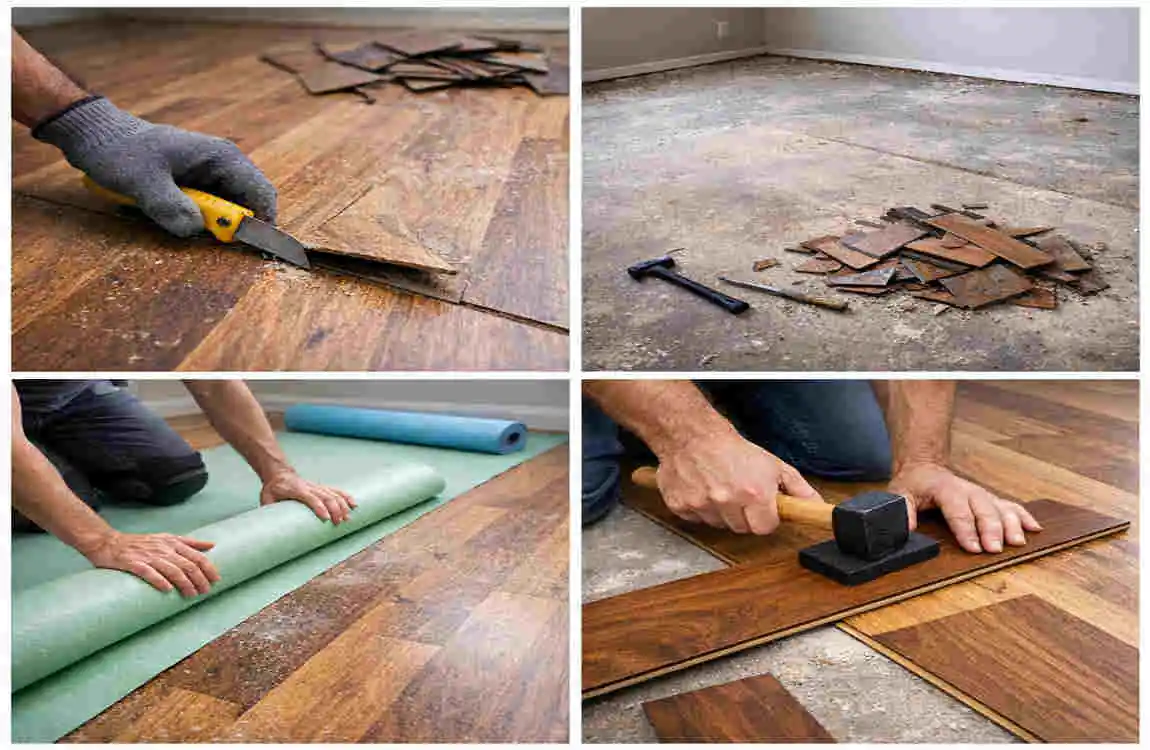
Check the Condition of Your Existing Laminate
Before you start, inspect the floor carefully. Look for:
- Water damage
- Warping or buckling
- Cracked or broken planks
- Loose boards
- Moldy smells or soft spots
If the flooring is badly damaged, full removal is usually the best choice. If only a few boards are affected, you may still need to replace the entire floor if the locking system is weak or the damage has spread.
Decide What to Do With the Old Flooring
You do not always need to throw everything away. A few options may work better:
- Reuse undamaged pieces for small DIY projects
- Donate usable flooring if local groups accept it
- Recycle it at approved construction waste centers
- Dispose of damaged pieces according to local rules
Try not to dump large amounts of laminate in regular household trash unless your local area allows it.
Choose Your New Flooring
Once the old floor is out, you can choose a better replacement. Common options include:
- Vinyl plank flooring for easy maintenance and water resistance
- Hardwood for a classic, natural look
- Engineered wood for a similar look with added stability
- Tile for strong durability and moisture resistance
- New laminate flooring if you want a budget-friendly update
If you want something easy to install, click-lock vinyl plank or laminate is often a smart choice.
When Should You Replace Old Laminate Flooring?
Some floors only need small repairs, but others are better replaced completely. You should consider replacement when you notice:
- Water damage
- Deep scratches and stains
- Buckling or lifting boards
- Persistent squeaking
- Mold or moisture problems
- Worn-out underlayment
- An outdated appearance
If the floor feels unstable underfoot, that is a strong sign that more than surface repair is needed.
Tools and Materials You May Need
Before starting, gather your supplies. This saves time and keeps the job running more smoothly.
Tool/MaterialPurpose
Pry bar Remove trim and flooring
Utility knife Cut underlayment
Hammer Remove stubborn pieces
Tape measure Measure the room
Level Check subfloor flatness
New flooring Replacement material
Underlayment Add support and cushioning
Spacers Keep expansion gaps even
How to Remove Old Laminate Flooring
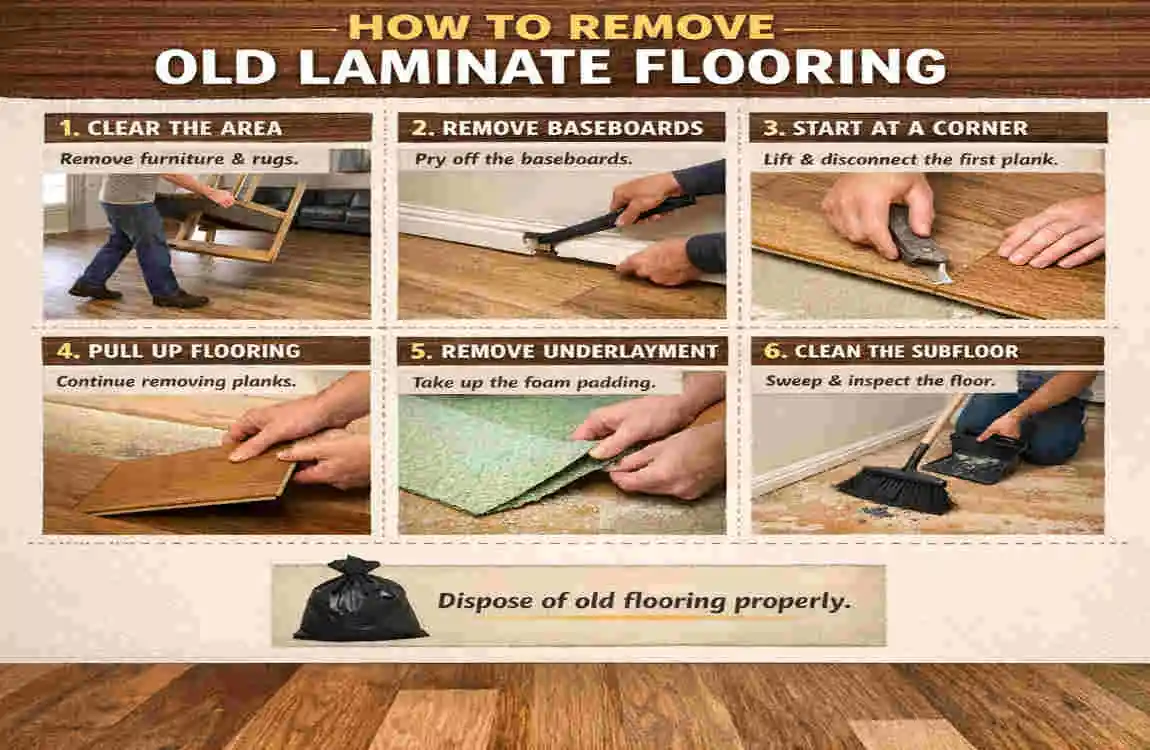
Clear the Room
Start by removing furniture, rugs, and anything else in the space. You want a clean, open area so you can work safely and move around freely.
Remove Baseboards and Trim
Carefully take off the baseboards and trim. If you remove them gently, you may be able to reuse them later. This also helps the new floor fit neatly against the walls.
Start Removing Laminate Planks
Begin at a wall that gives you easy access. If the floor uses a click-lock system, unlock the planks one by one. Work slowly so you do not damage the subfloor underneath.
Remove Old Underlayment
Once the planks are gone, lift the underlayment and check it closely. Look for stains, moisture, or damage. If it smells musty or feels damp, fix the moisture issue before installing anything new.
Prepare the Subfloor for New Flooring
This step is one of the most important parts of the job. A strong new floor needs a strong base.
Clean the Subfloor
Remove dust, debris, adhesive, nails, and any loose material. A clean surface helps the new flooring sit properly.
Check for Moisture
If moisture is present, stop and fix the cause first. Installing over a wet subfloor can lead to mold, swelling, and early damage.
Level Uneven Areas
A flat surface helps the flooring lock together properly. Small dips or bumps can cause movement, gaps, or noise later.
Repair Damage
Replace damaged sections of the subfloor before moving on. A repair now is much easier than fixing a floor that fails later.
How to Install the New Flooring
Measure the Room
Measure the full length and width of the room to find the square footage. Add extra material for waste, cuts, and mistakes. A common allowance is 5–10% extra.
Plan the Layout
Think about the direction of the planks. Most people run them along the longest wall or toward the main light source. Also, try to avoid ending up with very thin pieces along the edges.
Install the First Row
Start carefully. The first row sets the tone for the entire floor. Use spacers to keep the proper gap between the flooring and the wall so the material can expand and contract.
Continue Installing the Flooring
Connect each board according to the product instructions. Stagger the seams so the floor looks more natural and stays stronger. Take your time with each row.
Install the Final Row
The last row often needs trimming. Measure carefully and cut the pieces to fit. Do not force boards into place, or you may damage the locking edges.
Replace Baseboards and Transitions
When the flooring is complete, reinstall the baseboards, trim, and transition strips. These final touches make the room look finished and polished.
Common Mistakes to Avoid
Here are some mistakes that can cause problems later:
- Installing over a damaged subfloor
- Ignoring moisture issues
- Measuring incorrectly
- Forgetting expansion gaps
- Rushing the first row
- Using the wrong cleaner on the new floor
- Throwing away reusable old flooring
If you avoid these mistakes, your project has a much better chance of lasting.
How Much Does It Cost to Replace Laminate Flooring?
The total cost depends on several factors, so it is better to think in terms of cost factors rather than a single fixed price.
Cost Factor What Affects It
Room size Larger rooms need more material
Flooring type Vinyl, wood, tile, and laminate vary in price
Material quality Better finishes usually cost more
Labor DIY saves money, hiring help increases cost
Subfloor repairs Extra work adds to the total
Removal and disposal Old flooring must be handled properly
Underlayment Some floors need new padding
Trim and transitions Finishing pieces add to the budget
If the subfloor is in good shape, the project is usually simpler and cheaper. If repairs are needed, plan for extra time and cost.
Can You Install New Flooring Over Old Laminate?
Sometimes, yes. But it depends on the condition of the old floor and the rules for the new material.
When It May Be Possible
You may be able to install over old laminate if the floor is:
- Stable
- Clean
- Dry
- Flat
- Approved by the manufacturer
When Removal Is Better
Removal is usually the safer choice if you have:
- Damaged laminate
- Uneven flooring
- Moisture problems
- Soft or unstable areas
- Too much floor height already
In many cases, removing the old laminate gives you a better final result.
How to Dispose of Old Laminate Flooring
There are a few responsible ways to handle old flooring:
- Reuse it for small DIY projects.
- Donate it if the pieces are still usable.
- Check recycling options at local construction waste centers.
- Follow local disposal rules for damaged material.
A little planning here keeps the project cleaner and more eco-friendly.
How to Maintain Your New Flooring
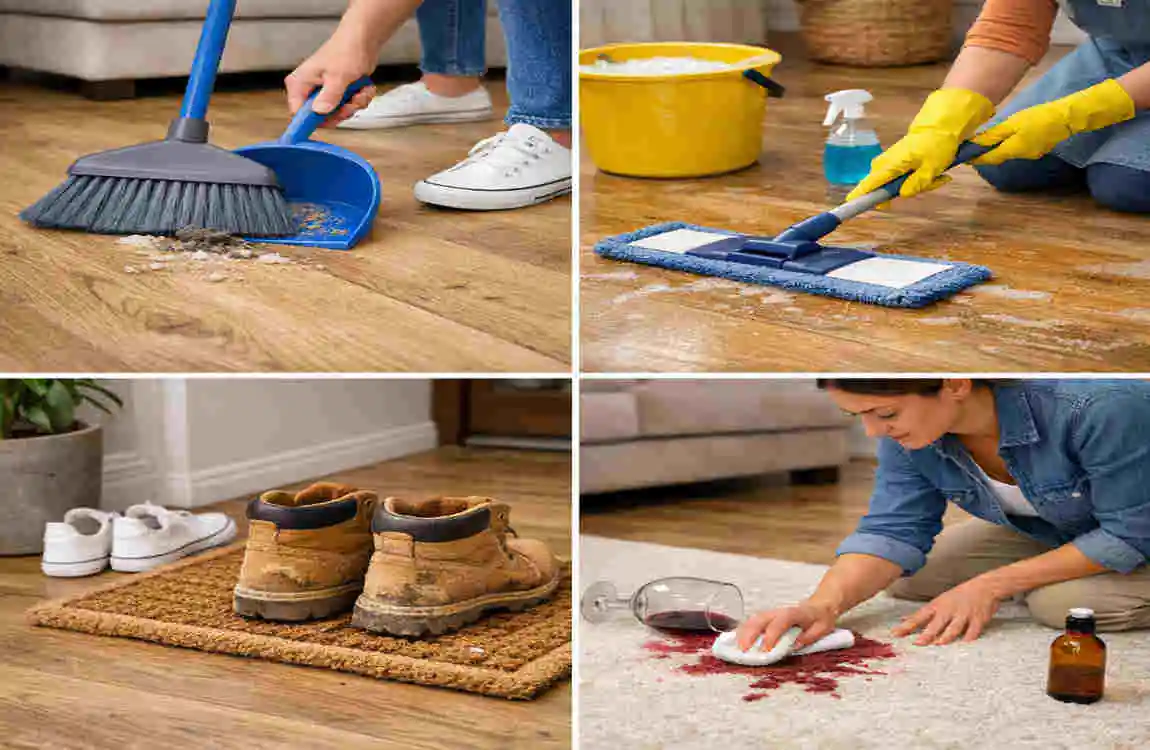
Once your new floor is in place, good care will help it last.
- Clean spills quickly
- Use manufacturer-approved cleaners
- Protect the floor from furniture scratches
- Place mats near doors
- Avoid excess water
- Check the floor regularly for damage
Simple habits like these can keep the floor looking fresh for years.
Frequently Asked Questions
Can I replace laminate flooring myself?
Yes, many people can do it themselves. Floating flooring systems are often DIY-friendly if you follow the instructions and use the right tools.
What should I do with old laminate flooring?
You can reuse, donate, recycle, or dispose of it in accordance with local waste management rules.
Can new flooring go directly over old laminate?
Sometimes, but only if the old floor is stable, dry, level, and approved for that type of installation.
Do I need to replace the underlayment?
Not always. Replace it if it is damaged, worn out, wet, or not compatible with the new flooring.
What is the easiest flooring to install after removing laminate?
Click-lock vinyl plank and click-lock laminate are usually among the easiest options.
| Step | What to Do | Quick Tip |
|---|---|---|
| Remove Old Flooring | Carefully take out the old laminate planks and underlayment. | Start from a wall and work across the room. |
| Clean the Subfloor | Remove dust, nails, adhesive, and debris. | A clean surface helps the new floor sit properly. |
| Inspect the Subfloor | Check for moisture, cracks, soft spots, or uneven areas. | Repair damage before installing new flooring. |
| Measure the Room | Calculate the floor area and add about 10% extra material for cuts and waste. | Double-check measurements before buying flooring. |
| Prepare New Flooring | Let the new flooring adjust to the room according to the manufacturer’s instructions. | Keep boxes flat and protected from moisture. |
