
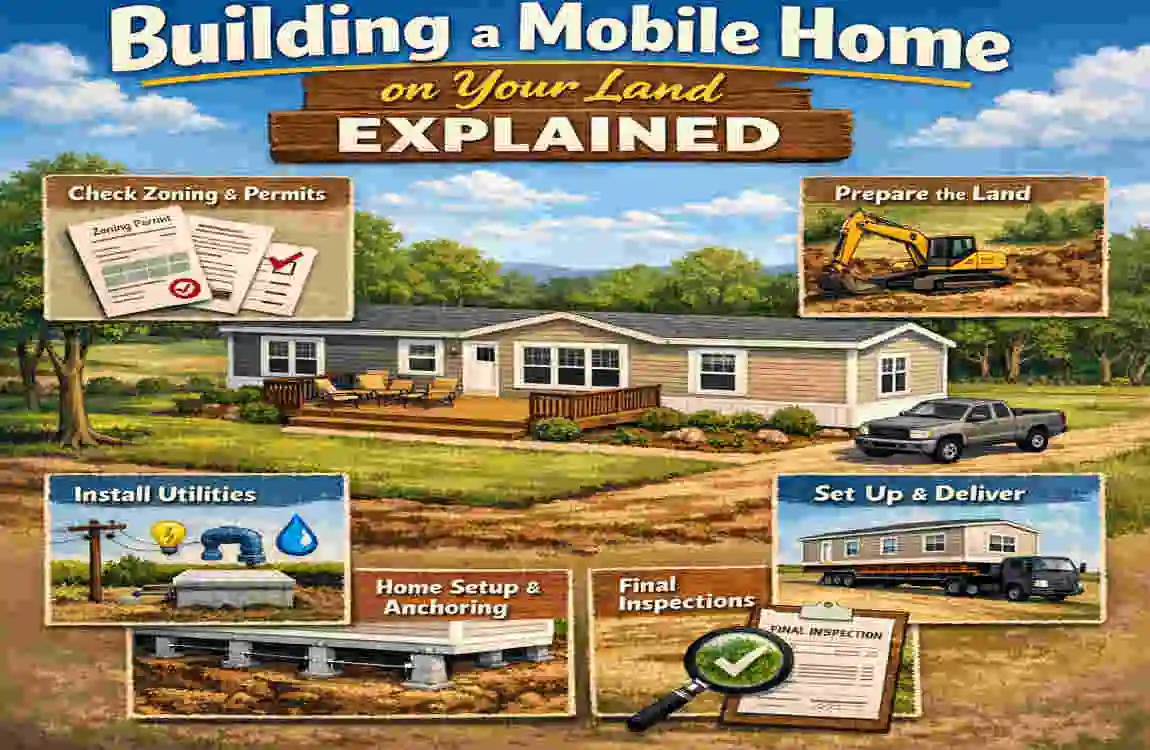
If you are asking, “Can I build a mobile home on my land?” the short answer is maybe. Owning land does not always mean you can place a mobile home on it right away.
A mobile home may be allowed in one area, but not in another. Local rules, zoning laws, permits, utility access, and foundation requirements all matter. Before you buy a home or begin site work, you need to check what your property actually allows.
Can I Build a Mobile Home on My Land?
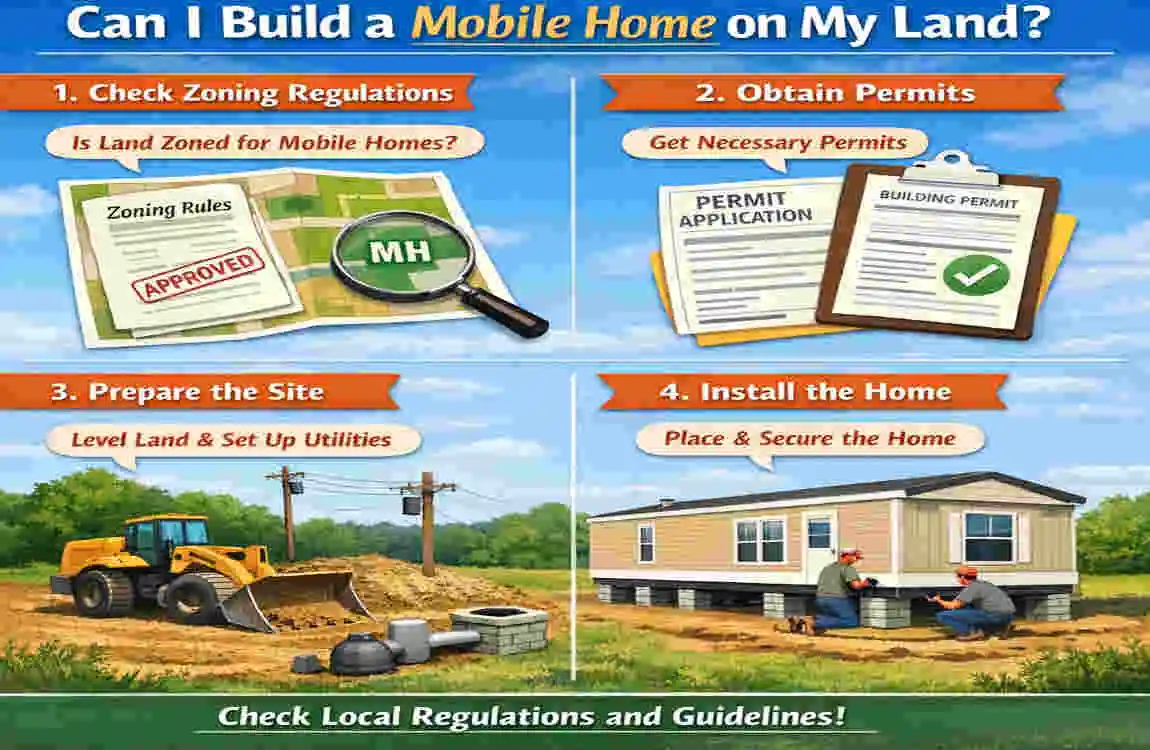
Yes, sometimes you can, but permission depends on the land and local regulations.
Your land may be private property, but that does not automatically mean a mobile home is allowed there. The local city or county may have zoning rules that control what type of home can be placed on that lot. Some areas allow manufactured homes, while others only allow traditional site-built houses.
Rules can change based on:
- City or county
- Zoning district
- Lot size
- Property type
- Existing structures
You should always check with the local planning or zoning office before buying a mobile home. That simple step can save you a lot of money and stress.
What Should You Check Before Buying a Mobile Home?
Before you move forward, look at these important points:
- Zoning classification
- Minimum lot size
- Setback requirements
- Road access
- Utility availability
- Flood or environmental restrictions
- Foundation requirements
If one of these items does not meet local rules, you may not be allowed to place the home on the land.
Zoning and Permit Requirements for a Mobile Home
Zoning is usually the first major step. It tells you whether a mobile home is allowed on the property at all.
Many people make the mistake of buying a home first and checking the rules later. That can lead to delays, permit issues, or even being forced to move the home elsewhere.
Common Permits You May Need
Depending on the location, you may need:
- Building permit
- Placement or installation permit
- Electrical permit
- Plumbing permit
- Septic permit
You may also need inspections before you can live in the home. Local authorities often want to confirm that the home is safe, properly installed, and connected to utilities.
How to Find Your Local Requirements
The best way to avoid problems is to ask the right office early. You can:
- Contact the local zoning or planning department.
- Check the property’s zoning type.
- Ask if manufactured homes are allowed.
- Request the list of needed permits and inspections.
- Confirm whether the property has special restrictions.
If you skip this step and start work without approval, you could face fines, delays, or expensive corrections.
Preparing Your Land for a Mobile Home
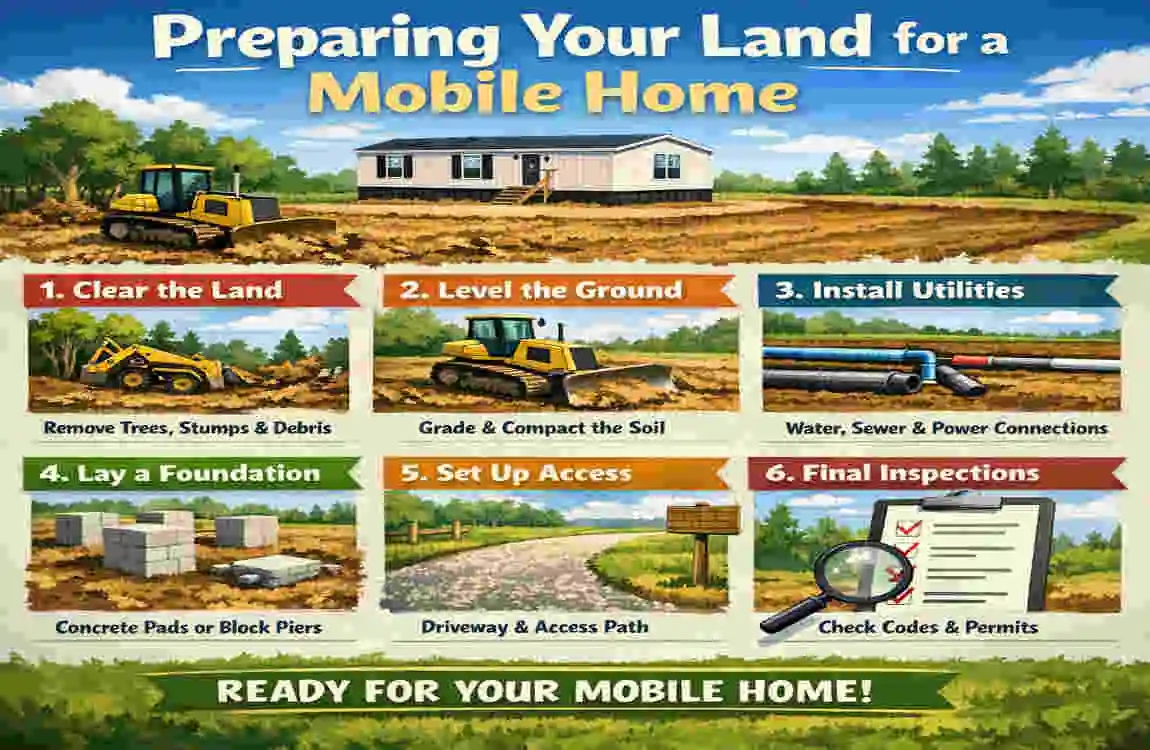
Even if your land is approved, it still may need a lot of work before the home can be placed.
Undeveloped land is often not ready for a home right away. You may need to clear the area, level the ground, create access for delivery, and make sure water flows away from the site properly.
Foundation and Ground Preparation
A mobile home usually needs a proper base to sit on. The exact foundation depends on the type of home and local regulations.
Common foundation or support options may include:
- Concrete pads
- Pier systems
- Anchoring systems
- Permanent foundation setups
Local codes may require a specific type of base. In many cases, professional installation is the safest choice because the home must be stable and secure.
Connecting Utilities to Your Mobile Home
A livable home needs basic utilities. That includes more than just electricity.
You may need:
- Electricity
- Water
- Sewer
- Septic system
- Natural gas or propane
- Internet
If the land already has utility access, the process is easier. If not, the cost can rise quickly.
Rural Land vs. Developed Land
A lot in a developed area may already have water, sewer, and electrical service nearby. Rural land often needs more work.
Remote land may require:
- Private well
- Septic tank
- Utility poles
- Long service lines
These items can add a big amount to your total budget. Utility work may also need separate permits and inspections.
How Much Does It Cost to Put a Mobile Home on Your Land?
The mobile home itself is only one part of the total cost. Many buyers focus on the purchase price and forget about the land work needed before move-in.
Your budget may include:
- Mobile or manufactured home
- Land preparation
- Transportation
- Foundation
- Installation
- Utility connections
- Permits
- Driveway or access work
- Landscaping
Costs vary by location, home size, and the amount of work your land needs.
Ways to Control Your Total Cost
You can avoid surprises by planning early.
- Choose a suitable site before buying the home.
- Get several contractor estimates.
- Ask about utility connection costs in advance.
- Check permit fees early.
- Save money for unexpected land work.
- Do not buy land only because it is cheap.
A low land price can be misleading if the lot requires extensive prep work.
Mobile Home vs. Manufactured Home: What Is the Difference?
People use these terms in different ways, but the legal meaning can matter.
A mobile home is often used for older homes built before modern standards were in place. A manufactured home usually refers to a home built to newer construction standards.
This matters because the home’s age, construction type, and legal classification can affect:
- Placement rules
- Financing
- Insurance
- Resale value
- Local approval
If you are not sure how your home is classified, check with local authorities before buying or moving it.
Can You Build a Custom Manufactured Home on Your Land?
Yes, you can customize the home. Buyers often choose floor plans, finishes, room sizes, and extra features.
But customization does not remove zoning or code requirements. The home still has to meet the rules for installation, safety, and site approval.
Step-by-Step Process for Putting a Mobile Home on Your Land
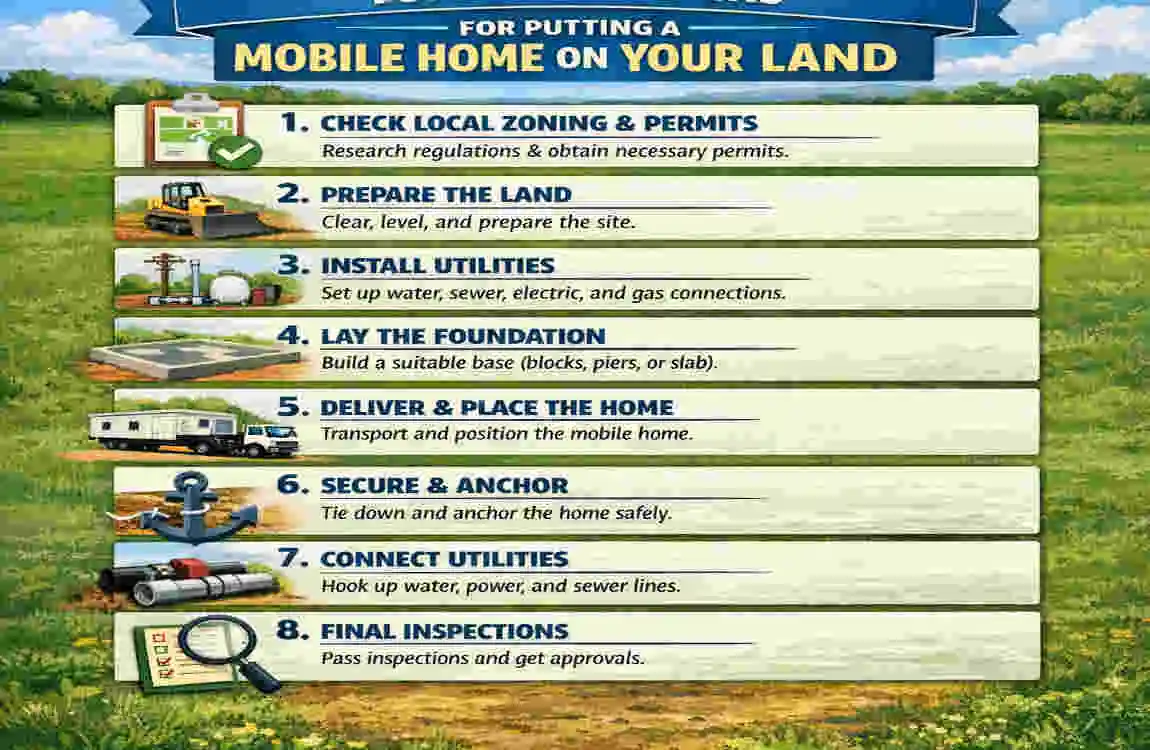
Here is a simple order to follow.
- Verify zoning and land-use rules.
- Check deed, HOA, and property restrictions.
- Confirm water, sewer, septic, and electricity options.
- Create a site plan.
- Apply for required permits.
- Prepare and grade the land.
- Arrange transportation and installation.
- Connect utilities.
- Complete inspections.
- Obtain final approval or occupancy clearance, if needed.
Doing these steps in the right order can help you avoid delays and extra costs.
Frequently Asked Questions
Can I build a mobile home on my land without a permit?
Usually no, or at least not safely without checking first. Permit rules vary by location, so always confirm before starting.
Can I put a mobile home on any piece of land?
Not always. Zoning, lot size, setbacks, and deed restrictions may stop you from doing that.
Do I need a foundation for a mobile home?
In most cases, yes, some support or foundation is required. The exact setup depends on local rules and the type of home.
Can I put a mobile home on land without utilities?
You can place it there physically, but for full-time living, you usually need approved water, waste, and electrical solutions.
Is it cheaper to put a mobile home on land than build a house?
Sometimes yes, but not always. Land prep, utilities, permits, and installation can quickly raise the total cost.
| Key Area | Quick Information |
|---|---|
| Land Requirements | Check zoning rules, lot size, and whether mobile homes are permitted. |
| Local Permits | Building, placement, utility, and septic permits may be required. |
| Foundation | Choose an approved foundation or anchoring system based on local codes. |
| Utilities | Plan connections for electricity, water, sewer, gas, or septic systems. |
| Site Preparation | Clear, level, and prepare the land before the home is delivered. |
| Home Selection | Choose a manufactured/mobile home that meets local construction standards. |
