
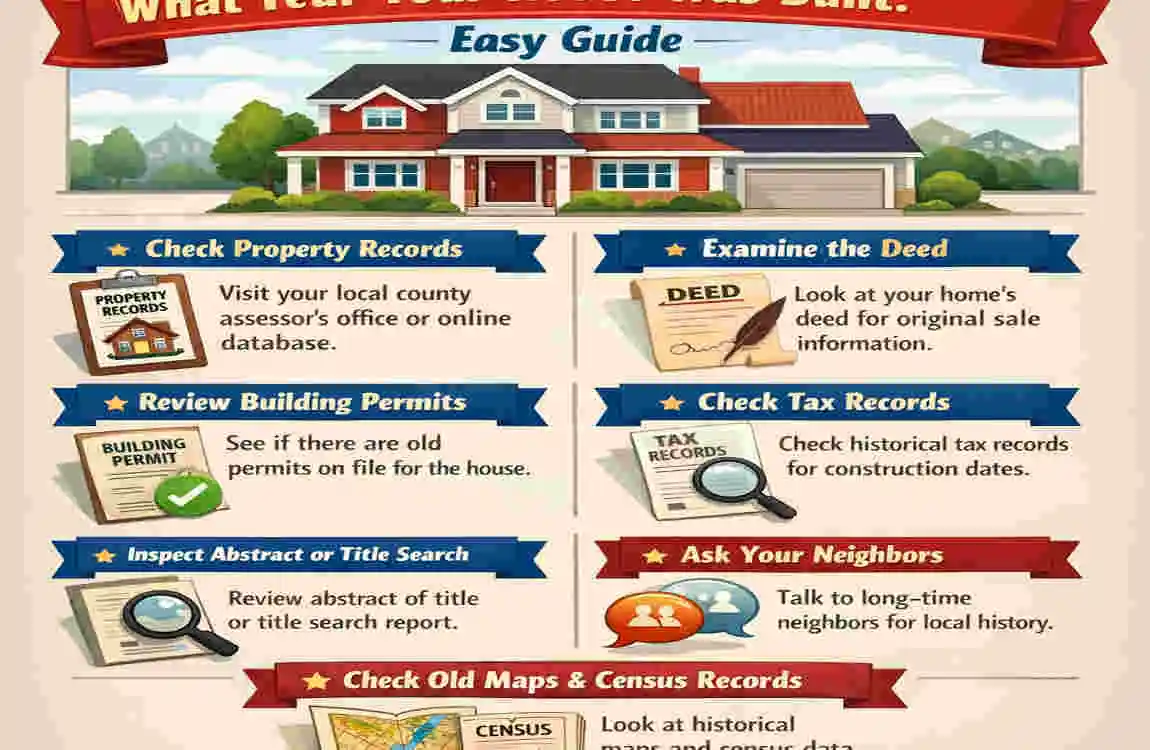
If you have ever wondered what year your house was built, you are not alone. Many homeowners ask this question because a home’s age can tell you a lot about its history, structure, and future needs.
Knowing the construction year can help with maintenance, renovation planning, insurance, and even property value. It can also be interesting if you want to understand your home’s story.
Why Find Out What Year Your House Was Built?

A home’s age is more than just a fun fact. It can affect how you care for the property and what you should expect from it.
Property History Matters
Every house has a history. Some homes were built in a single phase, while others changed over time with additions, remodels, and repairs.
Knowing the original construction year gives you a better sense of where the home began and how it changed.
Age Can Affect Maintenance and Renovation
Older homes often need more attention in certain areas. Wiring, plumbing, roofing, and insulation may all be tied to the structure’s age.
If you know the home’s age, you can plan repairs more wisely and spot issues that may come with older construction.
Insurance and Property Value
Insurance companies and appraisers may consider a home’s age when assessing risk or value. A home’s construction year can influence replacement costs, material expectations, and overall market appeal.
Original Build Date vs Renovation Date
A home may have a construction year and several renovation years.
For example, a house may have been built in 1950 but updated in 2005. The update does not change the original build date, but it may change how the home looks and functions today.
Check Your Property Documents and Records
One of the easiest places to start is with your own paperwork. You may already have a record that shows the construction year.
Property Deed and Purchase Documents
Your deed may not always list the exact year the house was built, but it can help you trace ownership history. That history can guide you toward the original construction date.
Your closing documents or purchase paperwork may also include basic property details that point to the home’s age.
Building Permits and Renovation Records
Building permits are often very helpful. If your home went through major work, permit records may show when the property was originally built or later altered.
These records can reveal:
- original construction year
- addition dates
- major remodeling years
- structural changes
Property Tax Records
Local tax records often include the year a home was built. The county or local assessor’s office usually handles these records.
If the tax record is accurate, it can be one of the fastest ways to confirm your home’s age.
Appraisal or Assessment Documents
If your home has been appraised or assessed for tax purposes, those documents may also list the year it was built. This is especially helpful if the home has changed hands or been updated over time.
Inspection Reports
Old inspection reports may contain clues about the structure’s age. A home inspector might note the approximate build date based on materials, systems, or visible wear.
What If the Records Conflict?
Sometimes one document says one year and another says something different. This can happen when homes are remodeled, records are incomplete, or data was entered incorrectly.
In that case, do not rely on just one source. Compare several records and look for the most consistent information.
Search Online Property and Government Records
If your paperwork does not give you a clear answer, online records may help.
Local Government Property Databases
Many counties and cities offer online property search tools. These are often the most reliable places to check because they come from official sources.
You may be able to search by:
- address
- parcel number
- owner name
- lot number
County or Municipal Assessor Records
Assessor records often include the year built or an estimated construction date. These records are especially useful if your property has a long history.
Building Department Databases
Some local building departments keep permit records online. These may show the earliest construction permit or major renovation permits tied to the home.
Property Websites and Historical Listings
Real estate websites can sometimes help, especially for newer homes. But treat them as secondary sources.
These sites may show the year built, but they are not always as accurate as official records.
Address Changes Can Make Searching Harder
Some older properties have changed addresses over time. That can make online searches harder.
If that happens, try searching by:
- parcel number
- lot number
- previous owner name
Why Official Records Are Better
Official government records are usually more trustworthy than listing websites. They are tied to tax, permit, or legal property data rather than marketing information.
Look at the House Itself for Clues
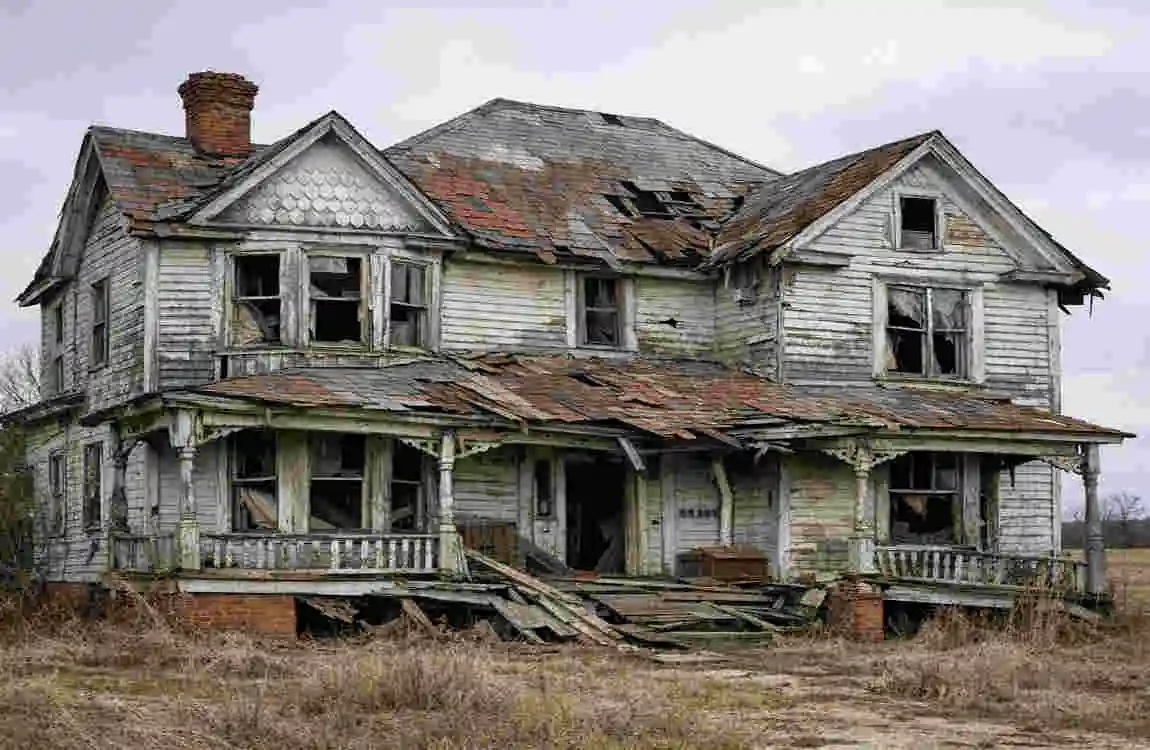
Sometimes the house itself tells part of the story. Physical clues do not always give the exact date, but they can help narrow it down.
Check the Exterior
Look at the foundation, brick style, siding, windows, doors, and roofing. Older building materials often differ from newer ones.
For example, certain brick patterns, window frames, or roofing materials can point to a specific building era.
Look at the Systems Inside
Electrical panels, plumbing fixtures, furnace units, and HVAC equipment may have dates or labels. These don’t show when the house was built, but they can offer clues about upgrades and age.
Search for Stamps or Labels
Sometimes builders or manufacturers stamp dates on materials. You may find labels on pipes, framing, appliances, or mechanical equipment.
Check for Hidden Clues
Older homes may have builder names, plaques, or even dates hidden in attics, basements, or wall spaces. These can be useful if visible and safe to inspect.
Physical Clues Are Estimates, Not Proof
This is important. A home’s materials can suggest an age, but they rarely prove the exact year on their own.
A house may have original features mixed with later replacements, so always check physical clues against records.
Safety Reminder
Do not open walls or disturb electrical systems to investigate your home’s age. That can create safety problems and may damage the property.
Ask Previous Owners, Neighbors, and Local Experts
If records are missing or unclear, people with local knowledge can help.
Contact Previous Owners
If possible, ask previous homeowners when they bought the property and what they know about the home’s construction history.
They may know about additions, rebuilds, or major renovations that are not obvious in public records.
Talk to Long-Term Neighbors
Long-term neighbors may remember when the house was built or when the lot was developed.
They may also know whether the home replaced an older structure.
Speak With Real Estate Professionals
Local real estate agents, appraisers, or home inspectors may know the neighborhood and nearby homes. They can sometimes estimate a construction period based on common local building patterns.
Check Historical Societies and Local Archives
Historical societies, libraries, and local archives can be very helpful, especially for older homes. They may have maps, photos, directories, or neighborhood records.
Consider a Property Researcher or Historian
For very old homes, hiring a professional property researcher or historian may be worth it. They can combine records, maps, and local history to build a stronger timeline.
Old Photos Can Help
Historical photos of the neighborhood may show when the home first appeared. Even if the exact year is not clear, they can help narrow the date range.
How to Confirm the Exact Construction Year
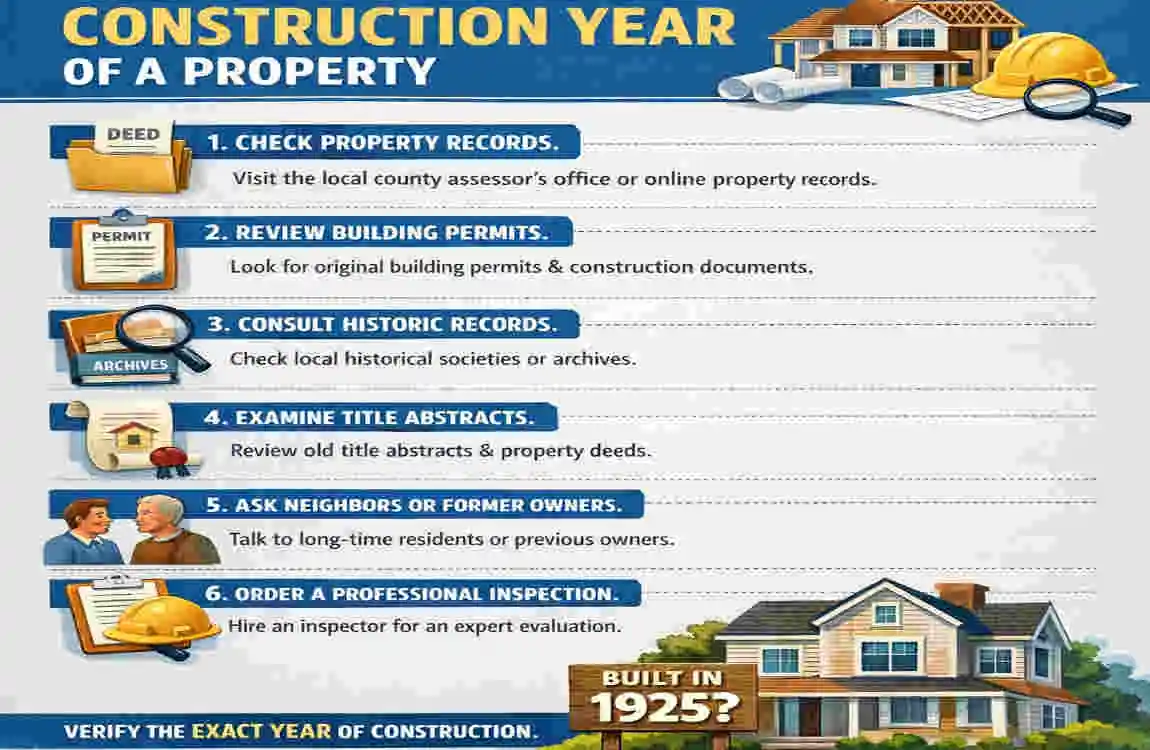
Once you gather information, compare it carefully.
Compare Multiple Sources
Avoid relying on a single source if you can. Look at property records, permits, tax data, physical clues, and local history together.
The more sources that agree, the more confident you can be.
Understand the Different Dates
Here is a simple way to tell the dates apart:
TermWhat It MeansWhy It Matters
Construction year The year the house was first built Shows the original age of the home.
Permit year The year a permit was filed May show additions or major repairs.
Major renovation year The year of a large remodel Does not change the original build date.
Sale year The year the home was sold Useful for ownership history, not age.
When Records Are Incomplete
If official records are missing, you may need to combine smaller clues to form the best estimate. This happens often with older homes.
In that case, use the most reliable source available and note that the date may be approximate.
Build a Simple Timeline
A timeline can help you organize what you find:
- First record found
- Oldest permit
- Tax record year
- Physical building clues
- Owner or neighbor recollection
- Final estimated construction year
Which Source Is Most Trustworthy?
In most cases, official government records are the strongest source. After that, permit records and assessor data are usually more reliable than memory or listing sites.
When Professional Research Is Worth It
If your home is historically important, very old, or missing records, professional research may be the best option. It can save time and give you a more accurate answer.
FAQ: What Year Was My House Built In?
How can I find out what year my house was built in?
Start with your property documents, then check local tax and assessor records. If needed, use building permits, online databases, and physical clues to confirm the date.
Where can I find the construction year of my house?
You can often find it in property tax records, assessor records, permit files, appraisal documents, and sometimes in purchase paperwork.
Can I find my home’s age online?
Yes. Many local governments offer online property records that show the year built or other useful property history details.
Does a property deed show when a house was built?
Usually not. A deed mainly shows ownership history, while the construction year is more likely to appear in assessor or permit records.
What if there are no records of my old house?
If records are missing, use physical clues, old maps, neighbor memories, historical societies, and professional research to estimate the age.
Can a house be older than its recorded construction date?
Yes. Records may be incomplete, or the home may have been moved, rebuilt, or expanded over time.
Why is knowing my home’s construction year important?
It helps with maintenance, renovation planning, insurance, property value, and understanding your home’s history.
Can I determine the age of a house from its materials?
You can get clues from materials like brick, windows, siding, and fixtures, but materials alone usually cannot prove the exact year.
| Method | What to Check | Why It Helps |
|---|---|---|
| Property Records | Search local property or land records | Often lists the original construction year |
| Tax Records | Check property tax documents | May show the recorded building date |
| Building Permits | Look for old permits | Provides construction or renovation dates |
| Previous Owners | Ask former homeowners | They may know the home’s history |
| Real Estate Listing | Check old property listings | Listings often mention the year built |
| Local Archives | Visit historical or municipal archives | Useful for older homes |
| Home Inspection | Review inspection reports | May estimate the home’s age and construction period |
