
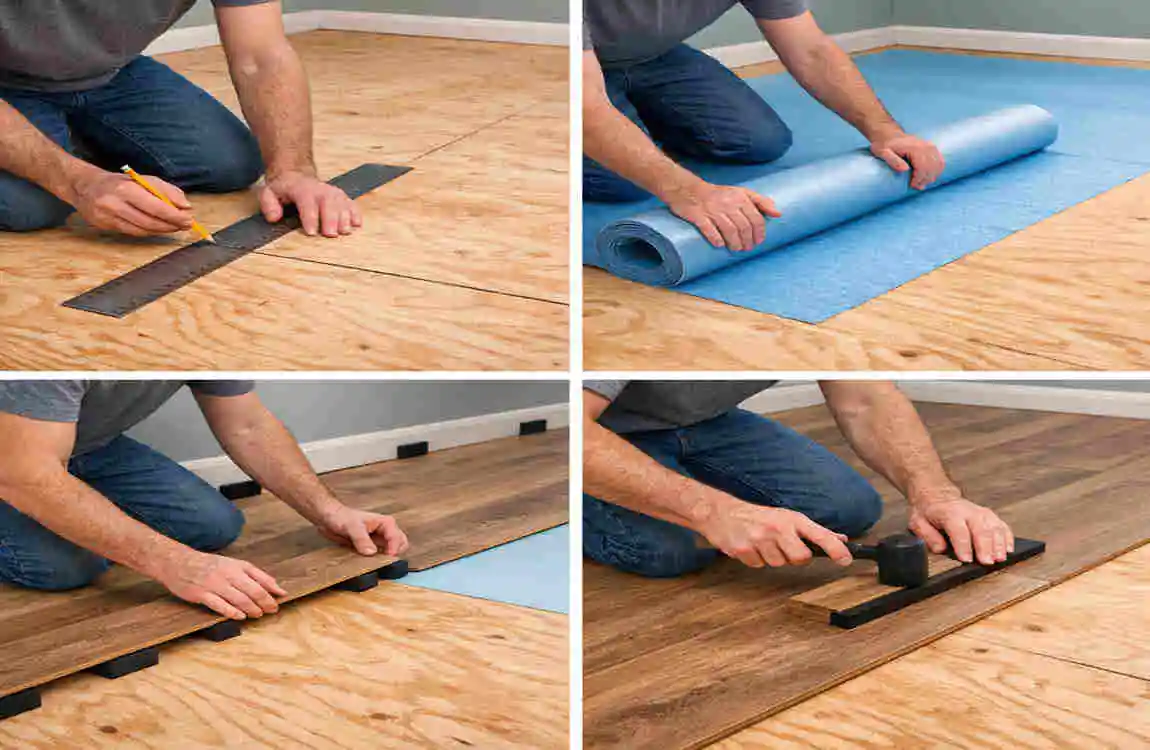
If you want a floor that looks stylish, feels comfortable, and costs less than hardwood, laminate flooring is a strong choice. It gives your home a clean, modern look without making the project too expensive.
Plywood is also a very common subfloor, making it a great base for laminate in many homes. When the plywood is dry, level, and in good shape, you can install laminate flooring with good results.
Can You Install Laminate Flooring on Plywood?
Is Plywood a Good Subfloor?
Yes, plywood is usually a good subfloor for laminate flooring. It is strong, stable, and easy to work with when compared to many other surfaces.
It also gives you a smooth base that helps the laminate planks lock together properly. That matters because laminate flooring needs a flat, steady surface to perform well over time.
Still, plywood must be checked carefully before you begin. If it has moisture damage, loose panels, or uneven areas, those problems can show through the new flooring later.
Benefits of Installing Laminate Over Plywood
Installing laminate on plywood comes with several benefits:
- Affordable compared with many other flooring types
- DIY-friendly for homeowners who want to do the job themselves
- Long lifespan when installed correctly
- Attractive appearance with many wood-look styles
Because of these benefits, laminate over plywood is one of the most practical flooring projects for many homes.
Tools and Materials You’ll Need
Essential Tools
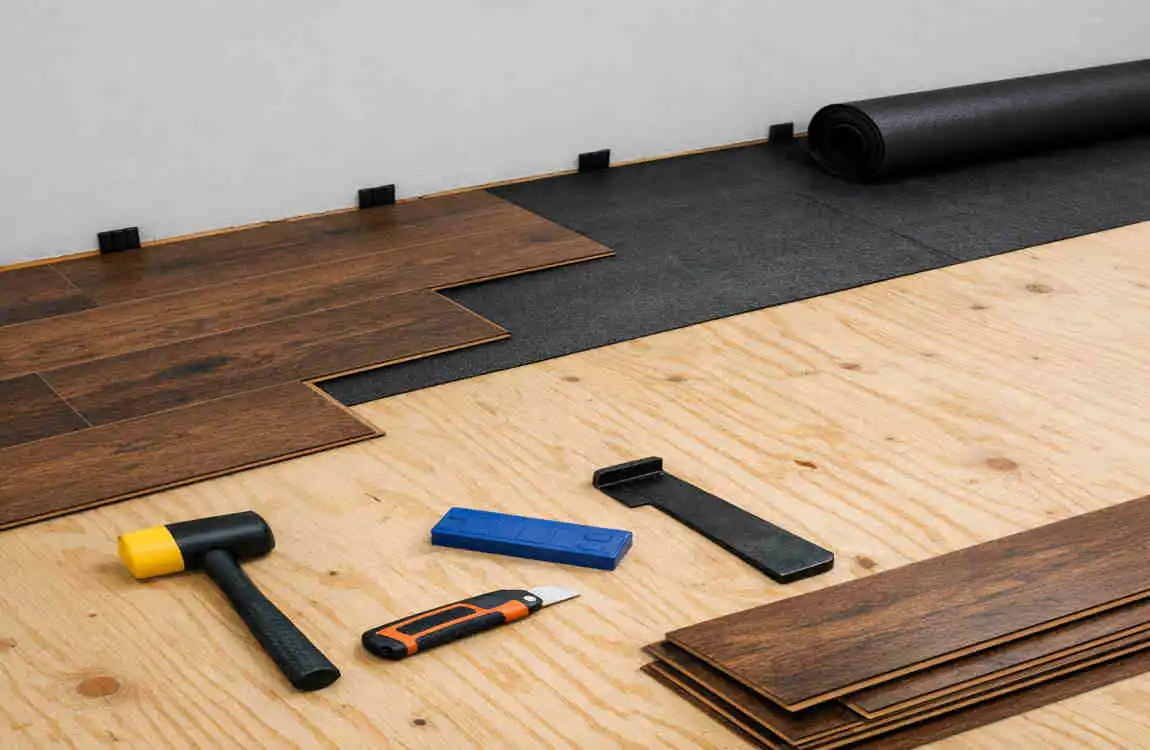
Before you start, gather the right tools. A good setup will make the job faster and cleaner.
You will need:
- Tape measure
- Circular saw or laminate cutter
- Utility knife
- Rubber mallet
- Pull bar
- Spacers
- Pencil
- Level
Each tool plays a simple but important role. For example, spacers help you keep the correct gap around the edges, and a pull bar helps you fit the last row neatly.
Required Materials
You will also need the right materials for the project.
These include:
- Laminate flooring planks
- Underlayment
- Moisture barrier, if needed
- Transition strips
- Baseboards or quarter-round molding
The exact materials may vary depending on the room and the product instructions, so always check the flooring package before starting.
Prepare the Plywood Subfloor
Inspect the Floor
Start by looking closely at the plywood subfloor. Check for loose panels, soft spots, damage, and any signs of water issues.
If you find rotten or damaged plywood, replace it before installing the new floor. Laminate needs a solid base, and weak spots can cause trouble later.
Clean the Surface
Next, clean the plywood very well. Remove dust, dirt, nails, and old debris from the surface.
Use a vacuum to clean the floor thoroughly. The surface should be completely clean and dry before you move to the next step.
Level the Floor
A level floor is very important. If the plywood has dips or high spots, the laminate may not sit correctly.
Use a straightedge to check the surface. Fill low areas if needed and sand down high spots. This step helps prevent movement, gaps, and clicking problems after installation.
Install Underlayment
Why Underlayment Matters
Underlayment is a thin layer placed between the plywood and the laminate. It does several helpful things.
It can:
- Reduce noise
- Add comfort underfoot
- Help with moisture protection
Some laminate products come with attached underlayment, but if yours does not, you will need to install it separately.
How to Lay Underlayment Properly
Roll out the underlayment across the room in clean, even strips. Make sure the seams are tight and taped properly.
Do not overlap the material unless the instructions say to do so. A smooth underlayment helps the laminate sit flat and perform better.
How to Install Laminate Flooring on Plywood
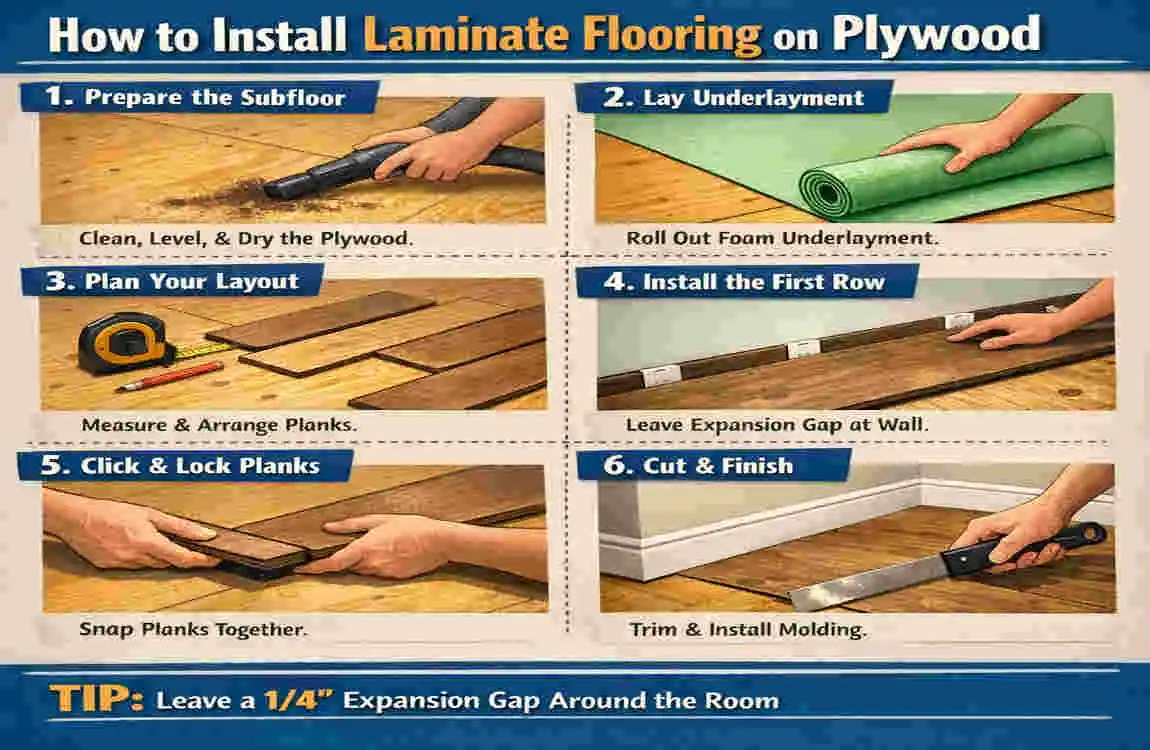
Measure the Room
Measure the length and width of the room carefully. Multiply those numbers to find the square footage.
It is smart to buy extra material for waste, cuts, and small mistakes. A little extra flooring is better than running short in the middle of the job.
Acclimate the Flooring
Before installation, leave the laminate planks in the room for at least 48 hours. This helps the flooring adjust to the room’s temperature and humidity.
If you skip this step, the planks may expand or contract later after installation. That can lead to gaps or buckling.
Plan the Layout
Decide which direction the planks should run. In many rooms, the flooring looks best when it runs along the longest wall or toward the main light source.
Also, stagger the joints between rows. This creates a more natural look and improves strength.
Install the First Row
Start along one wall and place spacers between the planks and the wall. These spacers create the expansion gap the floor needs.
Lock the first row together carefully. Take your time here because the first row helps guide the rest of the room.
Continue Installing Rows
As you add more rows, use the click-lock system or the manufacturer’s recommended connection method. Make sure each plank fits tightly before moving on.
Use a tapping block if needed, but do not force the planks too hard. Gentle pressure is usually enough.
Cut Around Obstacles
You will likely need to cut planks around door frames, pipes, and vents. Measure each area carefully before making the cut.
This part takes patience, but clean cuts help the floor look professional and fit properly.
Common Mistakes to Avoid
Skipping Underlayment
Underlayment does more than add comfort. It also helps with noise and moisture control. Skipping it can reduce your floor’s performance.
Not Leaving Expansion Gaps
Laminate needs room to move. If you install it too tightly against the wall, the floor may buckle later.
Installing on Uneven Plywood
Uneven plywood can cause gaps, noise, and movement in the flooring. Always fix the subfloor first.
Ignoring Moisture Problems
If the plywood has moisture damage, the new floor may fail. Check for leaks and damp areas before you begin.
Failing to Acclimate Flooring
If you install laminate too soon, the planks may change shape after they are in place. Let the flooring sit in the room first.
Maintenance Tips
Daily Cleaning
Keep the floor clean by sweeping or vacuuming regularly. Dirt and grit can scratch the surface over time.
Prevent Water Damage
Use a damp cloth for cleaning, not a soaking wet mop. Wipe spills right away so moisture does not seep into the seams.
Protect Against Scratches
Place pads under furniture legs and avoid dragging heavy items across the floor. Small habits like this can protect the finish.
Repair Minor Damage
If a plank becomes damaged, fix it early. Catching small problems quickly can help the floor last longer.
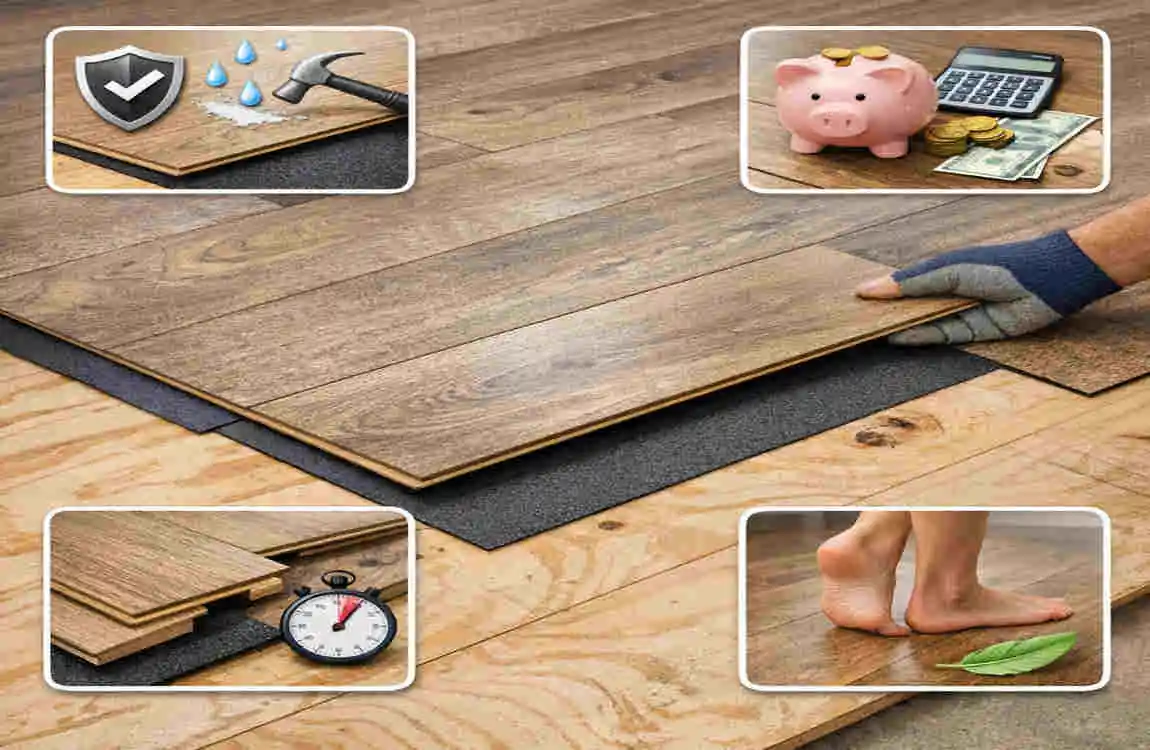
Advantages of Laminate Flooring on Plywood
BenefitDescription
Easy Installation Suitable for DIY projects
Affordable Lower installation costs
Durable Resistant to wear
Stylish Available in many wood designs
Low Maintenance Easy to clean
Comfortable Softer with underlayment
Is This a DIY-Friendly Project?
Suitable for Beginners?
Yes, this can be a DIY-friendly project if you are patient and follow the steps carefully. Laminate flooring is one of the easier types of flooring for homeowners to install.
If you can measure well, cut carefully, and follow instructions, you can likely handle the project.
When to Hire a Professional
If the plywood is badly damaged, the room is very uneven, or you are not comfortable using cutting tools, please call a professional.
A professional can also help if the room has a complicated layout, moisture concerns, or major structural issues.
Frequently Asked Questions
Can you install laminate flooring directly on plywood?
Yes, as long as the plywood is clean, dry, level, and structurally sound.
Do I need underlayment over plywood?
Yes. Underlayment improves comfort, reduces noise, and helps protect against moisture.
How flat should plywood be before installing laminate?
The subfloor should be level within the manufacturer’s recommended tolerance, usually around 3/16 inch over 10 feet.
Should laminate flooring be glued to plywood?
Most modern laminate flooring uses a floating click-lock system and should not be glued unless the manufacturer recommends it.
How long should laminate flooring acclimate?
Leave the flooring in the installation room for at least 48 hours before installation.
Can laminate flooring be installed in kitchens?
Yes, but use water-resistant laminate and clean spills quickly to prevent damage.
| Topic | Information |
|---|---|
| Project | Installing laminate flooring over a plywood subfloor |
| Difficulty Level | Easy to Moderate (DIY-friendly) |
| Estimated Time | 1–2 days, depending on room size |
| Best Subfloor | Clean, dry, level, and structurally sound plywood |
| Required Tools | Tape measure, utility knife, spacers, jigsaw, tapping block, pull bar, rubber mallet, straightedge |
| Materials Needed | Laminate flooring planks, underlayment (if required), moisture barrier (where needed), transition strips |
