

Upgrading your home’s floors can completely transform your space, making it feel fresh, modern, and inviting. One common question that homeowners often ask is: “Do you have to remove vinyl flooring before installing laminate?”
The answer isn’t always straightforward because it depends on several factors, including the condition of your vinyl floor, the type of laminate you’re installing, and the state of your subfloor. Understanding these details is crucial to ensure a successful flooring upgrade that lasts for years to come.
Understanding Vinyl and Laminate Flooring Basics
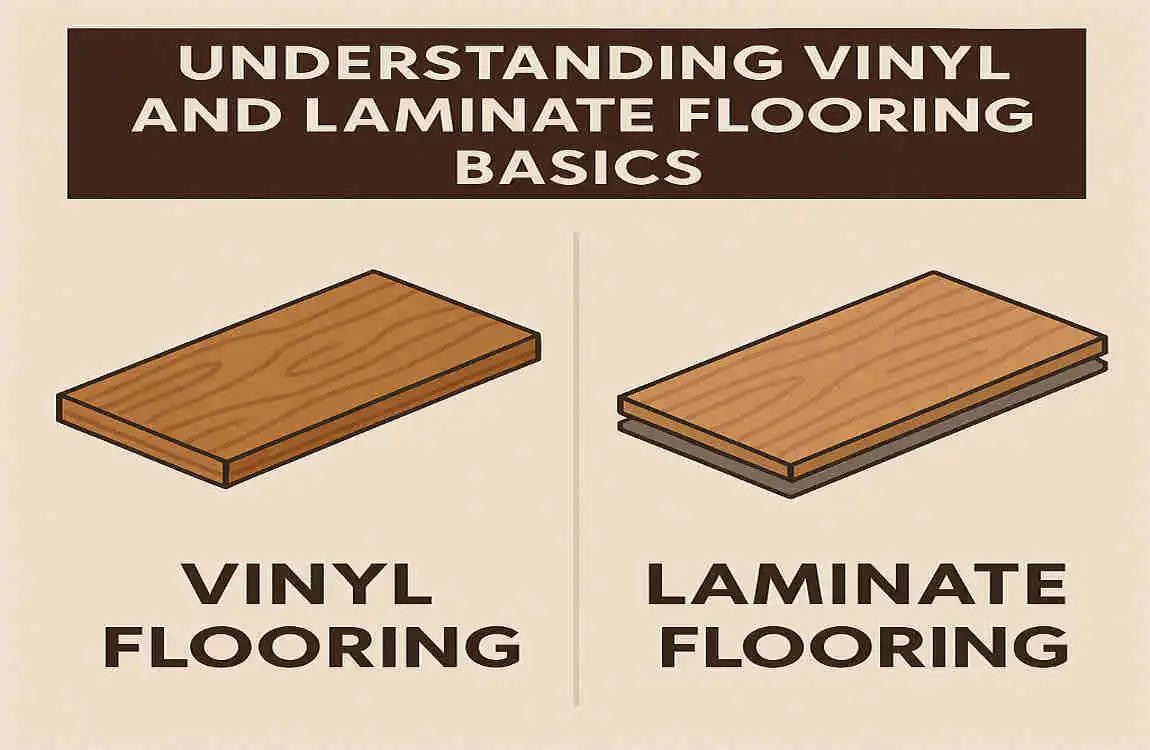
Before we can tackle the main question, it’s essential to understand the basics of vinyl and laminate flooring. Knowing their characteristics, differences, and installation requirements will help you make an informed decision about your flooring project.
What Is Vinyl Flooring?
Vinyl flooring is a durable, water-resistant, and versatile flooring option that has been popular for decades. It comes in several forms, including:
- Sheet Vinyl: Large, continuous sheets that are easy to install and water-resistant.
- Vinyl Planks: Individual planks designed to mimic the appearance of wood.
- Vinyl Tiles: Small tiles that can resemble stone, ceramic, or wood.
Pros of Vinyl Flooring:
- Affordable: Vinyl is one of the most budget-friendly flooring options.
- Water-Resistant: It’s perfect for areas like kitchens and bathrooms.
- Easy Maintenance: Simple to clean and resistant to stains.
- Comfortable: Softer underfoot compared to hardwood or tile.
Cons of Vinyl Flooring:
- Durability Issues: Over time, it can wear down, especially in high-traffic areas.
- Difficult to Repair: Damage often requires replacing entire sections.
- Environmental Concerns: Some types of vinyl flooring are not eco-friendly.
What Is Laminate Flooring?
Laminate flooring is a multi-layer synthetic product designed to mimic the look of natural materials like wood or stone. It’s a favorite choice for homeowners seeking a stylish, affordable alternative to hardwood.
Laminate is constructed with four main layers:
- Wear Layer: Protects the surface from scratches and stains.
- Design Layer: Provides the realistic appearance of wood or stone.
- Core Layer: Composed of high-density fiberboard for stability.
- Backing Layer: Adds moisture resistance and structural support.
Why Is Laminate Popular?
- Cost-Effective: Cheaper than hardwood but with a similar aesthetic.
- Durable: Resistant to scratches, dents, and fading.
- DIY-Friendly: Many laminate products feature click-lock systems for easy installation.
However, laminate flooring is not entirely waterproof, so it’s not ideal for areas prone to excessive moisture.
Key Differences Between Vinyl and Laminate Flooring
Feature Vinyl Flooring Laminate Flooring
Appearance mimics wood, stone, or ceramic. More realistic wood aesthetics
Durability Waterproof and long-lasting Scratch-resistant, less water-resistant
Installation : Glued or floating installation , Click-lock floating installation
Comfort Softer underfoot, Harder but warmer than tile or stone
Cost is more affordable overall. Slightly more expensive than vinyl
Do You Have to Remove Vinyl Flooring Before Installing Laminate?
Now, let’s address the central question: Can you install laminate flooring directly over vinyl, or does it need to be removed? The answer depends on several factors, which we’ll explore in detail below.
General Rule: Removal vs. Installation Over Vinyl
In some cases, you can install laminate flooring directly over vinyl without removing it. However, this depends on the condition of your vinyl flooring and its compatibility with laminate installation.
When Removal Is Required:
- If the vinyl floor is damaged, uneven, or lifting.
- If the vinyl is too thick, it can cause height issues.
- If the vinyl is glued down, it leaves behind sticky adhesive.
When You Can install Over Vinyl:
- The vinyl floor is in good condition (no cracks, bumps, or peeling).
- The surface is smooth, level, and clean.
- The height increase won’t interfere with doors or baseboards.
Assessing Your Existing Vinyl Floor Condition
Before making a decision, it’s critical to evaluate the condition of your vinyl flooring. Here’s what to check:
- Signs of Damage:
- Look for cracks, warping, or peeling edges.
- Damaged vinyl can lead to an uneven surface, which may cause laminate planks to shift or break over time.
- Thickness and Type of Vinyl:
- Thick vinyl with a cushioned layer may compress under the weight of the laminate, causing instability.
- Thin, glue-down vinyl is often better for layering.
- Subfloor Examination:
- Check the subfloor beneath the vinyl for moisture or unevenness.
- A stable subfloor is essential for properly supporting the laminate.
Pros and Cons of Installing Laminate Over Vinyl
If your vinyl flooring is in good condition, you might wonder whether installing laminate over it is the right decision. Let’s weigh the pros and cons.
Benefits of Installing Laminate Over Vinyl
- Saves Time and Effort:
- Skipping the removal process means you can install laminate faster and with less hassle.
- Cost Savings:
- Avoids disposal fees for old vinyl flooring.
- Reduces labor costs if you hire professionals.
- Less Disruption:
- No need for noisy or messy removal, making it a more convenient option.
Potential Drawbacks and Risks
- Height Issues:
- Adding new flooring over vinyl can raise the floor height, potentially causing clearance issues with doors and appliances.
- Uneven Surfaces:
- If the vinyl isn’t perfectly level, the laminate may develop gaps, creaks, or damage over time.
- Warranty Concerns:
- Some laminate flooring manufacturers may void the warranty if installed over vinyl.
How to Prepare Vinyl Flooring for Laminate Installation
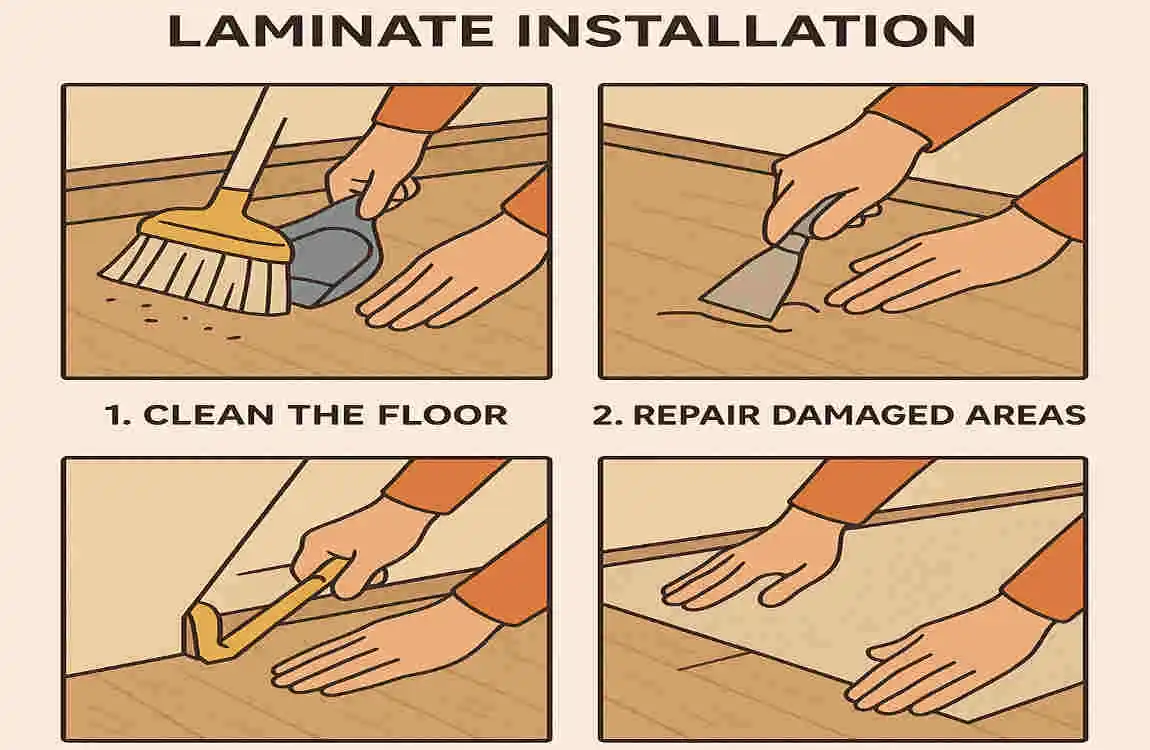
If you decide to install laminate over vinyl, proper preparation is crucial. Follow these steps to ensure a smooth and durable installation.
Inspection and Cleaning Steps
- Thoroughly Clean the Vinyl:
- Remove dust, dirt, and debris using a vacuum or broom.
- Clean the surface with a damp mop and mild detergent.
- Check for Wax or Residue:
- Use a wax remover or degreaser to eliminate any residues that could hinder the laminate’s underlayment.
Leveling and Repairing Imperfections
- Fill Bumps and Holes:
- Use a floor patching compound to fill any dents, holes, or seams in the vinyl.
- Ensure Surface Smoothness:
- Sand down high spots or use a leveling compound for uneven areas.
Moisture Barrier and Underlayment Requirements
- Choose the Right Underlayment:
- Use an underlayment with a built-in moisture barrier if you suspect moisture problems.
- Install a Moisture Barrier:
- Lay a plastic sheet over the vinyl, especially in basements or humid areas.
Step-by-Step Guide: Removing Vinyl Flooring if Necessary
If you determine that your vinyl flooring needs to be removed, here’s a step-by-step guide to help.
Tools and Materials Needed
- Floor scraper
- Heat gun
- Adhesive remover
- Utility knife
Safe and Effective Methods for Removing Vinyl Flooring
- Peel and Scrape:
- Start by cutting the vinyl into strips using a utility knife.
- Use a floor scraper to lift the vinyl off the subfloor.
- Handle Stubborn Adhesive:
- Apply adhesive remover to dissolve sticky residue.
- Use a heat gun to soften the adhesive for easier scraping.
Preparing the Subfloor After Removal
- Clean Thoroughly:
- Sweep and mop the subfloor to remove dust and debris.
- Level the Surface:
- Sand down rough patches and fill gaps to create a smooth surface for laminate installation.
Expert Tips for a Successful Laminate Flooring Upgrade
To ensure your flooring project goes smoothly, follow these expert tips:
- Don’t Rush the Prep Work:
- Proper preparation is key to a long-lasting floor.
- Invest in Quality Materials:
- Use high-quality laminate and underlayment for the best results.
- Know When to Call a Pro:
- If you’re unsure about subfloor issues or installation techniques, hire a professional.
