
Laminate flooring is a popular choice for many homeowners because it looks clean, feels modern, and usually costs less than hardwood. It also comes in many styles, so it is easy to match almost any room.
But if you already have vinyl flooring, a common question arises: do you have to remove it before installing laminate? The honest answer is not always. In some homes, you can leave the vinyl in place and install laminate right over it. In other cases, removing it first is the safer and better choice.
The best option depends on the condition of the vinyl, its type, and the installation method you plan to use. A floor that is flat, dry, and firmly attached may serve as a good base. A floor that is soft, damaged, or holding moisture usually should come out first.
Can You Install Laminate Flooring Over Vinyl?
The Short Answer
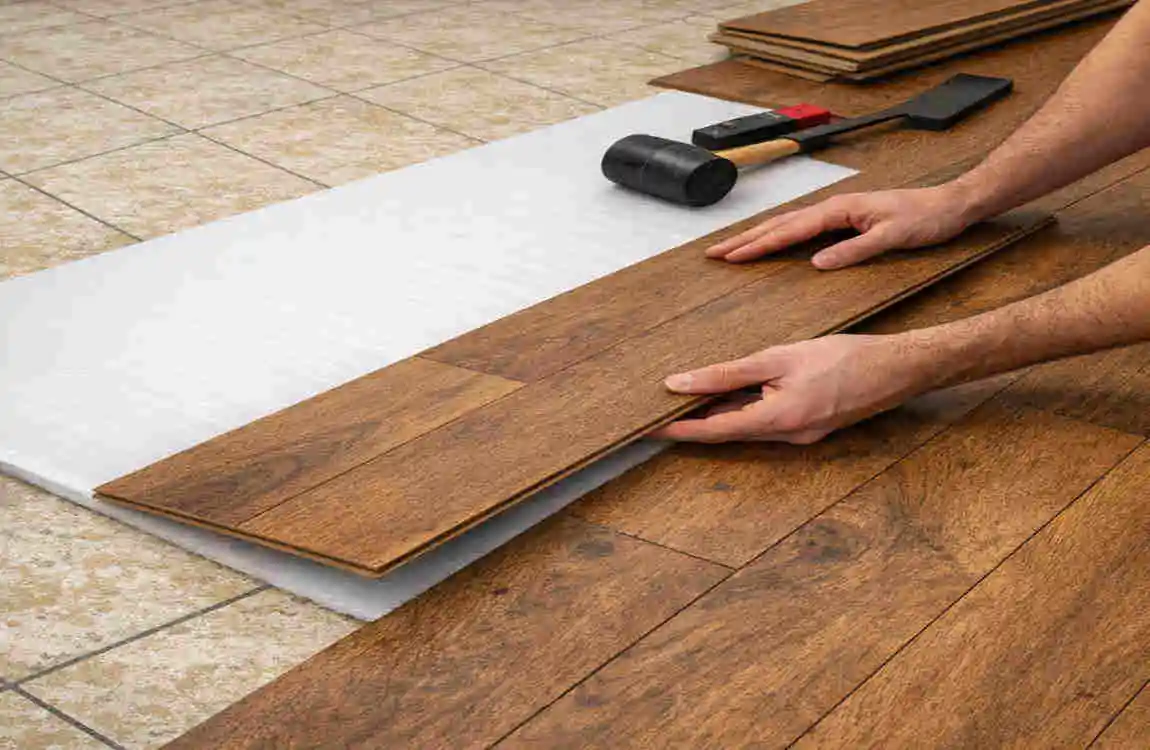
Yes, in many cases you can install laminate over vinyl flooring. This is usually possible because laminate is often installed as a floating floor, which means it locks together and sits over the existing surface instead of being nailed down.
That makes it easier to lay laminate over an old vinyl floor, as long as the underlying surface is stable. If the vinyl is in good condition, it can serve as a smooth base for the new floor.
When It Is Safe
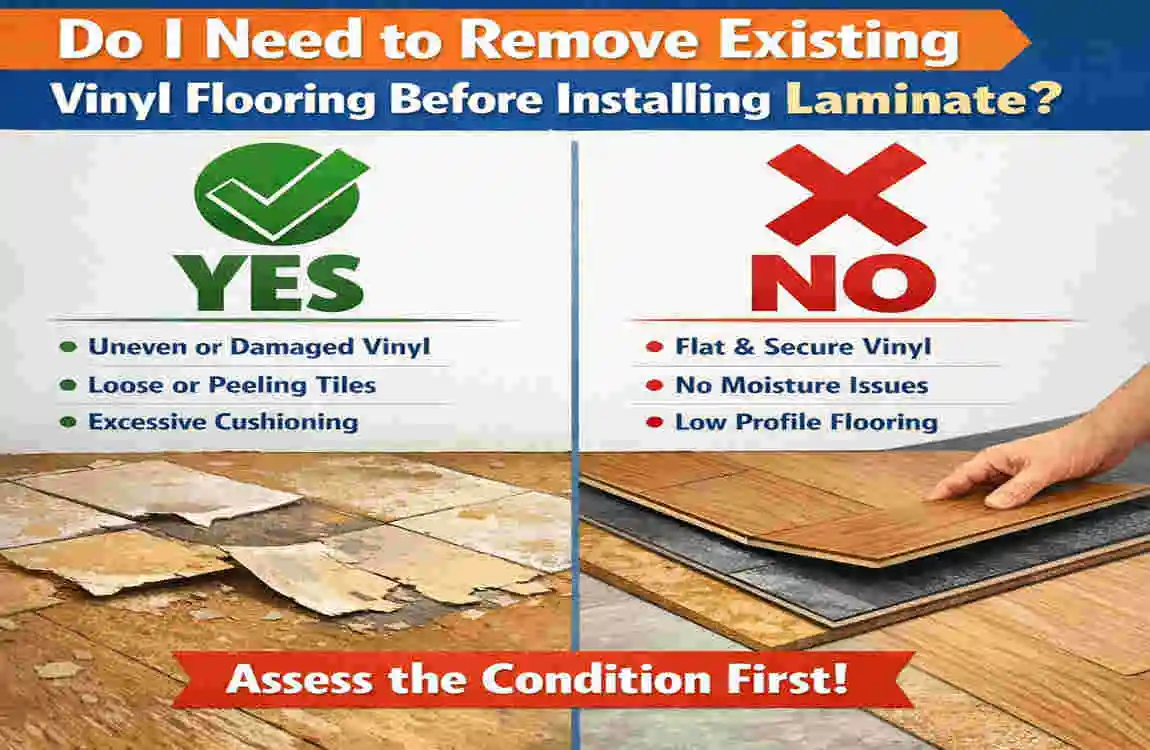
It is usually safe to install laminate over vinyl when the floor is:
- Smooth and flat
- Firmly attached
- Free of moisture problems
- Without soft or damaged spots
If the vinyl is secure and level, laminate can often perform well on top of it. This can save you time and money during your project.
When It Is Not Recommended
Installing laminate over vinyl is not a good idea when the floor has problems such as:
- Loose vinyl flooring
- Cushioned vinyl
- Multiple layers of flooring
- Water damage underneath
These issues can cause the laminate to move, flex, or wear out early. A laminate floor needs a solid base to last.
Do You Have to Remove Vinyl Flooring Before Installing Laminate?
Situations Where Removal Is Necessary
Sometimes removal is the best choice. Vinyl should usually come out if it is:
- Torn or damaged
- Affected by mold or mildew
- Sitting over an uneven subfloor
- Thick cushioned vinyl
If the floor is damaged, it may hide problems underneath. Installing a new floor over it can trap those issues and make them worse.
Situations Where Removal Isn’t Necessary
You may not need to remove the vinyl if it is:
- Sheet vinyl in good condition
- Thin vinyl flooring
- Properly glued down
- Flat and stable
In these cases, the vinyl may be strong enough to act as a base for laminate. That said, you still need to inspect it carefully first.
What Flooring Manufacturers Recommend
This part matters a lot. Every laminate product comes with specific installation instructions. Some brands allow laminate over vinyl, while others do not.
Always check the warranty and the product guide before you start. If you ignore the rules, you could end up with a floor problem that is not covered later.
Benefits of Installing Laminate Over Vinyl
Saves Time
One of the biggest advantages is speed. If the vinyl is still in good shape, you can skip the removal step and move straight into installation.
That makes the project much faster, especially if you are working on several rooms.
Reduces Labor Costs
Removing vinyl can take time and may require extra labor. If you leave it in place, you reduce the amount of work needed before the laminate goes down.
This can be a big help if you are trying to keep the project on budget.
Less Dust and Debris
Floor removal often creates a lot of mess. There may be old glue, broken pieces, or dust from the subfloor.
Installing over the vinyl keeps the process cleaner and easier to manage.
Protects the Existing Subfloor
In some cases, leaving the vinyl in place can help protect the subfloor below it. If the old floor is still sound, it may help reduce minor wear during the remodel.
Advantages of Removing Vinyl First
Better Floor Inspection
When you remove the vinyl, you can see what is really happening underneath. That makes it easier to find problems like moisture damage, cracks, or rot.
This is important because a damaged subfloor can cause bigger trouble later.
Longer Flooring Life
A new laminate floor usually lasts longer when it is installed on a solid, level base. If the old vinyl is uneven or soft, removing it may help the new floor perform better over time.
Easier to Fix Moisture Problems
If moisture is trapped under the vinyl, you need to address it before installing the laminate. Removing the old floor gives you a chance to dry the area and make repairs.
Better Height Transition Between Rooms
Adding laminate on top of vinyl raises the floor height in some homes; that can cause awkward transitions between rooms.
If you remove the vinyl first, you may get a cleaner and more even result.
How to Check Whether Your Vinyl Floor Is Suitable
Check for Flatness
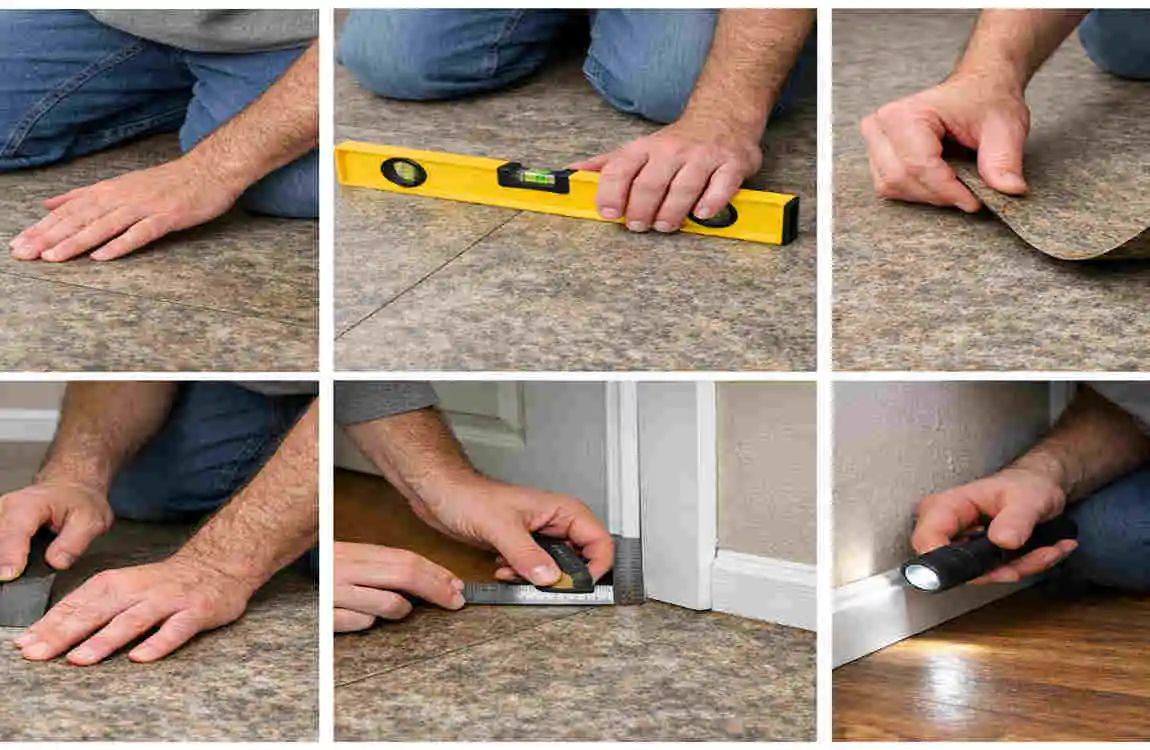
Use a straightedge or level to check whether the floor is level. Laminate flooring works best on a flat surface.
Small bumps and dips can lead to problems with the locking system.
Look for Moisture Damage
Look closely for signs like stains, bubbling, peeling, or a musty smell. These often point to hidden moisture problems.
If you see these signs, do not install over the vinyl until the source of the moisture is fixed.
Inspect for Loose Sections
Walk across the floor and press down on different areas. If sections move, lift, or feel soft, the vinyl may not be strong enough to support laminate.
Test Floor Stability
A floor should feel solid underfoot. If it flexes too much, the laminate may shift over time and start to fail.
Step-by-Step Guide to Installing Laminate Over Vinyl
Gather Tools and Materials
Before you begin, make sure you have everything ready. This may include:
- Laminate planks
- Underlayment
- Tape measure
- Utility knife
- Spacers
- Saw
- Trim tools
Being prepared saves time and makes the project run more smoothly.
Clean the Vinyl Surface
The vinyl should be clean, dry, and free from dust, grease, and old polish. Dirt can affect how well the laminate sits on top of the floor.
A clean base always gives better results.
Repair Minor Damage
If there are small holes, loose spots, or surface problems, fix them before installing the new floor. Do not hide damage under laminate.
Even small issues can grow bigger later.
Install Underlayment If Required
Some laminate floors need underlayment, while others already come with a pad attached. Underlayment can help with sound, comfort, and moisture control.
Always follow the product instructions.
Lay the Laminate Flooring
Start along one wall and work across the room. Lock the planks together carefully and keep the rows straight.
Take your time. A slow, careful installation usually yields better results than rushing.
Install Baseboards and Trim
After the laminate is in place, reinstall the baseboards or add trim as needed. This gives the floor a finished look and hides the expansion gap.
Common Mistakes to Avoid
Some mistakes can ruin an otherwise simple project.
- Installing over soft vinyl
- Ignoring moisture problems
- Skipping floor leveling
- Forgetting expansion gaps
- Not reading manufacturer instructions
- Using the wrong underlayment
If you avoid these issues, your new floor has a much better chance of lasting.
Vinyl Removal Process If Needed
Required Tools
If you decide to remove the vinyl, you may need:
- A scraper
- Utility knife
- Gloves
- Pry tools
- Floor adhesive remover
The exact tools depend on the type of vinyl and how it was installed.
Removing Sheet Vinyl
Sheet vinyl is usually lifted and cut into sections. Sometimes the adhesive holds tight, so you may need to work slowly.
Removing Vinyl Tiles
Vinyl tiles can often be pried up piece by piece. Older tiles may leave behind adhesive that needs to be cleaned.
Cleaning Adhesive Residue
Once the vinyl is gone, you may still need to remove glue from the subfloor. A clean base is important before installing laminate.
Preparing the Subfloor
The subfloor should be dry, level, and damage-free. If there are cracks or soft spots, fix them before moving forward.
Cost Comparison

Option Estimated Cost Time Required Difficulty
Install Over Vinyl Low Short Easy
Remove Vinyl First Medium to High Longer Moderate
If the vinyl is in good shape, installing over it can save money. If the floor has damage, removal may cost more at first but help avoid bigger repairs later.
Pros and Cons
Installing Over Vinyl Removing Vinyl
Faster installation Better subfloor inspection
Lower labor cost Fix hidden problems
Less mess Better long-term durability
Saves demolition work Ideal for damaged floors
Both options can work. The right one depends on the condition of your current floor.
Expert Tips for Best Results
Use Quality Underlayment
Good underlayment can help with sound, comfort, and moisture control. It also supports the laminate better.
Keep the Floor Dry
Moisture is one of the biggest threats to laminate flooring. Fix leaks and dry the floor fully before installation.
Acclimate Laminate Before Installation
Let the laminate sit in the room before installing it. This helps the planks adjust to the room temperature and humidity.
Measure Room Carefully
Good measurements help you buy the right amount of flooring and reduce waste.
Follow Expansion Gap Guidelines
Laminate needs room to expand and contract. Do not install it too tightly against the walls.
Frequently Asked Questions
Do you have to remove vinyl flooring before installing laminate?
Not always. If the vinyl is flat, firmly attached, and free from moisture or damage, laminate flooring can often be installed directly over it.
Can laminate flooring be installed over sheet vinyl?
Yes. Sheet vinyl in good condition usually provides a suitable base for floating laminate flooring.
Should I use underlayment over vinyl?
It depends on the laminate product. Some laminate flooring includes an attached underlayment, while others require a separate moisture barrier or underlayment.
What type of vinyl must be removed?
Cushioned, loose, damaged, or water-damaged vinyl flooring should generally be removed before installing laminate.
Can laminate flooring be installed over vinyl tiles?
Yes, provided the tiles are firmly bonded, level, and free from cracks or moisture issues.
| Topic | Information |
|---|---|
| Can laminate be installed over vinyl? | Yes, in many cases laminate flooring can be installed directly over existing vinyl if the vinyl is flat, clean, firmly attached, and in good condition. |
| When should vinyl be removed? | Remove vinyl if it is damaged, loose, uneven, cushioned, moldy, or installed over multiple flooring layers. |
| Benefits of keeping vinyl | Saves time and labor, reduces installation costs, and provides an extra moisture barrier when the vinyl is stable. |
| Benefits of removing vinyl | Creates a more stable subfloor, prevents future flooring issues, and allows better inspection for hidden moisture or damage. |
| Subfloor requirements | The subfloor should be dry, level, clean, and structurally sound before installing laminate flooring. |
| Need for underlayment | Some laminate flooring includes a built-in underlayment. If not, install the manufacturer-recommended underlayment unless the product instructions state otherwise. |
| Moisture concerns | Check for moisture problems before installation, especially on concrete subfloors or in basements. |
| Professional recommendation | Inspect the vinyl carefully. If it is smooth, secure, and free of defects, it can usually remain in place. Otherwise, remove it before installing laminate. |
