
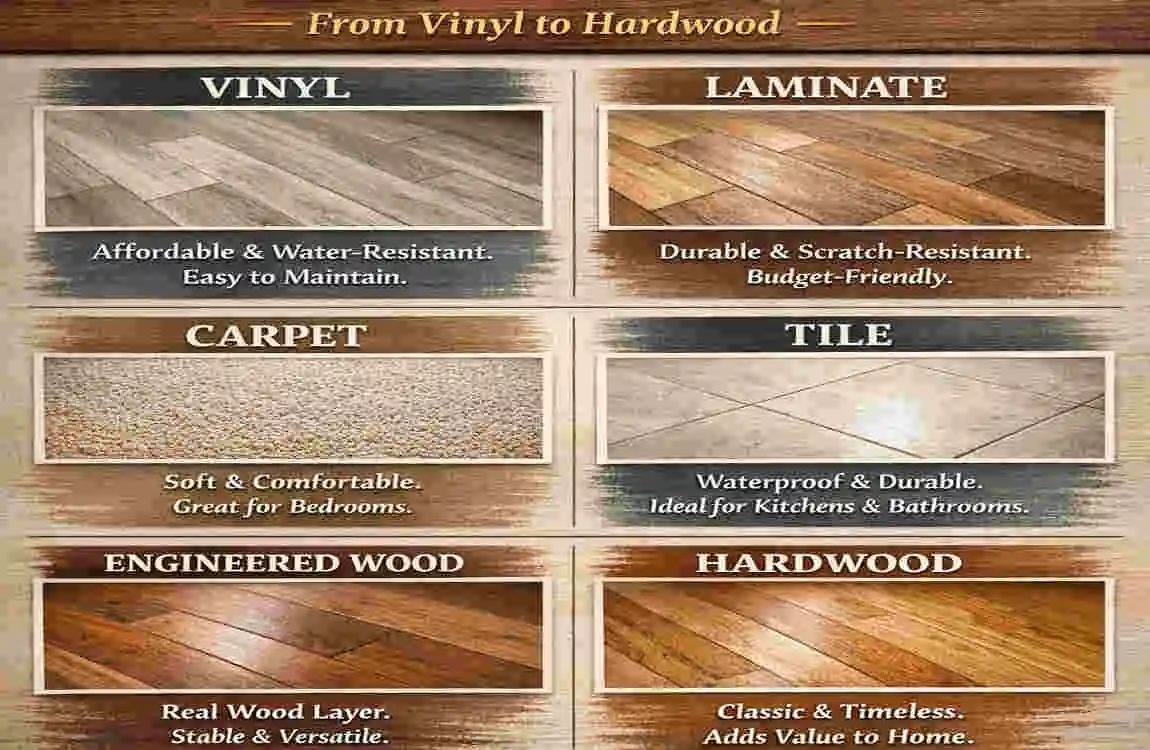
If you are wondering what flooring material is, it simply refers to the surface layer installed on the floor of a home or room. This is the part you walk on every day, so it plays a big role in how your home looks, feels, and functions.
The right flooring material can change the full mood of a room. It affects appearance, comfort, durability, cleaning, and cost. Some flooring types feel warm and soft, while others are tough and easy to clean. That is why people often compare options like vinyl, hardwood, laminate, tile, carpet, and engineered wood before making a choice.
The best flooring is not the same for every home. It depends on room use, moisture, traffic, budget, and personal style. A bathroom needs different flooring than a bedroom. A busy family home needs different flooring than a quiet apartment. In simple terms, flooring should fit your daily life, not just your taste.
Understanding Different Types of Flooring Materials
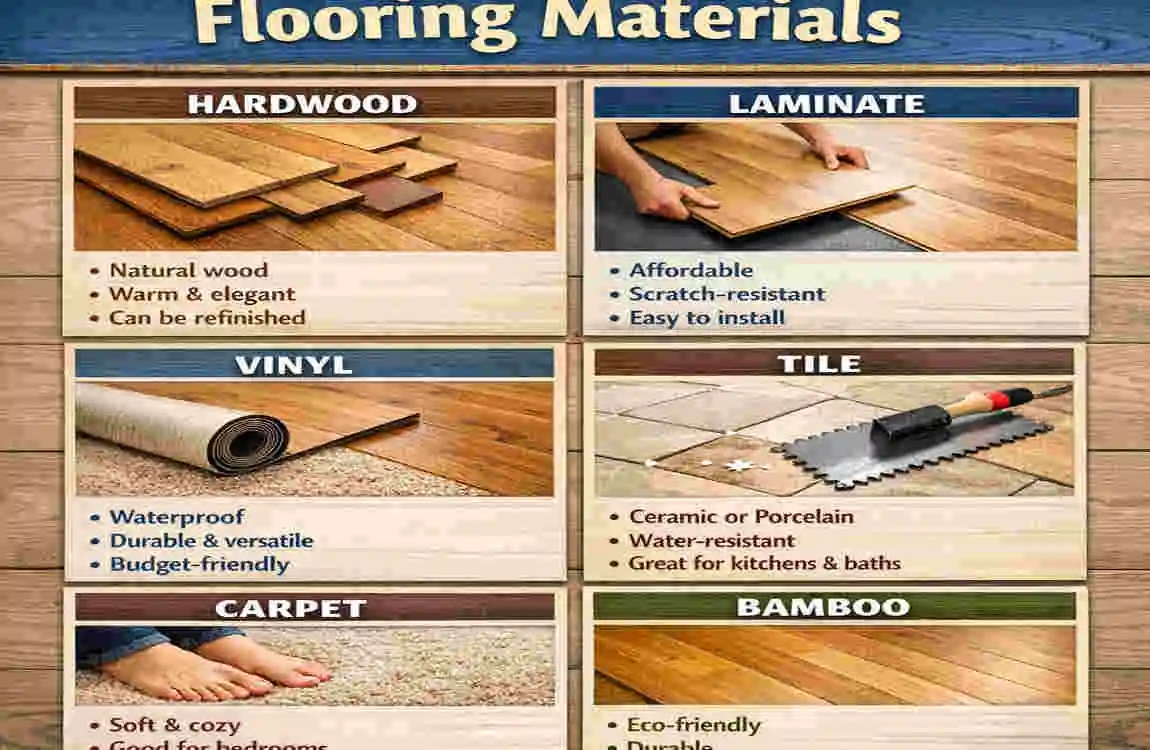
What Makes a Good Flooring Material?
A good flooring material should do more than look nice. It should also hold up well over time and match the way you live.
Here are the main things people usually look for:
- Durability so the floor lasts for years
- Moisture resistance for kitchens, bathrooms, and laundry rooms
- Easy cleaning for busy homes
- Comfort and style for a better living space
- Simple installation when possible
- Good long-term value instead of only a low starting price
A floor that looks great but wears out too fast may cost more in the long run. That is why it helps to think beyond the first price tag.
Main Categories of Flooring
Flooring materials usually fall into a few broad groups.
Hard flooring materials include vinyl, tile, hardwood, engineered wood, and laminate. These are popular because they are durable and often easy to maintain.
Soft flooring materials mainly include carpet. Carpet feels cozy, reduces noise, and works well in relaxing spaces.
You can also group flooring into natural and manufactured categories. Hardwood is natural, while vinyl and laminate are manufactured. Some materials are also waterproof or moisture-resistant, which makes them useful in damp rooms.
Factors to Consider Before Choosing Flooring
Before you buy flooring, think about the room and your lifestyle.
- Room location: Is it a bathroom, bedroom, or kitchen?
- Traffic level: Will lots of people walk on it every day?
- Children and pets: Do you need stain resistance and scratch resistance?
- Climate: Does your home deal with humidity or temperature swings?
- Maintenance: How much cleaning are you willing to do?
- Home style: Do you want a modern, rustic, or classic look?
These simple questions can help you avoid choosing a floor that looks nice but does not work well in real life.
Vinyl Flooring: Affordable and Versatile
What Is Vinyl Flooring?
Vinyl flooring is an artificial material composed of layered synthetic materials. It is designed to be practical, attractive, and budget-friendly. Many homeowners now choose luxury vinyl plank (LVP) or luxury vinyl tile (LVT) because these products mimic the look of wood or stone while being easier to care for.
Benefits of Vinyl Flooring
Vinyl is popular for good reason. It offers a nice mix of price, style, and convenience.
- Water resistance
- Affordable pricing
- Easy cleaning
- Many colors and patterns
- Comfortable underfoot
This makes vinyl a strong choice for families, rental homes, and busy households. It gives you flexibility without demanding too much care.
Where Vinyl Flooring Works Best
Vinyl works especially well in spaces that often get wet or dirty.
It is a strong option for:
- Kitchens
- Bathrooms
- Laundry rooms
- Living areas
- Rental properties
Because it handles spills well, vinyl is one of the easiest flooring materials for everyday life.
Potential Drawbacks
Vinyl is practical, but it is not perfect. Sharp objects can damage it, and cheaper products may not last as long. Also, while many vinyl floors look very realistic, they may still not feel exactly like real wood.
Hardwood and Engineered Wood Flooring
What Is Hardwood Flooring?
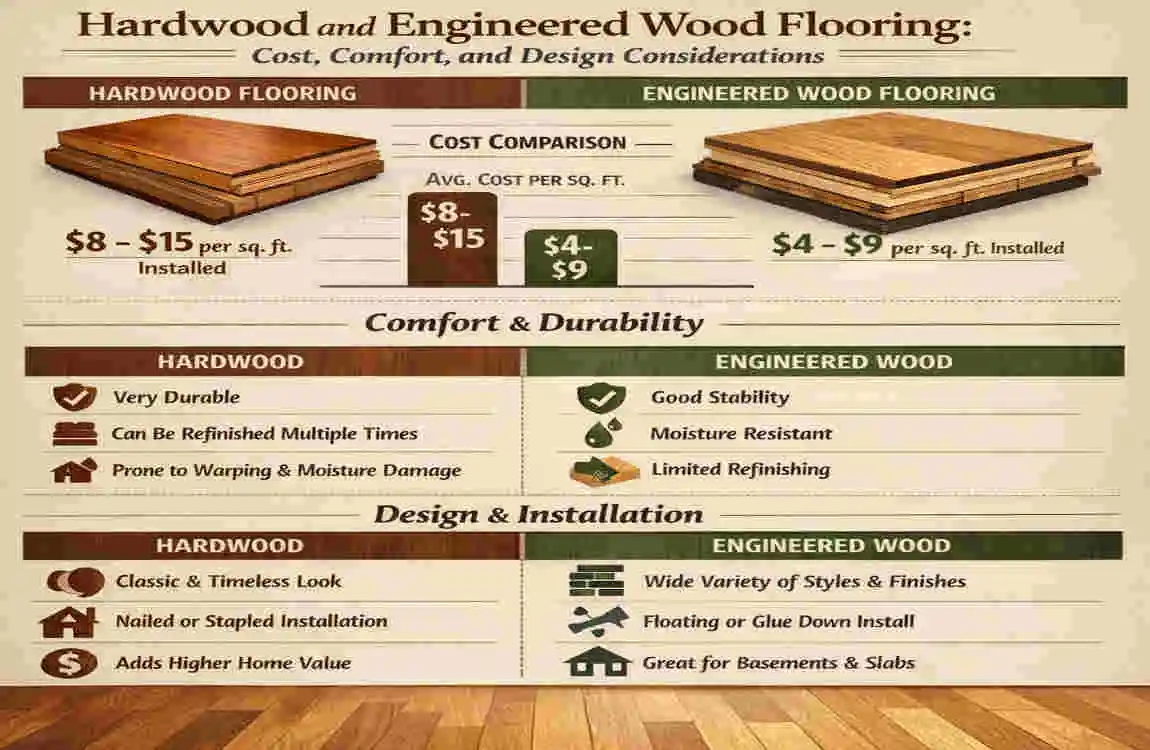
Hardwood flooring is made from solid pieces of natural wood. It has a classic look that many homeowners love because it feels warm, rich, and timeless. Common wood types include oak, maple, walnut, and cherry.
Hardwood can also come in different finishes, which affect the floor’s shine, color, and overall style.
Advantages of Hardwood
Hardwood remains one of the most respected flooring choices because it offers long-lasting beauty.
Its main strengths are:
- Long lifespan
- Timeless appearance
- Can often be refinished
- Adds warmth and character
If properly cared for, hardwood can remain beautiful for many years and may even enhance a home’s appeal.
What Is Engineered Wood?
Engineered wood looks like hardwood on the surface, but it has a layered structure underneath. The top layer is real wood, while the lower layers are built for stability.
This makes engineered wood a smart choice in places where humidity levels change frequently. It is usually more stable than solid hardwood, especially in climates where floors can expand or contract.
Hardwood Flooring Considerations
Hardwood is beautiful, but it does need more care than some other options. It usually has a higher upfront cost and is more sensitive to moisture. It can also scratch or dent over time, especially in homes with pets or heavy traffic.
Still, many people choose hardwood because of its natural look and long-term value.
Laminate, Tile, and Carpet Flooring
Laminate Flooring
Laminate is a layered flooring material designed to resemble wood, stone, or other surfaces. It is often chosen because it gives a stylish look at a lower price than hardwood.
Laminate is known for being:
- Affordable
- Durable
- Easy to clean
- Available in many realistic designs
However, it does have limits. Not all laminates are suitable for wet areas, and excessive moisture can damage some products. Always check the product details before using it in moisture-prone rooms.
Tile Flooring
Tile is a strong and reliable flooring choice. The two most common types are ceramic and porcelain. Both are popular in homes because they resist water and stand up well to wear.
Tile works well in:
- Kitchens
- Bathrooms
- Entryways
It is very durable, but it can feel hard and cold underfoot. Installation can also be more involved, and grout lines need cleaning over time.
Carpet Flooring
Carpet remains a favorite for people who want softness and comfort. It works especially well in bedrooms and family rooms where warmth matters most.
Carpet offers:
- Soft texture
- Better insulation
- Noise reduction
- Many design choices
The downside is that carpet can stain more easily and may need more cleaning than hard flooring. If you choose carpet, regular care is important.
How to Choose the Best Flooring Material for Each Room
Best Flooring for the Kitchen
Kitchens need flooring that can handle spills, foot traffic, and frequent cleaning. Vinyl, tile, and engineered wood are all strong choices here.
If you want something easy to maintain, vinyl is a smart option. If you want a more premium and durable feel, tile or engineered wood may be better.
Best Flooring for Bathrooms
Bathrooms need water resistance above almost everything else. That is why vinyl and tile are the most common choices.
Vinyl feels a bit softer and warmer, while tile offers very strong water resistance and a clean look. Both work well if installed properly.
Best Flooring for Living Rooms
Living rooms need flooring that looks good and feels comfortable. Hardwood, engineered wood, laminate, and luxury vinyl are all common picks.
If you want a classic and natural style, hardwood is a strong choice. If you want a balance of style and practicality, engineered wood or luxury vinyl may be a better fit.
Best Flooring for Bedrooms
Bedrooms should feel calm and cozy. That is why many people choose carpet for its softness and quiet feel.
Still, hardwood, laminate, and vinyl can also work well if you prefer a cleaner, more modern look. It depends on whether comfort or easy cleaning matters more to you.
Best Flooring for High-Traffic Areas
Hallways, entryways, and busy family rooms need durable flooring. Tile, vinyl, laminate, and engineered wood can all handle frequent use if you choose good-quality products.
In these areas, durability often matters more than softness. You want a floor that keeps its shape and appearance even with daily wear.
Flooring Cost, Maintenance, and Long-Term Value
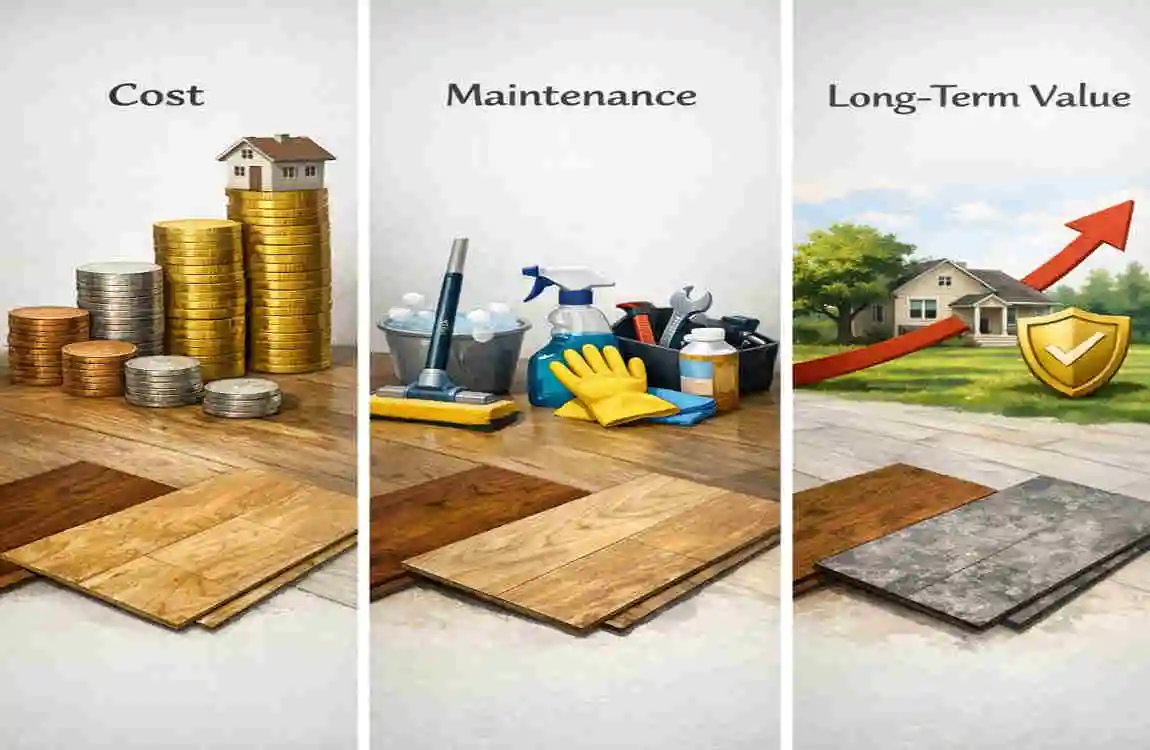
Understanding Flooring Costs
The price of flooring is not just about the material itself. Several other costs can affect your total budget.
These may include:
- Material cost
- Installation cost
- Subfloor preparation
- Removal of old flooring
- Extra materials and finishing
A cheaper floor may seem like the best deal at first, but a higher-quality product can sometimes save money later because it lasts longer and needs less repair.
Flooring Maintenance Tips
Good maintenance helps any floor last longer and look better.
- Sweep and vacuum regularly
- Clean according to the manufacturer’s instructions
- Wipe up spills quickly
- Use the right cleaning products
- Protect floors from furniture scratches
Simple care habits can make a big difference over time.
Which Flooring Offers the Best Long-Term Value
Long-term value depends on both upfront cost and lifespan. A low-cost floor that wears out quickly may end up costing more than a stronger material that lasts longer.
For example, vinyl may offer excellent value for busy homes because it is affordable and easy to maintain. Hardwood may cost more, but it can last for decades and add strong visual value to a home. The best choice depends on your needs, not just the price.
FAQ About Flooring Materials
What is flooring material?
Flooring material is the surface material installed over a home’s floor structure. Common examples include vinyl, hardwood, laminate, tile, engineered wood, and carpet.
What is the most popular flooring material?
Vinyl, hardwood, laminate, tile, and carpet are among the most common choices. The most popular option depends on the room, budget, and personal style.
What is the most durable flooring material?
Tile and high-quality hardwood are known for strong durability. Some luxury vinyl and laminate products are also made to handle heavy use.
What flooring material is best for a bathroom?
Water-resistant vinyl and ceramic or porcelain tile are popular bathroom choices because they handle moisture well.
Is vinyl flooring better than hardwood?
Not always. Vinyl is easier to maintain and handles moisture better, while hardwood offers natural beauty and is often refinishable.
Which flooring material is easiest to maintain?
Vinyl and many laminate floors are among the easiest to care for. Still, maintenance depends on the exact product.
Is laminate flooring waterproof?
Not all laminate is waterproof. Some newer products are highly water-resistant, but you should always check the product details.
How do I choose the right flooring material for my home?
Think about moisture, traffic, comfort, cleaning, budget, and style before you decide.
| Flooring Material | Key Features | Best For | Main Advantage |
|---|---|---|---|
| Vinyl Flooring | Water-resistant, versatile, easy to clean | Kitchens, bathrooms, busy areas | Affordable and durable |
| Hardwood Flooring | Natural wood with timeless appeal | Living rooms, bedrooms | Long-lasting and elegant |
| Laminate Flooring | Wood-like appearance, scratch-resistant | Family rooms, bedrooms | Budget-friendly alternative to hardwood |
| Tile Flooring | Durable, water-resistant, many styles | Bathrooms, kitchens, entryways | Excellent moisture resistance |
| Carpet Flooring | Soft, warm, comfortable | Bedrooms, living rooms | Adds insulation and comfort |
| Bamboo Flooring | Natural, renewable material | Modern interiors | Stylish and eco-friendly |
| Engineered Wood | Real wood surface with layered construction | Living areas, bedrooms | More stable than solid hardwood |
