
Laminate flooring is popular because it looks stylish, feels comfortable, and usually costs less than many other flooring options. It can give a home a warm wood-look finish without the higher price of real hardwood.
That is why many homeowners ask, “Can you put laminate in home bathroom spaces?” It seems like a smart idea, especially if you want a beautiful floor on a budget.
The short answer is yes, but only in the right bathroom and with the right type of laminate. Bathroom moisture changes everything. If you choose the wrong product or install it poorly, water can cause swelling, warping, and long-term damage.
What Is Laminate Flooring?
How Laminate Flooring Is Made
Laminate flooring is built in layers. Each layer has a different job, and together they create a strong, attractive floor.
The main layers are:
- Wear layer: the top protective surface
- Decorative layer: the printed design that gives the floor its look
- Core board: the main body of the plank
- Backing layer: the bottom layer that adds stability
This layered structure is what makes laminate affordable and attractive. But it also means moisture can be a problem if water reaches the inner core.
Different Types of Laminate Flooring
Not all laminate is the same. Some products are only made for dry spaces, while others are better suited for damp areas.
The three main types are:
- Standard laminate
- Water-resistant laminate
- Waterproof laminate
Standard laminate is the least protected. Water-resistant laminate handles small spills better. Waterproof laminate gives the best protection for bathroom use.
Can You Put Laminate in a Home Bathroom?
The Short Answer
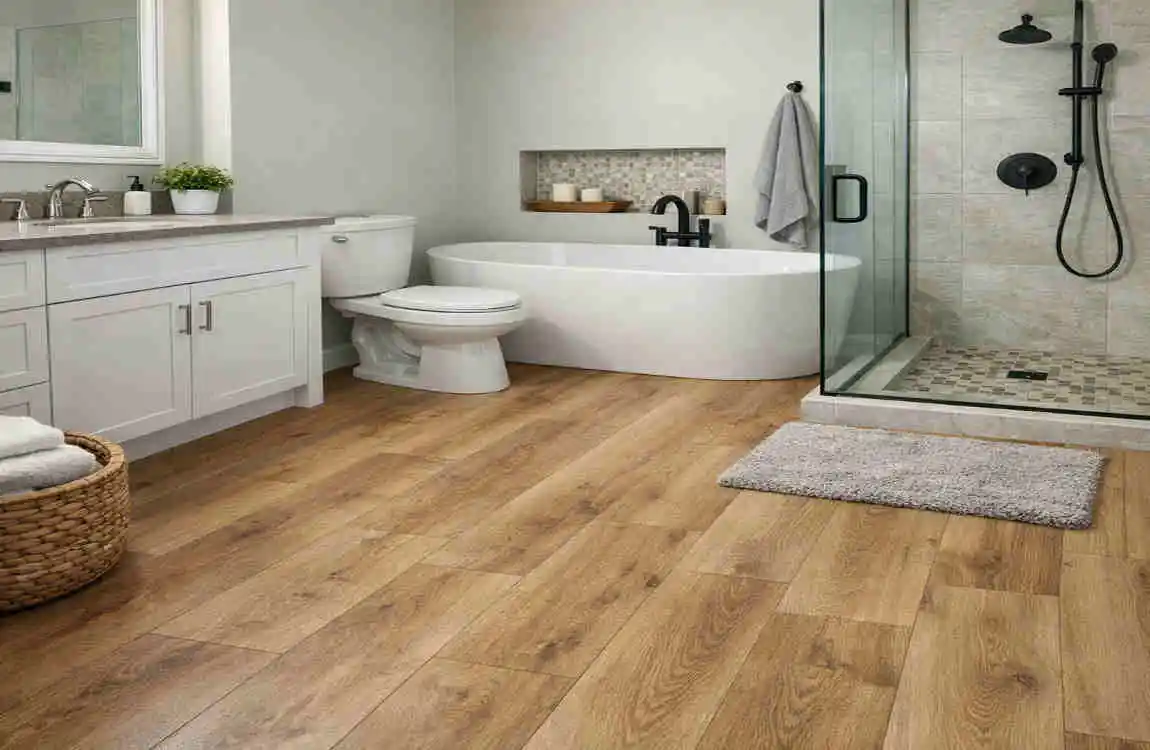
Yes, you can put laminate in a bathroom, but it depends on the bathroom and the product you choose.
If you use waterproof laminate and install it carefully, it can work in some bathrooms. If the room gets a lot of standing water, though, laminate is usually not the best choice.
When Laminate Is a Good Choice
Laminate works best in bathrooms that stay fairly dry and have good airflow.
Good examples include:
- Half bathrooms
- Guest bathrooms
- Low-moisture spaces
These rooms usually have less shower use and less water splashing on the floor.
When You Should Avoid It
You should be careful with laminate in bathrooms that get heavy water use or have poor ventilation.
Avoid laminate if the bathroom has:
- Frequent standing water
- High humidity
- Poor ventilation
In those rooms, water-resistant materials like vinyl or tile usually perform better.
Pros of Installing Laminate in a Bathroom
Affordable Flooring Option
One of the biggest reasons people choose laminate is price. It often costs less than hardwood, tile, or stone.
If you want a stylish bathroom without spending too much, laminate can be a practical option.
Attractive Wood-Look Designs
Laminate comes in many wood-style finishes. That makes it easy to create a warm, modern bathroom look without using real wood.
Many homeowners like the realistic appearance and the wide range of colors.
Comfortable Underfoot
Laminate usually feels warmer and softer underfoot than ceramic or porcelain tile. That can make the bathroom more comfortable, especially in cooler months.
Easy DIY Installation
Many laminate products use click-lock systems. That makes them easier to install than some other flooring types.
If you are comfortable with basic home projects, you may be able to handle the job yourself.
Wide Variety of Colors and Styles
Laminate gives you many design choices. You can choose light wood tones, dark wood shades, or even stone-like looks.
This makes it easier to match the floor with your bathroom style.
Cons of Laminate Flooring in Bathrooms
Moisture Damage Risk
The biggest problem with laminate in a bathroom is water. If moisture gets into the seams or beneath the floor, the material can be damaged.
That risk is higher in bathrooms than in most other rooms.
Swelling and Warping
If water reaches the core board, the planks can swell or warp. Once that happens, the damage is often hard to fix.
This is why water control matters so much.
Seam Vulnerability
Even if the surface holds up well, the seams between planks can be weak points. Water can slip through these gaps if the floor is not sealed properly.
Difficult Repairs After Water Damage
If laminate gets damaged by water, you often cannot patch it the way you might patch tile or vinyl. In many cases, you may need to replace several planks or the entire section of the floor.
Standard Laminate vs Waterproof Laminate
FeatureStandard LaminateWaterproof Laminate
Water Resistance Low High
Bathroom Use Limited Recommended
Cost Lower Higher
Durability Moderate Excellent
Lifespan 10–15 Years 15–25 Years
Best Bathrooms for Laminate Flooring
Powder Rooms
Powder rooms are usually the safest place for laminate. They do not have showers or tubs, so the floor gets much less direct water exposure.
Guest Bathrooms
Guest bathrooms can also work well if they are used lightly and kept dry.
Low-Traffic Bathrooms
If the bathroom is not used often, laminate is more likely to last longer.
Basement Bathrooms with Proper Moisture Control
Laminate can work in basement bathrooms if the room is dry, well-ventilated, and protected from moisture issues.
Bathrooms Where Laminate Is Not Recommended
Family Bathrooms
Family bathrooms usually see a lot of water, spills, and daily traffic. That makes them riskier for laminate.
Children’s Bathrooms
Kids often splash water on the floor, leave wet towels behind, or forget to dry spills. That can be a problem for laminate.
Bathrooms with Poor Ventilation
If steam lingers after showers, laminate may struggle over time. Poor airflow increases the chance of moisture damage.
Wet Rooms
Wet rooms are not a good match for laminate. These spaces are designed for frequent water exposure, which laminate cannot handle well.
How to Install Laminate Flooring in a Bathroom
Prepare the Subfloor
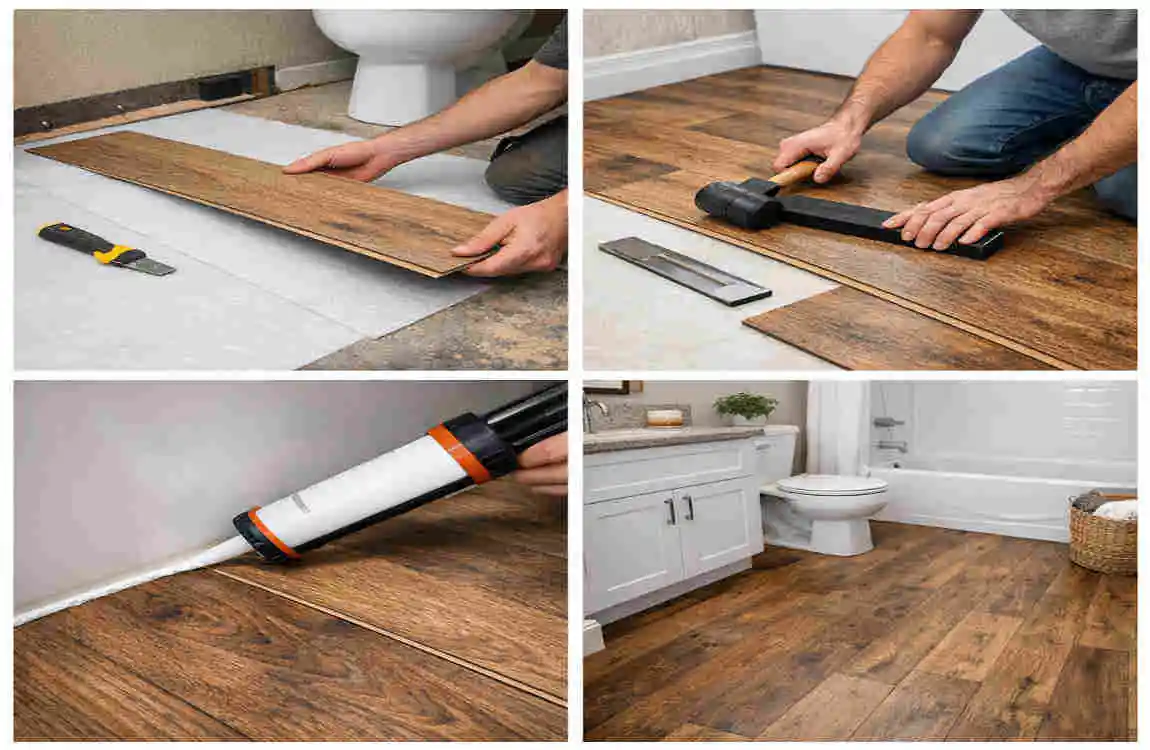
The subfloor must be clean, level, and dry before installation. Any moisture or uneven area can cause future problems.
Install a Moisture Barrier
A moisture barrier helps protect the flooring from water rising from beneath. This is especially important in bathrooms.
Leave Expansion Gaps
Laminate needs space to expand and contract. If you do not leave proper gaps, the floor may buckle.
Seal Around Fixtures
Use waterproof sealant around toilets, tubs, and other fixed areas. This helps block water from getting into the seams.
Finish With Waterproof Trim
Waterproof trim helps protect the edges and gives the room a cleaner finish.
Tips to Protect Laminate Flooring From Moisture
Clean Water Immediately
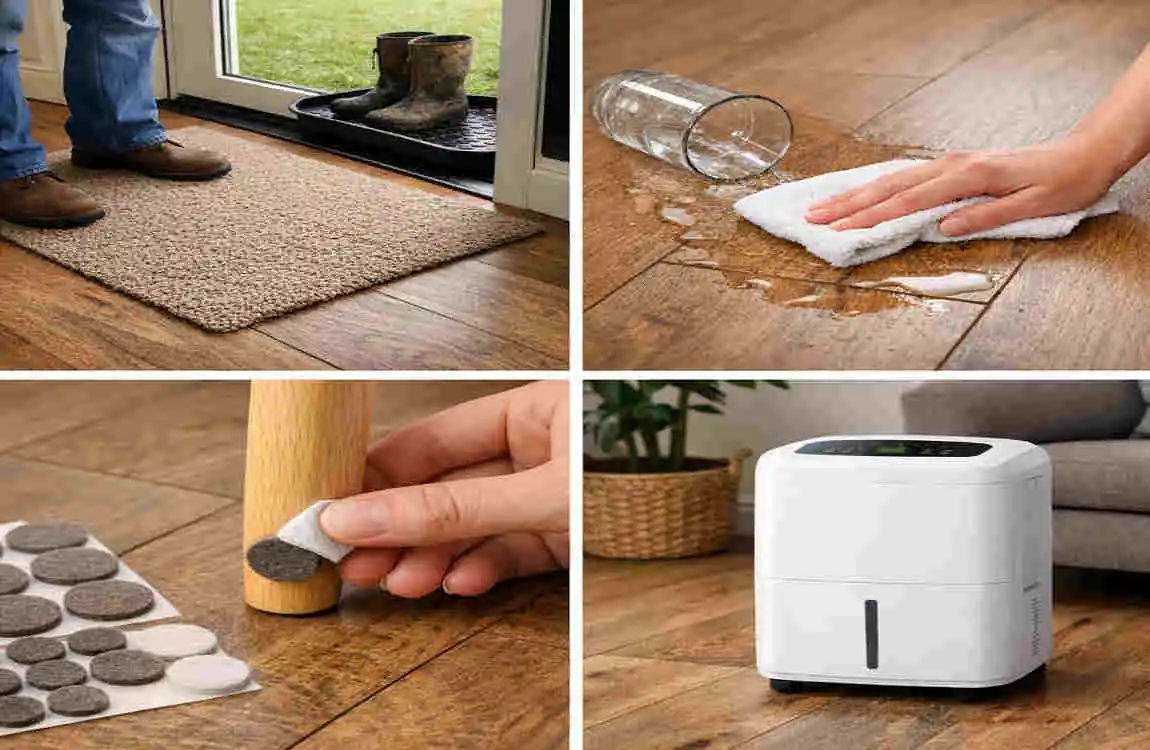
If water spills, wipe it up right away. Do not let it sit on the floor.
Use Bath Mats
Place mats near the sink, bathtub, and shower to catch splashes before they spread.
Improve Bathroom Ventilation
Use an exhaust fan or open a window when possible. This helps reduce humidity after showers.
Seal the Edges
Sealing edges and seams gives the floor extra protection. This is one of the most helpful tips for laminate flooring in bathrooms.
Avoid Excessive Water While Cleaning
Use a damp mop, not a soaking wet one. Too much water can lead to trouble over time.
Common Mistakes to Avoid
- Installing standard laminate in very wet bathrooms
- Ignoring expansion gaps
- Skipping underlayment
- Leaving seams unsealed
- Allowing water to sit for long periods
Best Alternatives to Laminate for Bathrooms
Luxury Vinyl Plank (LVP)
LVP is one of the best bathroom flooring options because it handles moisture well and still looks stylish.
Ceramic Tile
Ceramic tile is a classic bathroom choice. It is durable, water-resistant, and widely used.
Porcelain Tile
Porcelain is even more water-resistant than many other options and works well in high-moisture spaces.
Engineered Vinyl Flooring
This type of flooring is designed for modern homes and typically offers high water resistance.
Waterproof Hybrid Flooring
Hybrid flooring combines different materials for better strength and moisture control.
Cost of Installing Laminate in a Bathroom
Material Costs
Standard laminate usually costs less than waterproof laminate. However, the cheaper option may not be the best for bathroom use.
Installation Costs
DIY installation can reduce costs, but professional installation may be worth it if you want a tighter, more reliable finish.
Maintenance Costs
Laminate usually has low day-to-day maintenance costs, but water damage can be costly if the floor is not well protected.
Maintenance Tips for Bathroom Laminate Flooring
- Sweep regularly
- Use a damp, not soaking, mop
- Wipe spills immediately
- Avoid steam cleaners
- Inspect seals annually
These simple habits can help the floor last longer and stay in better shape.
Is Laminate Better Than Vinyl in Bathrooms?
Water Resistance
Vinyl usually wins here. It handles moisture better than laminate.
Durability
Both can be durable, but waterproof vinyl often performs better in wet spaces.
Appearance
Laminate often gives a more realistic wood look, which many homeowners love.
Comfort
Laminate can feel warmer and softer than tile, which adds comfort.
Price
Standard laminate may cost less upfront, but vinyl may save money in the long run if moisture is a concern.
Lifespan
Good waterproof laminate can last a long time, but vinyl often has the edge in bathrooms.
Expert Tips Before Choosing Laminate for a Bathroom
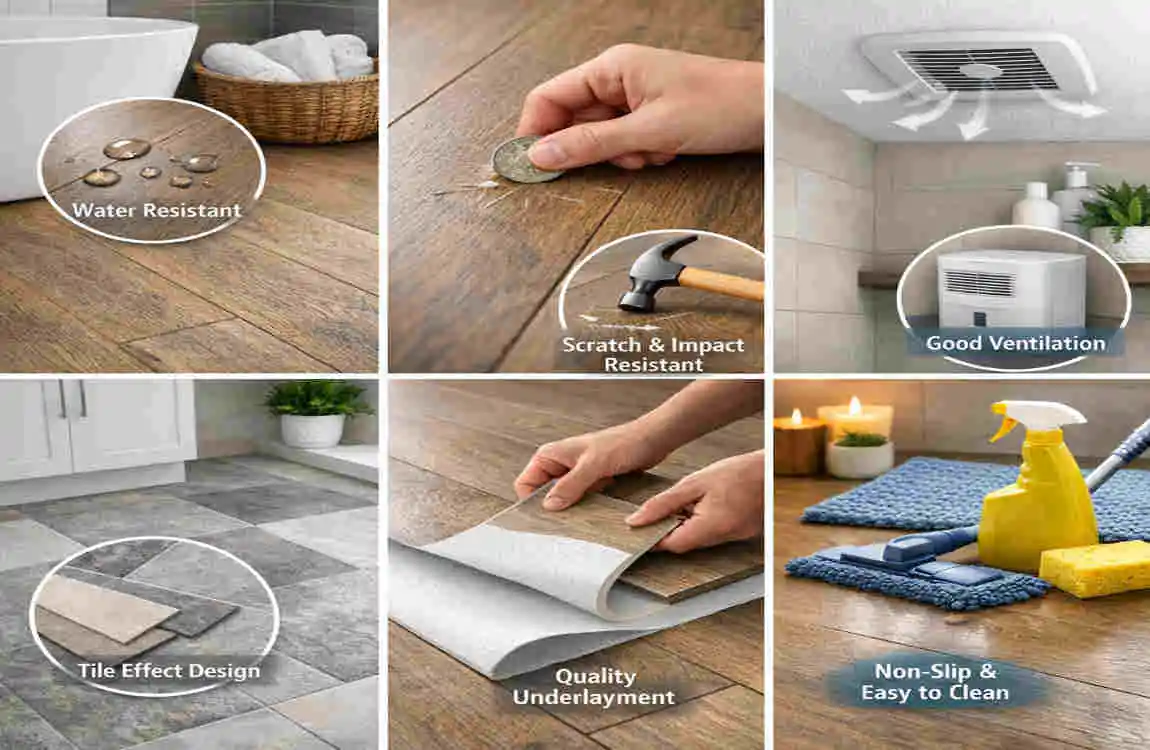
- Choose waterproof products
- Buy quality underlayment
- Install moisture barriers
- Seal all edges
- Follow manufacturer guidelines
If you follow these steps, your floor has a much better chance of holding up well.
Frequently Asked Questions
Can you put laminate in a home bathroom safely?
Yes, especially if you use waterproof laminate, seal the edges properly, and clean up moisture quickly.
Is waterproof laminate suitable for bathrooms?
Yes. Waterproof laminate is made to resist moisture better than standard laminate.
How long does laminate flooring last in a bathroom?
With proper installation and care, quality waterproof laminate can last 15–25 years.
What happens if water gets under laminate flooring?
The core can swell, warp, or become permanently damaged if water remains trapped beneath it.
Is laminate or vinyl better for bathrooms?
Vinyl usually offers better water resistance, while laminate often looks more like real wood.
| Topic | Information |
|---|---|
| Can laminate be used in a bathroom? | Yes, but only water-resistant or waterproof laminate is recommended for bathrooms. |
| Best Type | Waterproof laminate flooring with sealed edges and a moisture-resistant core. |
| Suitable Bathrooms | Half bathrooms and guest bathrooms with low moisture exposure are ideal. |
| Not Recommended For | Bathrooms with frequent standing water, poor ventilation, or heavy daily use. |
| Main Benefits | Affordable, stylish, comfortable underfoot, easy installation, and available in many wood-look designs. |
| Potential Drawbacks | Standard laminate can swell, warp, or become damaged if water penetrates the seams |
