

Your basement floor is most likely cracking because the concrete shrank while it dried and cured. That is normal and usually harmless. But cracks can also come from soil settling under the slab, water pressure pushing up from below, swelling clay soil, tree roots, or missing control joints. Thin, dry cracks that stay the same size are cosmetic. Cracks wider than about 1/4 inch, cracks with one side higher than the other, and cracks that leak water deserve a professional inspection.
You walk downstairs to the laundry room or home gym and spot a line running across the concrete that was not there before. Your stomach drops. Is the house sinking? Is water coming? Do you need to call someone today?
Why Is My Basement Floor Cracking? The 7 Most Common Causes
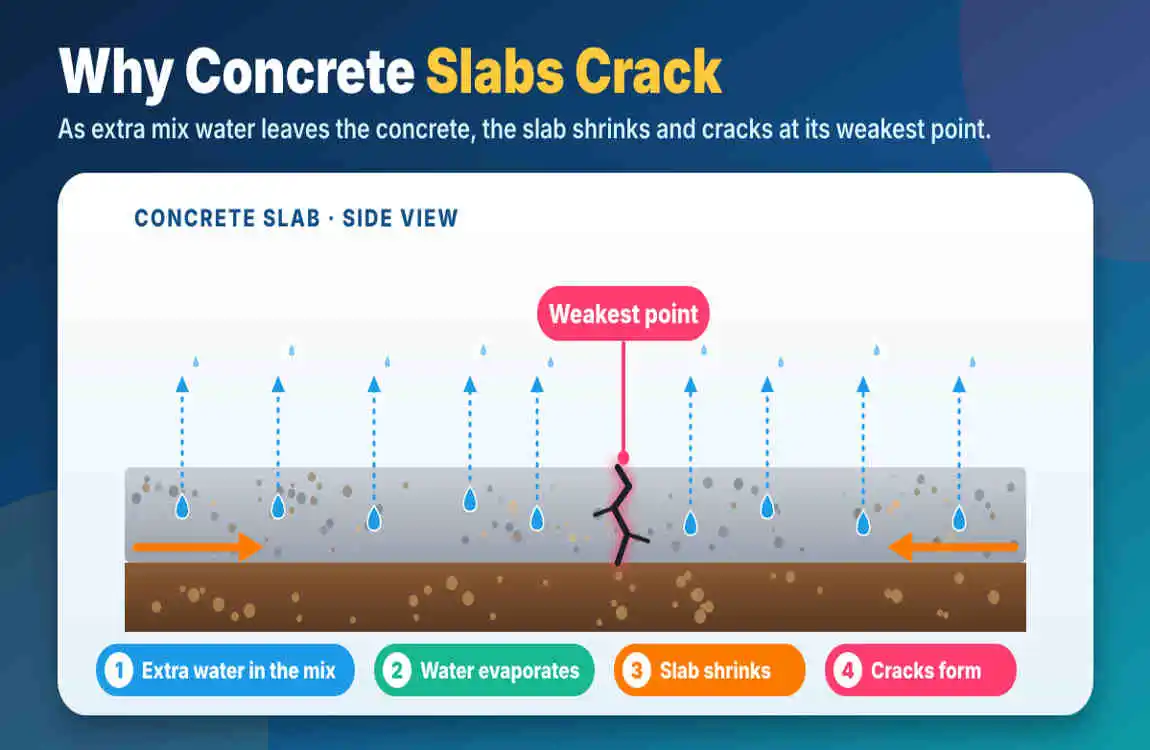
Concrete shrinkage (the most common cause)
Fresh floor concrete is mixed with more water than it needs to harden. As that extra water evaporates, the slab shrinks, and concrete is weak when pulled apart. The result is cracking. As Houzz explains in its concrete guide, the loss of water reduces the volume and literally pulls the slab apart, and a hairline crack usually runs the full thickness of the slab rather than just the surface.
Shrinkage cracks tend to appear in the first months or years, often straight or in a faint spiderweb pattern, and often run from corners or around pipes and posts. Home-improvement experts at Bob Vila note that fine cracks like these generally need no structural repair.
Soil settlement under the slab
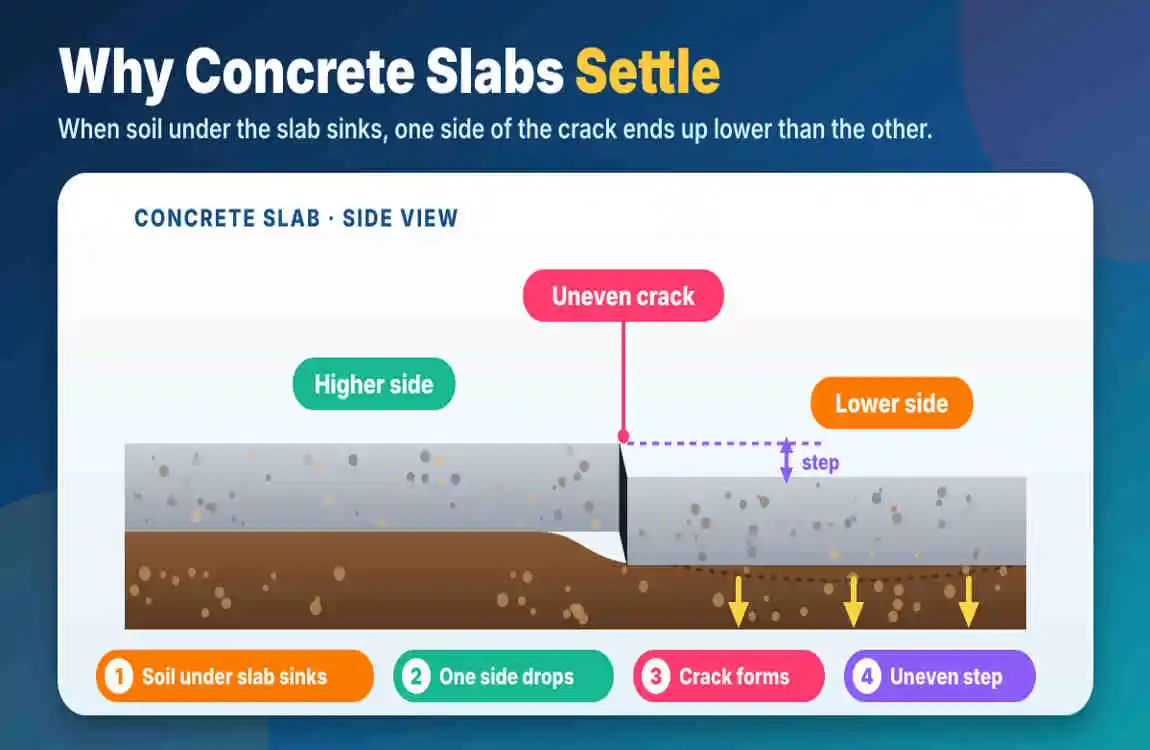
If the soil beneath the floor was poorly compacted, or the ground shifts as it dries and re-wets, parts of the slab lose support. The concrete then sags or drops, often leaving a crack where one side is lower than the other. The basement-waterproofing specialists at Basement Systems link cracked, sinking, uneven slabs directly to settlement.
Hydrostatic pressure (water pushing up from below)
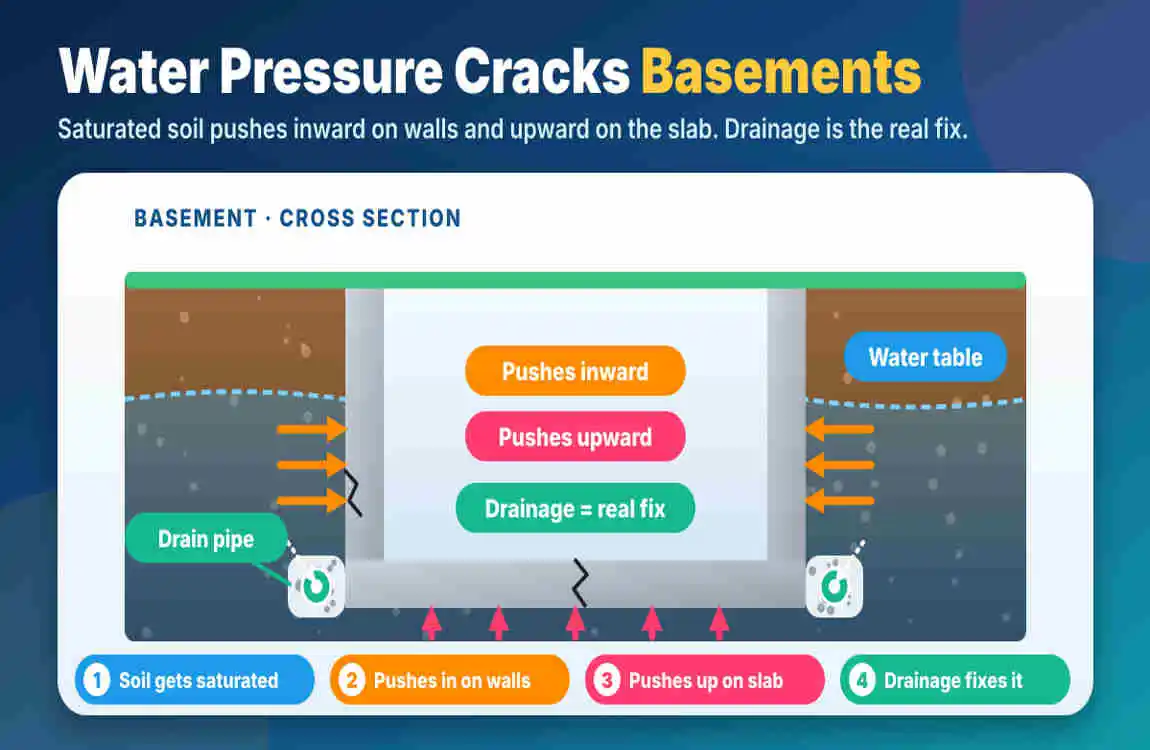
When the ground around your home is saturated from heavy rain, snowmelt or poor drainage, groundwater pushes against the foundation and up under the floor. Water is heavy, and that force is enough to crack and even lift concrete. This kind of crack is often accompanied by floor dampness, white mineral deposits, or water seeping up after storms. Angi’s guidance on foundation cracks points to clay-heavy soils and floods as common triggers.
Expansive clay soil and frost heave
Clay swells when wet and shrinks when dry. That seasonal tug-of-war can lift and drop sections of floor, producing cracks that widen and narrow through the year. In cold climates, frozen ground can add upward pressure of its own.
Missing or poorly placed control joints
Concrete will crack somewhere. Contractors cut shallow grooves, called control or contraction joints, so the cracking happens along a neat planned line instead of randomly. Industry guidance reviewed by The Concrete Network and similar trade sources stresses that cracking is expected; joints simply steer it. If your slab has long uninterrupted spans, expect random cracks.
Tree roots, plumbing leaks and heavy loads
Roots can lift a slab from beneath. A slow leak in a drain line can wash out soil and leave a void. A heavy water heater, storage rack or workshop machine on a thin slab can also stress the concrete over time.
A poor pour: too much water, thin slab, weak base
If the original mix was too wet, the slab was thin, the base was not compacted, or the surface was finished or cured badly, you can end up with more cracking than normal. Older homes with a long run of cracks across the whole cracking floor often fall into this group.
How to Read Your Crack: A Quick Visual Guide
| What you see | Likely cause | Severity | What to do |
|---|---|---|---|
| Hairline cracks, straight or spiderweb, dry | Drying shrinkage | Low | Seal if you like; monitor |
| Crack widening over months | Ongoing soil movement or water pressure | Moderate to high | Mark, measure, call a pro |
| One side higher or lower | Settlement or heave | Moderate to high | Professional evaluation |
| Damp, wet or white mineral residue | Hydrostatic pressure, poor drainage | Moderate | Fix drainage, then seal |
| Floor cracks plus bowing or cracked walls | Structural movement | High | Structural engineer |
When Should You Worry About a Basement Floor Crack?
Use size, direction and behaviour as your guide. A U.S. Waterproofing guide describes hairline, vertical, non-leaking cracks under 1/16 inch as typically cosmetic shrinkage cracks, while Angi suggests cracks under 1/8 inch that do not leak are generally not a concern.
Call a foundation specialist or structural engineer if you notice:
- A crack wider than about 1/4 inch, or one that keeps getting wider
- One side of the crack sitting higher or lower than the other
- Water, dampness or white powdery deposits on or near the crack
- Cracks in the basement walls, especially horizontal or stair-step cracks, or walls that bow inward
- Doors or windows that suddenly stick, or floors upstairs that slope
As a rule of thumb, a single thin, dry, unchanging crack is a housekeeping item. Several signs together are a structural conversation.
How to Monitor a Crack at Home (Free and Takes 5 Minutes)
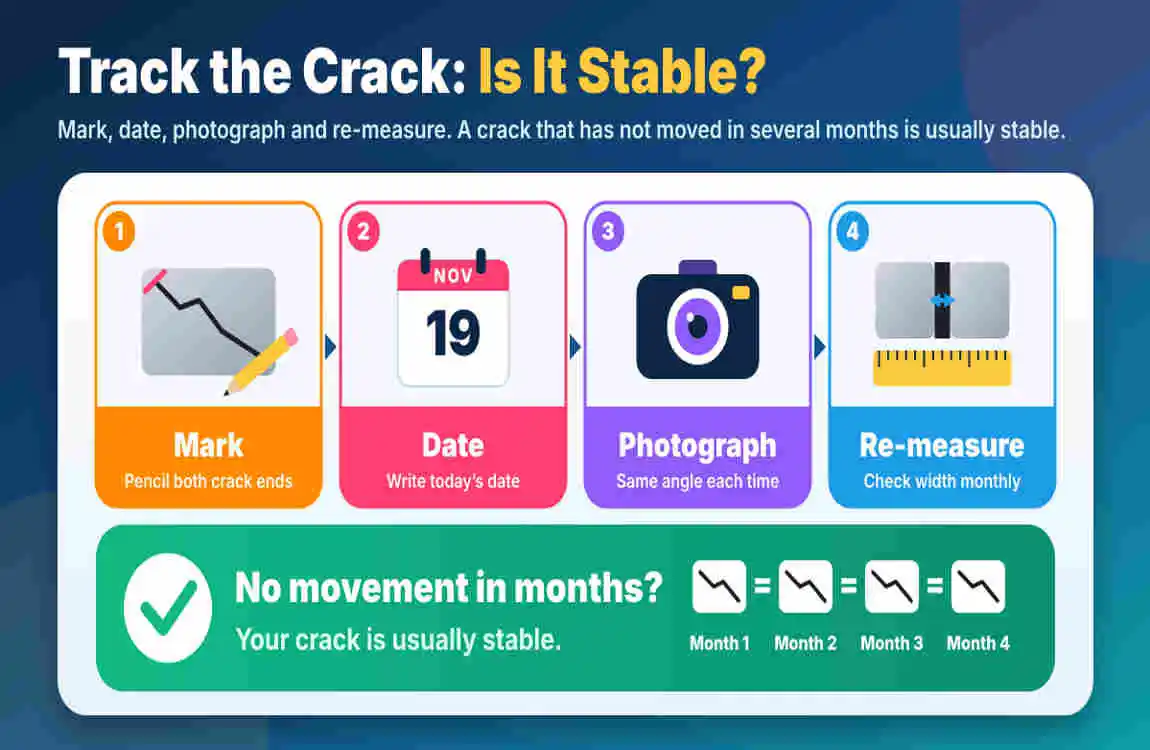
- Mark both ends of the crack with a pencil line and the date.
- Photograph it with a coin or ruler beside it for scale.
- Measure the width at the widest point with a crack gauge or a feeler gauge.
- Re-check monthly, and after heavy rain or thaw.
Turning worry into measurements is the quickest way to decide between “leave it” and “call someone.” Inspection firms such as Inspect & Test recommend exactly this approach: learn whether the crack is stable or changing, and how fast.
How to Fix a Cracked Basement Floor
Rule one: fix the cause before the crack. Sealing a crack that is caused by water pressure or settlement just treats the symptom, and it will often reopen.
Control water around the house
- Slope the soil away from the foundation (Bob Vila recommends at least a 2 percent grade).
- Add or extend gutters and downspouts so roof water lands several feet away.
- Keep soil moisture flooring even and avoid planting thirsty trees close to the house.
- If water is persistent, an interior drain tile and sump pump system may be needed.
Choose the right crack filler
- Epoxy injection: bonds the concrete and restores strength. It needs a dry crack.
- Polyurethane injection: flexible and reacts with moisture, so it is the usual choice for cracks that seep.
- Polyurea or semi-rigid floor fillers: used for slab-surface repairs where the floor will see foot traffic.
The Concrete Network notes that low-pressure injection with epoxy or polyurethane can be done by a contractor or a capable DIYer, and floor cracks have their own suitable epoxies and polyurea products.
Level or stabilise if the slab has sunk
Sunken or heaved sections are a job for a foundation or concrete-leveling specialist. Options include slab jacking or injecting leveling foam into voids, and in more serious cases, underpinning.
Finish with a sealer or epoxy coating
A sealed slab moves less moisture. The U.S. Department of Energy’s Pacific Northwest National Laboratory (Building America Solution Center) describes patching slab cracks, sealing the joint where the slab meets the wall, and coating the slab surface to cut soil gas entry and moisture transfer.
DIY or call a pro?
DIY is reasonable for narrow, dry, stable cracks with a clear shrinkage cause. Call a pro for anything leaking, uneven, growing, or tied to wall damage.
Why Cracks Matter for Moisture and Radon
A crack is not only a cosmetic issue. It is an opening. The U.S. Environmental Protection Agency states that radon can enter a house through cracks or openings in the foundation, and can build up to dangerous levels indoors. The Department of Energy’s Oak Ridge National Laboratory Foundation Design Handbook adds that pressure differences pull soil gas through cracks, joints and other openings in the foundation floor and walls.
Sealing cracks helps, but it is not a complete radon solution on its own. The only way to know your level is to test. If you find elevated radon, a certified mitigation contractor can install a soil depressurization system.
The same openings can let in humidity, which feeds musty smells and mold, so a cracked floor that stays damp is worth acting on even when the crack itself looks small.
How to Prevent New Basement Floor Cracks
- Manage drainage: clean gutters, extend downspouts and keep the grade sloping away.
- Service the sump pump twice a year and test it before storm season.
- Fix plumbing leaks quickly so soil is not washed out from under the slab.
- Mind your trees: keep large roots well away from the foundation.
- Control humidity with a dehumidifier, ideally holding indoor humidity in a moderate range.
- Don’t overload thin slabs with heavy equipment or storage.
- Pouring a new floor? Ask your contractor about base compaction, mix water content, proper curing and well-placed control joints.
Frequently Asked Questions
Why is my basement floor cracking?
Most often, the concrete shrank as it dried. Other causes are soil settlement, hydrostatic pressure, expansive clay, tree roots and a slab poured without control joints.
Are cracks in a basement floor normal?
Yes. Almost every concrete slab develops cracks. Thin, dry cracks that do not change are normal and rarely structural.
How wide is too wide for a basement floor crack?
Sources vary, but hairline cracks under about 1/16 to 1/8 inch that stay dry are usually fine. Cracks wider than about 1/4 inch, or any crack that grows, should be inspected.
Can a cracked basement floor mean foundation problems?
Sometimes. The warning signs are an uneven crack, water coming through, a crack that keeps widening, or matching damage on the walls.
Can I fix a basement floor crack myself?
Small, dry, stable cracks, yes, with an epoxy or polyurethane kit. If the cause is water pressure or settlement, fix that first or the crack will come back.
Can radon come in through basement floor cracks?
Yes. The EPA says radon can enter through cracks and openings in the foundation. Test your home and seal cracks as part of a bigger plan.
How often should I check my basement floor?
Do a quick walk-through every few months, and after heavy rain, flooding or a freeze-thaw swing, and keep a dated photo log of any crack you are tracking.
The Bottom Line
A cracked basement floor feels alarming, but most cracks are just concrete doing what concrete does. Measure it, watch it, keep water away from your foundation, and save the professional visit for cracks that are wide, uneven, leaking or growing. Catch those early and a small repair stays small.
Sources
- U.S. Environmental Protection Agency. Radon and foundation entry guidance.
- Oak Ridge National Laboratory (U.S. Department of Energy). Foundation Design Handbook: Points of Radon Entry into Buildings.
- Pacific Northwest National Laboratory, Building America Solution Center. Water Management: Existing Basement Floor.
- Angi. Foundation crack width and causes; When to worry about basement floor cracks.
- Bob Vila. What Cracks in the Basement Floor Really Mean.
- Houzz. Why Concrete Wants to Crack.
- The Concrete Network. Concrete crack injection.
- US. Waterproofing. When should I worry about foundation cracks?
- Basement Systems. Causes of basement floor cracks and what to do about them.
- Inspect & Test. Basement floor cracks: normal shrinkage or a real problem?
