
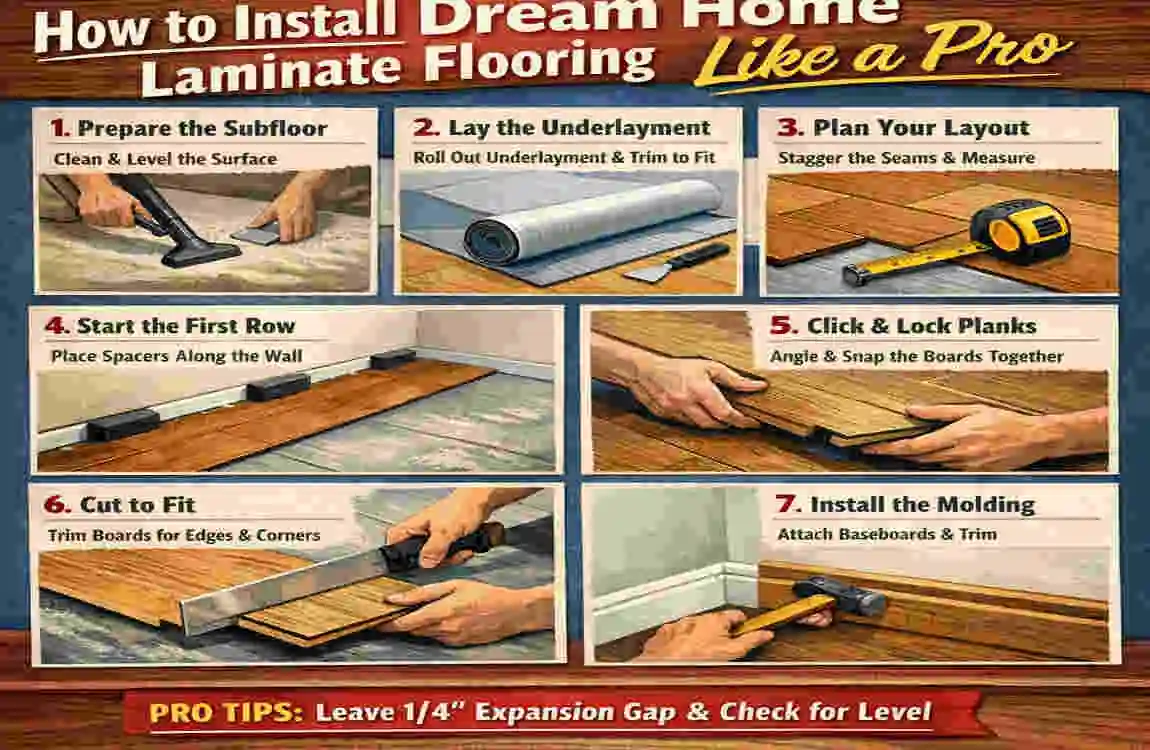
There’s something incredibly satisfying about transforming a room with your own two hands. New flooring can completely change how a space looks and feels, and it doesn’t have to cost a fortune or require a team of professionals. That’s where Dream Home laminate flooring comes in.
Dream Home laminate flooring is a popular, budget-friendly option that mimics the look of real hardwood without the hefty price tag. Homeowners love it because it’s stylish, durable, and surprisingly easy to fit yourself. Whether you’re refreshing a living room or updating a bedroom, this flooring delivers a beautiful finish.
Choosing to tackle the job yourself brings real rewards. You’ll save money on labor, work at your own pace, and enjoy the pride that comes with a job well done. Plus, it’s a fantastic weekend project for anyone who enjoys hands-on work.
What Is Dream Home Laminate Flooring?

Before you pick up a single plank, it helps to understand exactly what you’re working with. Dream Home laminate is designed to look great and last for years.
Key Features
Dream Home laminate flooring is built from several layers pressed together for strength and beauty. It features a tough top layer that resists scratches and everyday wear, plus a realistic photographic layer that recreates the look of natural wood grain.
Most planks use a click-lock system, which means they snap together easily without glue or nails. This design makes installation quick and beginner-friendly, even if you’ve never laid flooring before.
Benefits Over Hardwood
So why choose laminate over solid hardwood? For starters, laminate is far more affordable, giving you that gorgeous wood look without the premium price.
It’s also tougher against scratches, dents, and fading, which makes it perfect for busy households. Unlike hardwood, laminate won’t need sanding or refinishing over time. And because it’s simpler to install, you can complete the job yourself and save on labor costs.
Best Rooms for Installation
Dream Home laminate works beautifully in many areas of your home. It’s ideal for living rooms, bedrooms, hallways, and dining rooms, where it adds warmth and style.
However, you’ll want to be careful in rooms with lots of moisture, like bathrooms or laundry areas, unless the product is specifically rated for those spaces. Always check the product details before installing in damp environments.
Tools and Materials You’ll Need
Good preparation starts with gathering everything you need. Having the right tools and materials on hand makes the whole process smoother and far less frustrating.
Essential Tools
You don’t need a workshop full of equipment, but a few key tools will make your life much easier. Here’s your checklist:
- Tape measure for accurate measurements
- Rubber mallet to tap planks together gently
- Pull bar for fitting planks in tight spaces
- Spacers to maintain your expansion gap
- Utility knife for scoring and trimming
- Jigsaw or circular saw for cutting planks
- Tapping block to protect plank edges
- Safety glasses to keep your eyes protected
Required Materials
Beyond tools, you’ll need the right materials to complete the job properly. Make sure you have these ready before you begin:
- Dream Home laminate planks — buy about 10% extra to cover mistakes and cuts
- Underlayment if your planks don’t have it attached
- Moisture barrier for concrete subfloors
- Transition strips for doorways and room changes
- Baseboards or quarter round to finish the edges neatly
Having everything ready means you won’t have to stop halfway through to go to the shop.
Prepare the Subfloor Before Installation
Here’s a truth every flooring pro knows: preparation is everything. A little effort now saves you from big headaches later. A poorly prepped subfloor leads to squeaks, gaps, and uneven flooring.
Clean the Surface
Start with a clean, tidy subfloor. Sweep and vacuum thoroughly to remove all dust, dirt, and debris. Even small bits of grit can create bumps under your new flooring, so take your time here.
Check for Moisture
Moisture is the enemy of laminate flooring. If you’re laying over concrete, test for dampness before you begin. Excess moisture can warp your planks and ruin the finish.
If you find moisture, install a proper moisture barrier to protect your new floor and keep it looking great for years.
Level Uneven Areas
Run your hand or a straightedge across the floor to spot any dips or high spots. Uneven areas cause planks to flex and click apart over time.
Fill low spots with a leveling compound and sand down any high points. Aim for a smooth, flat surface before moving on.
Allow Flooring to Acclimate
This step is easy to overlook but absolutely vital. Leave your laminate planks in the room where they’ll be installed for at least 48 hours before fitting.
This lets the planks adjust to the room’s temperature and humidity, which prevents warping and buckling after installation. Stack the unopened boxes flat in the room and let them settle.
How to Install Dream Home Laminate Flooring Step-by-Step
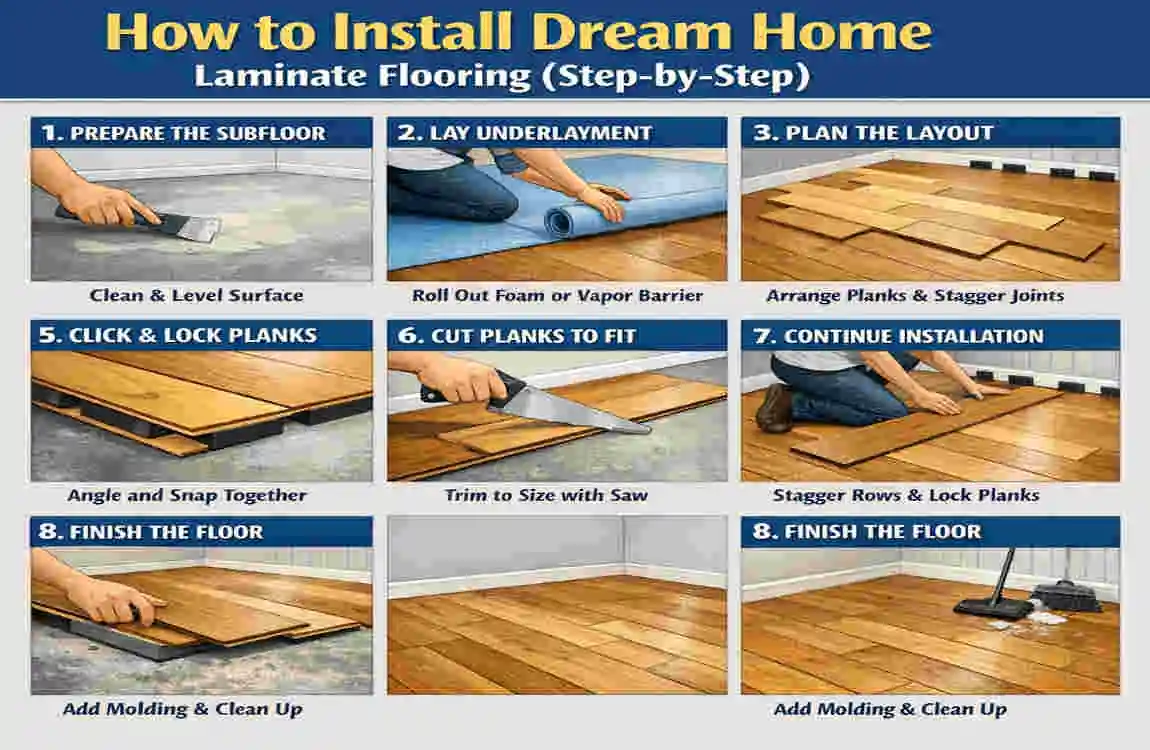
Now for the main event. This is where you’ll learn how to install Dream Home laminate flooring the right way. Follow these ten steps carefully, and you’ll achieve a professional finish.
Measure the Room
Start by measuring the length and width of your room. Multiply these figures to find the total square footage, which tells you how much flooring you need.
Always add around 10% extra to account for cuts, mistakes, and future repairs. It’s better to have a little too much than to run short.
Plan the Layout
Take a moment to plan how your planks will run. For the best look, lay them parallel to the longest wall or toward the main light source.
Planning helps you avoid awkward, narrow strips at the edges of the room. If needed, adjust the width of your first row so both edges look balanced.
Install Underlayment
If your planks don’t already have underlayment attached, roll it out across the subfloor now. Lay it flat, keeping the seams butted together without overlapping.
Tape the seams to hold everything in place. This layer cushions your floor, reduces noise, and adds a little insulation too.
Lay the First Row
Begin in a corner and work from left to right. Place spacers between the planks and the wall to create your expansion gap.
Position your first plank with the tongue side facing the wall. This first row sets the tone for the entire floor, so make sure it’s straight and secure.
Lock the Planks Together
Connect each new plank to the previous one by angling it into place and pressing down until it clicks. Use your tapping block and rubber mallet to close any gaps gently.
Never hit the planks directly with the mallet, as this can damage the delicate locking edges. Always use the tapping block as a buffer.
Stagger End Joints
For strength and a natural appearance, stagger the end joints of your planks. Make sure the seams in one row don’t line up with those in the next.
Aim for a stagger of at least 6 to 12 inches between rows. You can often start each new row with the offcut from the previous one, which also reduces waste.
Cut Planks Around Obstacles
Rooms rarely have perfectly straight edges, so you’ll need to cut planks around doorframes, pipes, and other obstacles. Measure carefully and mark your cut lines clearly.
Use a jigsaw for curved or detailed cuts and a circular saw for straight ones. Measure twice and cut once to avoid wasting material.
Install the Final Row
The last row often needs trimming to fit. Measure the remaining space, remembering to leave your expansion gap, then cut the planks to width.
Use your pull bar to snug these final planks into place, since there won’t be room to angle them as usual.
Install Trim and Transition Pieces
With all the planks down, it’s time to finish the edges. Remove your spacers and fit baseboards or quarter round to cover the expansion gaps.
Add transition strips at doorways and where your new floor meets different flooring types. These pieces give your project a clean, polished look.
Final Inspection
Finally, walk across your new floor and check for any loose planks, gaps, or lifted edges. Press down firmly on any spots that feel unsteady.
Give the whole floor a good clean to remove dust and debris. Step back, admire your work, and enjoy your beautiful new flooring.
Common Installation Mistakes to Avoid
Even careful DIYers can slip up. Knowing these common mistakes helps you avoid costly do-overs.
Skipping Acclimation
Rushing to install planks straight from the shop is a recipe for trouble. Without acclimation, your floor may expand or shrink, leading to gaps or buckling. Always give your planks time to settle.
Uneven Subfloor
Laying flooring over bumps and dips causes an unstable, noisy floor. Take the time to level your subfloor properly before you start.
No Expansion Gap
Laminate flooring expands and contracts with temperature changes. Forgetting to leave an expansion gap around the edges can cause your floor to buckle. Always use spacers.
Incorrect Plank Pattern
Lining up the end joints or failing to stagger planks creates a weak, unnatural-looking floor. Stick to a proper staggered pattern for strength and beauty.
Damaging Locking Edges
The click-lock edges are delicate. Hitting them directly with a mallet can chip them, ruining the connection. Always protect them with a tapping block.
Tips for a Professional Finish
Want your floor to look like a pro laid it? These simple tips make all the difference.
Maintain Consistent Gaps
Keep your expansion gap even all the way around the room. Consistent spacing ensures your floor can move freely without buckling or lifting.
Mix Planks from Different Boxes
Slight color and pattern variations exist between boxes. To create a natural, blended look, open several boxes and mix the planks as you work.
Use Proper Cutting Tools
Sharp, quality tools give clean, precise cuts. Dull blades cause chipping and rough edges that spoil the finish. Invest in the right saw for the job.
Keep the Floor Clean During Installation
Sweep away dust and debris as you go. Even small particles trapped under planks can cause bumps and prevent proper locking. A clean workspace equals a flawless floor.
How to Care for Dream Home Laminate Flooring
Your hard work deserves to last. With the right care, your laminate floor will stay beautiful for many years.
Daily Cleaning
Sweep or vacuum regularly to remove dust and grit that can scratch the surface. For a deeper clean, use a slightly damp mop and a cleaner made for laminate floors.
Preventing Scratches
Place felt pads under furniture legs to prevent scratches. Use doormats at entrances to catch dirt, and avoid dragging heavy items across the floor.
Moisture Protection
Laminate doesn’t love standing water. Wipe up spills quickly and never soak the floor when cleaning. Too much moisture can seep into the seams and cause damage.
Long-Term Maintenance
Check periodically for any loose planks or lifted edges and address them promptly. Keep an eye on high-traffic areas and refresh your cleaning routine as needed to keep everything looking fresh.
DIY vs Professional Installation
Should you do it yourself or call in the experts? Both options have their place, and the right choice depends on your skills, budget, and the size of the job. Here’s a quick comparison:
DIY Installation Professional Installation
Lower cost Faster completion
Flexible schedule Expert artistry
Great for experienced DIYers Ideal for large or complex rooms
Requires tools and time Higher installation cost
If you enjoy hands-on projects and have a bit of patience, DIY is a rewarding, money-saving choice. For large, tricky rooms or if you’re short on time, hiring a professional might be the smarter move.
Estimated Installation Cost
Budgeting is an important part of any project. While exact prices vary, this table gives you a general idea of where your money goes:
Item Estimated Cost
Laminate Flooring Varies by style and quality
Underlayment Additional cost if required
Trim & Moldings Moderate expense
Installation Tools One-time purchase
Professional Labor Higher than DIY
Remember, doing it yourself eliminates labor costs, which are often the biggest expense. Your tools are also a one-time purchase you can reuse for future projects.
Is Dream Home Laminate Flooring Worth It?

Let’s answer the big question. Is this flooring a smart investment for your home?
Advantages
Dream Home laminate offers fantastic value for money. It looks like real wood, resists scratches and wear, and is easy enough to install yourself. It’s also low-maintenance and suits a wide range of decorating styles.
Possible Drawbacks
No product is perfect. Laminate can be sensitive to standing water, so it’s not ideal for very wet rooms. It also can’t be sanded or refinished like hardwood, so damaged planks usually need to be replaced.
Best Use Cases
This flooring shines in living rooms, bedrooms, and hallways where it gets plenty of foot traffic but stays dry. If you want an affordable, attractive, and durable floor for these spaces, Dream Home laminate is an excellent choice.
Frequently Asked Questions (FAQ)
How do you install Dream Home laminate flooring?
Start by prepping and cleaning your subfloor, then let the planks acclimate for 48 hours. Lay underlayment if needed, then click the planks together row by row, leaving an expansion gap. Finish with trim. Do I need underlayment for Dream Home laminate flooring?
It depends on the product. Some planks come with underlayment already attached, while others require you to lay it separately. Always check your specific product and use a moisture barrier over concrete.
How long should laminate flooring acclimate before installation?
Leave your planks in the installation room for at least 48 hours. This allows them to adjust to the temperature and humidity. Can I install laminate flooring over existing tile or vinyl?
Yes, in many cases you can install laminate over existing hard, flat, and stable surfaces like tile or vinyl. Just make sure the surface is clean, level, and free of damage first.
What expansion gap should I leave around the room?
Leave a gap of roughly 1/4 to 3/8 inch around the entire perimeter. This space lets the floor expand and contract naturally without buckling. Use spacers to keep it consistent.
| Step | What to Do | Pro Tip |
|---|---|---|
| Prepare the Room | Remove old flooring, clean the subfloor, and ensure it is level and dry. | Uneven subfloors can cause gaps and squeaks. |
| Acclimate the Flooring | Leave laminate planks in the room for 48 hours before installation. | This helps prevent expansion or contraction after installation. |
| Gather Tools | Use a tape measure, spacers, utility knife, tapping block, pull bar, and rubber mallet. | Having all tools ready speeds up the job. |
| Install Underlayment | Roll out underlayment if it isn’t attached to the planks. | It improves comfort, sound insulation, and moisture protection. |
| Plan the Layout | Measure the room and decide the plank direction. | Install planks parallel to the longest wall for a balanced look. |
| Lay the First Row | Place spacers along the wall and connect the first row of planks. | Leave a 1/4-inch expansion gap around the room. |
| Continue Installing | Click and lock each plank into place row by row. | Stagger end joints by at least 8 inches for strength and appearance. |
