Close Menu

    Subscribe to Updates

    Get the latest creative news from FooBar about art, design and business.

    What's Hot

    Ultimate Guide: How to Trade In Your Mobile Home for a Tiny House

    April 13, 2026

    Inside Stevie Nicks’ Pacific Palisades House: Fleetwood Mac Icon’s Luxe Coastal Retreat

    April 11, 2026

    Does Home Insurance Increase After a Roof Claim? Full Guide for Homeowners

    April 11, 2026
    Facebook X (Twitter) Instagram
    Facebook X (Twitter) Instagram
    Crazzy Homes
    Button
    • HOME
    • HOME IMPROVEMENT
      • HOME DECOR
      • ARCHITECTURE
      • FURNITURE
      • FLOORING
      • CLEANING
      • INTERIOR
        • BEDROOM
        • BATHROOM
        • DOORS
        • WINDOW
      • EXTERIOR
        • GARDENING
    • CELEBRITY HOME

      Inside Stevie Nicks’ Pacific Palisades House: Fleetwood Mac Icon’s Luxe Coastal Retreat

      April 11, 2026

      John Malone House and Lifestyle: A Deep Dive into His Exclusive Real Estate

      April 10, 2026

      nside Kevin O’Connor’s Cozy Beverly Home: This Old House Host’s Charming Short Tour & Renovation Secrets

      April 8, 2026

      Michael Cera’s $3.5M Brooklyn Townhouse Tour: Cozy Celebrity Vibes

      April 7, 2026

      Pat Harvey’s Hidden Hills House: Inside the $6M Luxury Estate

      April 6, 2026
    • Real Estate
    • PLUMBING
    • KITCHEN
      • APPLIANCES
    • LIFE STYLE
    Crazzy Homes
    Home » Ultimate Guide: How to Trade In Your Mobile Home for a Tiny House
    Real Estate

    Ultimate Guide: How to Trade In Your Mobile Home for a Tiny House

    Stella VictoriaBy Stella VictoriaApril 13, 2026No Comments16 Mins Read
    Facebook Twitter Pinterest LinkedIn Tumblr Email
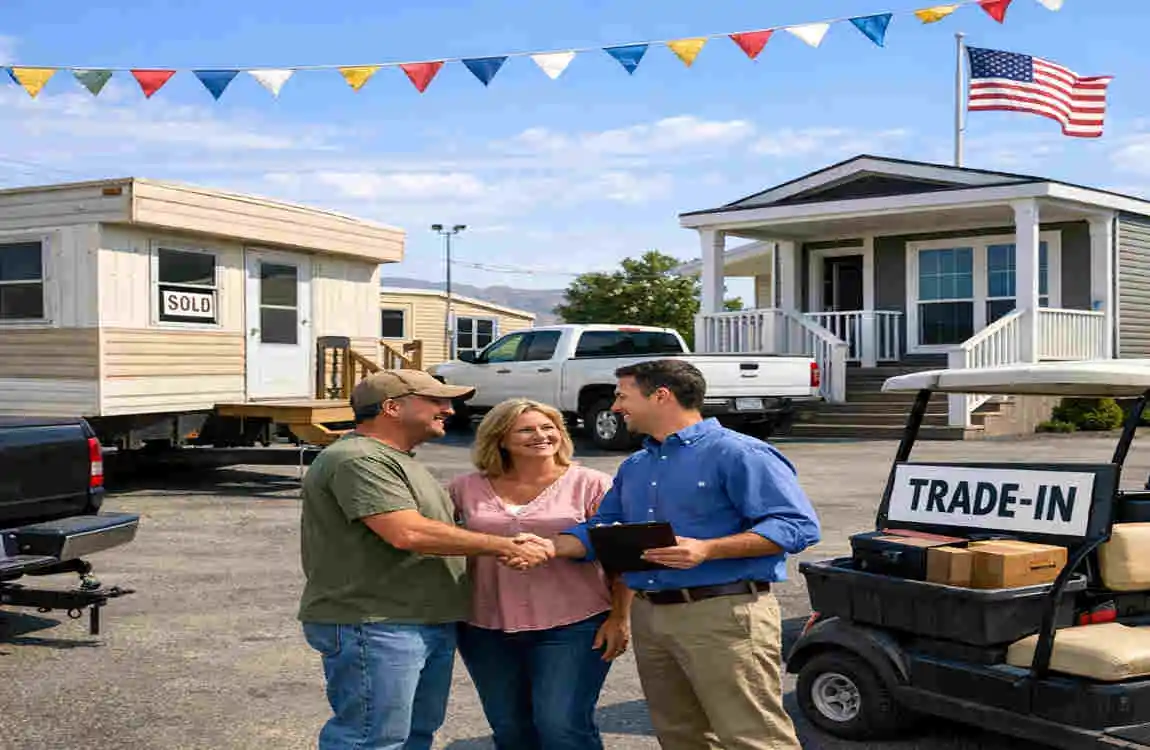
    How to Trade In Your Mobile Home
    Share
    Facebook Twitter LinkedIn Pinterest Email

    Have you ever looked around your current living space and wondered if you have too much house? You are certainly not alone. As we navigate through 2026, the housing landscape has shifted dramatically. With rising property taxes, soaring utility bills, and the ever-increasing cost of living, thousands of people are actively seeking a simpler, more affordable way to live. This is exactly why the massive trend of downsizing from traditional manufactured housing to ultra-efficient tiny homes is taking the country by storm.

    If you currently own a manufactured property, you are sitting on a fantastic opportunity. You might be wondering how to trade in a mobile home to fund this exciting lifestyle shift. Trading in your current property is a brilliant financial maneuver. Instead of dealing with the exhausting process of selling your home on the private market, waiting months for a buyer, and paying hefty real estate commissions, a trade-in allows you to seamlessly roll your existing equity directly into a brand-new tiny house.

    Right now, average mobile home values are comfortably between $50,000 and $150,000, depending on your location and the unit’s condition. On the flip side, the appeal of a beautifully customized tiny house—typically sitting under 400 square feet—is undeniable, with high-quality builds ranging from $30,000 to $100,000. If you play your cards right, your current equity could completely pay for your new tiny home, leaving you mortgage-free!

    Step Description Key Actions Timeline & Tips
    Evaluate Value Determine worth via age, condition, location (park vs. owned land), and market comps. Use NADA guides or free estimators; get pro appraisal ($200-$500). 1-2 weeks. Repairs can boost value 20-30%; pre-1976 homes often fetch less.
    Prepare Home Clean, repair minor issues, and compile docs like title, lease, and payoff statement. Take photos; fix leaks/roof for appeal. 3-7 days. Clear liens early to avoid delays.
    Find Dealers Research tiny house or mobile home builders accepting trade-ins. Contact 3-5 locals; check reviews/policies. 1 week. High-demand areas yield better credits.
    Get Quotes Submit details for offers; negotiate equity credit. Compare bids; use appraisals to haggle. 1-2 weeks. Expect 20-50% of market value.
    Sign Contract Agree on terms, financing, and removal logistics. Review fees, contingencies; secure loan if needed. 2-4 weeks. Budget 5-10% for extras.

    Table of Contents

    Toggle
    • Why Trade Your Mobile Home for a Tiny House?
      • The Unbeatable Financial Perks
      • The Freedom of Lifestyle Advantages
      • Capitalizing on Market Timing
    • Assessing Your Mobile Home’s Trade-In Value
      • Factors That Boost Your Value
      • Value Ranges by Condition
    • Step-by-Step: How to Trade In a Mobile Home
      • Inspect and Repair the Unit
      • Gather Your Crucial Documents
      • Research Dealers and Builders
      • Get Quotes and Negotiate
      • Finalize the Trade Agreement
      • Close the Deal and Move
    • Finding Tiny House Builders Who Accept Mobile Home Trade-Ins
    • Financing Your Tiny House After Trade-In
    • Common Pitfalls and How to Avoid Them
      • Title Issues and Liens
      • The Lowball Offer Trap
      • Zoning and Parking Hurdles
      • Budgeting for Hidden Fees
    • Legal and Tax Implications
    • Real-Life Success Stories
    • Maintenance Tips for Your New Tiny House
      • Frequently Asked Questions (FAQs)

    Why Trade Your Mobile Home for a Tiny House?

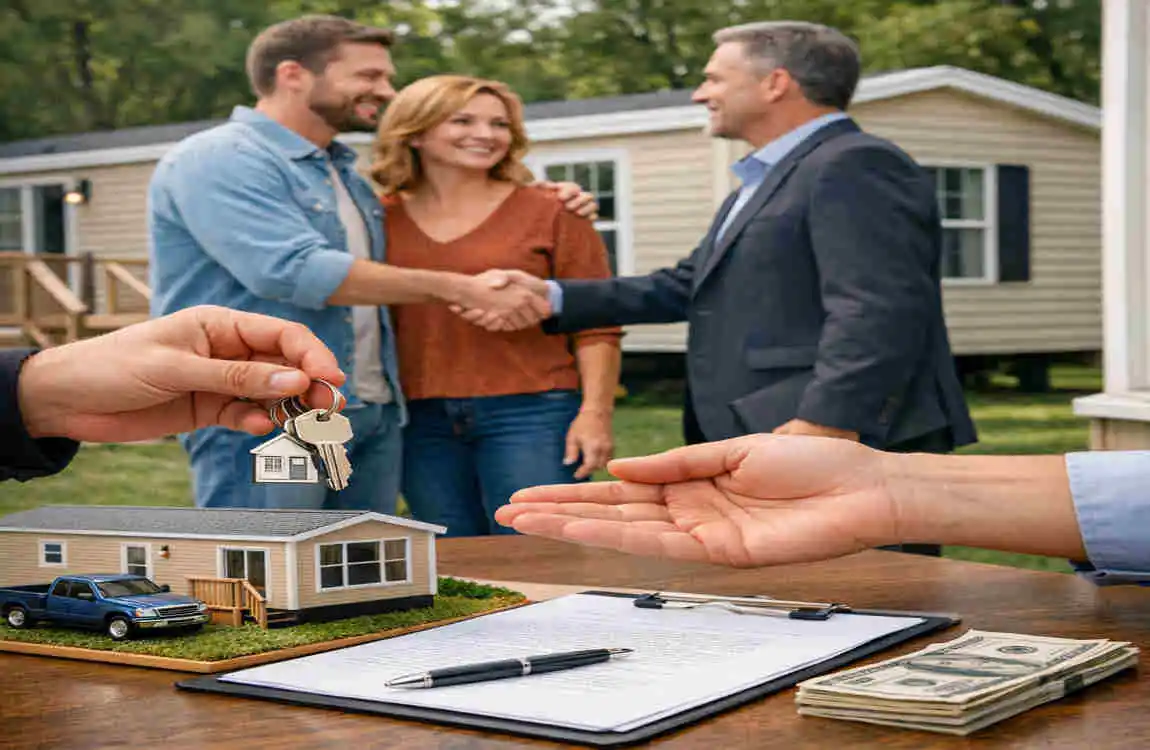
    How to Trade In Your Mobile Home

    Before we get into the nuts and bolts of the transaction, we need to talk about why so many people are making this specific leap. Trading a larger manufactured house for a much smaller footprint is a major life decision. However, when you break down the financial math and the lifestyle benefits, the choice becomes incredibly clear.

    The Unbeatable Financial Perks

    Let us talk about your wallet. Maintaining an older, larger mobile home is expensive. Between heating and cooling poorly insulated rooms, repairing aging roofs, and paying high lot rents, the average owner spends roughly $5,000 a year just on basic upkeep and utilities.

    Now, compare that to a modern tiny house. Because these units are small, highly insulated, and often built with energy-efficient or even solar-powered systems, your yearly maintenance and utility costs can easily drop to  $1,000-$2,000. Furthermore, using your current equity as a trade-in eliminates the need for a massive upfront down payment on your new build. You get faster access to your equity without the stress of a traditional sale.

    The Freedom of Lifestyle Advantages

    A tiny house forces you to declutter your life. You stop buying things you do not need because you do not have the space to store them. This shift toward minimalism is incredibly freeing for your mental health.

    Additionally, you gain unmatched mobility. While traditional manufactured homes are technically “mobile,” moving a double-wide unit costs thousands of dollars and requires massive logistical planning. A tiny house on wheels (THOW), on the other hand, can be hitched to a heavy-duty pickup truck. If you do not like your neighbors, or if you want to spend the winter in Florida and the summer in Colorado, you pack up and drive.

    Capitalizing on Market Timing

    We are currently experiencing a unique alignment in the housing market. The explosion of remote work means that more people than ever can live wherever they choose. You no longer need to live within commuting distance of a major city.

    Furthermore, local building rules are finally catching up to the times. Across the country, zoning changes are aggressively favoring tiny homes to combat the housing shortage. Municipalities that previously banned tiny houses are now welcoming them, creating specialized eco-villages and flexible parking laws. There has genuinely never been a better time to make this transition.

    Assessing Your Mobile Home’s Trade-In Value

    If you are seriously considering this path, your first step is to figure out exactly what your current property is worth. You cannot budget for a new tiny house until you know how much equity you have to play with.

    Valuing a manufactured home is slightly different from valuing a traditional stick-built house. Builders and dealers will consider four primary factors: age, condition, location, and the specific model type.

    To start, you can use free online valuation estimators provided by major mobile home dealerships. These will give you a rough ballpark figure. However, if you want a highly accurate number, you should invest in a professional appraisal. A certified appraiser will usually charge between $200 and $500 to visit your property, inspect the home’s bones, and provide an official valuation document. You can also look at “comps” (comparable sales) on websites like Zillow to see what similar homes in your specific park are selling for.

    Factors That Boost Your Value

    If you want to command top dollar from a tiny house builder, you need to present a highly attractive package. Having a clear title (meaning you do not owe any money to a bank) instantly makes your trade-in more appealing. Furthermore, if your home is currently sitting in a highly desirable, well-maintained park—and the park management approves the transfer of the lease—dealers will pay more because they know they can easily flip it to a new buyer. Finally, recent upgrades like a new HVAC system, a modern metal roof, or fresh laminate flooring will significantly boost your final number.

    You need to set realistic expectations. Unlike traditional real estate, which generally appreciates over time, manufactured homes typically lose value as they age. Older units from the 1990s or early 2000s will usually fetch between 20% and 50% of their original purchase price.

    Value Ranges by Condition

    To help you gauge where you might stand, here is a quick look at average 2026 trade-in values based on the condition of your home:

    Condition LevelAvg. Trade-In Value: Potential Tiny House Credit

    Excellent (Like new, modern upgrades) $80,000 – $150,000 $60,000 – $120,000

    Good (Well maintained, minor wear) $50,000 – $80,000 $40,000 – $60,000

    Fair (Needs cosmetic work, older age) $20,000 – $50,000 $15,000 – $40,000

    Step-by-Step: How to Trade In a Mobile Home

    Understanding the theory is great, but how do you actually execute this massive transaction? The key to a stress-free transition is extreme organization. Here is your definitive, step-by-step guide on how to trade in a mobile home without losing your mind.

    Inspect and Repair the Unit

    Before you invite a single dealer or builder over to look at your property, you need to view it through their eyes. Walk through your home and look for obvious flaws.

    • DIY Fixes: Take a weekend to patch holes in the drywall, apply a fresh coat of neutral paint, tighten leaky faucets, and deep-clean the carpets. These cheap fixes make a massive difference in perceived value.
    • Professional Help: If you have soft spots in your floorboards, major roof leaks, or electrical issues, you might need to hire a pro. However, do the math first. Do not spend $5,000 on a new roof if the dealer will only bump your trade-in value by $2,000.

    Gather Your Crucial Documents

    Dealers hate paperwork delays. If you have your files organized on day one, you look like a serious, reliable client. You will need to locate your original Title or Certificate of Origin. You also need a copy of your current park lease agreement, your most recent property tax bills, and any receipts for major upgrades or repairs you have completed over the years. Keep these in a physical folder ready to hand over.

    Research Dealers and Builders

    Not every tiny house builder has the capital or the real estate network to accept a trade-in. You need to specifically seek out tiny house specialists or large network dealerships that advertise trade-in programs. Look for builders who have a strong reputation for high-quality craftsmanship and transparent pricing.

    Get Quotes and Negotiate

    Never accept the very first offer you receive. Your goal is to get at least 3 to 5 bids from different builders. Once you have multiple offers, you hold all the power.

    If a builder will not budge on the dollar amount of your trade-in credit, negotiate the features of the tiny house instead. Ask them to throw in a Premium solar package, upgraded butcher-block countertops, or a composting toilet system to bridge the gap.

    Finalize the Trade Agreement

    Once you agree on the numbers, you will sign a formal contract. You must read this document carefully. It should clearly state the exact trade-in credit you are receiving, the final purchase price of the tiny house, and a strict timeline for when the new home will be delivered. If you are taking out a small loan to cover any remaining balance, this is the stage where you will lock in your financing.

    Close the Deal and Move

    The transition period requires careful coordination. Usually, the entire process takes between 4 and 8 weeks. You will need to pack your belongings, downsize aggressively (remember, your new house is much smaller!), and arrange for the tiny house to be delivered to your new chosen location. Once your new home arrives, you hand over the keys and the title to your old property.

    Finding Tiny House Builders Who Accept Mobile Home Trade-Ins

    Finding the right partner to build your dream home is crucial. As the tiny home movement matures in 2026, the market has split into several tiers of builders.

    When vetting a company, focus solely on its reputation. Do they have positive reviews? Do they offer a solid warranty on their builds? You should always ask about their specific trade-in policies. Some builders will only take your old home if it can be easily moved, while others have partnerships with local parks and will gladly take over your current lot lease.

    You generally have two options:

    • National Dealerships: These massive companies have vast networks. They are highly likely to accept your trade-in because they have dedicated sales teams ready to flip your old home. However, their tiny house designs are often mass-produced with fewer customization options.
    • Local Custom Builders: These are the passionate artisans who will build you a masterpiece. While they might not have formal “trade-in” programs advertised on their websites, many are affiliated with local real estate investors who will buy your mobile home for cash, effectively functioning as a trade-in.

    If you live in a high-demand area—like the sunbelt states or near major tech hubs—your current home is highly desirable. Use this regional demand as leverage to get the absolute maximum credit from the builder.

    Financing Your Tiny House After Trade-In

    What happens if your trade-in credit does not cover the entire cost of your customized tiny house? Do not panic. You have several highly accessible financing options available in 2026.

    Because tiny houses on wheels are legally classified differently from traditional real estate, you generally cannot get a standard 30-year mortgage. Instead, most buyers utilize RV financing or specialized personal loans.

    This is where your trade-in equity acts as a massive superpower. Let us look at a quick mathematical example. If your new tiny house costs $85,000, and the builder gives you a $50,000 credit for your old home, you only need to finance $35,000.

    By applying that massive equity chunk upfront, you drastically reduce your principal balance. This means your monthly loan payments could be slashed by $300 to $500 a month compared to financing the entire build from scratch. Furthermore, because the loan amount is smaller, you will qualify for much better interest rates and pay significantly less interest over the life of the loan.

    Common Pitfalls and How to Avoid Them

    Trading properties is a complex legal dance, and if you are not careful, you can step on a few landmines. Here are the most common pitfalls people face, and exactly how you can avoid them.

    Title Issues and Liens

    If you lost your title, or if there is an old mechanical lien on your property from a contractor you disputed with five years ago, the deal will crash instantly. Solution: Pull a copy of your title from your local DMV or housing authority months before you start this process to ensure it is clean and clear.

    The Lowball Offer Trap

    Dealers are businesses, and they want to buy your home for the lowest possible price to maximize their profit. If you do not know your home’s worth, you will get ripped off. Solution: As mentioned earlier, spend the $300 to get an independent professional appraisal. When you hand the dealer a certified document proving your home is worth $60,000, they cannot justify offering you $30,000.

    Zoning and Parking Hurdles

    Do not buy a tiny house until you know exactly where you will put it! Many buyers finalize a trade only to discover their chosen county outlaws tiny homes on wheels. Solution: Call your local zoning office and ask for the specific rules regarding “Accessory Dwelling Units” or “RVs as primary residences” before you sign any contracts.

    Budgeting for Hidden Fees

    The sticker price is never the final price. You need to account for hidden fees, which generally eat up about 5% to 10% of the total value. Solution: Keep a cash buffer in your bank account to cover transportation fees for the tiny house, local sales taxes, park transfer fees, and utility hookup charges.

    Legal and Tax Implications

    When you swap one house for another, the government always wants to know about it. Navigating the legal paperwork is the most tedious part of learning how to trade in a mobile home.

    First, you must understand how your property is classified. In most states, if your mobile home is sitting in a rented park, it is considered “chattel” (personal property, like a car) rather than real estate. This means the title transfer happens at the Department of Motor Vehicles (DMV) or a specialized housing department, not through a real estate deed.

    The good news involves your taxes. Under current laws, including the latest 2026 IRS updates, if you have lived in the mobile home as your primary residence for at least two out of the last five years, you are generally exempt from paying capital gains taxes on profits up to $250,000 (or $500,000 for married couples). Since most mobile homes trade for well under that threshold, you can usually roll your equity into your new tiny house entirely tax-free!

    However, state laws vary wildly. Park rules regarding lease transfers also vary. It is highly recommended that you consult a local tax professional or a real estate attorney for one hour to review your specific situation before closing the deal.

    Real-Life Success Stories

    Sometimes, the best way to understand a major life change is to look at people who have already crossed the finish line. Here are three real, anonymized stories from people who successfully navigated the trade-in process in the last year:

    • The Empty Nesters: Sarah and Tom lived in a massive, aging 1980s double-wide that required constant roof repairs. They traded it to a local dealer for a $45,000 credit. They used that equity to purchase an outright, beautifully custom-built single-level tiny home with no stairs. They now travel the country and estimate they have saved over $20,000 in repairs and lot fees in the first year alone.
    • The Remote Worker: Mark, a 28-year-old software developer, inherited a rundown trailer in a park he disliked. He negotiated a trade-in with a national builder, securing a $25,000 credit. He financed the remaining $30,000 for a high-tech tiny house. His monthly payment is now less than $400, allowing him to save aggressively for his future while living off-grid in the mountains.
    • The Eco-Conscious Couple: Elena and David wanted to reduce their carbon footprint. They traded their energy-guzzling manufactured home in the suburbs for an $80,000 credit, which completely covered a state-of-the-art tiny house equipped with solar panels and a rainwater catchment system. They now live completely utility-bill-free.

    Maintenance Tips for Your New Tiny House

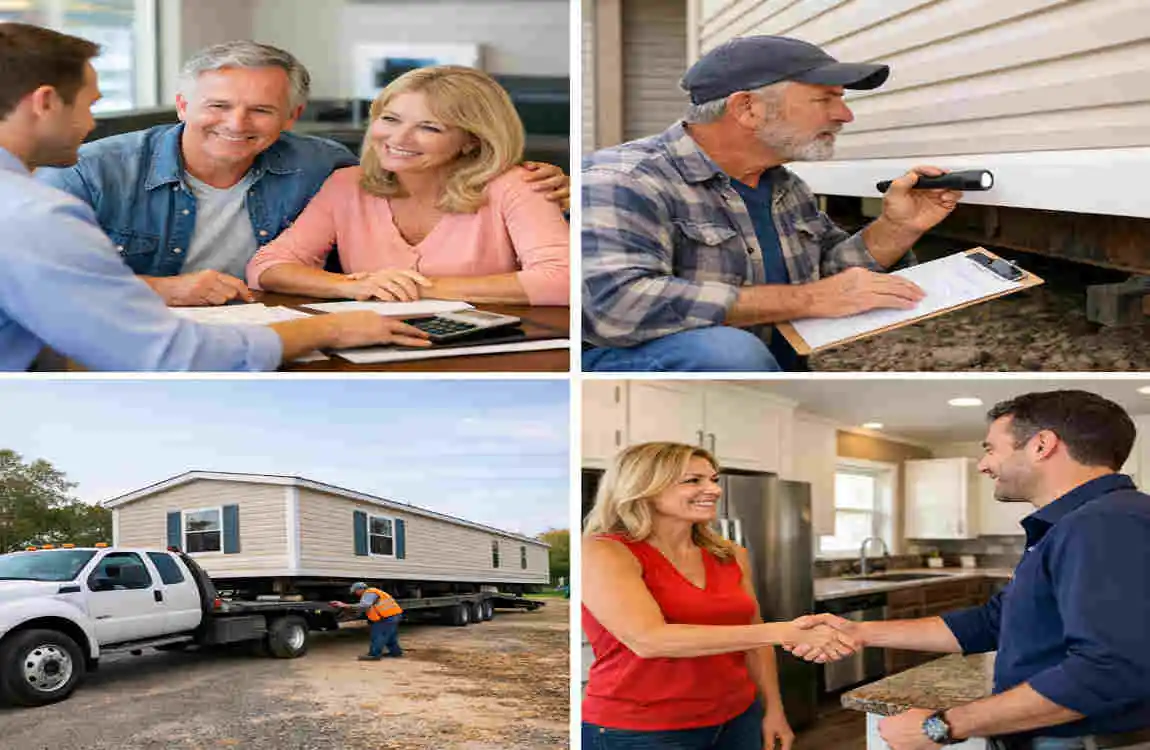
    How to Trade In Your Mobile Home

    Once you hand over the keys to your old property and step into your gorgeous new tiny house, a new type of homeownership begins. Tiny houses require different, though generally cheaper, maintenance routines.

    First, you must ensure your home is properly leveled and securely anchored to the ground, especially if you live in high-wind areas. Check your leveling jacks every few months, as the ground can settle after heavy rains.

    Secondly, stay on top of your specialized utilities. If you use a composting toilet, follow the carbon-to-nitrogen ratio strictly to avoid odors. Finally, winterizing is vital. Because plumbing in a tiny house is often exposed beneath the trailer, you must wrap your pipes with high-quality heat tape and install durable skirting before the first freeze hits. A frozen pipe in a tiny house can cause catastrophic water damage in minutes.

    Frequently Asked Questions (FAQs)

    Can I trade in a mobile home if I still owe money on it? Yes, but it is slightly more complicated. The dealer will factor your outstanding loan balance into the trade-in equation. If your home is worth $60,000 and you owe $10,000, your actual trade-in credit toward the tiny house will be $50,000.

    Do I have to move the mobile home myself before trading it in? Rarely. One of the biggest perks of a trade-in is that the builder or dealership usually handles the logistics. They will either assume your current lot lease and leave the home where it is, or they will dispatch a professional transport crew to haul it away at their own expense.

    How long does the entire trade-in process usually take? If you have a clear title and the tiny house is already built (a pre-fab unit), the transaction can close in as little as 2 to 3 weeks. If you are ordering a custom-built tiny house from scratch, the process will align with the build time, which usually takes anywhere from 6 to 12 weeks.

    Share. Facebook Twitter Pinterest LinkedIn Tumblr Email
    Stella Victoria

    Related Posts

    How Often Should You Level a Mobile Home? Signs, Timing, and Tips

    April 10, 2026

    Mobile Home Park Zoning Explained: Rules, Permits, and Land Use

    April 8, 2026

    Are Mobile Home Toilets Different from House Ones? Key Facts Homeowners

    April 3, 2026
    Leave A Reply Cancel Reply

    Top Posts

    Blueface House costs how much?

    May 24, 2024

    Unveiling the Secret of Luke Combs House in Nashville

    June 16, 2024

    Inside the Historical Charm of the Cecil B. DeMille House

    July 10, 2025
    Stay In Touch
    • Facebook
    • YouTube
    • TikTok
    • WhatsApp
    • Twitter
    • Instagram
    Latest Reviews

    Stay Connected

    Fill the form below and get early updates.

    Most Popular

    Blueface House costs how much?

    May 24, 2024

    Unveiling the Secret of Luke Combs House in Nashville

    June 16, 2024

    Inside the Historical Charm of the Cecil B. DeMille House

    July 10, 2025
    Latest Posts

    Ultimate Guide: How to Trade In Your Mobile Home for a Tiny House

    April 13, 2026

    Inside Stevie Nicks’ Pacific Palisades House: Fleetwood Mac Icon’s Luxe Coastal Retreat

    April 11, 2026

    Does Home Insurance Increase After a Roof Claim? Full Guide for Homeowners

    April 11, 2026

    Did we make a mistake?

    Submit a correction suggestion and help us fix it!

    Facebook X (Twitter) Instagram Pinterest
    • About us
    • Contact us
    • Privacy Policy
    • Disclaimer
    • Terms And Conditions
    © 2026 ThemeSphere. Designed by ThemeSphere.

    Type above and press Enter to search. Press Esc to cancel.