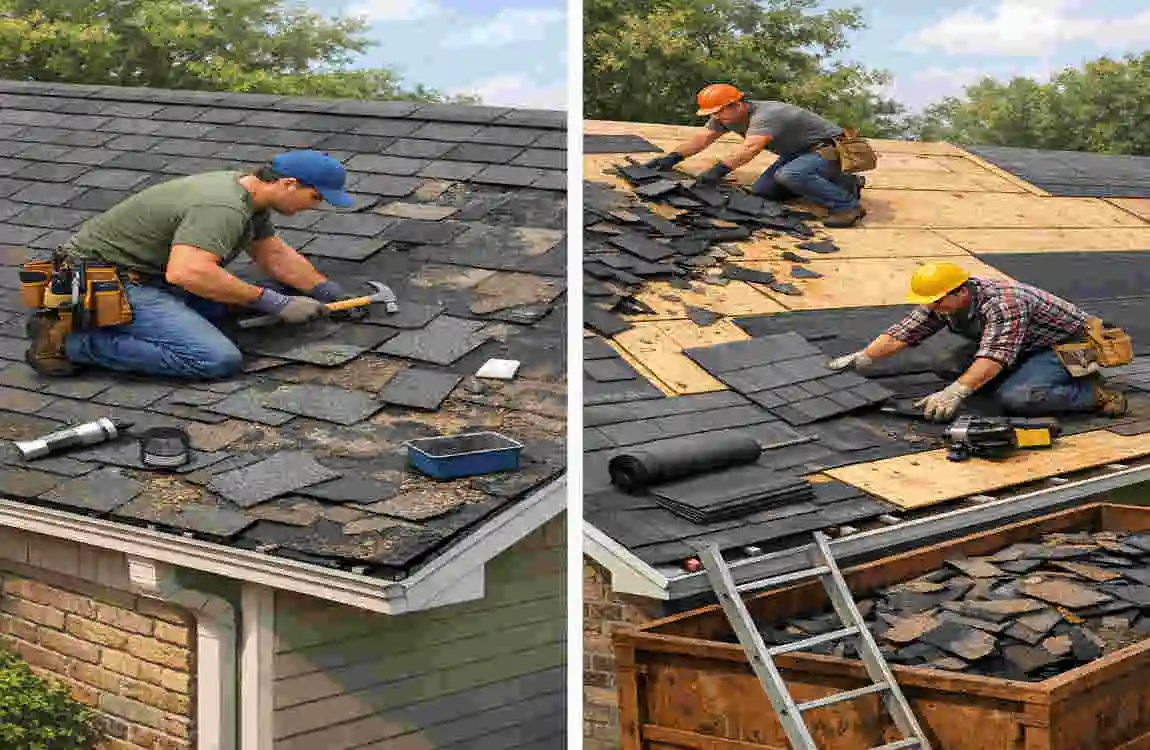
A bad storm rolls through. The wind howls, hail hits hard, and then you notice the drip coming from the ceiling. You do what most homeowners would do: you call your insurer, start a roof claim, and hope your policy helps you recover. Then renewal season arrives, and your premium jumps.
That leads to the big question many homeowners ask: Does home insurance go up after a roof claim?
The short answer is yes, it can. But it does not always happen, and it is rarely as simple as “file one claim, get one rate hike.” Insurers look at the type of damage, the size of the payout, your claims history, where you live, and even how risky they think your house may be going forward.
How Home Insurance Works: The Basics

Before you can understand how a roof claim affects your premium, it helps to know how homeowners’ insurance works in plain language.
What homeowners’ insurance usually covers
A standard homeowners policy usually includes a few core parts:
- Dwelling coverage for the physical structure of your home
- Personal property coverage for your belongings
- Liability coverage if someone gets hurt on your property
- Loss of use coverage if you cannot live in your home during repairs
For roof claims, the most important part is dwelling coverage. This section helps pay to repair or rebuild the structure of your house when a covered event causes damage.
Your roof falls under that structural protection. So do walls, attached garages, and often other built-in parts of the home.
What dwelling coverage means for your roof
If a storm rips shingles off your roof or a tree crashes through it, that may fall under dwelling coverage. In simple terms, this is the part of the policy designed to help restore the house itself.
But there is a catch. Insurance is generally meant for sudden and accidental damage, not problems that happen because a roof got old, was poorly maintained, or slowly wore out over time.
That is why two roof problems that look similar to you may be treated very differently by your insurer.
Covered perils vs. exclusions
Insurance companies use the term “covered perils ” to describe the events your policy protects against. These often include things like:
- Windstorms
- Hail
- Fire
- Lightning
- Falling objects, such as a tree limb
On the other side are exclusions, which are losses your policy usually does not cover. Common examples include:
- Wear and tear
- Old age
- Neglect
- Poor maintenance
- Slow leaks that developed over time
This matters because if the damage is not covered, filing a claim may go nowhere.
How deductibles fit in
Your deductible is the amount you agree to pay out of pocket before your insurance coverage starts paying.
If your roof repair costs $4,000 and your deductible is $2,000, the insurer may only pay the remaining $2,000 if the claim is approved.
That means not every roof problem is worth filing a claim for. If the repair cost is close to your deductible, you may get very little benefit from filing, while still adding a claim to your insurance record.
And that brings us back to the heart of this article: not every roof repair should become a claim, and not every roof claim will automatically raise your premium.
Does Home Insurance Go Up After a Roof Claim?
This is the question you came for, so let’s answer it directly.
The short answer
Yes, home insurance can go up after a roof claim. But it is not automatic, and it does not happen the same way for everyone.
Some homeowners file one roof claim and see little or no change. Others face a noticeable premium increase at renewal. In more serious cases, especially after large or repeated claims, a company may even decide not to renew the policy.
Why is the answer not the same for everyone
Insurance pricing is based on risk. When you file a claim, the insurer now has more information about your house and about you as a policyholder.
From the company’s point of view, a roof claim may suggest one or more of the following:
- Your house is in a storm-prone area
- Your roof may be vulnerable to future damage
- You may be more likely to file another claim
- The insurer may have to pay out again in the future
Still, one claim alone does not always lead to a higher premium. A lot depends on context.
What insurers usually consider
When deciding whether to raise your rate after a roof claim, insurers often look at:
- The severity of the damage
- The size of the payout
- Whether this is your first claim or one of several
- Your location
- Your policy history
- State insurance rules
A small claim for limited roof damage may have a much lighter effect than a full roof replacement after a major storm.
Likewise, a homeowner with no recent claims may be treated differently from someone who filed multiple claims in the last few years.
State rules and location matter too
Where you live can make a real difference.
In some states, insurers have more freedom to adjust rates after claims. In others, rate changes are more tightly regulated. Also, homes in areas with frequent hail, hurricanes, heavy snow, or windstorms may already be considered higher risk, even before a claim happens.
So if you are asking, does home insurance go up after a roof claim, the most honest answer is this:
It often can, but the size and timing of the increase depend on your claim, your insurer, your location, and your overall risk profile.
Why Do Roof Claims Raise Insurance Rates?
To understand rate increases, it helps to think like the insurer for a moment.
A roof claim can signal future risk.
Your roof is one of the most important protective parts of the house. If it is damaged, the insurer may see that as a warning sign.
Why? Because roof problems can lead to bigger and more expensive losses later. A weak or damaged roof can increase the chance of:
- Interior water damage
- Mold growth
- Damaged ceilings and walls
- Insulation issues
- Structural weakening
Even if your current claim gets resolved, the insurer may believe the house is more exposed to future trouble.
Insurers’ price for patterns, not just one event
A single claim may not be a big deal. But insurance companies watch for patterns.
If they see repeated claims, they may conclude that your property has ongoing issues or sits in a high-risk location. That can push rates higher.
In many cases, frequency matters as much as size. A homeowner who files several smaller claims may look riskier than someone who filed one larger storm claim years ago.
Other non-roof factors can also affect the rate.
A roof claim does not exist in a vacuum. Insurers may also consider:
- Your total claims history, not just roof claims
- Your insurance score or credit-based insurance score, where allowed
- Your ZIP code or region
- Local weather patterns
- Rebuilding costs in your area
So even if the roof claim feels like a one-time event to you, it may get bundled into a broader risk picture inside the company’s pricing model.
The insurer’s goal is simple.
The company wants to predict the likelihood of future claims.
If a roof claim makes your home appear more expensive to insure, the premium may rise. It is not personal. It is a business calculation.
That may not make it feel fair, but it explains why roof-related losses often get close attention.
What Types of Roof Damage Are Covered?
Before worrying about a premium increase, you first need to know whether the damage is even the kind of insurance usually covers.
Covered roof damage: sudden and accidental events
Home insurance usually works best when the damage is sudden, unexpected, and caused by a covered event.
Common examples of covered roof damage include:
- Wind is tearing off shingles
- Hail-damaging roofing materials
- Fire or lightning damage
- A tree falling onto the roof
- A sudden storm opened the roof and caused leaks
In these cases, the event is clear, and the damage did not happen slowly over time.
Roof damage that is often not covered
This is where many homeowners get surprised.
Insurance usually does not cover roof problems caused by:
- Old age
- Wear and tear
- Lack of maintenance
- Rot
- Poor installation
- Long-term seepage or slow leaks
If your roof reached the end of its life, your insurer will usually treat that as a maintenance issue, not an insurance event.
Sudden damage vs. gradual damage
This is one of the most important distinctions in roofing claims.
Sudden damage happens quickly. A storm blows through. A branch falls. Hail cracks shingles. These are the kinds of events insurance is generally built to handle.
Gradual damage develops slowly. A small leak goes unnoticed. Flashing fails over time. Old shingles deteriorate year after year. These issues are usually considered the homeowner’s responsibility.
Quick reference table: covered vs. non-covered roof damage
Roof Issue: Usually Covered? Why is it Worth Filing a Claim?
Hail damage to shingles. Yes, often. Sudden storm-related damage. Often, yes, if the repair cost is well above the deductible
Wind is tearing off the roof materials. : Yes, often covered in weather events in many policies. Often, yes, for significant damage.
A tree falls on the roof during a storm. Yes, often. Sudden accidental loss. Usually yes.
Fire or lightning damage. Yes, often covered peril under many policies. Usually yes
The roof leaks from old age. No, usually not. Wear and tear or aging. Usually no
Missing shingles from neglect. No, usually not. Maintenance issue. Usually no
Slow leak over months or years. No, usually not. Gradual damage. Usually no
Poor installation problems. No, usually not. Artistry issue, not a covered peril. Usually no
Why this matters for your premium
If the damage is not covered, you may not get a payout at all. In that case, your premium may not increase after a claim payment, because there may not be one. But you still have a roof problem, and your house can still “pay the price” through repair costs, interior damage, and lower property protection.
That is why understanding coverage before filing is so important.
How Much Does Home Insurance Go Up After a Roof Claim?
This is one of the hardest parts to answer with precision, because there is no universal percentage.
There is no fixed rate increase.
Insurers do not all use the same pricing formula. One company may treat a roof claim as a modest risk event. Another may react more strongly, especially in areas with frequent storm losses.
That means two neighbors with similar claims could see very different renewal outcomes.
What affects the size of the increase
Several factors can shape how much your premium changes:
- Repair or replacement cost
- Whether the insurer paid a large amount
- Whether this was your first claim
- How recently you filed other claims
- Your area’s storm history
- Your company’s underwriting rules
- State insurance regulations
A moderate claim for part of a roof repair might lead to a smaller increase than a full roof replacement with a major payout.
Real-world framing
Instead of focusing on a single number, it is more useful to think in terms of scenarios.
A homeowner with:
- one isolated storm claim,
- no recent claim history,
- and a solid insurance record
may see only a small to moderate increase, or in some cases, no major change beyond general market increases.
A homeowner with:
- multiple claims,
- a very large roof payout,
- or a house in a high-risk area
may see a much larger increase, a higher deductible, reduced coverage options, or trouble finding affordable renewal terms.
Bigger issue: renewal and insurability
Sometimes the premium itself is not the only issue.
After a major roof claim, you may also run into:
- higher wind or hail deductibles,
- tighter policy terms,
- added inspection requirements,
- Or fewer insurers are willing to quote your home.
So while many homeowners ask only, “How much will my rate go up?” the better question may be, “How will this claim change my insurance options over the next few years?”
That is where the real cost can show up.
Timing: When Might Your Premium Rise?
Even when rates do go up, the increase usually does not happen the day after you file the claim.
Most changes happen at renewal.
In many cases, insurers reassess your policy when it is time to renew.
That means you file a roof claim in spring, complete repairs in summer, and do not see any pricing impact until renewal arrives months later.
This can catch homeowners off guard because the claim feels finished, but the financial effect shows up later.
Mid-term changes are less common.
For an individual claim, a mid-policy rate increase is less common. Insurers generally wait until the renewal period to adjust pricing or terms.
However, they may still contact you during the policy term if they need:
- proof of repairs,
- a roof inspection,
- or additional underwriting information.
How long do claims stay on your record?
A roof claim can stay visible in your claims history for several years, often around three to five years, depending on the insurer and reporting system.
During that time, the claim may affect:
- renewal pricing,
- eligibility with other insurers,
- and how underwriters view your home.
Non-renewal is also possible.
In some cases, the company may decide not to renew the policy at all if it believes the risk is too high.
That does not always mean you did something wrong. It may mean the insurer is tightening its rules for older roofs, storm-prone regions, or homes with recent large losses.
This is why it is smart to ask your agent a direct question after a claim: “When would any rate or policy changes show up, and what should I expect at renewal?”
When a Roof Claim Might NOT Raise Your Premium
This is the part many homeowners need to hear: not every roof claim leads to a higher premium.
Small or low-impact claims
If the issue is minor and the insurer pays little or nothing beyond the deductible, the rate impact may be limited.
In some situations, homeowners decide not to file at all when the repair cost is too close to the deductible. That can help avoid adding a claim record for a small payout.
First-claim or claims-free protections
Some insurers offer forgiveness, first-claim protection, or rewards for long claim-free periods.
If your policy includes something like that, a single roof claim may have less impact than you expect.
Broad storm losses can be treated differently.
If your claim happened during a large regional weather event, some insurers may look at it more as a catastrophe loss than as a sign that your individual home is uniquely risky.
That does guarantee no increase, but it can soften the effect in some cases.
A strong overall profile helps.
Homeowners with:
- a long claims-free history,
- a newer roof,
- updated home systems,
- and a stable insurance record
may be in a better position after one roof claim than someone with a more complicated history.
So yes, whether home insurance goes up after a roof claim is a valid concern. But the answer is not always yes. A single covered event, especially with a solid prior record, may not hurt as much as you fear.
How a Roof Claim Can Affect Your House Besides the Premium
The premium increase gets most of the attention, but it is not the only way your house may “pay the price.”
Higher costs for years, not just once
If your renewal premium increases, that increase may follow you for several years while the claim remains on your record.
That means the true cost of a roof claim is not just the deductible. It may also include years of higher premiums.
Shopping around can get harder.
After a roof claim, some homeowners discover that switching insurers is not as easy as it used to be.
Another insurer may ask:
- When was the claim filed?
- Was it a full replacement or a partial repair?
- How old is the current roof?
- Have there been other claims?
Even if one company raises your rate sharply, another may still offer a better deal. But the claim can narrow your options.
Inspections and coverage conditions may follow.
Insurers may require:
- a roof inspection,
- proof that repairs were completed,
- updated photos,
- or specific improvements to keep the policy active.
If the roof is older or still appears risky, they may also impose:
- higher deductibles,
- wind/hail exclusions,
- or more limited roof settlement terms.
Unresolved issues create even bigger problems.
If you choose not to repair roof damage properly, the house can suffer consequences that are far more expensive than the original issue.
That can lead to:
- water intrusion,
- ceiling damage,
- mold,
- ruined insulation,
- warped framing,
- and interior damage to flooring or walls.
At that point, the house pays twice: once through the original damage, and again through the fallout of delayed repairs.
So the insurance question matters, but the home-protection question matters even more.
How to Decide If You Should File a Roof Claim
This is really a cost-benefit decision. You need to weigh the immediate help from insurance against the possible long-term effects on your premiums and future insurability.
Start with the coverage question.
Ask yourself: Was the damage caused by a covered peril?
If the answer is no, then filing may not help and could create frustration. If the answer is yes, move to the next question.
Compare the repair cost to your deductible.
If the repair cost is only slightly above your deductible, the payout may be small.
For example, if repairs cost $3,500 and your deductible is $2,500, the insurer may only pay about $1,000. In that case, some homeowners decide it is better to pay out of pocket and keep the claim off their record.
If repairs are far above the deductible, the equation changes.
Think about your recent claims history.
If you already filed one or more claims in the last few years, another claim may carry more weight.
A homeowner with no prior claims may be able to absorb one roof claim more easily than someone with a recent water damage claim, theft claim, or prior roof loss.
Consider how long you plan to stay in the home.
If you plan to live there for many years, you may care more about long-term premium stability.
If you plan to sell sooner, you may think differently. But remember, unresolved roof issues can also hurt resale value and inspection results.
A simple claim decision framework
Use this as a basic guide:
- Large, sudden, covered storm damage
- Usually worth serious consideration for a claim
- Major roof replacement after hail, wind, or tree impact
- Often worth filing if the cost is far above the deductible
- Small repair near the deductible amount
- Often, it’s better to consider paying out of pocket
- Old roof with general wear and tear
- Usually, it’s not a good insurance claim
- Maintenance-related leak or neglect issue
- Often better handled without a claim
One smart step before filing
If possible, call your agent first and ask practical questions:
- Is this likely covered?
- What is my deductible?
- How could a roof claim affect my renewal?
- Is there a claim-free protection feature on my policy?
You may not get an exact future premium quote, but you can often get useful guidance before formally filing.
How to Reduce the Risk of a Higher Premium After a Roof Claim
You cannot control the weather, but you can reduce the odds that your roof becomes a repeated insurance problem.
Stay ahead with regular roof maintenance.
Routine care matters more than many homeowners realize.
Simple habits can help a lot:
- Clean out gutters
- Trim back overhanging branches
- Replace missing shingles quickly
- Check flashing around vents and chimneys
- Inspect the attic for moisture or signs of leaks
When you catch small problems early, they are less likely to become large claims.
Fix small issues before they grow.
A tiny roof issue rarely stays tiny.
A loose shingle, a minor flashing gap, or a clogged gutter can lead to water intrusion, rot, and interior damage if ignored. Paying for a small repair today may save you from filing a much larger claim later.
Choose durable roofing materials when replacing a roof.
If you are already replacing the roof, talk with your roofer and insurer about materials that may perform better in your area.
Some roofing materials offer better resistance to:
- hail,
- wind,
- fire,
- and moisture.
A stronger roof can reduce future claim risk and, in some cases, support better insurance terms.
Look for discounts that offset risk.
You can also soften premium pressure by improving your overall insurance profile.
Consider:
- Bundling home and auto coverage
- Adding alarm or monitoring systems
- Installing storm shutters where relevant
- Updating older home systems
- Keeping a claims-free history when possible
These steps will not erase a roof claim, but they may help balance the risk in the insurer’s eyes.
How to Shop Around and Protect Your Home After a Claim
One insurer’s pricing decision is not the entire market.
Compare quotes before renewal.
If your premium increases after a roof claim, do not assume you are stuck.
Get quotes from multiple insurers and ask clear questions about:
- how they view roof claims,
- how they treat storm-related losses,
- and whether a newer roof helps your application.
Some companies may see a single isolated roof claim as manageable, especially if the roof has now been fully replaced and is in better condition than before.
Use your new roof as a strength.
A newly replaced and well-documented roof can actually become a selling point when shopping for coverage.
Be ready to provide:
- installation date,
- contractor details,
- material type,
- warranty information,
- and proof of maintenance if available.
If the roof is newer, stronger, and built with better materials, that can improve how some insurers view the property.
Protect the house while you protect the policy.
Do not focus only on premiums. Also, focus on preserving the home itself.
After a roof claim:
- Complete repairs properly
- Keep all records and invoices
- Take photos of the finished work
- Maintain the roof in the future
That combination helps you with future quotes and also keeps your house safer from repeat damage.
Common Myths About Roof Claims and Insurance
Roof claims are often confusing. Let’s clear up a few common myths.
Every roof claim will spike my premium
Reality: Not always.
Some claims have little effect, especially if they are isolated, modest, or handled under a policy feature like claim forgiveness. The outcome depends on the insurer, the claim size, your history, and where you live.
If my roof is old, insurance will replace it
Reality: Usually not for age alone.
Insurance is generally not a roof maintenance plan. If the roof wears out over time, the insurer will usually treat that as the homeowner’s responsibility.
Avoiding a claim always saves money
Reality: Not if serious damage gets worse.
If your roof has major storm damage and you avoid filing a claim to protect your premium, you may end up paying much more later if water enters the house and causes bigger problems.
A new roof means cheap insurance forever
Reality: A new roof can help, but it is not a magic fix.
Your rate still depends on many things, including location, weather risk, claims history, and general insurance market conditions.
The insurer’s first answer is the final answer
Reality: Not necessarily.
If a claim is denied or the payout seems too low, you may be able to ask questions, provide more evidence, request a reinspection, or speak with a professional.
The main takeaway is simple: good decisions come from good information, not assumptions.
Case-Style Example: A Real-Life Roof Claim Scenario

Let’s make this practical.
A fictional but realistic example
Maria owns a home in a hail-prone area. After a severe storm, she notices dents in the metal vents, damaged shingles, and a leak in the ceiling of one bedroom.
She has the roof inspected and learns the damage is significant. The repair cost is far above her deductible, so she files a claim.
Her insurer approves most of the roof replacement cost. Maria pays her deductible, the new roof is installed, and the immediate crisis is solved.
What happens next
When renewal arrives, her premium increases. It is noticeable, but not extreme.
Why?
Because:
- The claim was a real storm loss,
- It was her first recent claim,
- and the insurer now has to account for that payout.
Still, Maria does a few smart things:
- She keeps all repair records
- She maintains the roof carefully
- She avoids filing small future claims
- She shops around at the next renewal
Over time, her premiums begin to stabilize, especially because the house now has a newer roof and she avoids additional losses.
The lesson
This is a good example of how your house can “pay the price” after a roof claim, and how smart follow-up steps can limit long-term damage.
When to Talk to a Professional
Sometimes you should not try to figure it all out alone.
When an insurance agent can help
A good agent can explain:
- whether the damage appears covered,
- how your deductible applies,
- What your policy says about roof losses,
- and what might happen at renewal.
They may not guarantee the future rate, but they can often help you make a more informed choice before filing.
When a lawyer or consumer expert may help
Consider professional help if:
- Your claim seems unfairly denied,
- The payout looks far too low,
- Your insurer acts inconsistently,
- or a rate increase appears unreasonable under local rules.
This is not about fighting every insurer’s decision. It is about protecting your home and your financial health when something feels off.
Does Home Insurance Go Up After a Roof Claim? FAQ
Q: Does home insurance go up after a roof claim?
A: Yes, it can. But it is not automatic. Your premium may go up depending on the size of the claim, your claims history, your insurer, and where you live.
Q: Will one roof claim always raise my premium?
A: No. A single roof claim does not always lead to a rate increase. Some insurers are more lenient with first-time or storm-related claims.
Q: When does the premium usually go up after a roof claim?
A: Most of the time, any increase shows up at your policy renewal, not right after the claim is filed.
Q: How much can home insurance increase after a roof claim?
A: There is no fixed amount. Some homeowners see a small increase, while others may face a larger jump, especially after a costly roof replacement or multiple claims.
Q: What type of roof damage is usually covered?
A: Home insurance often covers sudden damage from wind, hail, fire, lightning, or falling trees. It usually does not cover wear and tear, old age, or poor maintenance.
Q: Should I file a roof claim for minor damage?
A: Usually, only if the repair cost is well above your deductible. For small repairs, paying out of pocket may make more sense.
Q: Can a roof claim affect more than just my premium?
A: Yes. It can also make it harder to switch insurers, lead to higher deductibles, or trigger a roof inspection at renewal.
Q: How can I avoid higher rates after a roof claim?
A: Keep your roof well maintained, avoid filing small claims when possible, and compare quotes from other insurers before renewing.