
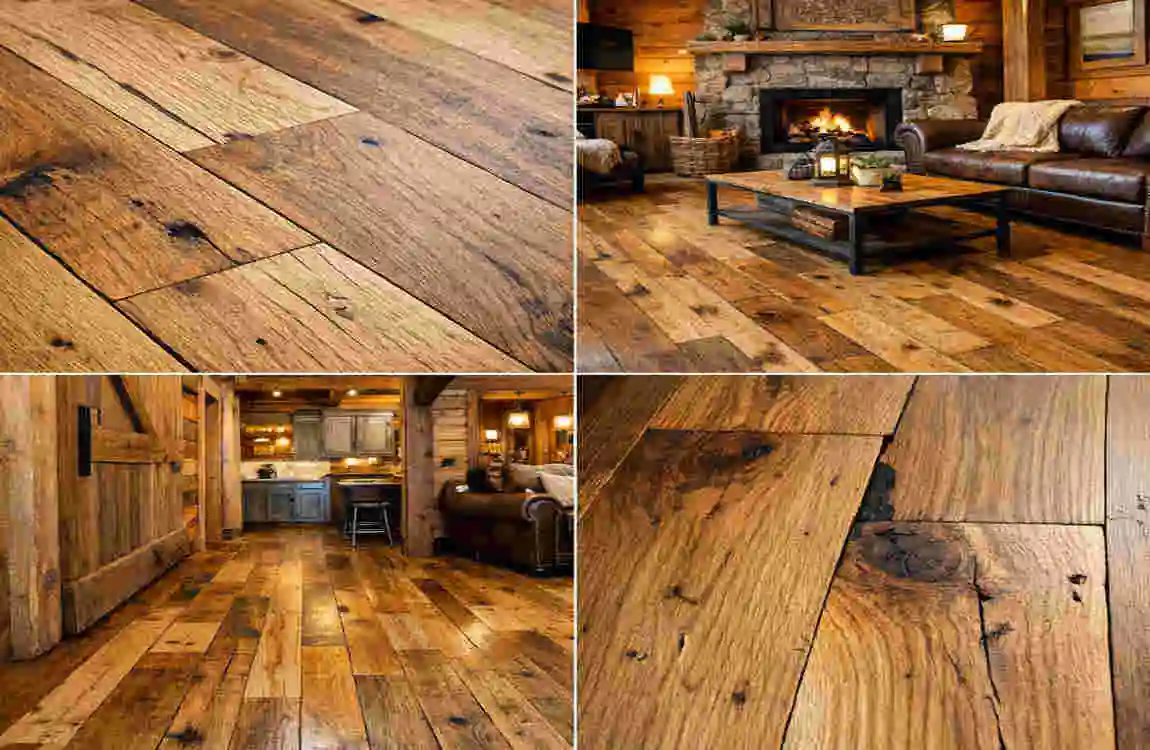
Imagine walking into a mountain lodge or a cozy countryside cottage. There is a fire crackling in the hearth, comfortable leather furniture, and a general sense of warmth that wraps around you. But look down—what really sets the tone for that space? It is almost always the floor. It isn’t shiny, perfect, or plastic-looking. It has character. It has history.
In simple terms, cabin-grade hardwood flooring is a rugged, character-filled lumber option that embraces natural imperfections like knots, mineral streaks, and color variations to create an authentic rustic charm. It is the wood that tells a story. While standard flooring tries to look uniform and “perfect,” cabin-grade flooring celebrates the natural life of the tree.
What Is Cabin Grade Hardwood Flooring?
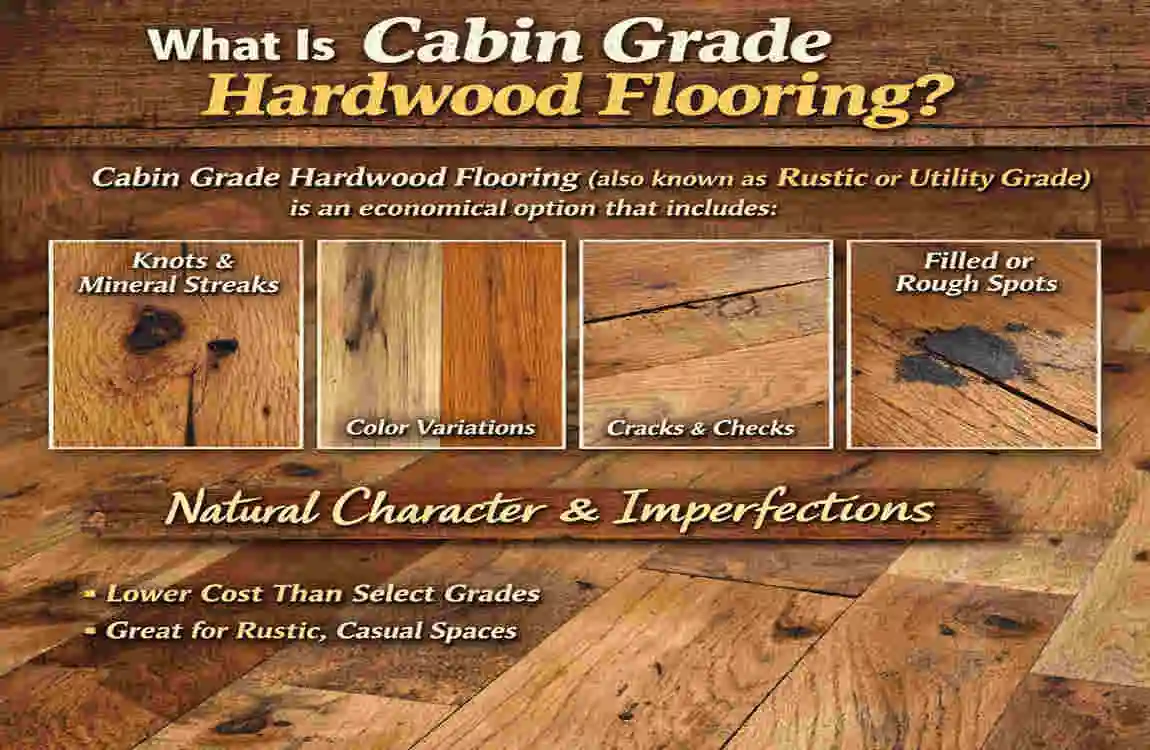
Cabin grade hardwood flooring (often referred to as “tavern grade” or “rustic grade”) is essentially the rebel of the hardwood world. When manufacturers mill lumber, they inspect every single plank. The boards that are free of knots and have perfectly uniform color are labeled as “Select” or “First Grade.” These are the expensive, pristine boards you see in formal dining rooms.
But what happens to the boards that have a lot of personality? The boards with wild grain patterns, visible knots, wormholes, or slight milling defects? They aren’t thrown away. They are categorized as cabin grade.
It is important to understand that this is real hardwood. It is the same Oak, Hickory, or Maple species as the expensive stuff. The difference is strictly visual and, to a lesser extent, structural regarding the length of the boards.
Understanding the Grading System
To really grasp what you are buying, you have to understand the hardwood grading hierarchy. Think of it like buying produce at a farmer’s market versus a high-end supermarket.
- Select/Clear Grade: This is the top tier. The wood is uniform in color, has almost no knots, and looks very “clean.” It is formal and pricey.
- #1 Common: You start to see a little variation here. Small knots and minor color streaks appear, giving it a more natural look.
- #2 Common: This is where things get interesting. You will see prominent knots, dark streaks, and distinct variations between light sapwood and dark heartwood.
- Cabin Grade (often #3 Common): This is the wildest of the bunch. It allows for defects that other grades reject. This includes open knots, shorter board lengths, checks (small cracks), and significant color variation.
Cabin grade usually contains 20-40% defects, which is exactly what gives it that reclaimed, vintage aesthetic.
The Origin Story: From Log Cabins to Modern Homes
Historically, this type of wood was used in—you guessed it—log cabins, barns, and workshops where aesthetics didn’t matter as much as function. It was the “leftover” wood that was affordable and tough.
However, home design trends have shifted dramatically. According to recent design reports from platforms like Houzz (2025 trends), homeowners are moving away from the sterile, high-gloss look of the early 2000s. People crave texture, warmth, and organic materials. As a result, cabin-grade flooring has moved out of the barn and into modern living rooms, becoming a deliberate design choice for “Modern Farmhouse” and “Rustic Chic” styles.
Comparison: Cabin Grade vs. Premium Grade
To help you visualize the difference, here is a quick comparison:
FeaturePremium Grade (Select)Cabin Grade (Rustic/Tavern)
Visual Appearance Uniform color, clean grain, no knots. High variation, large knots, mineral streaks.
Board Lengths: Mostly long, consistent boards. Includes many shorter boards (1-2 feet).
Imperfections Virtually none. Knots, wormholes, splits, milling marks.
Install a Waste 5% waste factor recommended. 15-20% waste factor recommended.
Price Point High ($$$$) Affordable ($ – $$)
Best For Formal, contemporary, minimalist spaces. Rustic, farmhouse, cottages, high-traffic areas.
Key Characteristics of Cabin Grade Hardwood Flooring
When you open a box of cabin-grade flooring, you are opening a box of surprises. No two planks will look exactly alike. This unpredictability is its superpower, but you need to know what you are signing up for.
Natural Imperfections
This is the headline feature. You are going to see:
- Knots: These are the dark circles where branches once grew out of the tree. In cabin grade, you might find “open” knots (holes that go through the board) or “tight” knots.
- Checks and Splits: Small cracks that run along the grain. These often occur during the drying process.
- Wormholes: Tiny holes created by insects when the tree was alive. These add incredible antique character.
- Heartwood vs. Sapwood: Heartwood is the darker, center part of the tree; sapwood is the lighter outer ring. Cabin grade mixes these freely, creating a striped or patchwork effect on your floor.
Durability Factors
Do not mistake “defects” for “weakness.” Cabin grade flooring is typically standard 3/4-inch solid hardwood.
- Thickness: Because it is solid wood, it can be sanded and refinished multiple times, just like Premium grades.
- Hardness: A cabin-grade Hickory floor is just as hard (Janka rating) as a select-grade Hickory floor. It is tough stuff.
- Texture: Many cabin-grade floors come with a wire-brushed or hand-scraped finish, which physically adds texture to the wood, making it even better at hiding dents.
Species Spotlight
While you can find cabin grade in almost any wood, three species dominate the market because they look fantastic when they are a bit rough around the edges:
- Rustic Oak: The king of flooring. Oak has a strong grain pattern that hides scratches well. Red Oak offers warm, pinkish tones, while White Oak provides cooler, neutral browns.
- Hickory: The strongest domestic hardwood. It naturally has wild color swings—from blonde to deep brown—making it the poster child for cabin-grade flooring.
- Maple: Usually known for being creamy and white, rustic Maple introduces dark streaks and heavy graining that completely changes its personality.
Finish Options
You generally have two choices:
- Pre-finished: The factory has already applied the stain and protective coating. This is easier to install.
- Site-finished: You install raw wood and sand/stain it yourself. This allows you to fill open knots with a black epoxy or colored wood filler for a custom look.
Pro Tip: Think of cabin-grade flooring like a weathered barn board. It isn’t trying to be a shiny new car; it’s a vintage truck. It ages gracefully, and every new scratch or dent adds to the history of the floor.
Benefits of Cabin Grade Hardwood Flooring for Rustic Upgrades
Why are so many homeowners choosing “imperfect” wood over the Premium stuff? There are some massive advantages beyond just the way it looks.
Significant Cost Savings
This is the biggest driver for most people. Cabin grade flooring typically costs 20% to 50% less than select grade flooring. Because the manufacturer classifies it as “lower quality” strictly based on visuals, you get the same structural material for a fraction of the price. If you have a large area to cover—like an open-concept living room and kitchen—these savings can amount to thousands of dollars.
Immediate Aesthetic Appeal
If you want a rustic house upgrade, standard wood requires work to make it look “lived in.” You might have to distress it, stain it unevenly, or wait ten years for it to age. Cabin grade brings that vibe instantly. As soon as it is laid down, your room feels grounded and earthy. It mimics the look of expensive reclaimed wood (which is wood taken from old buildings) but costs significantly less than actual antique lumber.
Environmentally Friendly Choice
Choosing cabin grade is actually a sustainable act. In the past, much of this wood was burned or thrown into landfills because it didn’t meet “perfectionist” standards. By buying cabin grade, you are ensuring that more of the harvested tree is utilized. It reduces waste in the timber industry and honors the natural resources we have. It’s “flawed” wood that saves trees.
Incredible Low Maintenance
This might sound counterintuitive, but hear me out. If you have a pristine, high-gloss floor, the first time your dog scratches it or your child drops a toy, it is heartbreaking. The scratch stands out like a sore thumb. With cabin-grade flooring, imperfection is the point. A new scratch blends right in with the existing knots and mineral streaks. Dust and dog hair are also less visible against the busy grain patterns and color variations. It is the perfect floor for busy families with pets.
Boosts Resale Value in the Right Market
While a formal mansion might require clear-grade wood, the real estate market in many suburban and rural areas is trending toward cozy, family-centric homes. Data from sites like Zillow suggests that keywords like “rustic,” “farmhouse,” and “hardwood” continue to attract buyers. If you are in a market where buyers value character—like a suburban neighborhood in Lahore or a countryside home in the US—this flooring can set your property apart.
Case Study: The Khan Family Upgrade. Take the example of a family home in a Lahore suburb. The homeowners wanted to replace cold tile with something warmer. They chose a cabin-grade oak. Not only did they save 30% on materials, allowing them to afford better kitchen cabinets, but the “busy” pattern of the floor proved perfect for hiding the dust that is common in the region. The home sold two years later, with the buyers specifically citing the “warm, custom wood floors” as a major selling point.
Drawbacks and Realistic Expectations
I want to be completely honest with you. Cabin-grade flooring is not for everyone, and it does come with challenges. You need to go into this with your eyes open to avoid frustration.
Potential Installation Issues
Because this is the “leftover” stock, milling consistency can vary.
- Tongue and Groove: Sometimes the tongue (the part that fits into the next board) might be broken or missing.
- Board Straightness: You will likely encounter more bowed or warped boards than with Premium grades. This means you have to use more force to wrestle them into place during installation.
- Short Boards: Cabin-grade boxes often contain a lot of “shorts”—planks that are only 12 to 18 inches long. If you don’t mix them in well, your floor can look choppy.
The Waste Factor
With standard flooring, you buy 5-10% extra for waste (cuts and mistakes). With cabin grade, you must buy 15-20% extra. Why? Because you will inevitably find some boards that are simply unusable—perhaps they have a giant hole right on the edge, or they are too split to nail down. You need to cull (sort out) the bad pieces.
Not for Every Room
While durable, the open knots and cracks can be moisture traps. Using cabin grade in a full bathroom where water splashes frequently is risky unless you seal it very, very heavily.
Pros vs. Cons Summary
ProsCons
Budget Friendly: Huge savings on material costs. Higher Waste: Need to buy 15-20% more wood.
Character: Unique, one-of-a-kind look. Labor Intensive: Harder to install and sort.
Hides Wear: Scratches blend in easily. Shorter Boards: Lots of small pieces to manage.
Eco-Conscious: Reduces lumber waste. Rough Texture: May snag socks if not finished well.
Mitigation Tip: The key to success is hiring a professional who understands rustic wood or being a very patient DIYer. Do not rush the sorting process.
How to Choose the Right Cabin Grade Hardwood Flooring
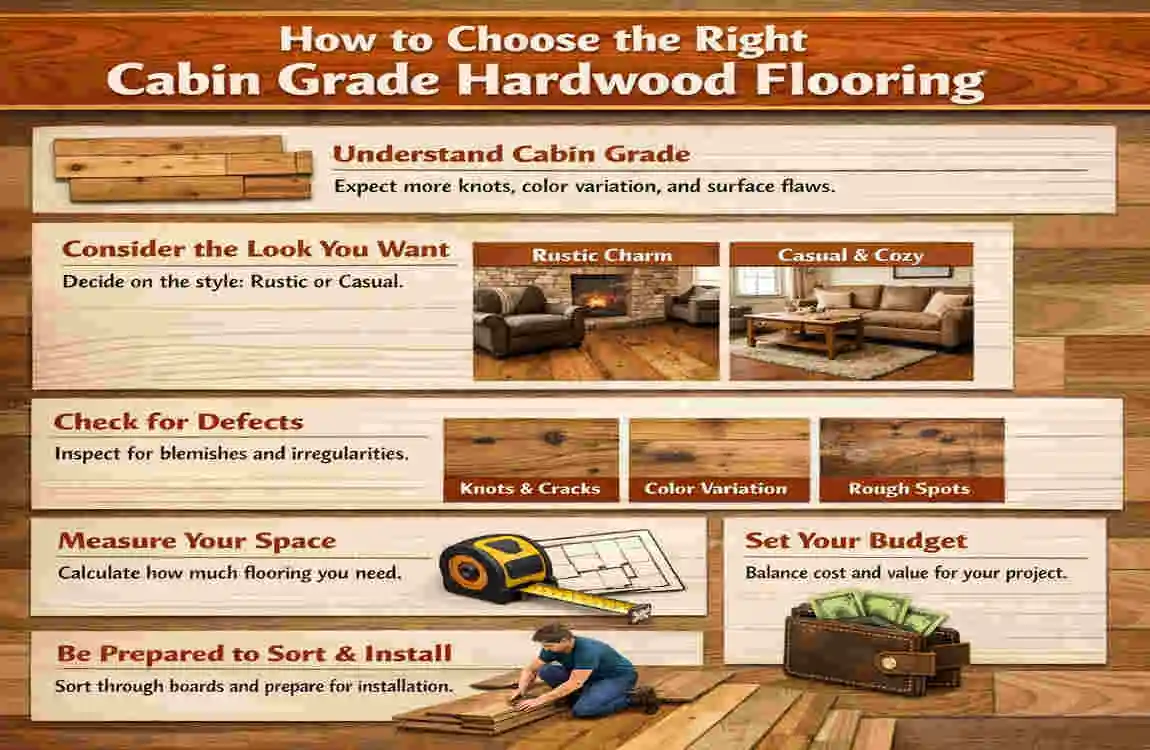
So, you are sold on the rustic look. How do you pick the right batch? It isn’t as simple as grabbing the first box you see.
Assess Your Space and Climate
Wood is a living thing; it breathes.
- Room Size: If you have a tiny room, the busy patterns of cabin grade (especially Hickory) might make the room feel cluttered. It shines best in medium to large open spaces.
- Humidity: If you live in a region with high humidity swings (like the monsoon season in South Asia or humid American summers), remember that solid wood expands. You need to leave generous expansion gaps around the walls.
Breakdown Your Budget
Don’t just look at the price per square foot on the sticker.
- Material Cost: $3.00 – $6.00 per sq ft (varies by species).
- Waste Overrage: Add cost for that extra 20% of wood.
- Installation: If hiring a pro, tell them it is cabin grade. They might charge slightly more because it takes longer to sort and install.
The Supplier Checklist
Buying cabin grade can be risky if you don’t trust the source.
- Ask for Samples: Get a physical sample, but remember, one small piece won’t show the full variety.
- Check Certifications: Look for FSC (Forest Stewardship Council) certification if eco-friendliness is a priority.
- Return Policy: Most cabin-grade flooring is sold “as-is” with no warranty. Confirm this before you swipe your card.
Color Matching
Since cabin grade has high color variation, bring paint chips and fabric swatches to the store. If you are looking at rustic Oak, does it lean red or gold? Ensure that the underlying tone matches your furniture. Don’t worry about matching every single board—look for the average color tone.
Installation Guide: DIY vs. Pro for Cabin Grade
This is the make-or-break section. Installing cabin grade is like putting together a puzzle where some pieces might need trimming.
Preparation
Do not skip this.
- Acclimation: You must bring the wood boxes into the room where they will be installed and open the ends. Let them sit for 7 to 14 days. This allows the moisture content of the wood to equalize with your home’s air. If you skip this, the wood will buckle later.
- Subfloor Check: Your subfloor (plywood or concrete) must be flat and dry. Squeaks happen because of uneven subfloors, not usually the wood itself.
The Tools You Need
If you are DIYing, you need:
- Flooring nailer (pneumatic)
- Miter saw and Table saw
- Chalk line
- Tapping block and pull bar
- Black Sharpie or Stain Pen: To touch up cut ends.
- Wood Filler: Specifically for filling open knots.
The Layout Strategy (Rack it Out)
Before you nail a single board, lay out the wood on the floor (dry lay).
- Mix the Boxes: Open 3-4 boxes at once and mix the planks. This prevents you from having a patch of dark wood next to a patch of light wood.
- Manage the Shorts: Use the short boards at the ends of the rows or in closets.
- The Knot Strategy: Decide if you want to cut out large knots or keep them. If a knot is on the edge of a board, cut it off so it doesn’t break later.
Pro vs. DIY Cost Table
ItemDIY CostProfessional Cost
Materials $3 – $5 / sq ft $3 – $5 / sq ft
Labor $0 (Just your sweat!) $2.50 – $4.00 / sq ft
Tools Rental ~$200 total Included
Time Investment 3-5 Days 1-2 Days
Total Estimate Low Medium
Safety Note: Always ensure proper ventilation when using adhesives or stains. Wear knee pads—your knees will thank you later.
Rustic House Upgrade Ideas with Cabin Grade Flooring
Once your beautiful, rugged floor is down, how do you style the rest of the room to match? You want to lean into the theme without making your house look like a theme park.
Pair with Texture
Cabin grade floors are visually “busy.” Balance them with solid textures.
- Walls: Clean, white shiplap walls or a simple creamy paint color allow the floor to be the star.
- Ceilings: Exposed wooden beams are the ultimate partner for rustic floors. They draw the eye up, mirroring the wood on the ground.
Room-Specific Ideas
- The Cozy Living Room: Place a large, fluffy wool or jute rug in the center. The contrast between the soft rug and the rough wood is stunning. Use leather sofas and plaid throws.
- The Farmhouse Kitchen: Cabin-grade floors look amazing against white or navy blue cabinetry. The rustic floor warms up the cool tones of the cabinets. Use a runner rug near the sink to protect the wood from water splashes.
Budget Design Hacks
- Mix and Match: If you found a great deal on cabin-grade wood but didn’t have enough for the whole house, use it in the bedrooms and use tile in the hallway. Use a wooden transition strip to blend them.
- Lighting: Use warm-toned LED bulbs (2700K). Warm light highlights the grain and knots better than cool, bluish light.
Maintenance and Long-Term Care for Lasting Beauty
The best part about cabin grade? It is forgiving. But you still need to take care of it to ensure it lasts for decades.
Daily and Weekly Care
- Sweep or Vacuum: Dirt is sandpaper. If you leave grit on the floor and walk on it, you are sanding the finish off. Vacuum regularly using the “hard floor” setting (turn the beater bar off).
- No Steam Mops: Never, ever use a steam mop on hardwood. The heat and moisture force water into the cracks (and remember, cabin grade has more cracks). This will cause warping. Use a barely damp microfiber mop with a pH-neutral cleaner.
Handling the “Character”
- Knot Filler: Over time, a loose knot might pop out. Don’t panic. You can buy colored epoxy or wood filler. Fill the hole, smooth it out, and dab a little stain on it. It’s a 5-minute fix.
- Screen and Recoat: Every 3-5 years, you might want to have a pro “screen” the floor (light sanding) and add a fresh coat of polyurethane. This keeps the protection strong without removing the beautiful texture.
Cost Analysis: Is Cabin Grade Worth the Investment?
Let’s talk numbers. Is this really a smart financial move?
If you were to buy 1,000 square feet of flooring:
- Select Grade Oak: approx. $8.00/sq ft material = $8,000.
- Cabin Grade Oak: approx. $4.00/sq ft material = $4,000.
Even with the extra 20% waste ($800) and slightly higher install labor (let’s say +$500), you are still looking at saving nearly $2,700.
The ROI (Return on Investment): Beyond the immediate savings, you are installing solid hardwood. Unlike laminate or vinyl, which depreciates, solid hardwood adds equity to your home. Appraisers generally do not deduct value for “rustic” grades; they check the box for “Solid Hardwood Floors,” which typically increases a home’s value by 3-5%.
So, yes. It is absolutely worth the investment for the right home.
