
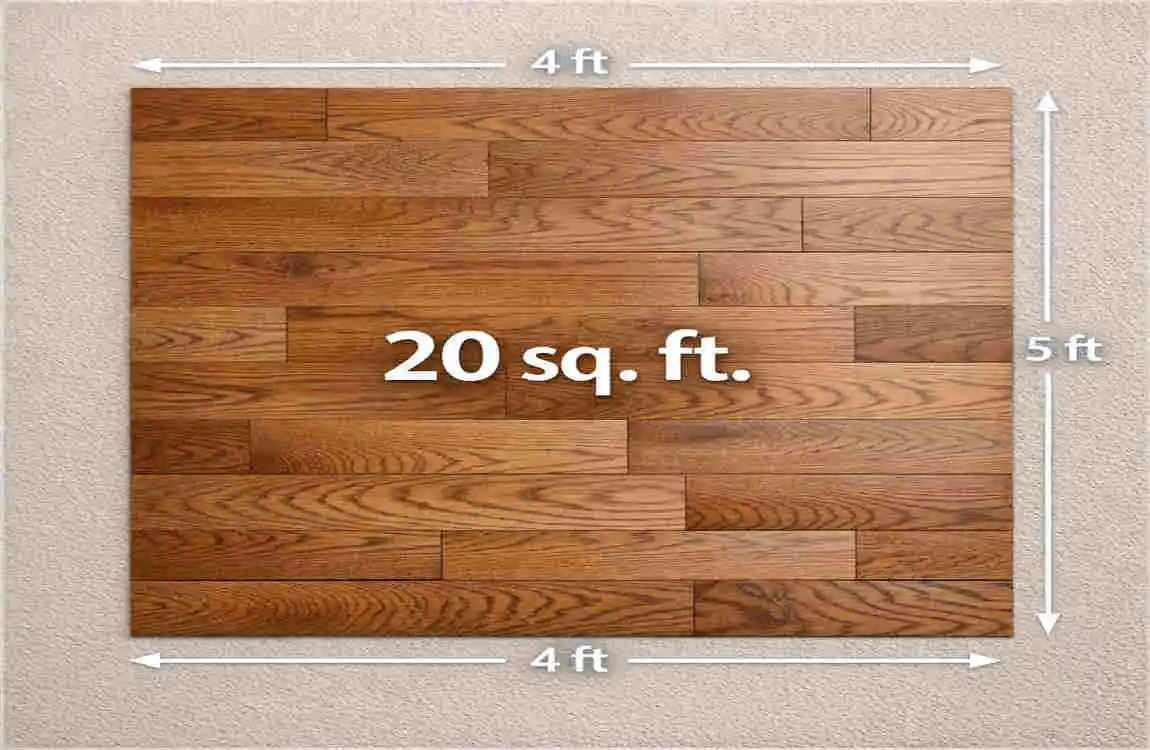
If you are planning a flooring project, one of the first things you may ask is how many sq ft are in a bundle of hardwood flooring. It is a simple question, but it matters a lot when you are buying material.
A hardwood flooring bundle is how the boards are usually packed and sold. The bundle size tells you how much floor area one package can cover. That makes it easier to estimate cost, calculate how many bundles you need, and avoid buying too much or too little.
What Is a Bundle of Hardwood Flooring?
Understanding Hardwood Flooring Bundles
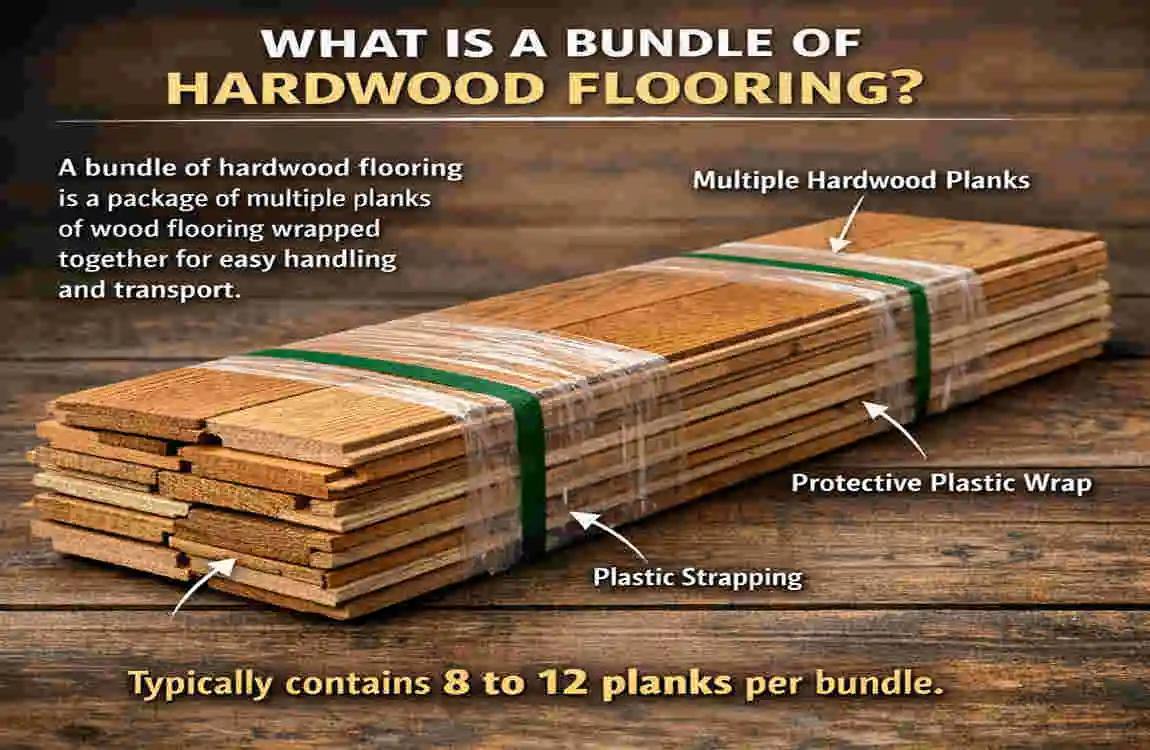
A hardwood flooring bundle is simply a boxed or wrapped package of flooring boards. Some people call it a carton, box, or package, but the idea is the same.
Inside the bundle, the boards are grouped to make shipping and storage easier. The package label usually shows the square footage per carton or per bundle, which is the most important number to check before you buy.
Why Bundle Sizes Are Different
Hardwood flooring does not come in a single universal size because each product is built a little differently.
Some boards are wider. Some are longer. Some are thicker. Some come in mixed lengths, while others are more uniform. All of these things affect how much area one bundle can cover.
That is why one product may cover 20 square feet per bundle, while another may cover 25 square feet or more. The exact amount depends on the manufacturer and the product design.
Typical Square Footage in a Hardwood Flooring Bundle
Many hardwood flooring bundles cover a moderate amount of space, but the exact amount can vary widely. Some bundles are small, and some are larger.
The safest rule is this: always check the package label. That label will tell you the actual coverage for that specific product.
How Many Sq Ft in a Bundle of Hardwood Flooring?
Average Hardwood Flooring Bundle Coverage
So, how many sq ft in a bundle of hardwood flooring? The honest answer is it depends on the product.
Many hardwood flooring bundles cover 15 to 30 square feet, but that is only a general guide. Some may be outside that range.
That is why you should never guess based on appearance alone. The square footage listed by the manufacturer is the number you should trust.
Factors That Affect Square Footage per Bundle
Several details affect how much coverage a bundle provides:
- Plank width
- Plank length
- Number of boards in the bundle
- Wood species
- Flooring thickness
- Solid vs. engineered hardwood
- Manufacturer packaging
- Product grade and design
Wider boards can reduce the number of pieces in a bundle. Longer boards may also change the total coverage. Engineered hardwood and solid hardwood may be packaged differently even when they look similar.
Example of Bundle Coverage
Here is a simple way to think about it:
- If one bundle covers 20 sq ft, then 5 bundles cover 100 sq ft
- If one bundle covers 25 sq ft, then 4 bundles cover 100 sq ft
This is only a basic math example. It does not include extra material for cutting or mistakes, which you should always plan for.
How to Calculate How Many Hardwood Flooring Bundles You Need
Measure the Room
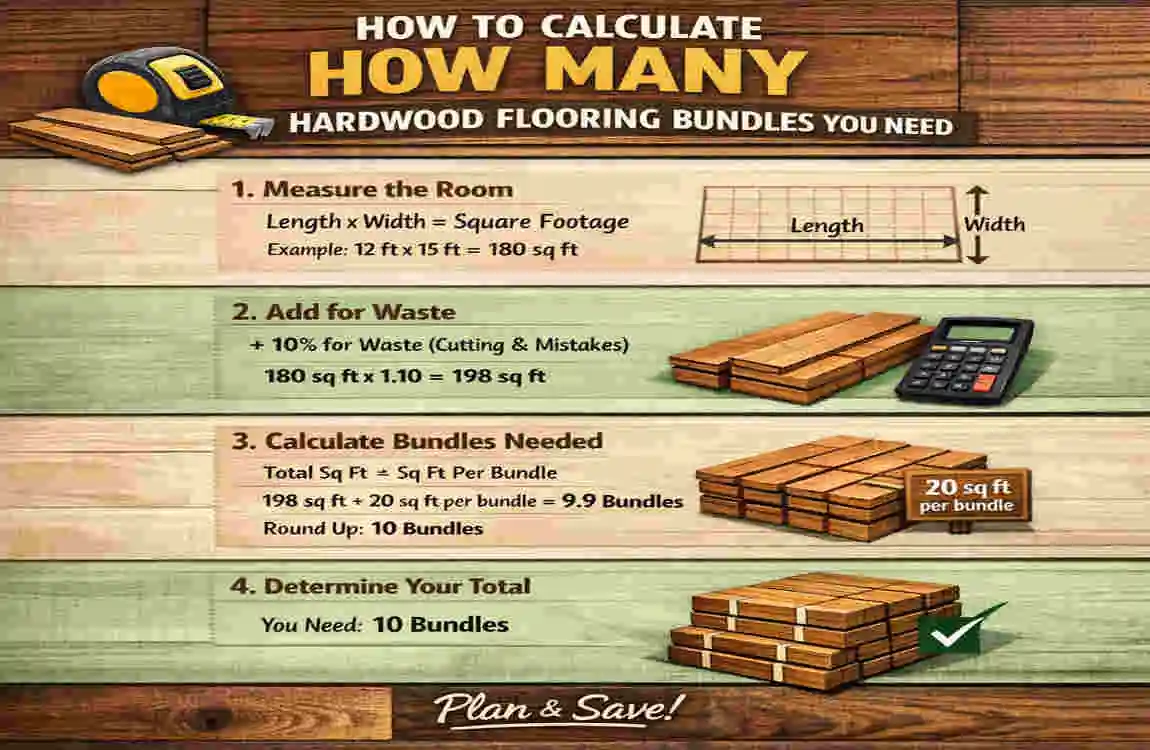
Before you buy anything, measure the room carefully.
Use this basic formula:
Room Square Footage = Length × Width
For example, if a room is 12 feet long and 10 feet wide, its area is 120 square feet.
If your room is not a simple rectangle, break it into smaller sections. Measure each section, then add them together. This makes the job much easier and more accurate.
Calculate Total Flooring Requirements
If you are doing more than one room, add all the areas together.
For example:
- Room 1 = 120 sq ft
- Room 2 = 80 sq ft
- Total = 200 sq ft
If there are areas you do not need to cover, subtract those spaces where appropriate. Just make sure all measurements use the same unit.
Add an Installation Waste Allowance
This step is very important. You should always buy extra flooring because some boards will be cut, damaged, or wasted during installation.
A waste allowance helps with:
- Cuts around walls and corners
- Damaged boards
- Odd room shapes
- Pattern matching
- Future repairs
The amount of waste depends on the room’s shape and how the floor is installed. A simple room may need less extra material than a complex one.
Convert Square Footage Into Bundles
Once you know your total square footage, use this formula:
Required Bundles = Total Required Square Feet ÷ Square Feet Covered by One Bundle
Always round up to the next whole bundle.
For example:
- Total needed = 210 sq ft
- One bundle covers = 21 sq ft
- 210 ÷ 21 = 10 bundles
If the result is 10.2, you still buy 11 bundles, not 10. That small extra amount can save you a lot of trouble later.
Hardwood Flooring Bundle Coverage by Flooring Type
Solid Hardwood Flooring
Solid hardwood is made from one solid piece of wood. It is a classic choice and can often be refinished over time.
Bundle coverage depends on board size and packaging. Some solid hardwood bundles may cover less area than expected because the boards are thicker or longer.
That is why the product label matters so much.
Engineered Hardwood Flooring
Engineered hardwood has a layered construction with a real wood top layer. It is often more stable in changing humidity.
Because of its construction, engineered hardwood may be packaged differently from solid hardwood. Some products cover more square footage per bundle, while others cover less.
Again, the key is to check the listed coverage before ordering.
Wide-Plank Hardwood Flooring
Wide-plank flooring uses broader boards, which can create a beautiful, open look. However, wider planks may mean fewer boards in each bundle.
That does not always mean less coverage overall, but it can change the package size and the number of bundles you need.
Narrow-Plank Hardwood Flooring
Narrow planks often include more boards in each bundle. This can make the package look fuller, but the total square footage may still be similar to other products.
The number of boards alone does not tell the full story. Square-foot coverage is the number that really matters.
Important Factors to Check Before Buying Hardwood Flooring Bundles
Check the Manufacturer’s Coverage Information
Always look for the printed square footage per bundle or per carton. This is the easiest and most reliable way to estimate coverage.
Do not assume all hardwood bundles are the same size.
Consider Flooring Waste
Buying exactly the measured square footage is risky. Installation always creates some waste.
A good plan includes a small buffer so you do not run short in the middle of the project.
Buy From the Same Product Lot When Possible
Wood floors can vary slightly in color, grain, and finish from one batch to another. If possible, buy enough for the entire project at once.
That helps the floor look more consistent across the room or between rooms.
Keep Extra Flooring for Future Repairs
Save a few leftover boards if you can. Extra flooring can help if one area gets damaged later.
It may also be hard to find the same product again if it gets discontinued.
Common Mistakes When Calculating Hardwood Flooring Bundles
Buying Based Only on Room Dimensions
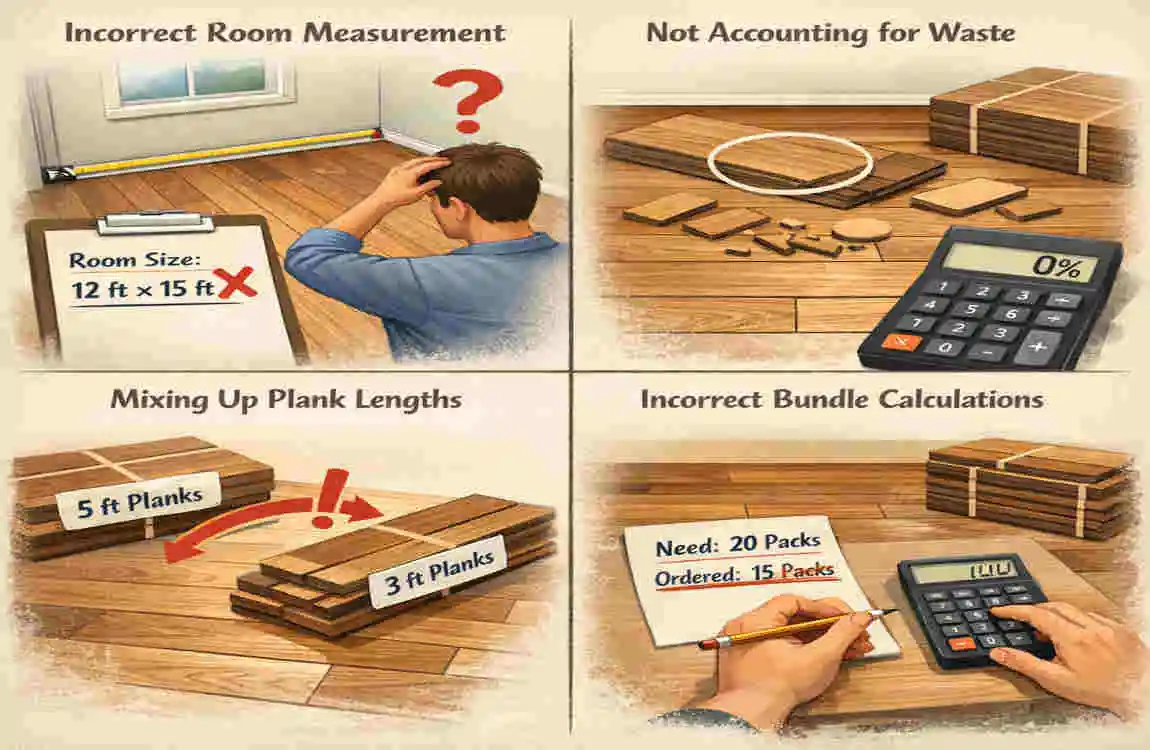
Room size is important, but it is not the full answer. You also need to include waste and match the bundle coverage.
Assuming Every Bundle Has the Same Coverage
This is one of the most common mistakes. Different products have different packaging sizes.
Forgetting Irregular Room Shapes
L-shaped rooms, hallways, and rooms with corners are harder to measure. Break them into smaller sections to make the math easier.
Rounding Down the Number of Bundles
Never round down. Flooring is sold in full packages, and being short can delay the project.
Ignoring Future Repairs
Leftover boards are worth keeping. They can save you trouble later if you need a patch or replacement.
Frequently Asked Questions
How many sq ft are usually in a bundle of hardwood flooring?
It varies by product. The best answer is the square feet per bundle printed on the package.
How do I calculate how many bundles of hardwood flooring I need?
Divide the total square footage you need by the square feet covered by one bundle, then round up.
Should I buy extra hardwood flooring?
Yes. Extra flooring helps cover waste, cuts, damage, and future repairs.
How much extra hardwood flooring should I buy?
That depends on the room shape, plank size, and installation method. Irregular rooms usually need more extra material.
Does hardwood plank size affect bundle coverage?
Yes. Plank width and Length both affect the area a bundle covers.
Are solid and engineered hardwood bundles the same size?
No. Their packaging and coverage can be different.
Can I calculate hardwood flooring coverage from the number of boards?
Not accurately unless you know the board dimensions; the square-foot coverage on the label is the safest number to use.
What should I do with leftover hardwood flooring?
Store it in a dry, safe place for future repairs or replacements.
| Hardwood Flooring Type | Typical Coverage per Bundle |
|---|---|
| Solid hardwood | 20–25 sq. ft. |
| Engineered hardwood | 20–30 sq. ft. |
| Prefinished hardwood | 20–25 sq. ft. |
| Wide-plank hardwood | 15–25 sq. ft. |
| Premium hardwood | 18–25 sq. ft. |
