
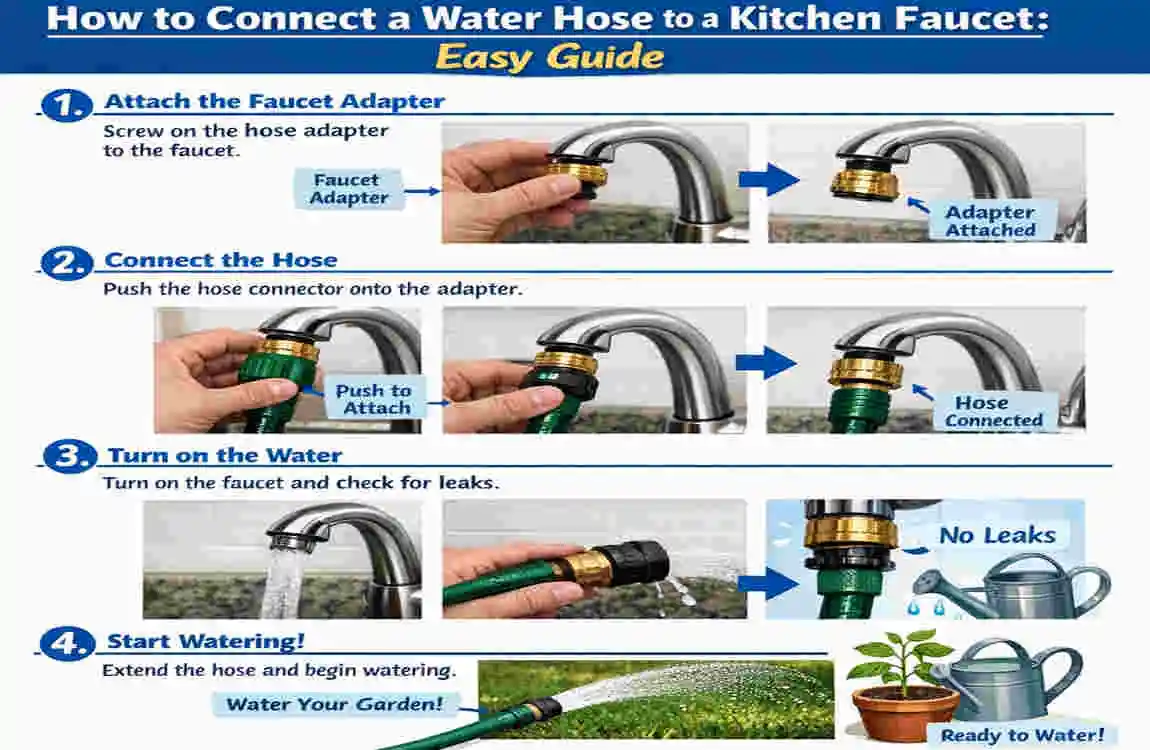
If you need temporary water access in your kitchen, learning how to connect a water hose to a kitchen faucet can be very useful. People often do this to fill large containers, clean, water plants, or access water conveniently for a short time.
The key is to use the right adapter and make sure the connection fits properly. A bad fit can cause leaks, loose connections, or even damage to the faucet.
What You Need to Connect a Water Hose to a Kitchen Faucet
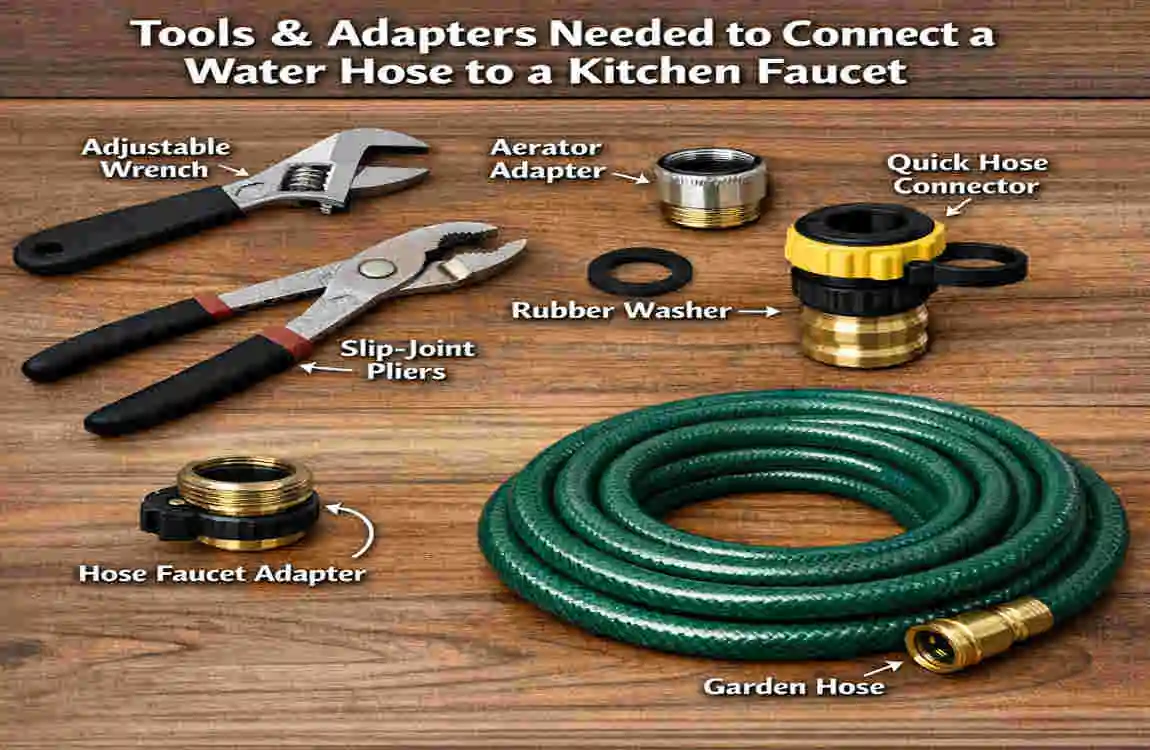
Before you begin, gather everything you may need. This makes the job easier and helps you avoid stopping halfway through.
Basic Tools and Materials
You will usually need:
- kitchen faucet adapter
- hose with the correct connector
- adjustable wrench
- plumber’s tape
- rubber washer
- bucket or towel for small spills
Threaded vs. Non-Threaded Faucet Connections
Some faucets have threaded ends, which makes them easier to connect to an adapter. Others do not.
If your faucet is non-threaded, you may need a special adapter that grips or clamps onto the spout. That is why checking the faucet size and shape matters before you start.
Check Your Kitchen Faucet Before Connecting the Hose
Not every kitchen faucet works the same way. A quick inspection can save you time and frustration.
Identify the Faucet Aerator
The aerator is the small piece at the end of the faucet where water comes out. It often screws onto the spout and may need to be removed before you can attach an adapter.
Remove the Aerator Carefully
Turn off the faucet first. Then try unscrewing the aerator by hand.
If it is too tight, use an adjustable wrench gently. Be careful not to scratch the faucet finish.
Check the Faucet Threads
Inspect the threads once you remove the aerator. Some faucets have male threads, while others have female threads.
This matters because the adapter must match the thread type. Also, some pull-down or pull-out faucets may not work with standard hose adapters.
How to Connect a Water Hose to a Kitchen Faucet
Once you know your faucet type, you can start the connection process.
Turn Off the Water
Make sure the faucet is completely off before you begin. This helps prevent splashes and makes the setup safer.
Remove the Existing Aerator
Unscrew the aerator and keep it somewhere safe. You will likely need it again when you remove the hose connection.
Install the Faucet Adapter
Choose the adapter that matches your faucet threads.
If needed, place the rubber washer inside the adapter. Then tighten it securely, but don’t overtighten.
Attach the Water Hose
Carefully connect the hose to the adapter. Make sure the threads line up properly before tightening.
Start by hand-tightening the connection. This usually gives you the safest, most even fit.
Turn on the Water Slowly
Turn on the water at low pressure first. Check the hose and adapter for leaks.
If you see drips, tighten the connection slightly. If the leak continues, stop and recheck the washer or thread fit.
Common Problems When Connecting a Hose to a Kitchen Faucet
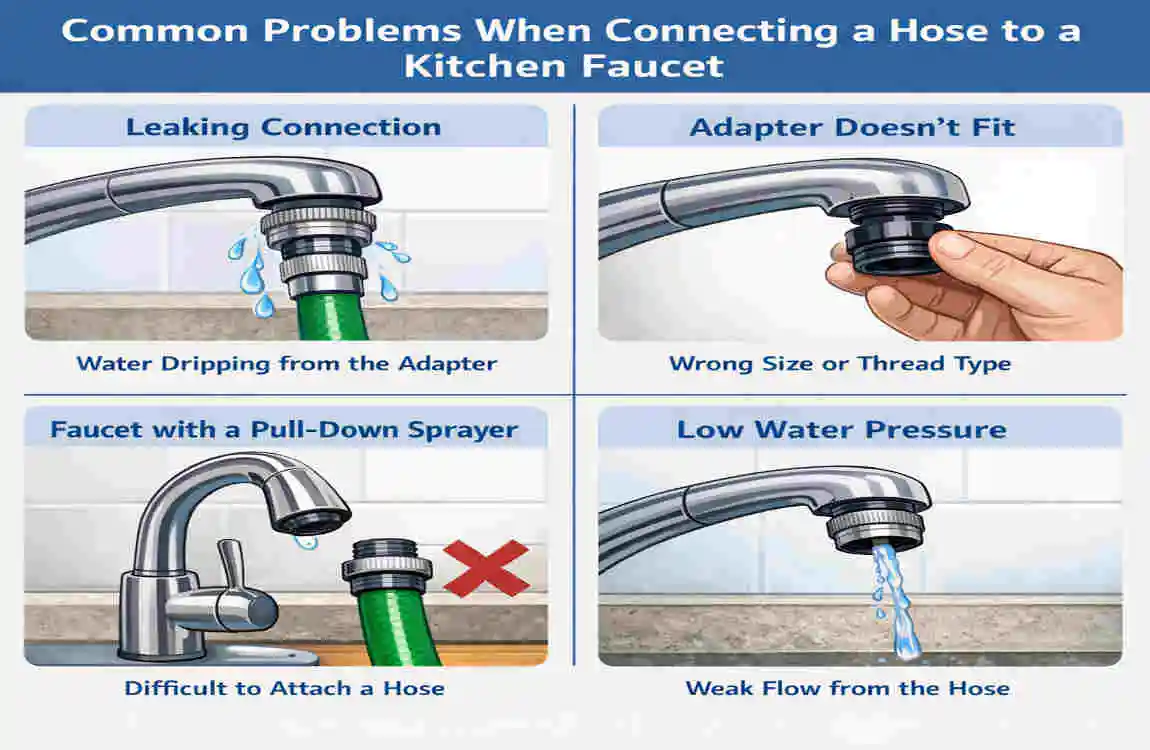
Sometimes the setup does not go perfectly the first time. Here are a few common issues.
The Hose Does Not Fit
This usually means the faucet and hose threads do not match. In that case, you need a faucet-to-hose adapter that matches both ends.
Water Is Leaking
Leaks often happen because of:
- missing rubber washer
- worn threads
- crooked connection
- loose fitting
Check each part carefully before turning the water back on.
Low Water Pressure
If the water flow is weak, the problem may be a clogged aerator, a restricted adapter, or even a hose that is too long.
Pull-Out or Pull-Down Faucets
These faucets are harder to adapt because of their design. Always check the manufacturer’s setup before trying to connect a hose.
Tips for a Safe and Leak-Free Hose Connection
A few simple habits can help you avoid problems.
Helpful Tips
- use the correct adapter
- do not force mismatched threads
- use plumber’s tape only where needed
- do not overtighten plastic parts
- keep water pressure moderate
- check for leaks before walking away
- Remove the hose after use if the setup is temporary
If the connection feels unstable, stop and fix it instead of risking damage.
How to Disconnect and Maintain the Hose Connection
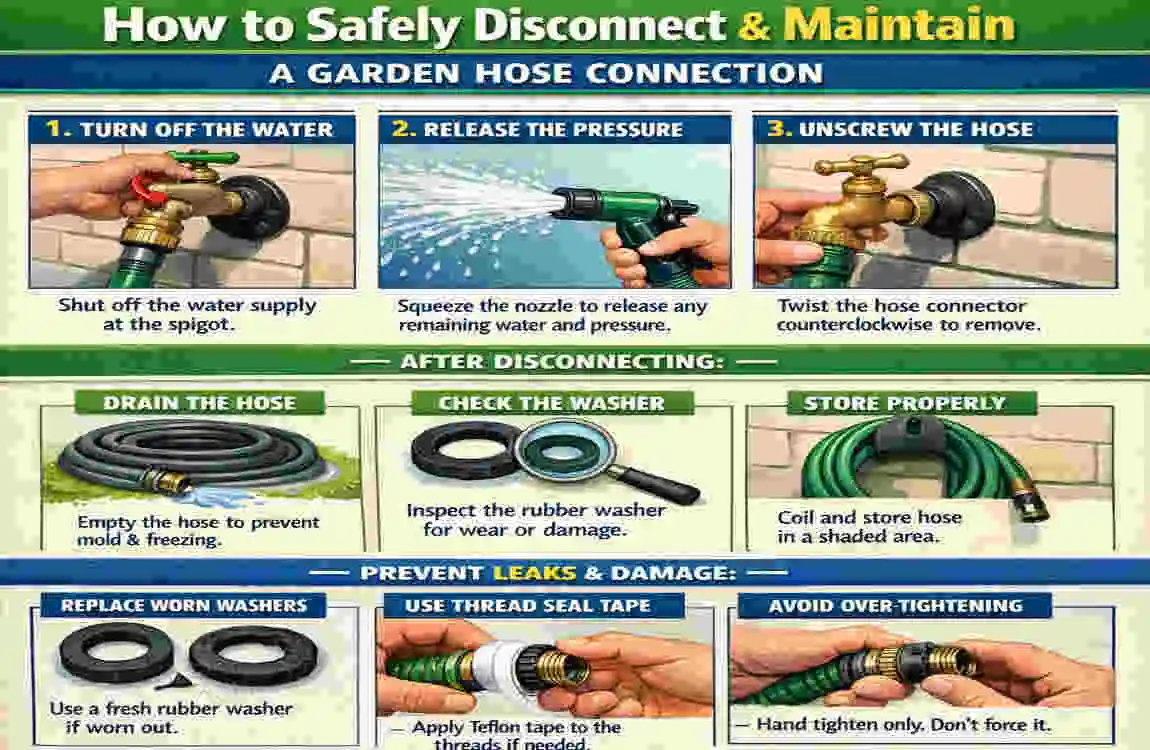
When you are done, remove everything carefully to keep the faucet in good condition.
Turn Off the Faucet
Shut off the water before disconnecting the hose.
Release Pressure
If needed, briefly open the faucet to release any trapped pressure in the hose.
Remove the Hose
Unscrew the hose slowly to avoid damaging the adapter or threads.
Reinstall the Aerator
Put the original aerator back on the faucet. Then run the water briefly to make sure the flow is normal.
Maintain the Parts
Check the washer, hose, and adapter regularly. Replace any cracked, worn, or damaged parts right away.
FAQs About Connecting a Water Hose to a Kitchen Faucet
Can you connect a water hose directly to a kitchen faucet?
Usually no. Most hoses need a compatible faucet adapter to fit properly.
What adapter do I need to connect a hose to a kitchen faucet?
It depends on your faucet thread type and your hose connector. Check both before buying an adapter.
Can I connect a garden hose to my kitchen faucet?
Sometimes yes, but usually only with the right adapter. A direct connection often will not fit.
How do I stop my kitchen faucet hose connection from leaking?
Make sure the washer is in place, the threads are aligned, and the fitting is tightened properly.
Can I connect a hose to a pull-down kitchen faucet?
It depends on the faucet design. Some can work with adapters, while others cannot.
Do I need plumber’s tape for a faucet hose connection?
Sometimes. In other cases, the rubber washer provides the main seal.
Can connecting a hose damage a kitchen faucet?
Yes, if you force the threads, overtighten the parts, or use the wrong adapter.
What should I do if my faucet does not have removable threads?
You may need a special adapter or help from a plumber.
| Step | What to Do | Quick Tip |
|---|---|---|
| Check the Faucet | Identify whether the faucet has a removable aerator or hose connection. | Most connections attach where the aerator sits. |
| Remove the Aerator | Unscrew the faucet aerator carefully. | Use pliers with a cloth to avoid scratches. |
| Add an Adapter | Install a faucet-to-hose adapter that matches the faucet thread. | Choose the correct size and thread type. |
| Attach the Hose | Screw the water hose onto the adapter securely. | Tighten by hand first; avoid overtightening. |
| Check the Washer | Make sure a rubber washer is inside the hose fitting. | The washer helps prevent leaks. |
