
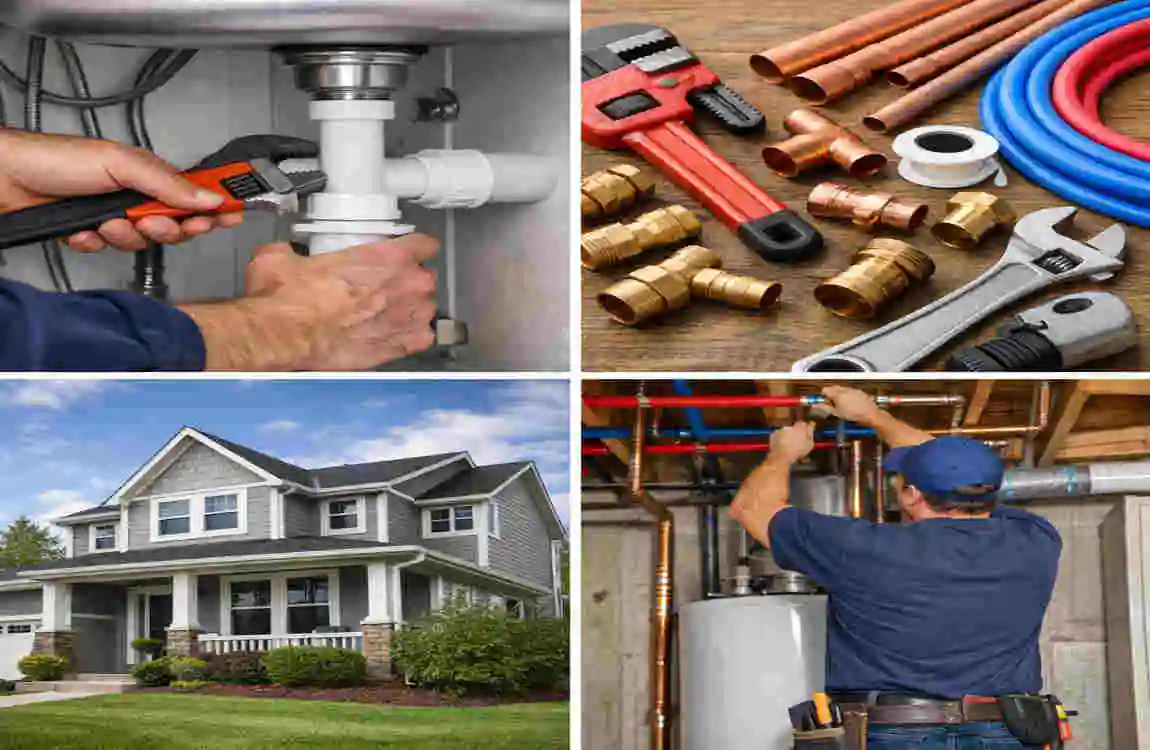
We often take our plumbing for granted. It is the hidden circulatory system of our homes, quietly delivering clean water and carrying away waste. But like any system, it has a lifespan. When pipes start to fail, you aren’t just looking at a small repair; you might be facing a whole-house repipe. The immediate question that hits every homeowner’s wallet is: How much to re-plumb a house?
To give you the direct answer: The average cost to re-plumb a standard 1,500-square-foot home typically ranges between $5,000 and $20,000. On a per-square-foot basis, you can expect to pay between $4 and $15.
However, that is a wide range. The final price tag depends heavily on the materials you choose (such as copper vs. PEX), your home’s layout, and where you live. For example, labor rates in downtown Los Angeles will differ vastly from those in Lahore, Pakistan, where hard water issues often force homeowners to replace pipes sooner.
What Is Re-Plumbing and When Do You Need It?
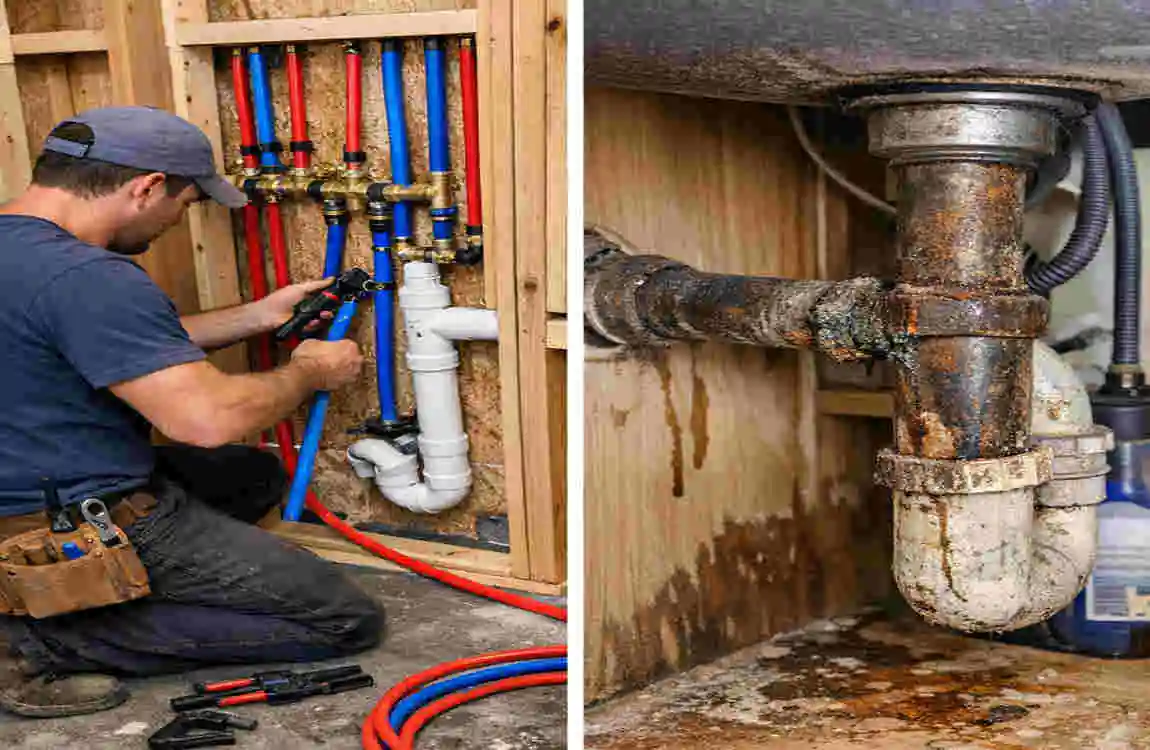
Before we dive into the bank account, let’s clarify what we are talking about. Re-plumbing (or repiping) generally refers to replacing the water supply lines. These pipes bring fresh water to your taps, toilets, and appliances. It doesn’t always include the drain or waste lines, though those can be done at the same time if needed.
Think of it as a heart transplant for your house. You are removing the clogged, corroded arteries and replacing them with fresh, clean vessels.
The Ticking Time Bomb of Old Pipes
Many older homes were built with materials that don’t last forever.
- Galvanized Steel: Popular before the 1960s, these rust from the inside out. If your house is over 50 years old and has original pipes, they are likely living on borrowed time.
- Polybutylene: Used heavily in the 70s and 80s, these plastic pipes are notorious for bursting. If you have them, you might struggle even to get home insurance until they are gone.
Signs You Need to Re-Plumb
How do you know it is time? Your house will tell you. Look for these red flags:
- Rust-Colored Water: If the water looks like tea when you first turn it on, your pipes are rusting inside.
- Low Water Pressure: Corrosion builds up inside the pipe, narrowing the water’s path (like a clogged artery).
- Frequent Leaks: If you fix one leak only for another to pop up a month later, the whole system is failing.
- Discolored Stains: Look at your ceilings or walls. Brown or yellow rings mean slow leaks.
- Bad Taste or Smell: Water shouldn’t taste metallic or smell musty.
- Noisy Pipes: Banging or clanging sounds usually indicate loose or pressurized pipes.
- Temperature Fluctuations: If the shower creates a scalding surprise when someone flushes the toilet, the pressure balance is off.
- Visible Corrosion: Look at exposed pipes in the basement or crawlspace. If they have flaking rust or white lime deposits, they are in trouble.
Pipe Types and Lifespans
Pipe Type, Estimated Lifespan, Common Issues, Best For
Galvanized Steel 20-50 Years Internal corrosion, rust buildup, low pressure. Obsolete (Avoid)
Copper 50+ Years Pin-hole leaks, expensive, theft risk (in vacant homes). Premium durability
PEX 50+ Years Rodent damage, UV sensitivity (outdoor). Cost-effective & flexible
CPVC 50-75 Years: Becomes brittle over time and is sensitive to freezing. DIY-friendly
Average Re-Plumbing Costs: National Breakdown
Now, let’s get into the nitty-gritty of the numbers. When you search “how much to re-plumb a house,” you will find that costs are generally calculated by the “fixture” (sink, toilet, shower) or by the square foot.
The Cost Per Square Foot
Nationally, professional plumbers charge between $4 and $15 per square foot for a total repipe.
- Small Home (1,000 sq ft): $4,000 – $15,000
- Medium Home (2,000 sq ft): $8,000 – $30,000
- Large Home (3,000+ sq ft): $12,000 – $45,000+
Why such a big gap? It mostly comes down to the material you choose. Let’s look at 2026 pricing trends.
Material-Driven Cost Breakdown For a 2,000 sq ft Home
MaterialCost per Foot (Installed), Total Estimated Cost, Pros/Cons
PEX (Cross-linked Polyethylene) $0.50 – $2.00 $4,000 – $8,000 Pros: Flexible, cheapest, fast install. Cons: Rodents might chew it.
Copper (Rigid) $2.00 – $5.00 $10,000 – $20,000 Pros: Proven longevity, bacteria resistant. Cons: Very expensive, hard to install.
CPVC (Chlorinated PVC) $1.00 – $3.00 $6,000 – $12,000 Pros: Handles hot water well. Cons: Brittle in cold, can crack during earthquakes.
Labor Costs
Don’t forget the humans doing the work. Labor typically accounts for 50% to 60% of the total invoice.
- Plumber Rates: Licensed plumbers charge between $75 and $150 per hour.
- Assistants/Apprentices: Usually range from $40 to $70 per hour.
A whole-house repipe takes time. For a standard home, a crew of two might work for 3 to 5 days. That is a lot of hours adding up on the bill.
Cost Factors Affecting Whole House Repiping
You might get a quote of $8,000, while your neighbor gets one for $15,000 for the same-sized house. Why? Because size isn’t the only thing that matters. Several variables influence the final answer to how much to re-plumb a house.
Accessibility and Foundation Type
Where are the pipes hiding?
- Crawlspace/Basement: If your plumber can walk or crawl under your house to access pipes, it is much cheaper. They don’t have to cut into as many walls.
- Slab Foundation: If your house is built on a concrete slab, the pipes are often buried underneath. To replace them, plumbers have to run new lines through the attic and down the walls. In worst-case scenarios, they have to jackhammer the floor. This can increase costs by 30% or more.
- Multi-Story Homes: Running pipes between floors means cutting into ceilings and navigating intricate framing. Expect to pay more for a two-story home than a ranch-style home.
Number of Fixtures
A 2,000-square-foot house with 1 bathroom is cheaper to plumb than a 2,000-square-foot house with 4 bathrooms. Each sink, toilet, shower, dishwasher, and washing machine requires a connection. Plumbers often charge a “per fixture” rate for these hookups, usually adding $500 to $1,000 per bathroom to the total.
Geographic Location
- United States: In high-cost-of-living areas like San Francisco or New York, labor rates skyrocket. In the rural Midwest, they are more affordable.
- International Context (Pakistan/Lahore): For our readers in South Asia, the dynamics differ. Labor costs are lower, but high-quality materials (such as imported PEX) are more expensive due to tariffs.
- Estimated Cost: A full repipe in a 10-marla or 1-kanal house in DHA or Bahria Town typically ranges from PKR 1.5 million to 6 million.
- Why? The groundwater in Lahore is increasingly hard and saline, leading to galvanized pipes corroding quickly. Homeowners often opt for imported Uponor PEX or high-grade PPRC (green pipe), which significantly increases material costs compared to local PVC.
Wall Repair and Cleanup
Plumbers are great at cutting holes to reach pipes. They are not always great at fixing them. Most plumbing quotes do not include patching the drywall, texturing, and painting. You might need to hire a separate contractor for this, adding another $1,000 to $3,000 to your project budget.
Inflation
Since 2025, the cost of raw materials—specifically copper and petroleum-based plastics—has risen by about 8%. When budgeting, add a buffer for these fluctuating market prices.
Detailed Cost Breakdown by Project Phase
To help you visualize where the money goes, let’s look at the project in phases. This is generally how a contractor will bid the job.
Inspection and Permits $200 – $2,500
Before a hammer swings, the plumber needs to see what is going on. They might use snake cameras to inspect the lines.
- Permits: You legally need a permit to repipe a house. This ensures the work meets safety codes. Permit fees vary by city but typically range from $500 to $2,000.
- Inspection Fee: Some plumbers waive this if you hire them for the job.
Demolition and Protection $1,000 – $3,000
This is the messy part. The crew will:
- Cover your furniture and floors with plastic.
- Cut open drywall in strategic locations (behind sinks, in closets).
- Shut off the main water supply and drain the old system.
- In some cases, they remove the old pipes. In others, they leave the old pipes in the wall (abandoned) and just run new ones. Removing old pipes takes more labor and costs more.
Installation $3,000 – $12,000
This is the bulk of the cost. The crew runs the new PEX or copper lines through your floor joists, attic, and wall studs. They secure the pipes with clamps to prevent rattling (water hammer).
Fixture Reconnection $1,000 – $4,000
Once the main lines are in, they have to connect them to your faucets, toilets, and showers. This requires precision. If you are upgrading to new faucets at the same time, this is when they go in.
Testing and Inspection $500 – $2,000
They turn the water back on and pressure test the system to ensure there are no leaks. Then, a city inspector comes out to sign off on the work.
Hidden Costs Table
Hidden Item, Estimated Extra Cost, Why It Happens
Slab Jackhammering $2,000 – $5,000. If a leak is under the concrete and cannot be bypassed.
Drywall Repair $1,500 – $4,000 Plumbers make holes; they rarely fix them perfectly.
Hotel Stay: $500-$1,000. You might not have water for 2-5 days.
Code Upgrades $500+ An inspector might require you to upgrade your water heater strap or expansion tank.
Material Comparison: Which Pipes Save Money?
Choosing the right material is the single biggest decision you will make regarding cost. Let’s look deeper at the battle between PEX and Copper.
PEX: The Budget Champion
PEX (Cross-linked Polyethylene) has taken over the residential market. Why? Because it is flexible. A plumber can snake a 50-foot piece of PEX through a wall like an extension cord. This means fewer connections, fewer potential leak points, and—most importantly—fewer holes cut in your wall.
- Cost Savings: It is roughly 40% cheaper than copper.
- Eco-Trends: As of 2026, many manufacturers are offering “Green PEX” made from recycled materials, which sometimes qualifies for local energy rebates.
Copper: The Gold Standard
Copper is rigid, durable, and naturally resistant to bacteria. It is the “Cadillac” of plumbing. However, it requires a master plumber to solder the joints with a torch. This labor is expensive.
- Theft Risk: In some areas, thieves strip copper from homes during renovation because the scrap metal is valuable.
Sourcing in Pakistan
For our Pakistani readers, the debate often centers on PPRC (Green Pipe) and UPVC.
- PPRC: This is heat-fused, meaning the joints become one solid piece. It is excellent for Lahore’s climate and is very affordable.
- Imported PEX: While superior, imported PEX (like Uponor) is a luxury item in Pakistan, often costing 3x the price of local PPRC.
DIY vs. Professional Re-Plumbing: Costs and Risks
You might be thinking, “I’m handy. Can’t I buy some PEX and crimp rings and do this myself?”
Technically, yes. Practically, it is risky.
The DIY Cost
If you do it yourself, you only pay for the materials. You could potentially repipe a small house for $2,000 to $3,000. You save roughly 60% by eliminating labor costs.
The Risks
- Insurance Void: Most homeowner’s insurance policies will deny coverage for water damage if a licensed professional did not perform the plumbing work. If your DIY pipe bursts and floods your living room, you are on your own.
- Code Violations: Do you know the specific code for venting? Or how far a pipe must be from an electrical outlet? Inspectors will fail you if you don’t.
- Resale Value: When you sell your house, you must disclose that a DIYer did the plumbing. This scares off buyers.
Cost vs. Risk Comparison
ApproachTotal Estimated CostTime RequiredRisk Level
DIY $3,000 – $7,000 2-3 Weeks (Evenings/Weekends) High (Leaks, Insurance Denial)
Professional $8,000 – $18,000 3-5 Days Low (Warranties, Licensed)
Verdict: For a whole-house repipe, hire a pro. Save the DIY for changing a faucet or a toilet flapper.
Ways to Save on Re-Plumbing Your House
If the average cost scares you, don’t worry. There are ways to shave thousands off the bill without cutting corners on quality.
- Get Multiple Bids: Never settle for the first quote. Prices can vary by 20-30% between companies. Get at least three written estimates.
- Partial Repipe: Do you really need to replace everything? Sometimes, only the exposed horizontal pipes in the basement or attic are bad. Leaving the vertical pipes in the walls (if they are in good condition) can save you $3,000+.
- Schedule During Off-Peak Seasons: Plumbers are busiest in winter (frozen pipes) and deep summer. Try scheduling your job in the mild spring or fall months. You might have more negotiating power.
- Do the Demo Yourself: Ask your plumber if you can knock $500 off the bill if you handle the cleanup or cut the drywall openings yourself (if they mark them).
- Rebates: Check for rebates. Installing water-saving fixtures or specific eco-friendly pipes can sometimes net you tax credits or rebates from your local utility company.
Step-by-Step Guide to Budgeting and Hiring

Ready to get started? Follow this checklist to ensure you hire the right team for the right price.
- Verify Licenses: In the US, check the PHCC (Plumbing-Heating-Cooling Contractors Association). In Pakistan, look for registered engineering firms. Never hire an unlicensed handyperson for a whole-house job.
- Ask for a “Turnkey” Quote: Make sure the quote includes materials, labor, permits, and removal of the old debris. Ask specifically if drywall repair is included.
- Check Warranties: A good plumber should offer a warranty on their work for 1 to 5 years. Manufacturers (like PEX brands) often offer 25-year warranties on the pipe itself.
- Plan for the Water Outage: Ask exactly how long the water will be off. Plan to stay with relatives or book a hotel for those days.
Common Mistakes and How to Avoid Them
- Going with the Lowest Bid: If a quote is $4,000 cheaper than the rest, they are likely skipping steps, using inferior materials, or not pulling permits.
- Skipping the Pressure Test: Never pay the final installment until you see the system hold pressure.
- Ignoring Insulation: If you live in a cold climate, ensure the new pipes in the attic or crawlspace are insulated to prevent freezing.
FAQs
How much to re-plumb a house in a 2,000 sq ft home? For a standard 2,000 sq ft home, expect to pay between $8,000 and $15,000 for PEX piping. If you opt for copper, the price can reach $18,000 or more, depending on labor rates in your city.
Is PEX cheaper for whole-house repiping? Yes, PEX is significantly cheaper than copper. The material itself costs less, but the real savings come from labor. Because PEX is flexible, it installs much faster and requires less demolition of walls and ceilings.
What factors affect the cost of whole-house plumbing replacement? The biggest factors are the size of your home, the number of bathrooms, the type of foundation (slab vs. crawlspace), and the piping material selected. Local labor rates and permit fees also play a major role.
How long does re-plumbing take? A professional crew can typically re-plumb a standard single-family home in 3 to 5 days. However, if you have a large home or require extensive drywall repair afterwards, the total disruption could last up to a week.
Does homeowners’ insurance cover repiping? Generally, no. Insurance covers “sudden and accidental” damage (like a burst pipe flooding a room). Still, it does not cover the maintenance cost of replacing old, worn-out pipes. That is considered the homeowner’s responsibility.
