
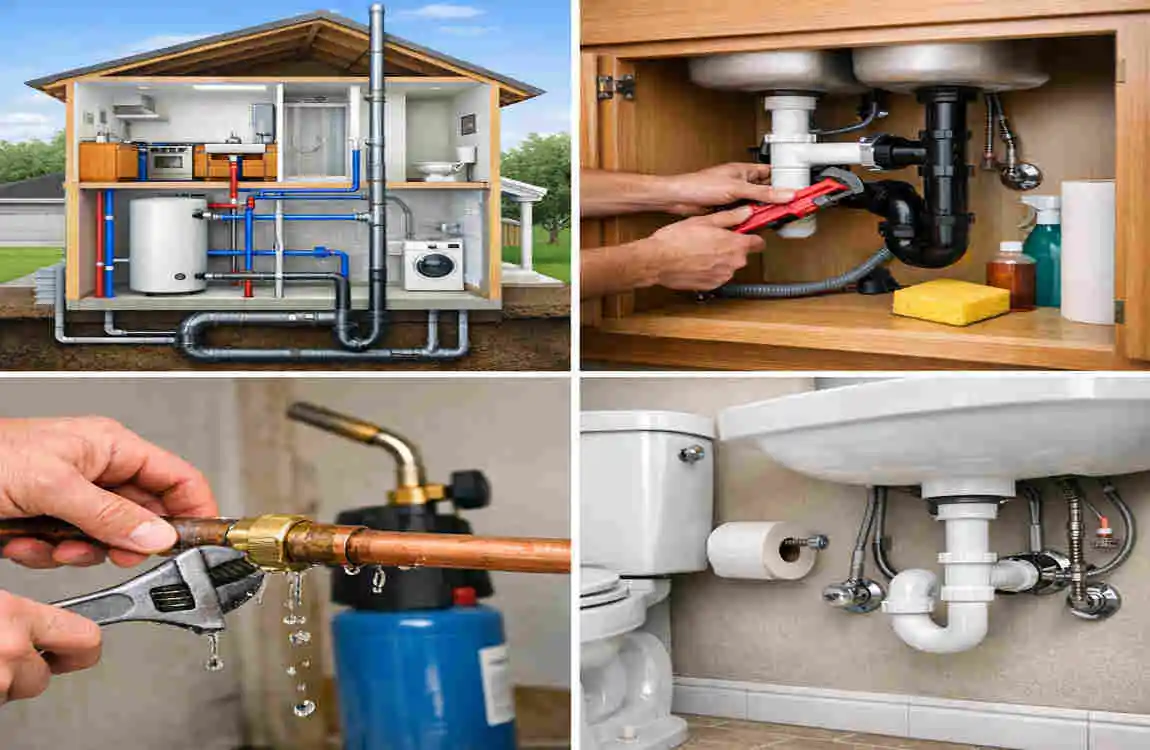
Household plumbing is one of the most important systems in your home. It brings in clean water, carries out wastewater, and supports daily life in simple but essential ways. When it works well, you barely notice it. When it fails, you notice fast.
If you understand the basics of plumbing, you can spot problems early, protect your home from damage, and save money on repairs. You do not need to be a plumber to know the essentials. A little knowledge goes a long way.
What Is Household Plumbing?
Definition of Household Plumbing
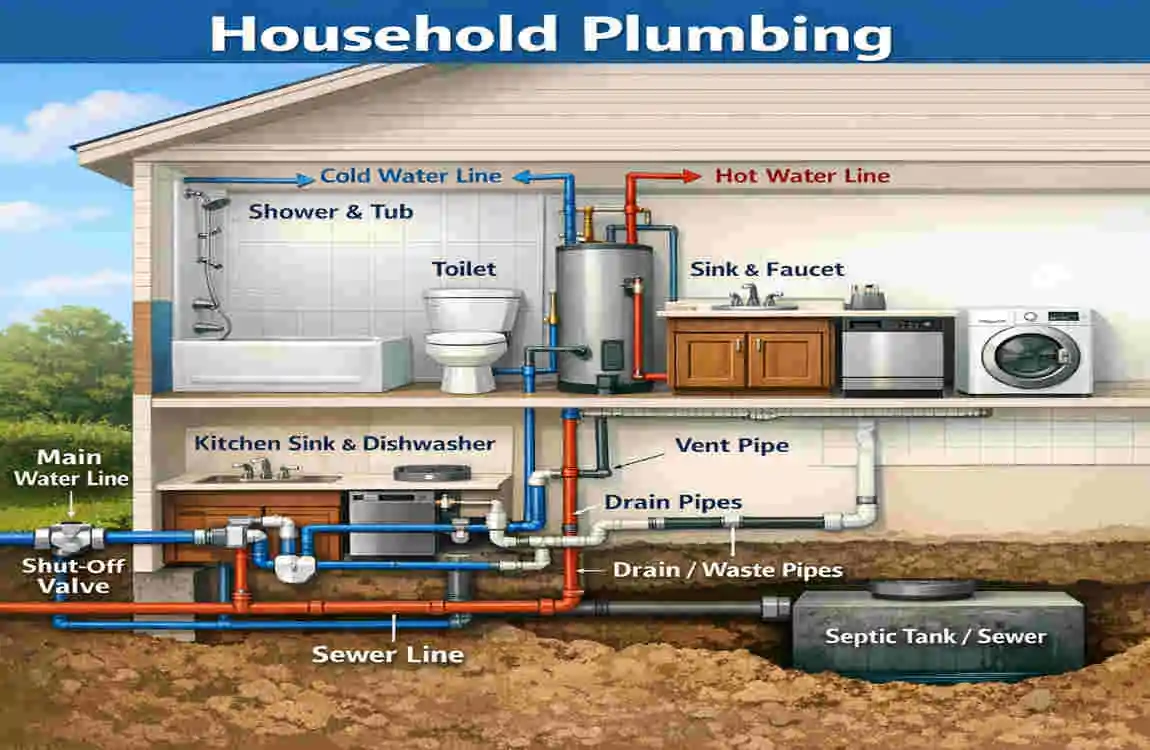
Household plumbing is the full system of pipes, fixtures, drains, and water lines inside a home. It supplies fresh water for drinking, bathing, cooking, and cleaning. It also removes wastewater safely.
How a Residential Plumbing System Works
A home plumbing system usually has two main jobs. First, it delivers water through supply lines. Second, it removes used water through drain pipes. The vent system helps air move through the pipes so water can drain properly.
When all parts work together, the system runs smoothly and safely.
Why Plumbing Is Essential in Every Home
Plumbing affects comfort, health, and safety. Without it, daily tasks become difficult. Good plumbing also helps prevent leaks, mould, water damage, and costly repairs.
Main Components of a Household Plumbing System
Water Supply Lines
These pipes bring clean water into the home. They carry water to sinks, toilets, showers, and appliances.
Drain-Waste-Vent System
The DWV system removes wastewater and helps prevent sewer gases from entering your home. It is a major part of indoor plumbing.
Water Heater
Your water heater warms water for showers, laundry, and washing dishes. If it fails, daily life gets uncomfortable very quickly.
Pipes and Fittings
Pipes move water through the home, while fittings connect different sections of pipe. Both must stay in good condition to avoid leaks.
Plumbing Fixtures
Fixtures are the visible parts of plumbing you use every day, including:
- Sinks
- Toilets
- Bathtubs
- Showers
- Faucets
Common Types of Plumbing Pipes
Different homes use different pipe materials. Each type has its own strengths.
Copper Pipes
Copper is strong, long-lasting, and dependable. It works well for water supply lines.
PEX Pipes
PEX is flexible, affordable, and easy to install. Many modern homes use it.
PVC Pipes
PVC is lightweight and commonly used for drainage.
CPVC Pipes
CPVC handles heat well, so it is often used for hot water lines.
Cast Iron Pipes
Cast iron is very durable and quiet, making it a strong choice for sewer lines.
Pipe TypeBest ForLifespanAdvantages
Copper Water supply 50+ years Durable and reliable
PEX Modern homes 40–50 years Flexible and affordable
PVC Drainage 50+ years Lightweight
CPVC Hot water 50 years Heat-resistant
Cast Iron Sewer lines 75+ years Strong and quiet
Common Household Plumbing Problems
Leaky Faucets
A dripping faucet may seem small, but it wastes water and can raise your bill over time.
Running Toilets
A toilet that keeps running often means a faulty flapper, valve, or fill part. This can waste a lot of water.
Low Water Pressure
Low pressure may result from a buildup in the pipes, a hidden leak, or a problem with the supply line.
Clogged Drains
Hair, grease, soap, and food particles often cause slow or blocked drains.
Burst Pipes
Frozen or damaged pipes can burst, causing serious water damage.
Water Heater Issues
If the water is not hot enough, runs out too fast, or smells strange, the heater may need attention.
Sewer Line Blockages
A blocked sewer line can cause bad odours, slow drains, or backups. This is a serious issue and needs quick action.
Signs Your Plumbing Needs Repair
Watch for these warning signs:
- Unusual water bills
- Slow drains
- Damp walls or ceilings
- Mold growth
- Rusty water
- Strange pipe noises
These signs often mean there is a hidden problem. Acting early can prevent bigger damage.
Basic Household Plumbing Maintenance Tips
Inspect Pipes Regularly
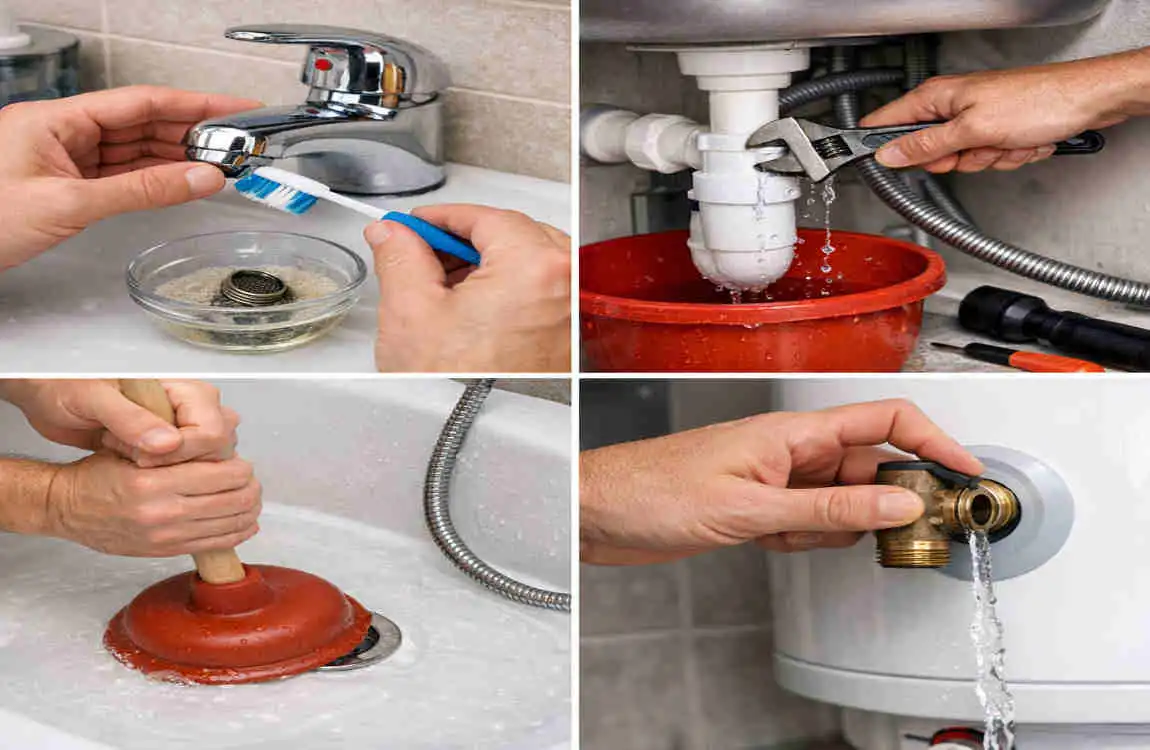
Look for corrosion, dripping, or wet spots under sinks and around exposed pipes.
Prevent Drain Clogs
Avoid putting grease, hair, wipes, and food scraps down the drain.
Check for Hidden Leaks
Look under cabinets, behind toilets, and around the water heater for moisture.
Flush the Water Heater
Flushing helps remove sediment and can improve performance.
Insulate Pipes During Winter
Pipe insulation helps prevent freezing in cold weather.
Test Water Pressure
Too much pressure can stress your pipes. Too little may signal a problem.
Essential Plumbing Tools Every Homeowner Should Have
A few basic tools can help you handle minor issues safely:
- Pipe wrench
- Adjustable wrench
- Plunger
- Drain snake
- Plumber’s tape
- Bucket
- Flashlight
- Basin wrench
DIY Plumbing Repairs You Can Safely Do
Fixing a Leaky Faucet
Often, a worn washer, cartridge, or O-ring is the cause. Replacing the faulty part can stop the drip.
Unclogging a Sink
Try a plunger or drain snake first. Avoid forcing the clog deeper.
Replacing a Showerhead
This is usually simple. Turn off the water, remove the old head, and install the new one with plumber’s tape.
Repairing a Running Toilet
In many cases, replacing the flapper or adjusting the float solves the problem.
Safety tip: Always shut off the water supply before starting any repair. If you are unsure, stop and call a professional.
When Should You Call a Professional Plumber?
Some problems are too large or risky for DIY repair.
Major Pipe Leaks
Large leaks can quickly damage walls, floors, and ceilings.
Sewer Line Damage
This often needs special tools and professional inspection.
Water Heater Installation
Installing a water heater incorrectly can be dangerous.
Whole-House Repiping
This is a major job that an expert should always handle.
Persistent Plumbing Problems
If the same issue keeps returning, a deeper problem may exist.
How to Improve Plumbing Efficiency
Install Water-Efficient Fixtures
Low-flow toilets, faucets, and showerheads can reduce water use.
Upgrade Old Pipes
Older pipes may leak or corrode more easily.
Fix Leaks Immediately
Even a small leak can waste gallons over time.
Use Smart Leak Detection Devices
These devices can warn you about hidden leaks before they cause damage.
Reduce Water Waste
Turn off taps when not needed and use appliances wisely.
Household Plumbing Safety Tips
- Know where the main shut-off valve is
- Never pour grease down drains
- Avoid chemical drain cleaners
- Use drain strainers
- Keep plumbing vents clear
These simple habits can protect your home and reduce the need for repairs.
Household Plumbing Maintenance Checklist
TaskFrequency
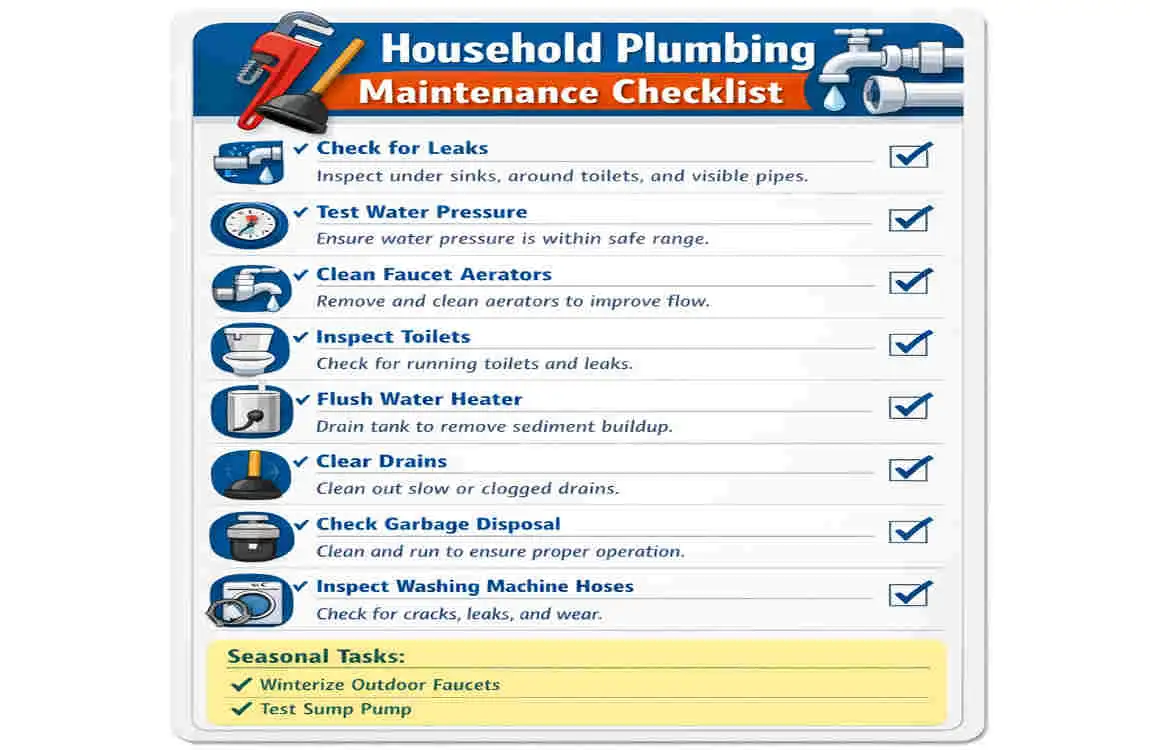
Check faucets for leaks Monthly
Inspect exposed pipes Every 3 months
Clean drains Monthly
Flush water heater Yearly
Test water pressure Yearly
Inspect toilets Every 6 months
Cost of Common Household Plumbing Repairs
Repair costs vary by location and damage level, but here is a general idea:
Repair Average Cost (USD)
Leaky faucet $100–$250
Drain cleaning $150–$350
Toilet repair $150–$300
Pipe leak repair $200–$1,000
Water heater repair $200–$800
Pipe replacement $1,000–$5,000+
Knowing these ranges helps you plan and avoid surprise expenses.
Frequently Asked Questions
What is household plumbing?
Household plumbing is the system of pipes, fixtures, drains, and water supply lines that brings clean water into a home and removes wastewater.
How often should household plumbing be inspected?
A professional inspection is usually recommended once a year.
What are the most common household plumbing problems?
The most common problems include leaky faucets, clogged drains, running toilets, low water pressure, burst pipes, and water heater issues.
Which plumbing pipe is best for homes?
PEX and copper are among the most popular choices because they are durable and reliable.
Can I fix plumbing problems myself?
Yes, small problems like a clogged sink or showerhead replacement are often safe DIY tasks. A plumber should handle major leaks and sewer issues.
How can I make my plumbing system last longer?
Regular maintenance, quick leak repair, yearly checks, and avoiding drain clogs can help your system last longer.
| Topic | Information |
|---|---|
| What Is Household Plumbing? | A home’s plumbing system delivers clean water and removes wastewater safely through a network of pipes, fixtures, and drains. |
| Main Components | Water supply lines, drain pipes, sewer line, water heater, faucets, toilets, sinks, showers, and valves. |
| Water Supply System | Brings fresh water into the home under pressure for daily use. |
| Drain-Waste-Vent (DWV) System | Carries wastewater away and uses vent pipes to maintain proper air pressure and prevent sewer gases. |
| Common Pipe Materials | PEX, copper, CPVC, PVC, galvanized steel (older homes), and ABS for drain lines. |
| Common Plumbing Problems | Leaky faucets, clogged drains, running toilets, low water pressure, burst pipes, and water heater issues. |
| Routine Maintenance | Inspect for leaks, clean drains, test shut-off valves, flush the water heater, and check pipe insulation regularly. |
