
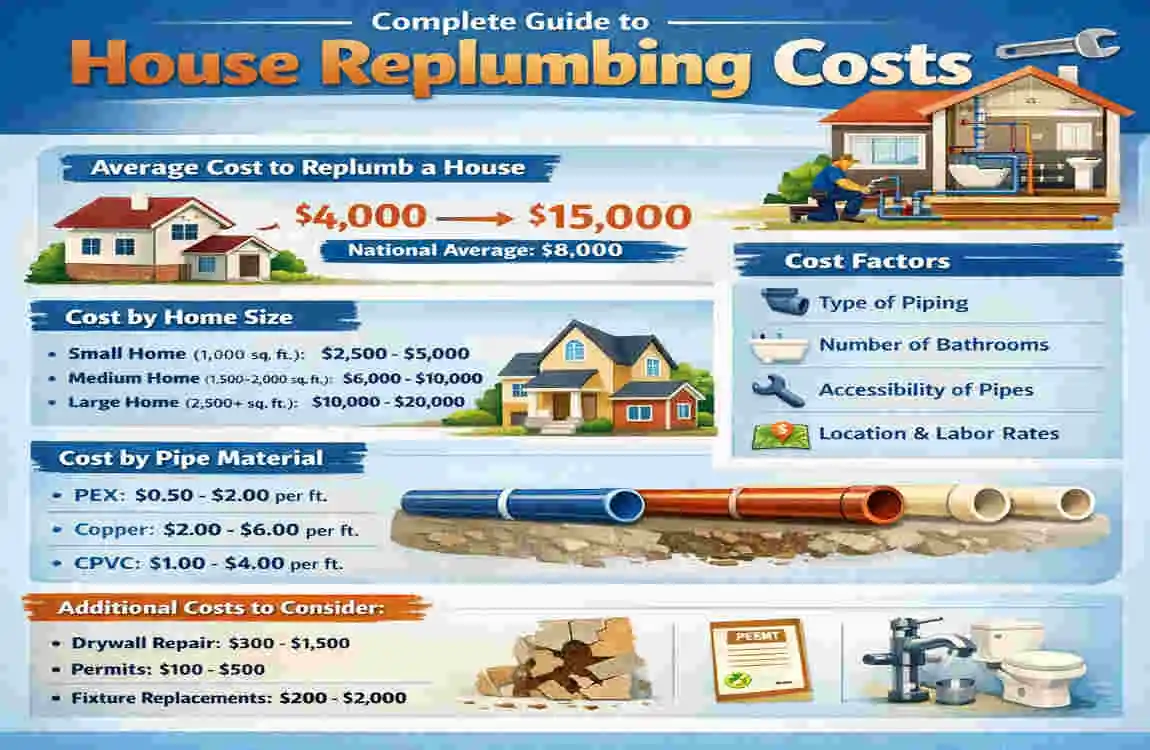
Replumbing a house is a big project, but it can also solve some very frustrating problems. If your pipes are old, leaking, rusty, or too small for your needs, new plumbing can make daily life much easier.
If you are asking how much it costs to replumb a house, the honest answer is that the cost depends on several tfactors Your home’s size, the number of fixtures, the type of pipe used, how easy the pipes are to reach, and local labor rates all affect the final price.
How Much Does It Cost to Replumb a House?
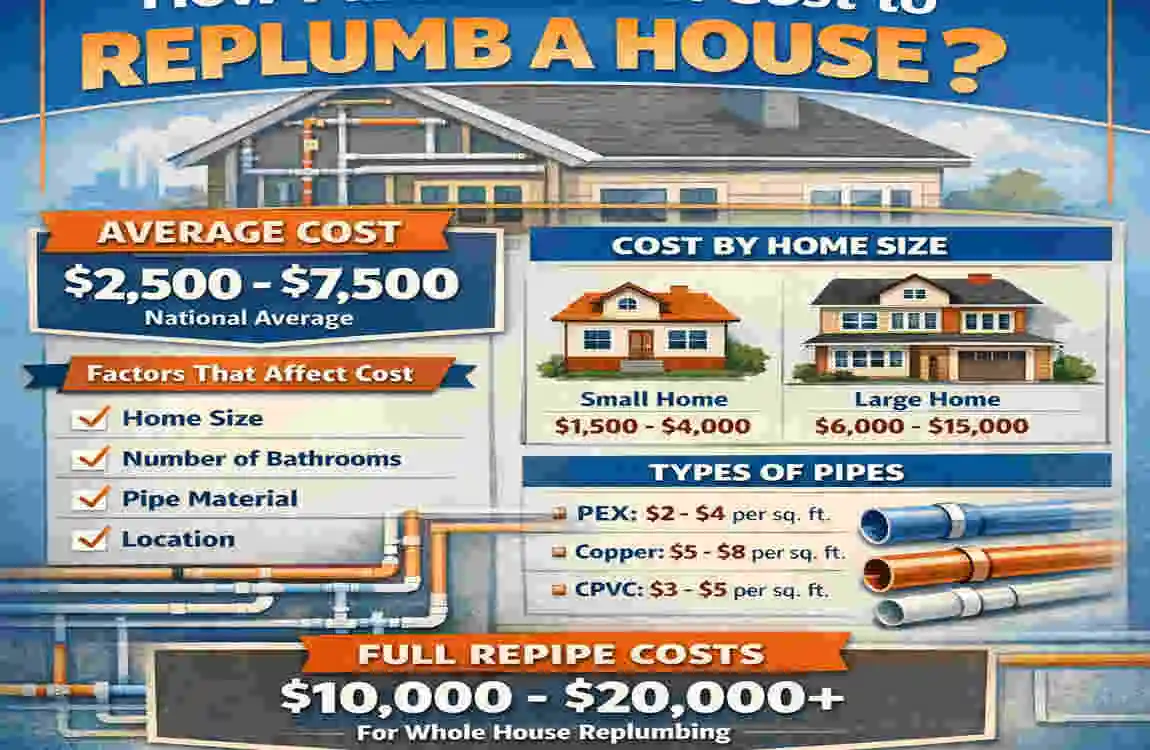
There is no single price for replumbing a house. The cost can vary widely depending on the job.
A small home with easy pipe access will usually cost less than a large home with pipes hidden behind finished walls or under concrete. A partial replumb is also usually cheaper than replacing the whole system.
Here is a simple way to think about it:
Project Type Typical Cost Drivers General Cost Pressure
Small home Fewer fixtures, less pipe, faster work Lower
Medium home Moderate pipe length and labor Medium
Large home More fixtures, more labor, more time Higher
Partial replumb Only damaged sections replaced Lower than full replumb
Whole-house replumb Entire supply system replaced Highest
The final total usually includes materials, labor, permits, and inspection fees. If walls or floors must be opened and repaired afterward, that adds more cost too.
What Affects the Cost to Replumb a House?
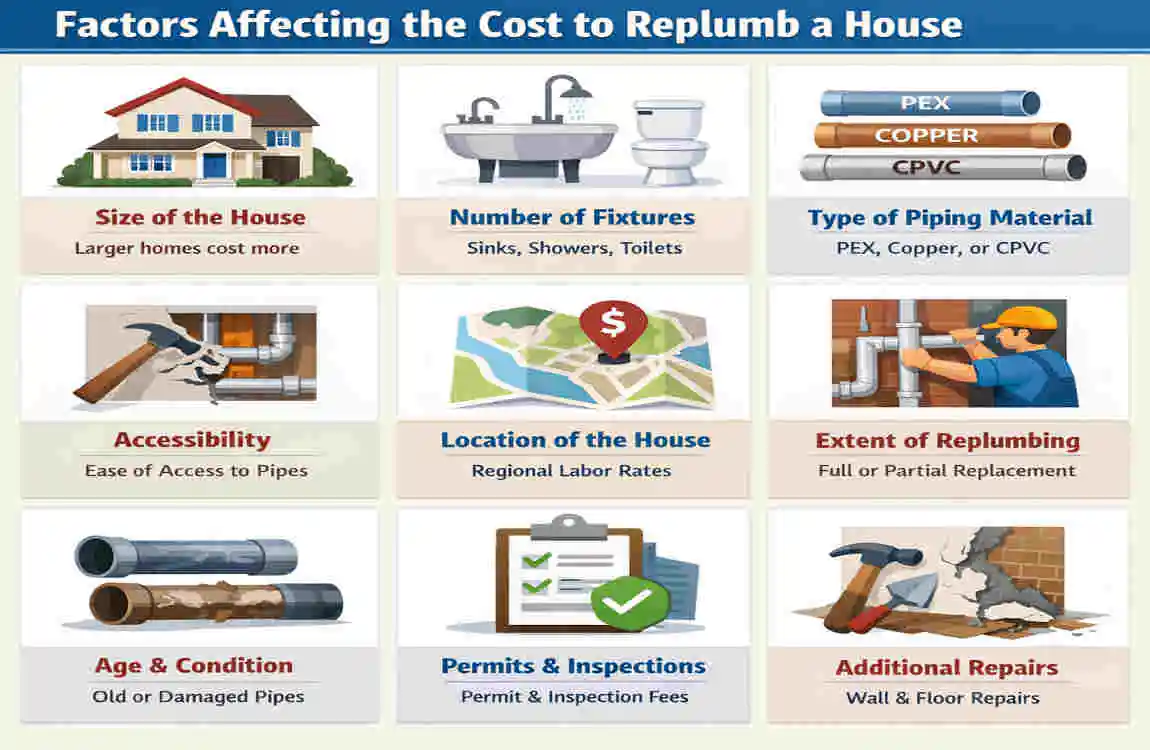
House Size and Layout
A bigger house usually needs more pipe, more fittings, and more labor.
A simple one-story layout is often easier to replumb than a large two-story house with bathrooms, laundry rooms, and kitchens in different areas. Long pipe runs also take more time and material.
Type of Plumbing Pipes
The pipe material you choose makes a big difference.
Common options include:
- PEX: Flexible, often easier to install, and usually more affordable
- Copper: Durable and long-lasting, but often more expensive
- CPVC: A lower-cost plastic option used in some homes
Each type has pros and cons. The best choice depends on your budget, local codes, and the plumber’s recommendation.
Accessibility of Existing Pipes
This is one of the biggest cost factors.
If the plumber can reach the pipes through a crawl space, basement, or utility area, the job is usually easier. But if pipes are behind tile walls, under slab flooring, or inside finished ceilings, the work takes longer and costs more.
Number of Fixtures
The more fixtures your home has, the more work the replumb requires.
Think about:
- Sinks
- Toilets
- Showers
- Bathtubs
- Dishwashers
- Washing machines
- Water heaters
- Outdoor hose connections
Every fixture adds lines, fittings, and connection points.
Local Labor Rates
Plumbing prices vary by area.
A plumber in one city may charge much more than a plumber in another. The cost also varies with the plumber’s experience and the job’s difficulty. Complex work usually costs more than simple pipe replacement.
Permits and Inspections
Some replumbing jobs need permits.
Local rules may require inspections to ensure the work meets code requirements. These fees are usually not huge, but they should still be part of your budget.
Signs Your House May Need Replumbing
Sometimes repeated repairs end up costing more than a full replacement would.
Look for these warning signs:
- Frequent leaks
- Rust-colored or discolored water
- Low water pressure
- Noisy pipes
- Corroded fittings
- Repeated pipe repairs
- Weak water flow
- Old plumbing materials
If you see several of these issues, a plumber should inspect the system. That inspection can show whether the problem is only in one area or spread through the whole house.
Whole-House Replumbing vs. Partial Replacement
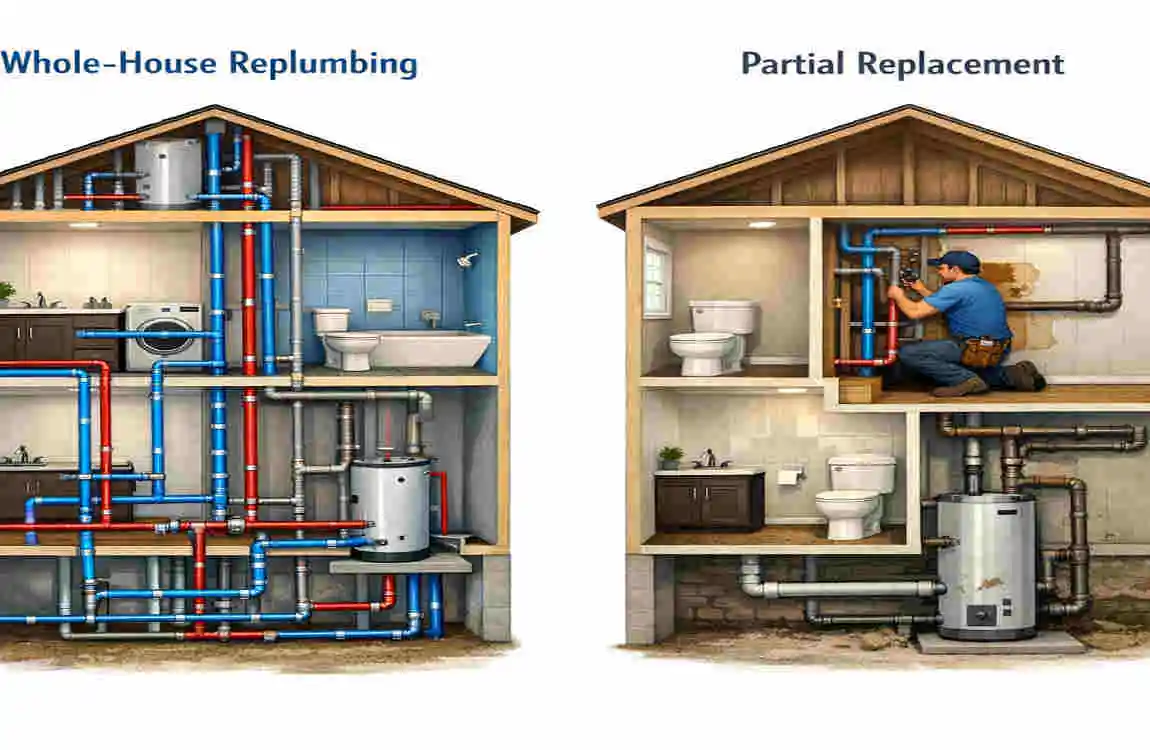
Whole-House Replumbing
This means replacing most or all of the home’s supply lines.
It is often the better option when the plumbing is very old, badly corroded, or failing in several places. A full replumb can cost more upfront, but it may save money later by reducing the need for repeat repairs.
Partial Replumbing
This means replacing only the damaged or outdated sections.
It can make sense when the problem is limited to one bathroom, kitchen, or part of the house. If the rest of the plumbing is still in good shape, partial replacement may be enough.
Which Option Is Better?
That depends on the condition of the system.
If your plumbing has had one isolated issue, a repair or partial replumb may be enough. If the pipes keep failing in different places, a full replumb may be the smarter long-term choice. It is often better to compare today’s repair cost with the cost of repeated future repairs.
Ways to Reduce House Replumbing Costs
You do not want to choose the cheapest plumber without looking deeper. But there are still smart ways to save money.
Here are a few practical options:
- Get multiple written estimates
- Compare pipe material choices
- Plan the project before work starts
- Combine plumbing work with other renovations
- Make pipe areas easier to access
- Ask about warranties
- Fix small plumbing issues early
- Check permit requirements in advance
You should also compare more than price. Look at licensing, insurance, experience, and artistry. A slightly higher quote can be worth it if it protects you from leaks, poor installation, or extra repairs later.
Frequently Asked Questions
How much to replumb a house?
There is no fixed number because the price depends on the home size, pipe material, labor rates, access, fixture count, permits, and whether you need a partial or full replumb.
Is it cheaper to repair or replumb a house?
Repairs are usually cheaper at first. But if the plumbing keeps failing, repeated repairs can cost more over time than replacing the system.
What is the best pipe for replumbing a house?
PEX, copper, and CPVC are the most common choices. The best one depends on your budget, local plumbing codes, climate, and installation needs.
How long does it take to replumb a house?
The timeline depends on the size of the house, number of fixtures, pipe access, and whether walls or floors need to be opened and repaired afterward.
Does replumbing a house increase its value?
It can. Updated plumbing often improves buyer confidence and reduces the chance of future problems, which may make the home more appealing.
Can you live in a house while it is being replumbed?
Sometimes yes, but expect water shutoffs, noise, and limited access to some rooms during the work.
Should I replace plumbing before selling my house?
If the plumbing is old or failing, replacement may help avoid inspection issues and make the home easier to sell. If the system is in good shape, a full replacement may not be necessary.
| Cost Factor | Typical Cost Range | What Affects the Price? |
|---|---|---|
| Whole-house replumbing | $4,000–$15,000+ | Home size, pipe material, labor, and accessibility |
| Small home | $3,000–$7,000 | Fewer fixtures and shorter pipe runs |
| Medium home | $5,000–$10,000 | More bathrooms, kitchens, and plumbing lines |
| Large home | $8,000–$20,000+ | More piping, fixtures, floors, and labor |
| PEX repipe | $3,500–$10,000 | Flexible, affordable, and easier to install |
| Copper repipe | $8,000–$20,000+ | Higher material and installation costs |
| Labor | $50–$150/hour | Local rates and project complexity |
