
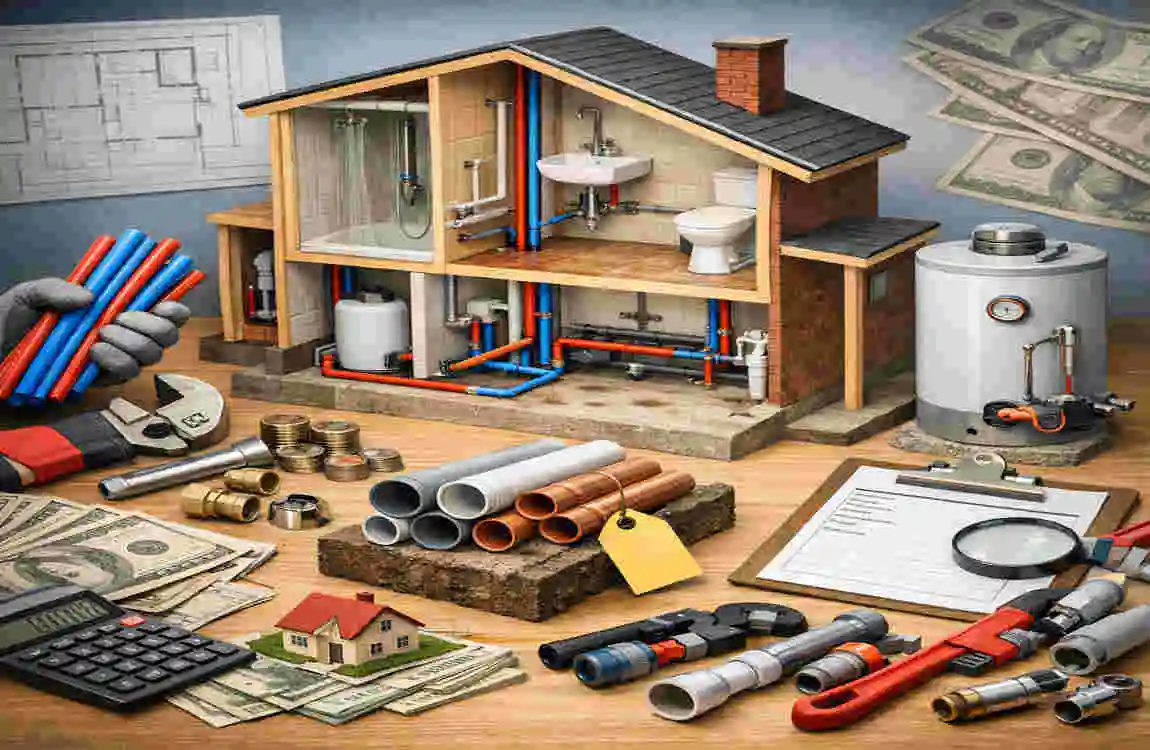
If you are thinking about how much it will cost to replumb a house, you are probably dealing with old pipes, leaks, low water pressure, or rusty water. Re-plumbing means replacing part or all of the plumbing system inside a home. It is a big job, but sometimes it is the best way to fix long-term problems.
Many homeowners eventually need this work because pipes wear out over time. Some older homes still have outdated materials that are more likely to fail. Others have repeated leaks that keep coming back, which makes repairs feel endless.
How Much to Re-Plumb a House?
National Average Cost
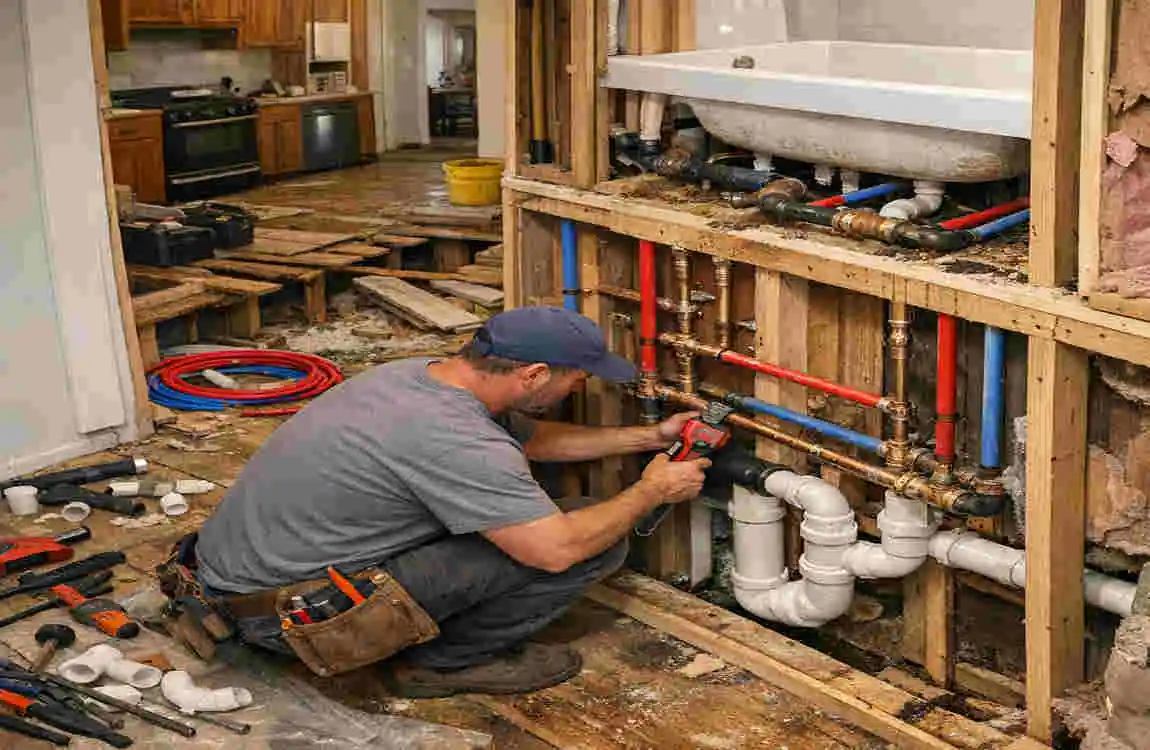
The average cost to replumb a house usually falls between $3,500 and $ 15,000. Smaller homes may cost less, while larger homes or homes with harder-to-reach pipes can cost much more.
Here is the basic idea:
- Low-end projects: around $2,500
- Typical homeowner spending: around $4,500 to $8,500
- High-end projects: $15,000 or more
If your plumbing system is old but easy to reach, the price may stay on the lower side. If the work involves walls, floors, or slab foundations, the cost rises quickly.
Cost by House Size
House Size Estimated Cost
1,000 sq. ft. $2,500–$5,000
1,500 sq. ft. $3,500–$6,500
2,000 sq. ft. $4,500–$8,500
2,500+ sq. ft. $6,000–$15,000+
A larger house usually means more pipe, more labour, and more time. That is why the price can increase so much as home size increases.
What Is Included in Re-Plumbing?
Water Supply Pipes
These are the lines that carry hot and cold water through the house. When you re-plumb, these pipes are usually replaced to improve water flow and reduce leaks.
Drain and Waste Pipes
Drain pipes carry wastewater away from sinks, tubs, showers, toilets, and laundry areas. If these pipes are damaged or old, they may also need to be replaced.
Pipe Fittings
Fittings include joints, valves, and shut-off points. These small parts matter because they connect the whole system and help control water flow.
Fixture Connections
Re-plumbing also affects the places where water enters and leaves each room. That includes:
- Bathroom plumbing
- Kitchen plumbing
- Laundry room plumbing
If one area has a problem, it may be smart to update nearby lines at the same time.
Factors That Affect Re-Plumbing Costs
House Size
Bigger homes need more pipe and more labour. Even a small cost difference per foot can add up fast.
Number of Bathrooms
More bathrooms usually mean more plumbing lines. A home with three bathrooms will cost more to re-plumb than one with just one bath.
Pipe Material
The type of pipe you choose affects both price and long-term value.
- PEX: usually the most affordable and flexible
- Copper: durable, but more expensive
- CPVC: middle-range cost and often budget-friendly
Labor Costs
Plumbers charge for their time and skill. Labour can vary based on location, job difficulty, and the extent to which they need to open up the house.
Accessibility
Some homes are easier to work on than others.
- Crawl space: often easier to reach
- Basement: usually more accessible
- Slab foundation: often more difficult and more expensive
Permit Fees
Many cities require permits for major plumbing work. These fees may not be huge, but they still add to your total cost.
Cost by Pipe Material
PEX Pipes
PEX is a popular choice because it is flexible, affordable, and faster to install. It works well in many modern homes.
Copper Pipes
Copper lasts a long time and handles heat well, but it costs more. Many homeowners choose it when they want a strong, long-lasting system.
CPVC Pipes
CPVC is often used as a lower-cost option. It can work well, but it may not be the best fit for every home or climate.
MaterialAverage CostLifespanPros
PEX Low 40–50 Years Flexible
Copper High 50–70 Years Durable
CPVC Medium 40–50 Years Affordable
If you want to keep costs lower, PEX is often the most common option. If you want maximum durability, copper may be worth the extra cost.
Signs Your House Needs Re-Plumbing
Low Water Pressure
If water barely comes out of your faucets or shower, old pipes may be blocked, corroded, or failing.
Rust-Colored Water
Brown or rusty water is often a sign that pipes are breaking down inside.
Frequent Pipe Leaks
One leak may be a simple repair. Repeated leaks, though, can mean the whole system is aging out.
Old Galvanised Pipes
If your home still has galvanised pipes, they may be near the end of their lifespan.
High Water Bills
A sudden rise in your water bill can point to hidden leaks.
Strange Pipe Noises
Banging, rattling, or whistling sounds may mean pressure problems or loose pipes.
How Long Does It Take to Re-Plumb a House?
Small Homes
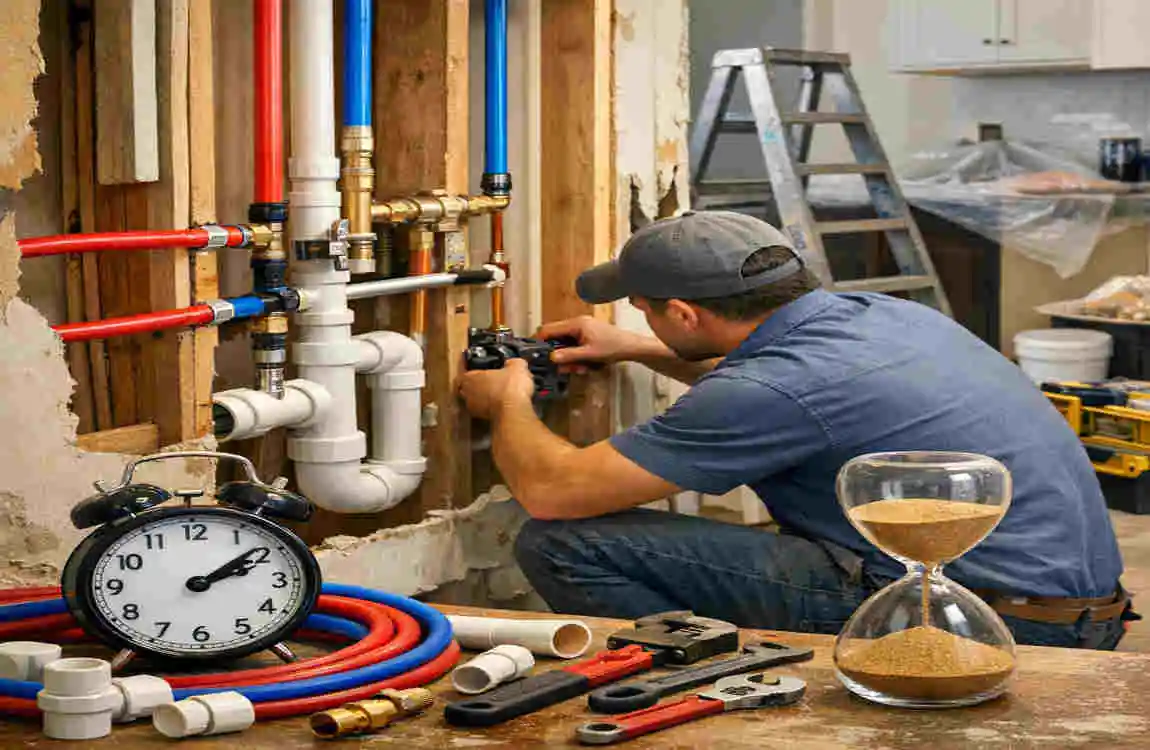
A small home may take just a few days if the plumbing is easily accessible.
Medium Homes
A medium-sized house often takes about 1 to 2 weeks to complete.
Large Homes
A large or more complex home may take 2 weeks or longer, especially if walls or floors must be opened.
The timeline depends on pipe access, permit approval, weather, inspection schedules, and the extent of repair work needed after the plumbing is replaced.
Can You Live in Your House During Re-Plumbing?
Temporary Water Shutoffs
In many cases, yes, but water will be shut off at times during the project. That can make daily routines harder.
Safety Considerations
You may need to avoid certain rooms while the work is happening. Dust, noise, and open walls can also make the house less comfortable.
When Temporary Relocation Is Better
If the project is large or the house has only one bathroom, staying elsewhere for part of the work may be easier.
Ways to Save Money on Re-Plumbing
Here are a few smart ways to keep costs under control:
- Compare multiple contractor quotes
- Choose cost-effective materials like PEX
- Replace plumbing during a renovation
- Repair walls after plumbing at the same time
- Schedule work during slower seasons
Planning can save you a lot of stress and money later.
Repair vs. Complete Re-Plumbing
Repairs vs. Full Re-Plumbing
Lower upfront cost Higher initial investment
Best for isolated leaks Best for aging systems
Temporary solution Long-term reliability
May require repeated repairs Fewer future plumbing issues
If the problem is small and local, a repair may be enough. If the plumbing is old throughout the house, full replacement is often the smarter choice.
Hiring the Right Plumbing Contractor

Verify Licensing
Always make sure the plumber is licensed to work in your area.
Check Insurance
Insurance protects you if something goes wrong during the job.
Read Customer Reviews
Past customer feedback can tell you a lot about reliability and artistry.
Request Written Estimates
A written estimate helps you compare prices clearly and avoid surprise charges.
Ask About Warranties
A good contractor should stand behind their work with a warranty.
Frequently Asked Questions
How much does it cost to replumb a house?
Most homes cost between $3,500 and $15,000+, depending on size and system complexity.
Is PEX cheaper than copper plumbing?
Yes, PEX is usually cheaper and easier to install than copper.
How long does a whole-house re-plumbing project take?
It often takes 2 to 14 days, depending on the home’s size and layout.
Does homeowners insurance cover re-plumbing?
Usually no, unless a covered event caused the damage. Always check your policy.
Can I stay in my home during re-plumbing?
Often, yes, but it may be inconvenient due to water shutoffs and construction noise.
What type of plumbing pipe lasts the longest?
Copper often lasts the longest, though it costs more than other materials.
| Category | Details |
|---|---|
| Average Cost | $4,000–$15,000 for a full house re-plumbing (varies by home size and pipe material). |
| Small Home (1,000–1,500 sq. ft.) | Around $4,000–$8,000. |
| Medium Home (1,500–2,500 sq. ft.) | Around $6,000–$12,000. |
| Large Home (2,500+ sq. ft.) | Around $10,000–$15,000+. |
| Common Pipe Materials | PEX (most affordable), CPVC, Copper (most expensive). |
| Labor Cost | Typically 50%–70% of the total project cost. |
| Project Duration | Usually 3–7 days, depending on home size and complexity. |
| Factors Affecting Cost | Home size, number of bathrooms, pipe material, accessibility, local labor rates, permits, and wall repairs. |
| Signs You Need Re-Plumbing | Frequent leaks, rusty water, low water pressure, old galvanized pipes, recurring plumbing repairs. |
| Money-Saving Tip | Choose PEX piping when suitable, compare multiple contractor quotes, and bundle plumbing upgrades during renovations. |
