
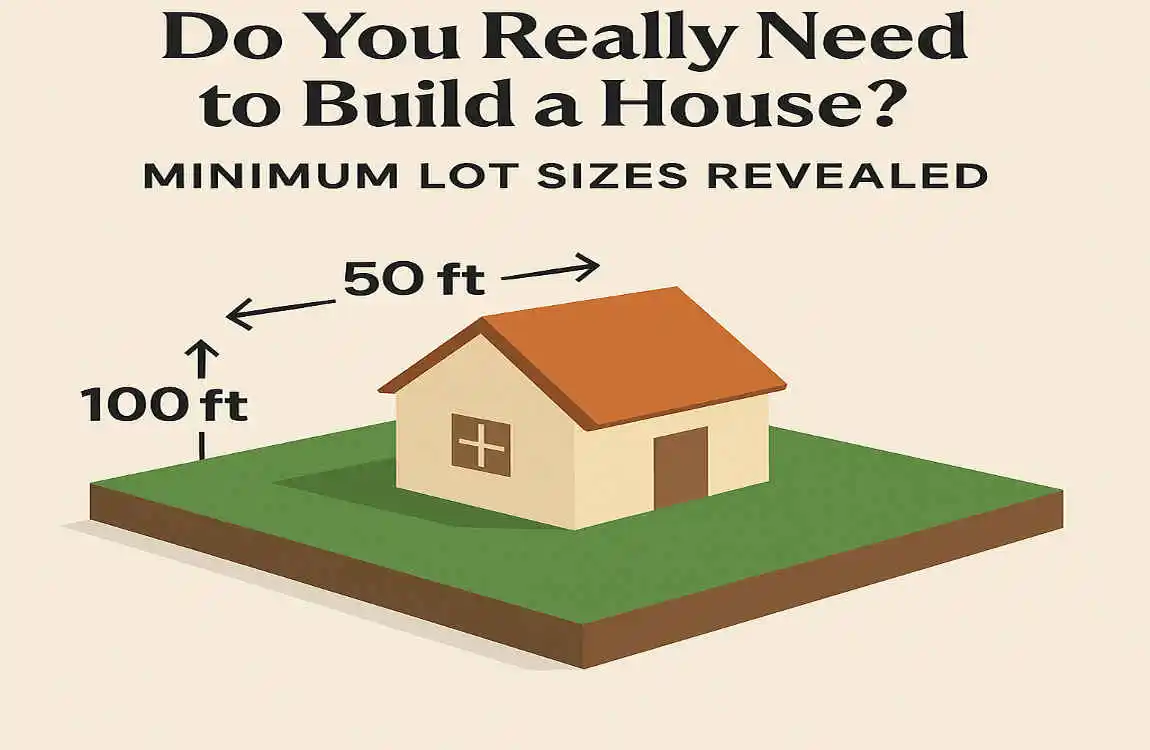
Imagine you’ve finally decided to build your dream home. You have a vision—a cosy two-story with a big backyard or a modern single-level with a garden. But when you start looking for land, confusion sets in. How much land do you really need? Is one acre enough? Or can you build on a much smaller lot?
This question is trickier than it seems. The amount of land needed to build a house not only depends on your home’s size but also on local zoning laws and minimum lot size requirements. For example, in the United States, the median lot size is around 25,240 square feet (about 0.58 acres), but this can vary dramatically depending on whether you’re in a city, suburb, or rural area.
Understanding Minimum Lot Sizes
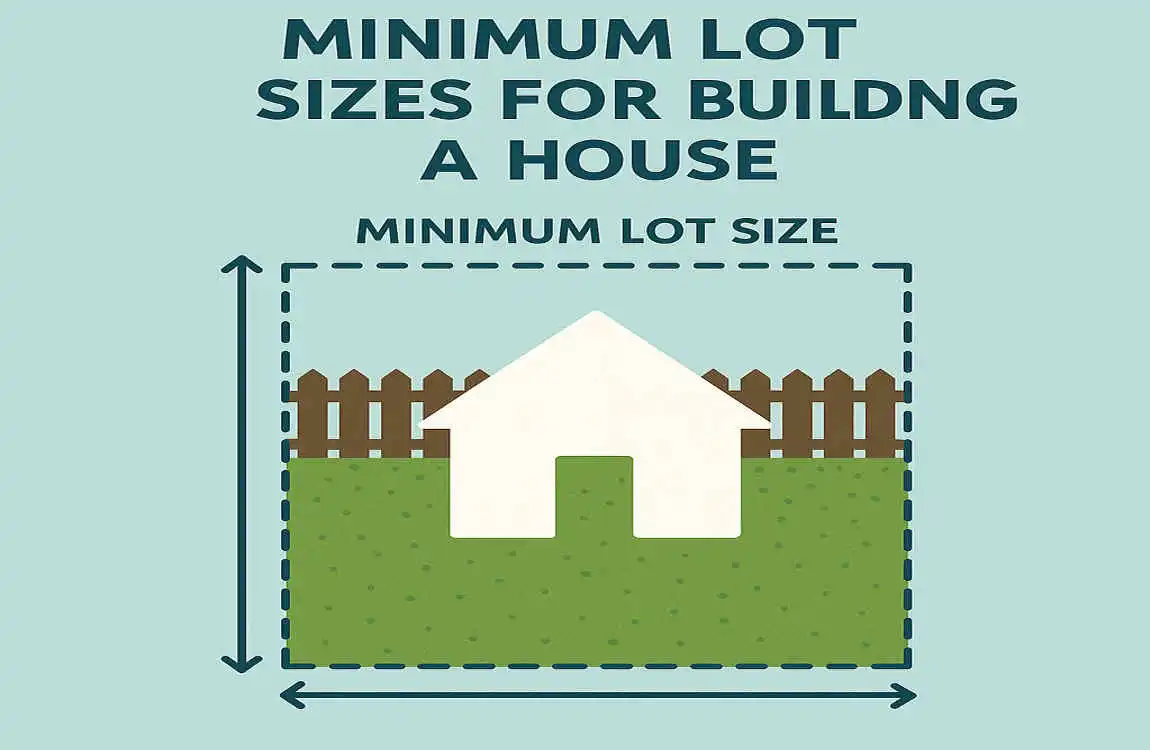
What Is a Minimum Lot Size?
Minimum lot size is the smallest piece of land that local governments allow for building a house. Zoning ordinances set these sizes to ensure homes have enough space for utilities, privacy, proper drainage, and setbacks (the distance your house must be from the property lines).
Think of it as a rule ensuring neighbourhoods are safe, pleasant, and functional. These requirements balance building density with livability.
How Minimum Lot Sizes Vary by Location
Minimum lot sizes change based on where you plan to build. Here’s a quick breakdown:
Location Type, Typical Minimum Lot Size, Key Factors
Urban 2,000 – 5,000 sq ft High density, sewer access
Suburban 8,000 – 20,000 sq ft Yards, setbacks, utilities
Rural 1 – 5+ acres, Septic systems, wells
- Urban lots are smaller because city infrastructure supports dense living with sewer systems and public water.
- Suburban lots are larger, allowing for private yards, driveways, and more space between neighbours.
- Rural lots require much more land due to reliance on septic tanks and wells, as well as the need to avoid sensitive environmental areas.
Who Enforces These Rules?
Local building departments or planning commissions enforce minimum lot sizes. Before you buy land, checking with them can save you from surprises later.
Factors Influencing Land Requirements
Several factors beyond just the minimum lot size affect how much land you actually need to build your home.
Zoning Laws
Local zoning laws are the main blueprint. They dictate:
- How big your house can be (floor area ratio).
- Required setbacks (how far your house must be from front, side, and rear property lines).
- Whether you can have additional buildings, such as garages or guesthouses.
Setbacks
Setbacks create space around your home for light, privacy, and emergency access. Typical setbacks include:
- Front setback: Usually 20-30 feet.
- Side setbacks: About 5-10 feet on each side.
- Rear setback: 20-30 feet at the back.
These rules reduce the available building area on your lot.
Easements
An easement is a legal right to use part of your land for utilities, roads, or drainage. You cannot build structures on easements, so they shrink your usable space.
Utilities and Septic Systems
If your lot isn’t connected to the city sewer, you’ll need space for a septic system, which typically requires 0.5 to 1 acre to function correctly. Similarly, wells need space and, in some cases, buffer zones.
Home Size and Land-to-Building Ratio
The land-to-building ratio is a helpful way to estimate lot size. For example, the median new home in the U.S. is about 2,261 sq ft. A standard recommendation is a 3:1 land-to-building ratio, meaning you’d need roughly 6,783 sq ft of land for that home.
Key Influences Summary
- Local ordinances and Homeowners Associations (HOAs).
- Soil conditions affecting septic design.
- Plans for future expansions, such as pools or accessory dwelling units (ADUs).
- Environmental rules, such as floodplain or wetland restrictions.
Regional Breakdown: U.S. Examples
Land requirements can differ widely across the U.S. Here’s a look at some typical state-level differences:
California
- Urban lots can be as small as 5,000 sq ft.
- Rural properties usually require 1 acre or more due to septic and well needs.
- Coastal areas may have additional environmental restrictions.
Texas
- Suburban minimum lot sizes range from 7,200 to 15,000 sq ft.
- Rural areas often require 1 to 2 acres.
- Local municipalities have their own building codes, so variation exists.
Midwest Rural Areas
- Lot sizes commonly range from 1 to 2 acres.
- Ample space is needed for wells and septic systems.
- Agricultural zoning may restrict residential building.
Visualising the Differences
Imagine a map with colour-coded zones indicating minimum lot sizes:
- Red zones for urban areas with 2,000-5,000 sq ft.
- Yellow zones for suburban with 8,000-20,000 sq ft.
- Green zones for rural with 1+ acres.
This kind of map helps buyers quickly understand their options based on location.
Calculating Your Ideal Lot Size
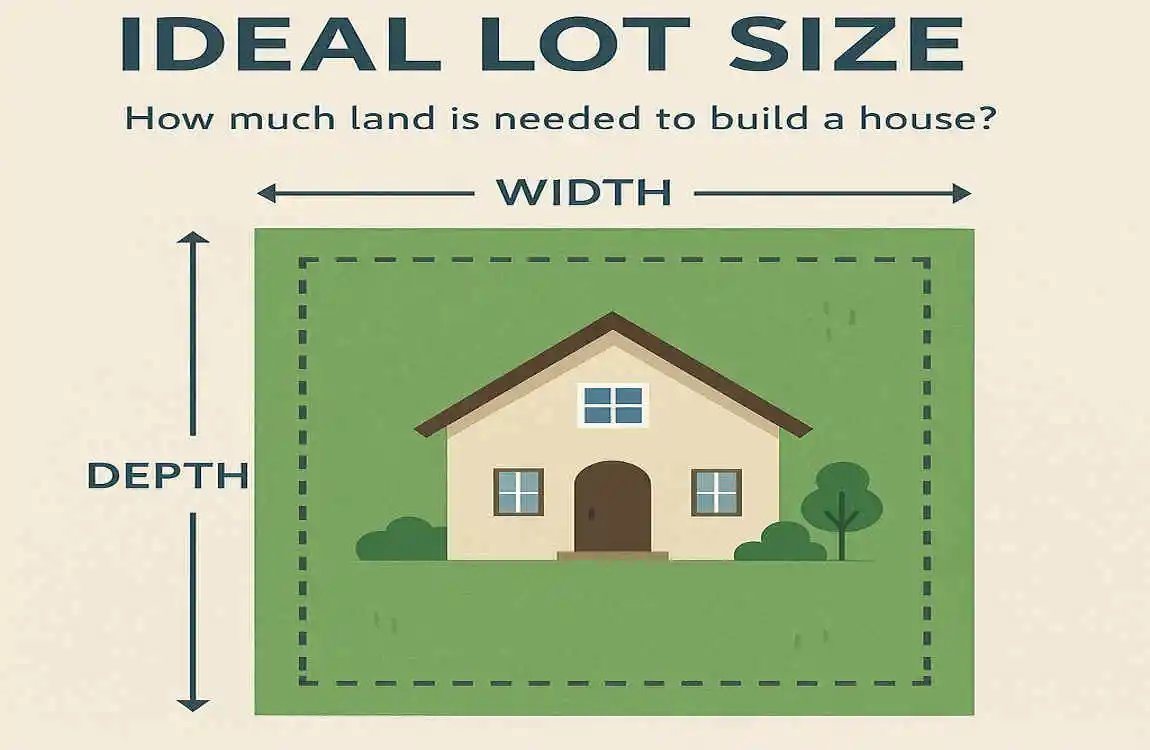
Ready to figure out how much land YOU need? Here’s a simple step-by-step method.
Determine Your Home Footprint
If your planned house is 2,000 sq ft, that’s your starting point.
Apply the Land-to-Building Ratio
Multiply by 3 for a comfortable lot:
2,000 sq ft × 3 = 6,000 sq ft
Add Space for Setbacks and Outdoor Areas
Add about 20-30% more space:
6,000 sq ft + 30% = 7,800 sq ft
Formula Summary
Lot Size = (Home Sq Ft × 3) + Setbacks/Yards
Tiny Homes vs. Luxury Builds
- Tiny homes (minimum 120 sq ft of habitable space) can fit on tiny lots, but check local regulations.
- Luxury homes with pools, guesthouses, and gardens will need much larger parcels.
Bonus: Download our free lot size calculator to plug in your numbers and get instant recommendations!
Costs and Practical Considerations
Land size impacts costs beyond just price per acre.
Land Price Range
- Urban areas: $3,000 to $150,000+ per acre, depending on location.
- Rural land is often cheaper but may require expensive site prep.
Site Preparation
- Clearing trees, grading uneven land, and removing debris add to your budget.
- Utilities hookups (water, sewer, electricity) can be costly, especially in rural zones.
Pros and Cons of Larger Lots
ProsCons
More privacy and space , Higher property taxes
Room for gardens, pools, and ADUs. Increased maintenance effort
Potential for future expansions , Possible zoning limitations
Practical Tips
- Match your lot size with neighbourhood averages to protect your home’s resale value.
- Consult with builders early about your home size and lot needs.
- Factor in long-term upkeep when choosing large parcels.
