
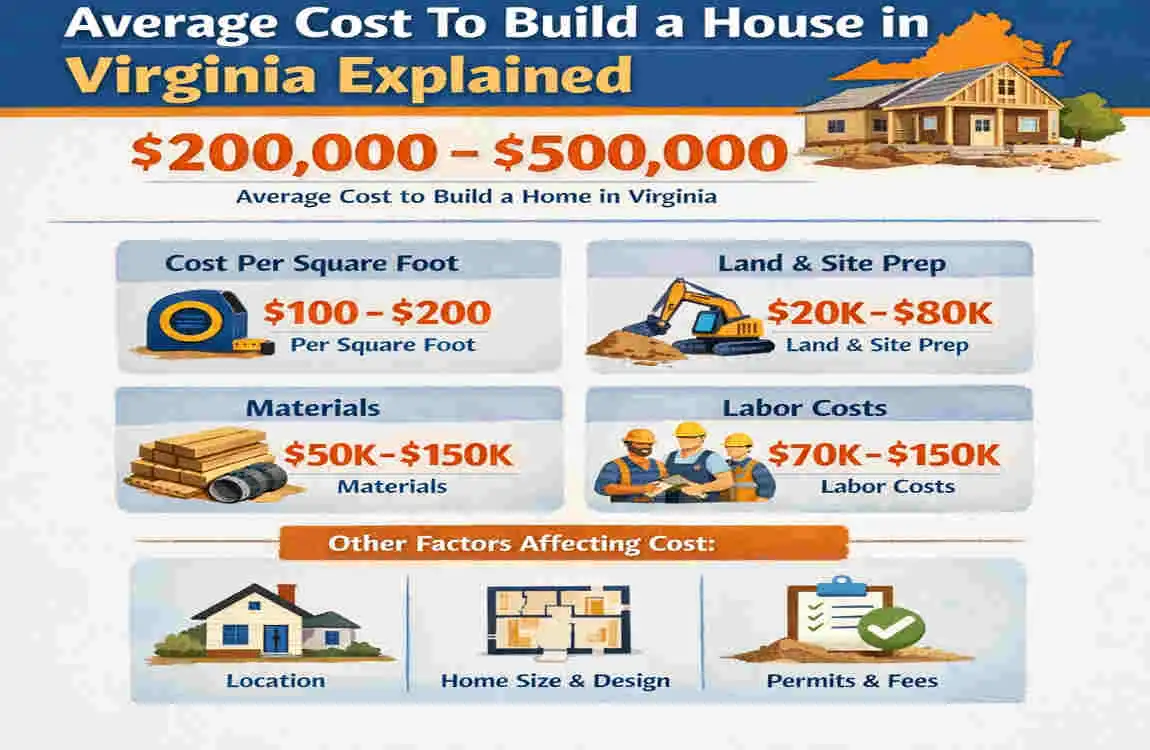
If you are asking how much it costs to build a house in Virginia, the short answer is: it depends on the size of the home, where you build, the materials you choose, and how custom the design is. Some homes can be built at a modest cost, while others quickly become major investments.
The average cost to build a home in Virginia is usually measured by cost per square foot. That makes it easier to compare different house sizes and styles.
In general, the price per square foot can vary a lot depending on the quality of the build. A basic home with standard materials will cost less than a custom home with high-end finishes.
Major Factors That Affect Virginia Home Building Costs
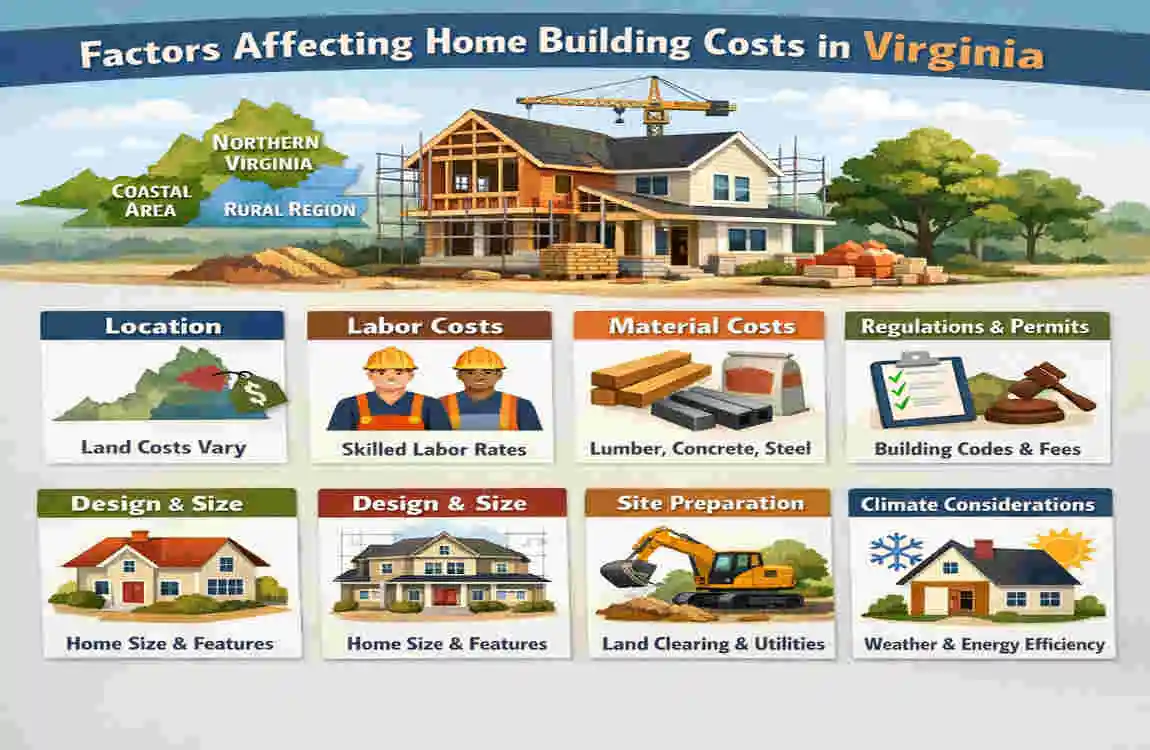
Several major factors shape the final price of a new home in Virginia. If you understand these early, you can plan better and avoid surprises.
Location and Land Prices
Location plays a big role in the total cost. Land in urban or fast-growing areas usually costs more than land in rural areas. Suburban areas may fall somewhere in the middle.
Here is the general pattern:
- Urban areas: often higher land and labour costs
- Suburban areas: moderate costs
- Rural areas: land may be cheaper, but site prep can be more expensive if utilities are far away
Land prices in Virginia can vary a lot based on access to roads, schools, shopping, and public utilities. A cheap lot is not always the cheapest choice if it needs major preparation.
Labour and Material Costs
Labour and materials are two of the largest components of the budget. Skilled workers such as framers, electricians, plumbers, and roofers all affect the final number.
Common materials that shape cost include:
- Lumber
- Concrete
- Roofing
- Drywall
- Insulation
- Windows
- Flooring
Material prices can rise or fall with supply and demand. If prices go up while your home is being built, your budget may need to stretch further than expected.
Home Design and Custom Features
A simple home is usually cheaper to build than a highly customised one. Every extra angle, ceiling detail, or built-in feature adds to labour and material costs.
Some features that raise the price include:
- Custom kitchens
- Spa-style bathrooms
- Vaulted ceilings
- Large window walls
- Smart-home systems
- Luxury flooring and cabinetry
If you want to manage cost, keep the design simple and focus on the features that matter most to your daily life.
Cost of Land and Site Preparation
Many people think about the house itself first, but the land and site work can add a big amount to the project.
Buying Land in Virginia
Land is part of the full budget, not separate from it. A cheaper lot may look attractive at first, but if it is far from utilities or needs major clearing, the final cost can rise fast.
You should also think about whether the land is ready for building. Some lots are easy to develop. Others require extensive work before construction can begin.
Preparing the Construction Site
Before the house can go up, the site usually needs to be prepared. That may include:
- Land clearing
- Grading
- Excavation
- Utility connections
- Foundation preparation
Why Site Work Matters
Site preparation is often overlooked, but it can be a major expense. If the land is uneven, wooded, rocky, or far from water and power lines, the cost can increase significantly.
A lot that looks simple on paper may require heavier equipment and labour than expected.
Construction Costs by Type of Home
The type of home you build makes a big difference in total cost. A basic house and a luxury house can feel like two completely different projects.
Basic or Budget Home
A basic home usually uses standard materials, simple finishes, and a straightforward layout. This is often the most affordable route if you want a new home without too many extras.
Mid-Range Family Home
This type of home usually offers a better balance of comfort and cost. It may include upgraded materials, modern finishes, and a more flexible layout.
This is often the sweet spot for many families because it provides good value without pushing the budget too high.
Custom Luxury Home
A luxury home is usually the most expensive option. It often includes large rooms, premium finishes, custom details, and personalised design choices.
The price can rise quickly when you add:
- High-end kitchens
- Multiple bathrooms
- Large master suites
- Special flooring
- Custom lighting
- Advanced home systems
Modular and Prefabricated Homes
Modular and prefabricated homes can sometimes reduce construction costs. Because parts are built in a controlled setting, on-site labour time may be lower.
They are not always the cheapest option in every situation, but they can offer better predictability and faster construction than traditional building.
Hidden Costs of Building a House in Virginia
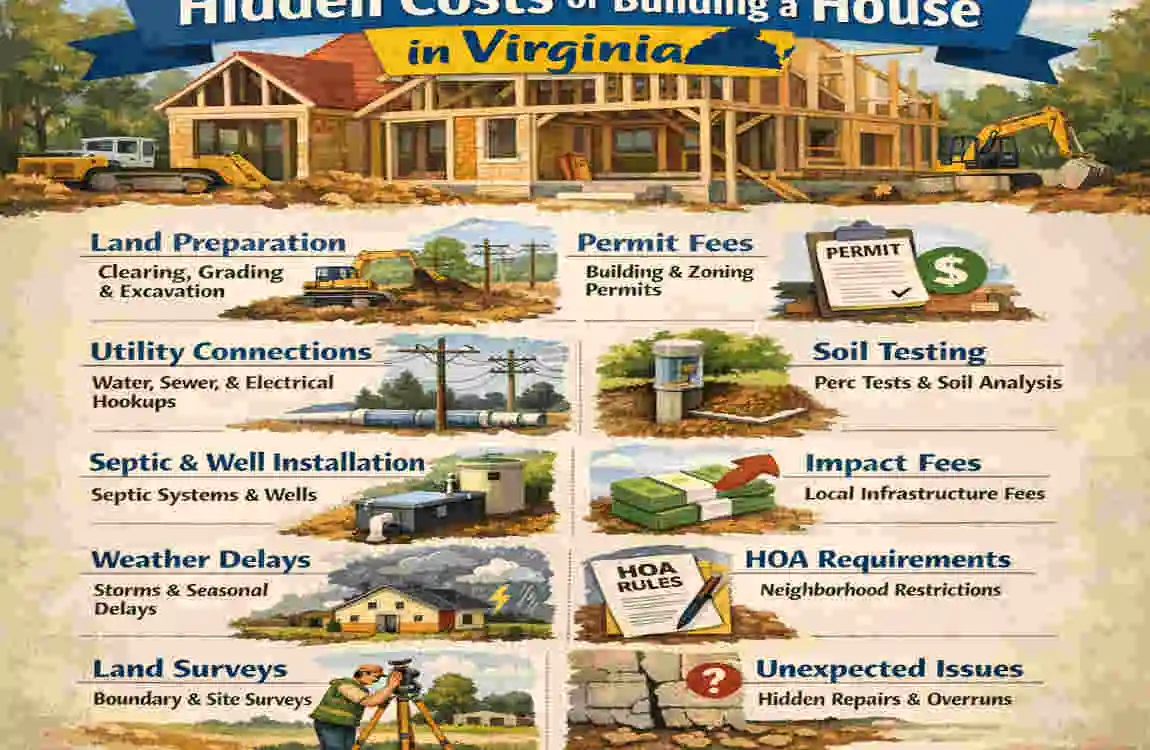
Many first-time builders focus on the house price alone. That is a mistake. Hidden costs can add up quickly.
Common Hidden Expenses
You should plan for these extra items:
- Building permits and inspections
- Architectural and engineering fees
- Utility installation
- Driveways and landscaping
- Property taxes and insurance
- Furniture and interior finishing
- Contingency budget for unexpected expenses
Why These Costs Matter
Each item may seem small on its own. But together, they can add a large amount to the total project cost. If you ignore them, you may run out of money before the home is fully finished.
A Contingency Fund Is Essential
A contingency fund is money set aside for surprises. It helps cover delays, design changes, and price increases. This is one of the smartest parts of any home-building budget.
How to Save Money When Building a House in Virginia
You do not need to overspend to build a good home. A few smart choices can help you stay on budget.
Choose a Simple Home Design
Simple homes are usually cheaper to build. Fewer corners, fewer rooflines, and fewer complicated details can reduce labour and material costs.
Compare Multiple Contractors
Never rely on just one quote. Get several detailed estimates so you can compare what each builder includes. This helps you understand whether a price is truly fair.
Use Cost-Effective Materials
Cost-effective does not mean poor quality. It means choosing materials that balance price, durability, and appearance. In many cases, a mid-range material gives you better value than a premium one.
Build Within Your Budget
A realistic budget keeps the project on track. Try not to add expensive changes once construction has started, because last-minute upgrades often cost more than expected.
Smart ways to save money:
- Keep the floor plan simple
- Avoid unnecessary custom details
- Choose standard finishes where possible
- Plan before work begins
- Leave room for surprise costs
Is Building a House in Virginia Worth the Cost?
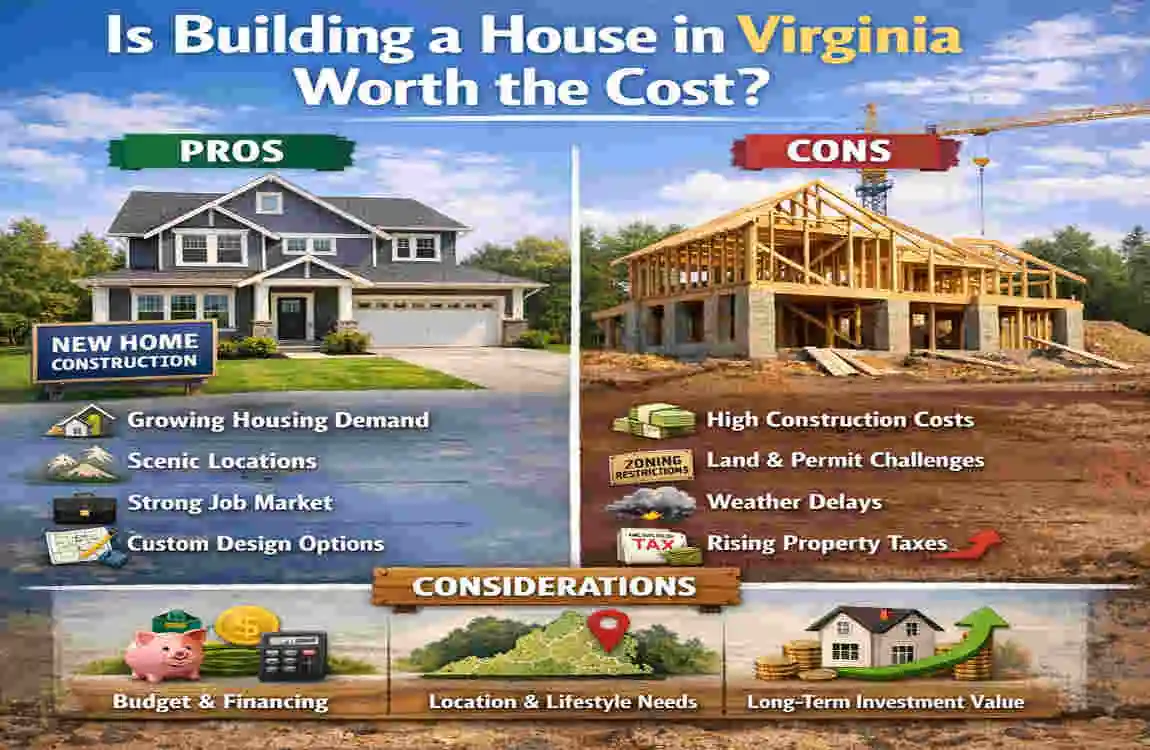
For many buyers, building a home in Virginia can be worth it. It may cost more upfront than buying an existing home, but it also gives you more control.
Building vs. Buying
Buying an existing home may be cheaper in some areas. It is often faster too. But building gives you the chance to choose the layout, materials, and features from the start.
Why People Choose to Build
A new home can offer:
- Custom design
- Better energy efficiency
- Lower short-term repair needs
- Modern layouts
- Less hidden wear and tear
When Building Makes Sense
Building may be the better choice if you want a home that fits your exact needs and you are willing to wait for construction to finish. It can also be a good option if you want a more efficient home that may cost less to maintain over time.
Frequently Asked Questions
How much does it cost to build a house in Virginia?
The final cost depends on the home size, location, design, materials, labour, and site preparation requirements. There is no single fixed price.
What is the cheapest way to build a house in Virginia?
A smaller home with a simple design, standard finishes, and cost-effective materials can help reduce construction expenses.
Is it cheaper to build or buy a house in Virginia?
Buying may be cheaper in some markets, while building can offer greater customisation and improved energy efficiency.
How much does land cost in Virginia?
Land prices vary widely depending on the city, county, accessibility, and whether utilities are already available.
What is the most expensive part of building a house?
Major expenses often include the foundation, framing, roofing, interior finishes, labour, and mechanical systems.
How much extra money should I budget for unexpected costs?
It is smart to include a contingency fund for design changes, material price increases, and unexpected site expenses.
| Cost Factor | Average Cost in Virginia | What It Includes |
|---|---|---|
| Land Purchase | $20,000–$150,000+ | Location and plot size |
| Basic Construction | $150–$250 per sq. ft. | Standard materials and labor |
| Mid-Range Home | $250–$400 per sq. ft. | Better finishes and modern features |
| Luxury Home | $400+ per sq. ft. | Premium materials and custom design |
| 2,000 Sq. Ft. House | $300,000–$800,000+ | Approximate total construction cost |
| Permits & Fees | $5,000–$20,000+ | Building permits and inspections |
| Utilities & Site Work | $10,000–$50,000+ | Water, electricity, grading, and connections |
