
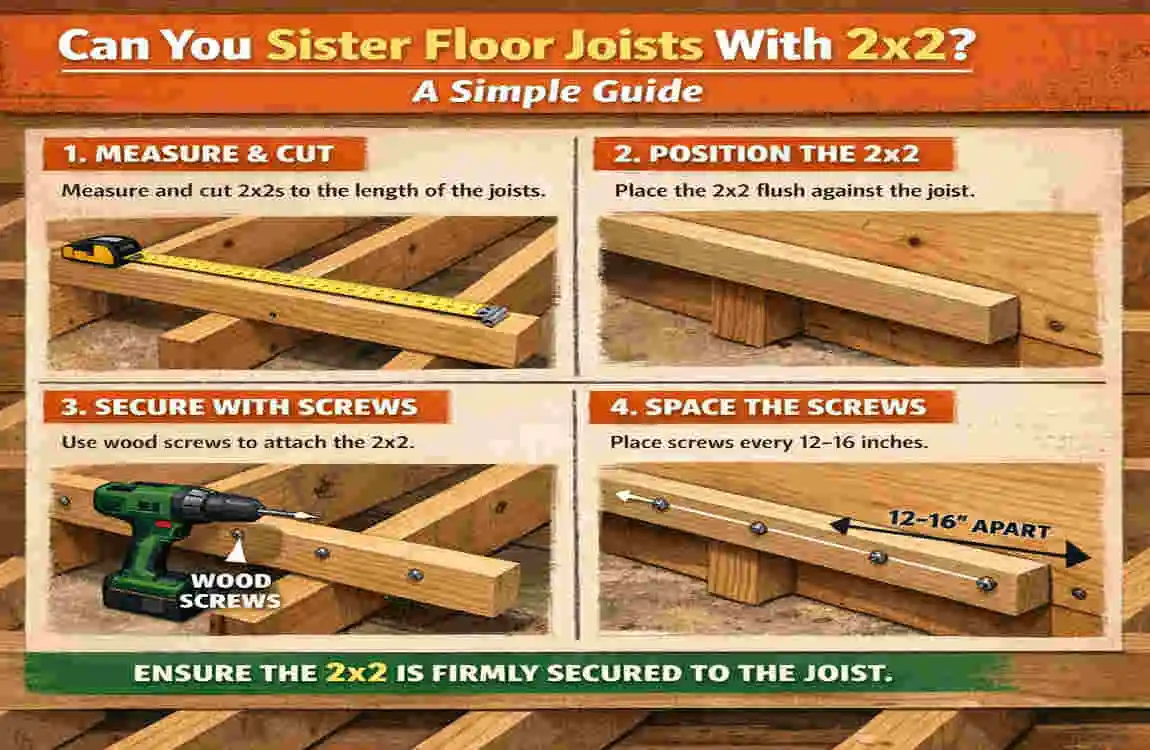
If you are asking whether you can sister floor joists with 2×2, the short answer is usually no for meaningful structural repair. A 2×2 piece of lumber is very small compared with the size needed for most floor-joist reinforcement jobs.
Can You Sister Floor Joists With 2×2?
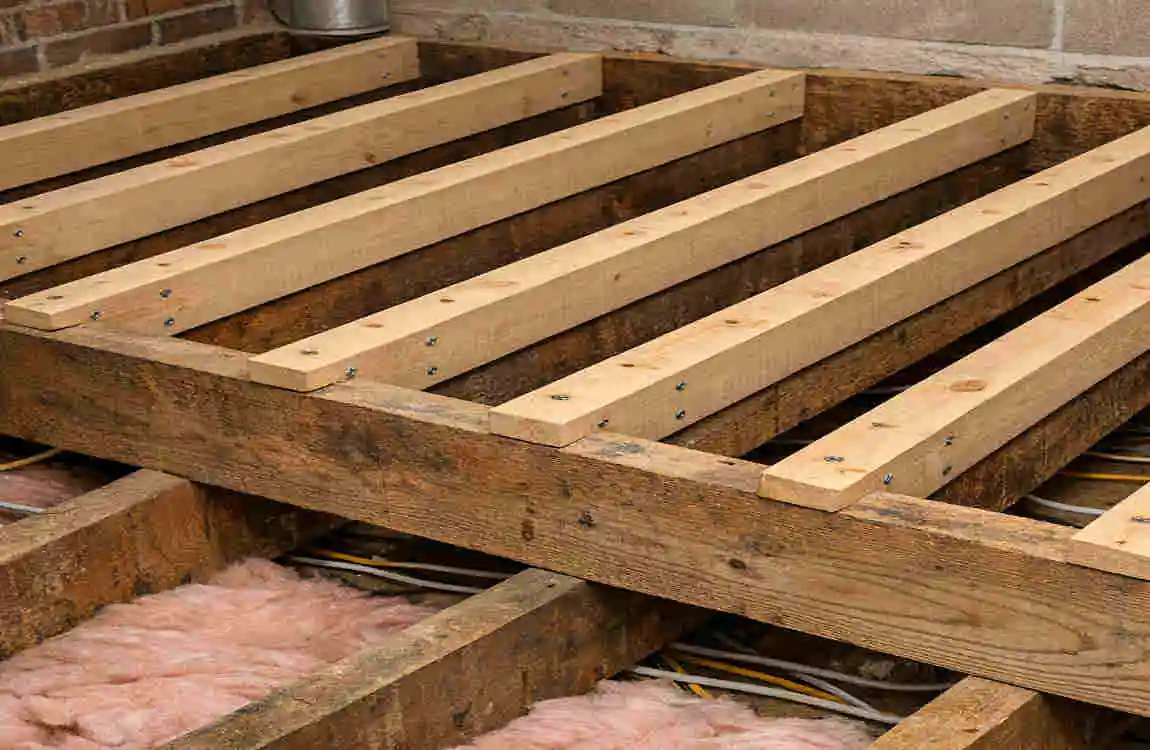
In most cases, a 2×2 is too small to sister a floor joist effectively. Sistering works best when the new piece of lumber is strong enough to share the load with the damaged joist.
A 2×2 does not offer much bending strength on its own. So while it may fit in tight spaces, it usually does not provide the support needed for a sagging floor, cracked joist, or structurally weak area.
What sistering means
Sistering floor joists means placing a new joist alongside an existing one so the two members work together. This can help strengthen a damaged joist or reduce floor bounce.
Homeowners often do this when they see:
- Sagging floors
- Cracked joists
- Water damage
- Insect damage
- Excessive floor movement
Repair, reinforcement, or replacement?
These are not the same thing.
- Repair fixes a damaged area
- Reinforcement adds strength to a joist that is still usable
- Replacement is needed when the joist is too damaged to save
A 2×2 may help with a minor repair, but it is not usually enough for true structural reinforcement.
What Does Sistering a Floor Joist Mean?
How joist sistering works
When you sister a joist, you install a second piece of lumber next to the old one. The goal is to make both pieces act together so the floor becomes stronger and stiffer.
For sistering to work well, the new piece needs:
- Good contact with the old joist
- Proper length
- Correct fastening
- Enough size to carry load
If the added lumber is too small, the repair may not do much.
Why homeowners sister joists
People usually sister joists to:
- Improve stiffness
- Reduce bounce
- Support damaged sections
- Help level a floor
- Add strength near a weak spot
It is a common joist repair method, but it only works when the materials and installation are appropriate.
Does the sister joist need to match the original?
Not always exactly, but size matters a lot. The new joist must be suitable for the floor‘s span, spacing, and load requirements.
A small piece of lumber cannot automatically replace a full-size joist. Structural strength depends on more than just being attached to the old one.
Is 2×2 Lumber Strong Enough for Sistering Floor Joists?
What 2×2 really means
A nominal 2×2 is actually smaller than many people expect. It is a thin piece of lumber, much smaller than typical joist sizes like:
- 2×6
- 2×8
- 2×10
- 2×12
Those larger sizes are common in floor framing because they offer greater depth and bending strength.
Why joist depth matters
The depth of a joist is one of the biggest factors in how well it resists bending. Deeper lumber is much stiffer and stronger for floor loads.
That means a 2×2, which has very little depth, usually cannot match the performance of a proper sister joist. Even if it is attached well, its contribution may be limited.
Where 2×2 falls short
A 2×2 may look helpful, but it often does not add enough strength for:
- Long spans
- Heavily loaded rooms
- Significant sagging
- Damaged or rotted joists
- Structural floor repair
So if your goal is real strengthening, a 2×2 is usually not the right answer.
When a 2×2 might still help
A 2×2 may be useful for non-structural or localized support in some situations. But that is very different from sistering a floor joist in the full structural sense.
If the floor has a real problem, you should check the structural needs before relying on a small piece of wood.
Lumber SizeTypical UseStructural Strength for Sistering
2×2 Blocking, small support, minor bracing Very limited
2×4 Light reinforcement in some cases Limited to moderate
2×6 Smaller structural repairs Moderate
2×8 or larger Common for serious joist reinforcement Better suited
When Might a 2×2 Be Used With a Floor Joist?
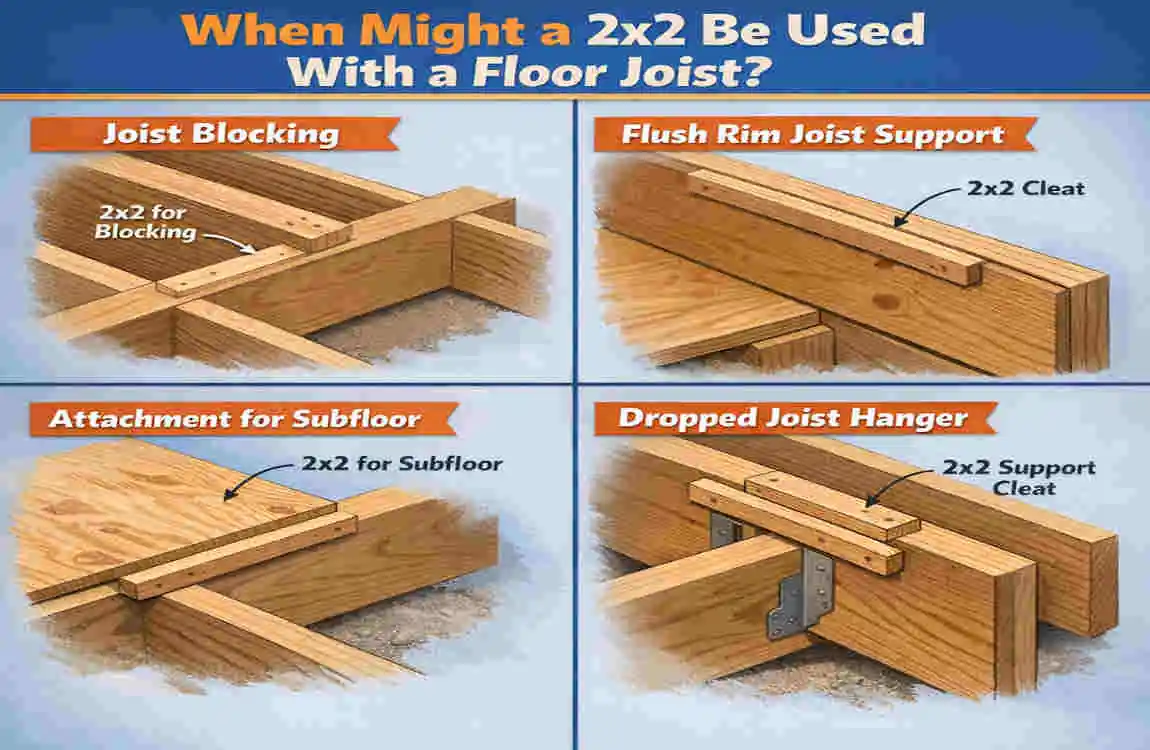
Minor localized repairs
A 2×2 can sometimes help stabilize a small area, especially if the goal is not full joist replacement. For example, it may help support a narrow edge, hold a small piece in place, or assist with a minor fix.
But stabilization is not the same as structural strengthening. Keep that difference in mind.
Blocking and bracing
Sometimes smaller lumber is used for blocking or bracing between joists. This can reduce movement and help transfer loads.
That said, blocking is not sistering. It supports the framing system differently.
Temporary support only
A 2×2 may be part of a temporary fix while you plan a proper repair. That can make sense for a short-term solution.
Still, you should not treat a temporary measure as permanent, especially if the floor is sagging or the joist is damaged.
How to Sister a Floor Joist Properly
Inspect the existing joist.
Before adding any lumber, find out why the joist is failing.
Look for:
- Cracks
- Rot
- Insect damage
- Splitting
- Deflection
- Water staining
If you do not fix the cause, the problem can come back.
Choose the right lumber.
Pick a sister member that has enough strength for the job. The size should fit the structural need, not just the available space.
In many cases, the new piece should be long enough to cover the weak area and provide proper bearing.
Position it correctly
The new joist should sit tightly against the old one. Good contact matters because the two pieces need to share the load.
If there is a gap, the sistering job may not work as intended.
Fasten it properly
Use the correct structural fasteners. Do not depend only on random screws, small nails, or glue.
A proper fastening pattern helps the new and old joists act together. That is what gives the repair real strength.
Check the supports
A sister joist cannot solve a bad support problem underneath it. If the ends are not bearing properly, or if the support structure is weak, the repair may still fail.
That is why floor joist repair should always look at the whole setup, not just the damaged piece.
Common Mistakes to Avoid When Sistering Floor Joists
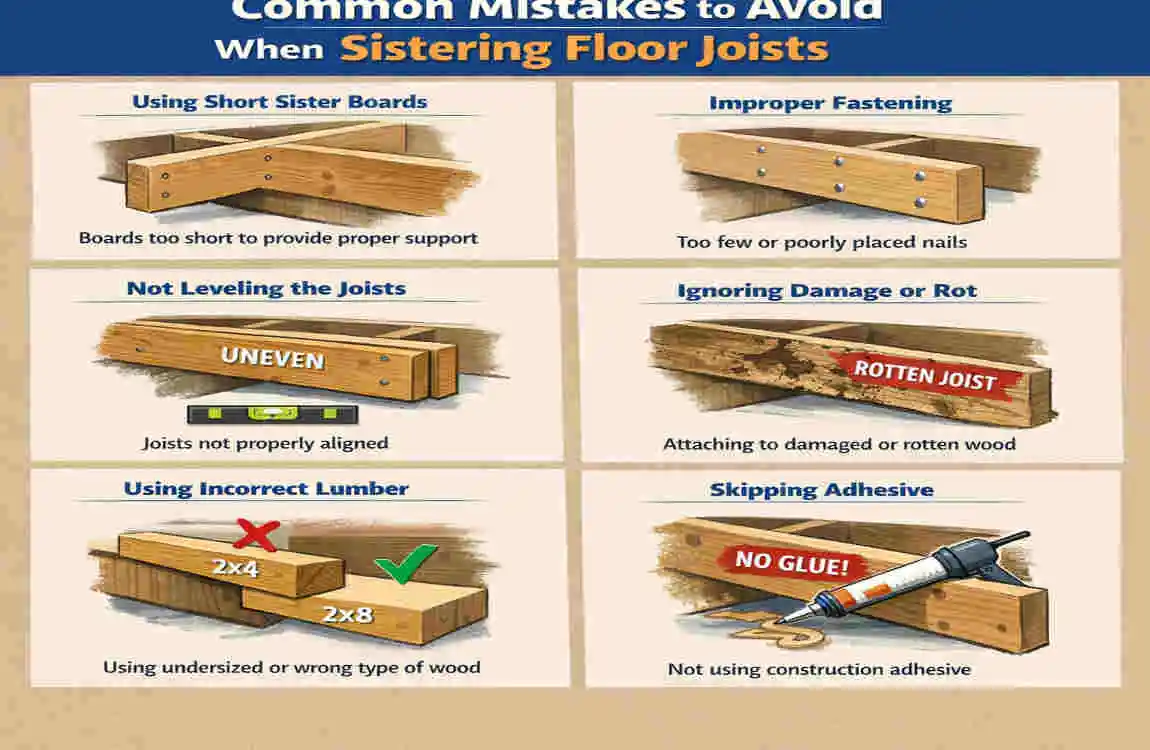
Using a 2×2 just because it fits
This is one of the biggest mistakes. Easy fit does not mean good strength. A 2×2 may slide into place, but that does not mean it will support the floor properly.
Ignoring the real cause of damage
If moisture, rot, or pests caused the problem, adding lumber alone will not solve it. Fix the source first.
Sistering too short a section
A short patch may help with a minor problem, but more extensive damage requires a longer repair. Partial coverage often does not spread the load well enough.
Leaving gaps between pieces
The old and new joists should work together. Gaps weaken the repair and reduce the benefit.
Using weak fasteners
Structural repairs need the right connectors. Ordinary screws are not always enough.
Covering serious damage
If the joist ends are rotted or the floor system is badly compromised, sistering may not be the best fix. In that case, replacement or professional evaluation is the better option.
When to get professional help
Call a structural engineer, qualified contractor, or building professional if:
- The floor is badly sagging
- The joist is heavily rotted
- You see major cracking
- The problem affects multiple joists
- You are unsure about load capacity
FAQ: Sistering Floor Joists With 2×2
Can you sister floor joists with 2×2?
Usually no, not for serious structural support. A 2×2 is generally too small to provide the strength needed for most floor-joist problems.
Can I use a 2×4 to sister a floor joist?
Sometimes, but size alone does not decide it. You also need to consider span, load, spacing, lumber grade, and how the repair is fastened.
What is the best size lumber for sistering floor joists?
There is no single best size for every project. The right member depends on the existing joist and the load it must carry.
Does sistering a joist fix a sagging floor?
It can help in some cases, but not always. First, you need to identify the cause of the sag and ensure the support system is sound.
Can you sister only part of a floor joist?
Yes, in some cases. But the repaired section must be long enough to strengthen the weak area properly.
Should sister joists be the same length as the original joists?
Not always, but they often need to extend well beyond the damaged area. The required length depends on the problem and the support conditions.
When should I replace a floor joist rather than sister it?
If the joist has severe rot, major structural damage, or poor bearing, replacement may be the better choice.
Do building codes allow sistered floor joists?
Often yes, but local code rules vary. Always check local requirements before starting structural repairs.
| Question | Short Answer |
|---|---|
| Can 2×2 lumber be used? | Usually not recommended for structural joist sistering. |
| Better option | Use lumber similar in size to the existing joist, such as a 2×8, 2×10, or 2×12, as appropriate. |
| Main purpose | Sistering strengthens weak, damaged, sagging, or undersized joists. |
| Why 2×2 is weak | A 2×2 provides limited structural support and has much less bending strength than a full-size joist. |
| How to attach | Structural screws or bolts and proper construction adhesive may be used, depending on the repair. |
| Best practice | Match the existing joist depth and get professional advice for load-bearing repairs. |
| Important safety note | If the joist supports a significant load or has serious damage, have a qualified contractor or structural engineer inspect it. |
