
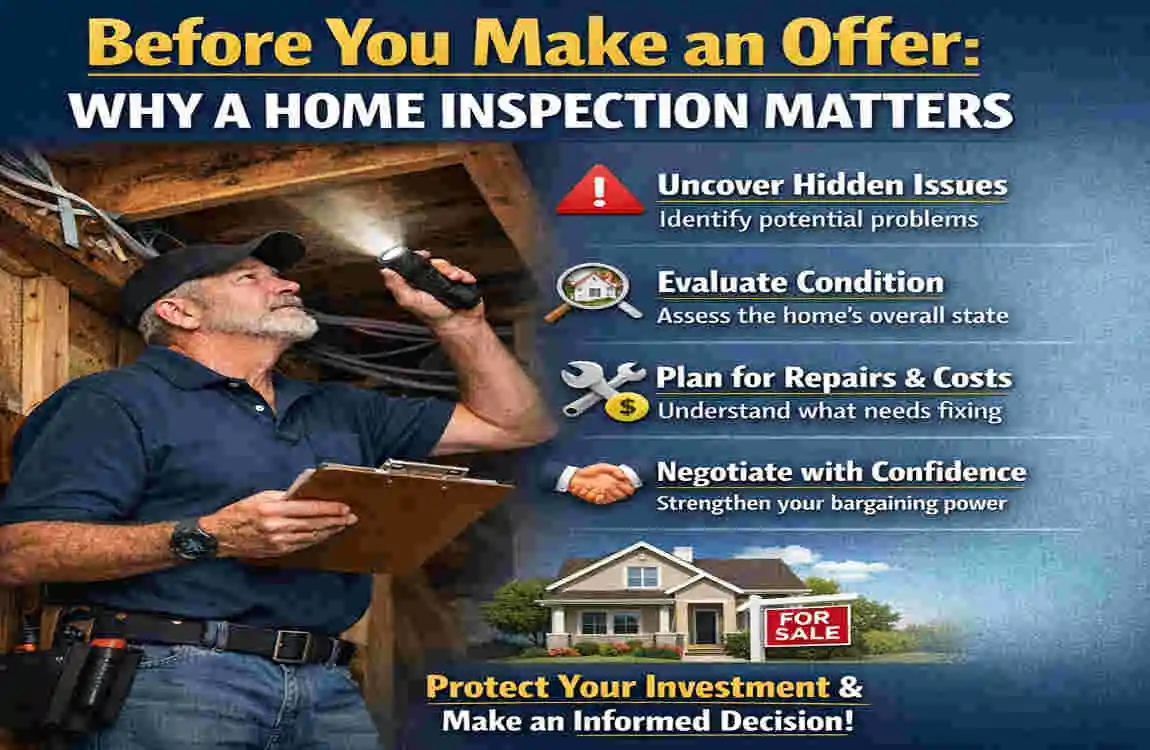
If you are wondering whether you can do a home inspection before making an offer, the short answer is yes; in many cases, you can. This is often called a pre-offer home inspection, and it can give you a much clearer picture of the property before you decide how much to bid.
That said, it depends on the seller, the local market, and the rules in your area. Some sellers are open to it, while others prefer buyers to inspect after an offer is accepted. Either way, understanding the home’s condition before you commit can help you make a smarter choice.
Can You Do a Home Inspection Before Making an Offer?
A pre-offer home inspection is a professional check of the home before you submit or finalize your offer. Instead of waiting until after your offer is accepted, you get important information earlier.
So, can you do a home inspection before making an offer? Yes, but you usually need the seller’s permission. In some places, buyers can tour a property with an inspector before making an offer. In other cases, sellers may not allow it because they do not want too many people on the property.
A pre-offer inspection is different from a regular inspection after an offer is accepted. The timing is what changes. The goal is the same: find out what condition the home is really in before you make a major financial decision.
This can be especially helpful if:
- The home is older
- The property has visible wear or damage
- The market is competitive
- You want to avoid surprise repair costs
- You are deciding between several homes
Why a Home Inspection Matters Before Buying
A home may look great during a showing, but that does not mean everything behind the walls is in good shape. A home inspection helps uncover problems that are not easy to see at first glance.
Hidden problems can be expensive.
Some issues are minor, but others can be costly to fix. An inspector may find signs of roof damage, plumbing leaks, electrical concerns, or foundation problems. These issues can affect both safety and value.
Major systems should be checked.
A typical inspection looks at important parts of the home, such as:
- Roof
- Foundation
- Plumbing
- Electrical system
- HVAC
- Windows and doors
- Attic and insulation
- Visible signs of moisture or damage
When you know the condition of these areas, you can judge whether the home is a good buy or a risky one.
It helps you make a better financial choice.
Buying a home is one of the biggest purchases most people ever make. A professional inspection gives you better facts before you make that decision. That means fewer surprises and more confidence.
Benefits of Getting a Pre-Offer Home Inspection
A pre-offer inspection can give you a real advantage, especially if you want to make a careful decision.
Better negotiating position
If the inspection reveals problems, you may be able to lower your offer, ask for repairs, or request a credit. If the issues are serious, you may choose to walk away rather than spend more money.
More confidence in your offer
When you know more about the home, you can make an offer with less guesswork. That can help you feel more secure, especially in a fast-moving market.
Lower risk of surprise repairs
Unexpected repairs can quickly become stressful and expensive. A pre-offer inspection helps reduce that risk by showing you what may need attention soon.
Easier comparison with other homes
If you are choosing between several properties, inspection results can help you compare them more clearly. A home with fewer problems may be the better long-term value, even if the asking price is a little higher.
In simple terms, a pre-offer inspection can help you decide whether to:
- Make an offer
- Change your offer amount
- Ask questions before moving forward
- Walk away from a risky property
What Does a Pre-Offer Home Inspection Check?
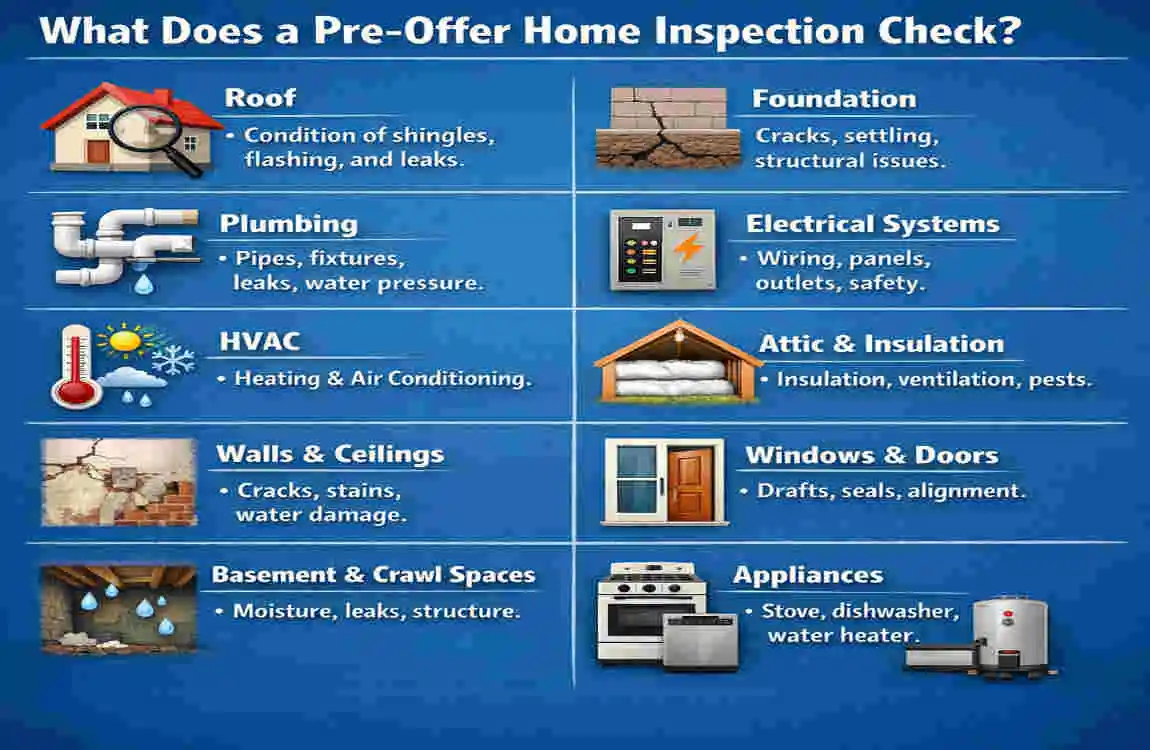
A standard home inspection covers the main visible parts of the home. It is not usually invasive, but it gives a solid overview of the property’s condition.
Structural and exterior areas
The inspector will often check the foundation, framing, siding, and overall structure. They may look for cracks, settling, water damage, or signs of movement.
Roof and drainage
The roof is another key area. The inspector may look for damaged shingles, leaks, poor flashing, clogged gutters, or drainage issues around the home.
Plumbing and electrical systems
These systems matter because problems can affect safety and daily living. The inspector may check sinks, visible pipes, outlets, breaker panels, and signs of leaks or faulty wiring.
Heating and cooling systems
The HVAC system is important for comfort and cost. An inspector may test the furnace, air conditioner, or heat pump if conditions allow.
Windows, doors, and interior conditions
They may also look at:
- Window seals
- Door alignment
- Insulation
- Ventilation
- Stains on ceilings or walls
- Signs of mold or moisture
What a standard inspection may not cover?
Some issues need a separate specialist. A normal inspection may not include:
- Pest inspections
- Sewer line checks
- Radon testing
- Asbestos testing
- Mold testing
- Chimney specialty checks
If something seems suspicious, you may need a separate inspection to address the issue.
How Much Does a Home Inspection Cost and When Should You Schedule One?
Home inspection costs vary, but they are usually small compared with the price of major repairs. The final cost depends on the home’s size, age, location, and the level of detail the inspection requires.
Common cost factors
A larger or older home may cost more to inspect because it takes more time and may have more areas to review. Add-on tests also increase the price.
Who usually pays?
In most cases, the buyer pays for the inspection. That is because the buyer wants the information to help make a decision.
When should you schedule it?
If you are doing a pre-offer inspection, schedule it as early as possible. Good inspectors may book quickly, especially in busy housing markets.
Why choosing the right inspector matters
Look for someone qualified, independent, and experienced. A good inspector should give you a clear report and explain what they found in simple language.
Cost vs. risk
Even though an inspection is another expense, it can save you from much higher costs later. That is why many buyers see it as a smart investment, not just an added fee.
Should You Inspect Before or After Making an Offer?

This is one of the biggest strategy questions in real estate. There is no single right answer. It depends on the home, the market, and how comfortable you are with risk.
Before-offer inspection
A pre-offer inspection gives you information early. That can help in a competitive market where buyers want to move fast. It also reduces the chance of wasting time on a home with major issues.
Pros:
- More information before you bid
- Less chance of surprise problems
- Better offer strategy
Cons:
- You may pay for an inspection on a home you do not get
- The seller may not allow it
- It can take extra time
After-offer inspection
This is more common in many places. You make an offer first, then inspect the home if the contract includes an inspection contingency.
Pros:
- More common and often easier to arrange
- Usually tied to the purchase contract
- Lets you negotiate after findings
Cons:
- You may spend time under contract before learning about major problems
- In a hot market, you may feel pressure to limit your contingencies
FAQ: Home Inspection Before Making an Offer
Can you do a home inspection before making an offer?
Yes, in many cases you can, but it depends on the seller and local real estate practices. Some sellers allow it, while others prefer inspections after an offer is accepted.
Is a home inspection required before making an offer?
No, it is usually not required. Still, it can be very helpful because it shows you the home’s condition before you fully commit.
Who pays for a pre-offer home inspection?
Usually, the buyer pays. The inspection is meant to help the buyer make a better decision.
Can a home inspection change the amount I offer?
Yes. If the inspector finds problems, you may lower your offer, ask for repairs, or adjust your terms.
What happens if the inspection finds major problems?
You can negotiate, request repairs or credits, change your offer, or decide not to move forward.
Is a pre-offer inspection worth the cost?
It often is, especially for older homes, larger homes, or properties with visible concerns. It can help you avoid expensive surprises.
What should I look for in a home inspector?
Choose someone with experience, good communication, proper qualifications, independence, and insurance. A detailed written report is also important.
| Inspection Area | What It Checks | Why It Matters |
|---|---|---|
| Roof | Damage, leaks, shingles, and age | Helps identify costly roof repairs |
| Foundation | Cracks, settling, and structural concerns | Reveals potential major structural issues |
| Electrical | Wiring, outlets, panels, and safety | Finds hazards and outdated systems |
| Plumbing | Pipes, drains, leaks, and water pressure | Prevents unexpected water-related costs |
| HVAC | Heating and cooling equipment | Shows system condition and possible replacement needs |
| Windows & Doors | Seals, frames, operation, and damage | Identifies energy-loss and repair issues |
| Overall Condition | Visible defects and maintenance concerns | Helps you make a more informed offer |
