
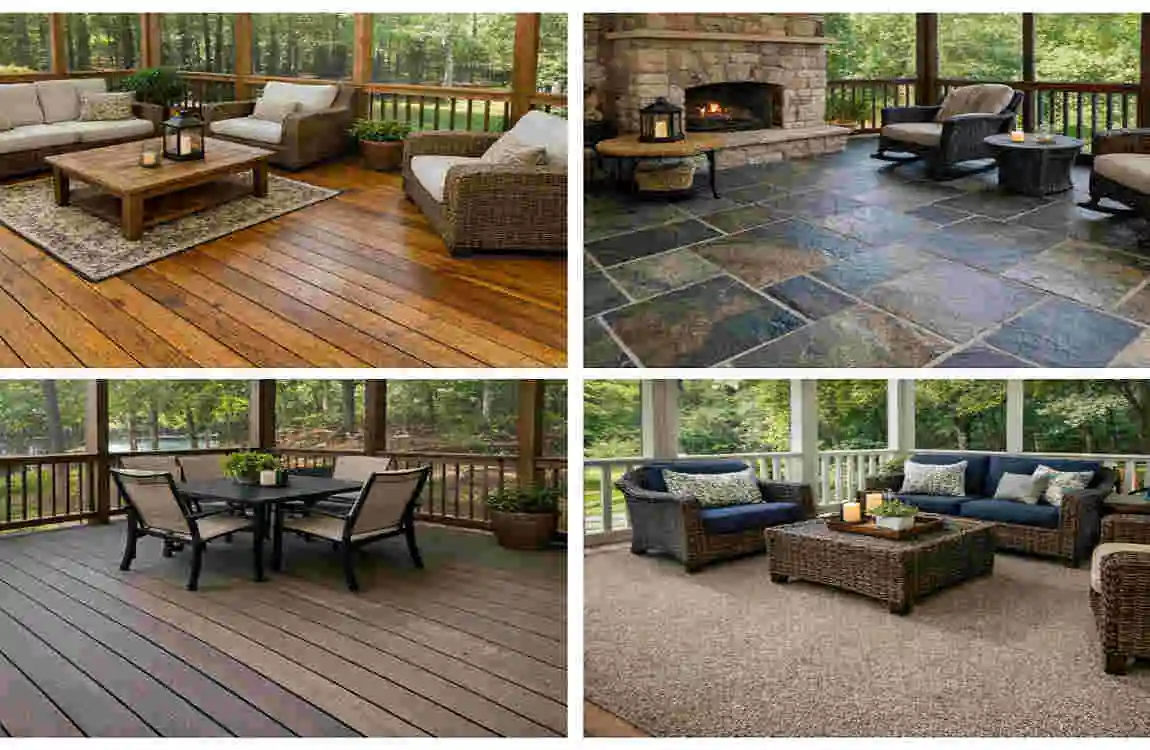
A screened porch should feel like a comfortable middle ground between indoors and outdoors. It is a place where you can enjoy fresh air, relax with family, and still stay protected from bugs and harsh weather. But to make that space work well, you need the right floor.
That is why choosing the right surface matters so much. The best flooring for a screened porch should handle moisture, stay comfortable underfoot, last through changing weather, and still look good over time. If you pick the wrong material, you may deal with stains, warping, slipping, cracking, or constant repairs.
What Is the Best Flooring for a Screened Porch?
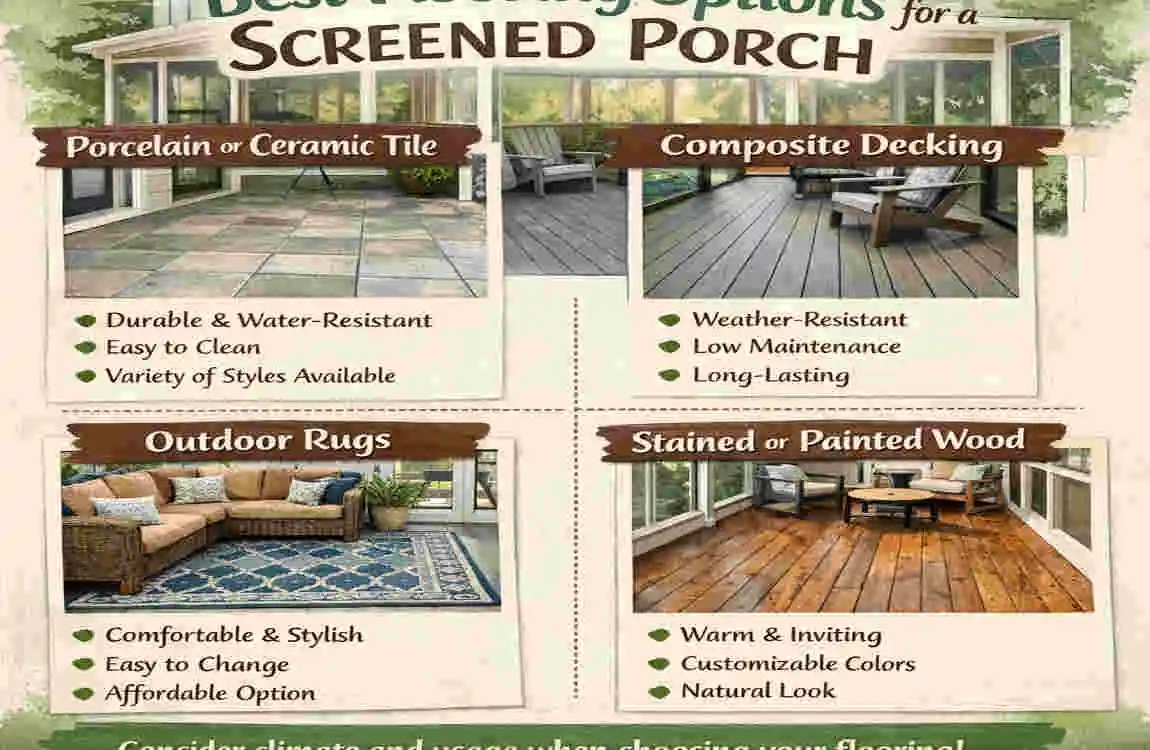
The short answer
There is no single best flooring for every screened porch. The right choice depends on how you use the space, where you live, and how much maintenance you want to handle.
Some people want a floor that looks warm and natural. Others want something easy to clean and built to last. A few homeowners care most about price. That is why the best option for one porch may not be the best for another.
What a good screened porch floor should do
The ideal flooring should do a few important things well:
- Handle moisture without damage
- Feel comfortable when people walk on it
- Hold up to sun, humidity, and changing temperatures
- Be easy enough to clean
- Match the style of the home
A screened porch is not a fully indoor room, but it is also not fully exposed like a patio. Because of that, the floor needs to be tougher than indoor flooring and more weather-friendly than many people first expect.
Common flooring choices
The most common options include concrete, composite decking, outdoor tile, wood, and vinyl. Each one has strengths and weak points. The best choice depends on your climate, budget, and the look you want.
Key Factors to Consider Before Choosing Porch Flooring
Climate and weather conditions
Your local weather should guide your decision. If you live in a place with a lot of rain, humidity, or temperature swings, you need flooring that can handle that pressure.
A screened porch may be covered, but it still deals with moisture from the air, wind-driven rain, and dampness under the structure. In very hot or very cold areas, some materials expand, contract, or wear down faster than others.
Moisture and humidity
Moisture is one of the biggest concerns. Even if the porch stays mostly dry, humidity can still cause trouble over time.
Some materials absorb water and swell. Others may grow mold or become slippery. That is why moisture resistance should always be near the top of your checklist.
Budget and installation cost
It is smart to consider both the material cost and the installation cost. A floor may look affordable at first, but if it needs extra prep work or special tools, the final cost can rise quickly.
You should also think beyond the first bill. A cheap floor that needs frequent repairs may cost more over time than a slightly more expensive floor that lasts longer.
Durability and maintenance
Some homeowners want a low-maintenance option. Others do not mind doing a little upkeep if the floor looks beautiful. Both choices are fine.
The real question is how much work you want to do over the years. A strong floor that is easy to maintain often feels like the best value in the long run.
Comfort and slip resistance
A screened porch is a space where people may walk barefoot, relax with pets, or gather with guests. The floor should feel safe and comfortable.
If the surface gets slippery when damp or feels too hard for long sitting or standing, it may not be the right fit. This matters even more if you have children or older adults in the home.
Best Flooring Options for a Screened Porch
Composite Decking
Composite decking is one of the most popular choices for screened porches. It is made from a mix of wood fibers and plastic, which gives it a strong and durable surface.
Why people choose it
Composite decking is known for being low-maintenance. It does not need the same level of care as natural wood. It also holds up well against moisture, fading, and everyday wear.
Best for
- Homeowners who want a modern, polished look
- People who want less maintenance
- Porches in humid or wet climates
Things to keep in mind
Composite can cost more upfront than some other materials. Still, many homeowners feel the long-term benefits make it worth it.
Outdoor Tile
Outdoor tile can give a screened porch a stylish and finished look. It works well if you want something that feels clean, bright, and elegant.
Why people choose it
Tile is water-resistant and easy to wipe clean. It also comes in many styles, colors, and textures so that you can match it to your home design.
Best for
- Porches in warm climates
- Homeowners who want a decorative look
- Spaces that need easy cleaning
Things to keep in mind
Tile can crack if the base is not prepared correctly. It may also feel hard and cold underfoot. In some climates, certain tile types may not perform as well outdoors.
Concrete Flooring
Concrete is one of the most practical choices for a screened porch. It is strong, simple, and often more affordable than people expect.
Why people choose it
Concrete is long-lasting and can withstand heavy use. It also gives you a flexible base if you want to paint, stain, or coat it for a better finish.
Best for
- Budget-conscious homeowners
- Porches that need a durable foundation
- People who want a simple and sturdy floor
Things to keep in mind
Concrete can crack if it is not installed well or if the ground shifts. It can also feel plain unless it is finished decoratively.
Wood Flooring
Wood brings warmth and a natural feel that many homeowners love. It can make a screened porch feel cozy and inviting.
Why people choose it
Wood looks beautiful and adds charm. If you want your porch to feel like an extension of your indoor living space, wood can be a great fit.
Best for
- Homeowners who want a classic look
- Porches with good protection from direct moisture
- Projects where appearance matters most
Things to keep in mind
Wood needs regular care. It can warp, fade, or rot if exposed to excessive moisture without proper treatment. If you choose wood, make sure it is suitable for outdoor or semi-outdoor use.
Vinyl Flooring
Vinyl is another option that can work well in some screened porches, especially when you want something affordable and easy to clean.
Why people choose it
Vinyl is budget-friendly and simple to maintain. It often comes in many styles, including looks that mimic wood or stone.
Best for
- Lower-budget projects
- Smaller porch spaces
- Homeowners who want easy cleaning
Things to keep in mind
Not all vinyl is suitable for outdoor or semi-outdoor conditions. You need outdoor-rated vinyl that can withstand temperature and moisture fluctuations.
How Climate Affects Your Flooring Choice
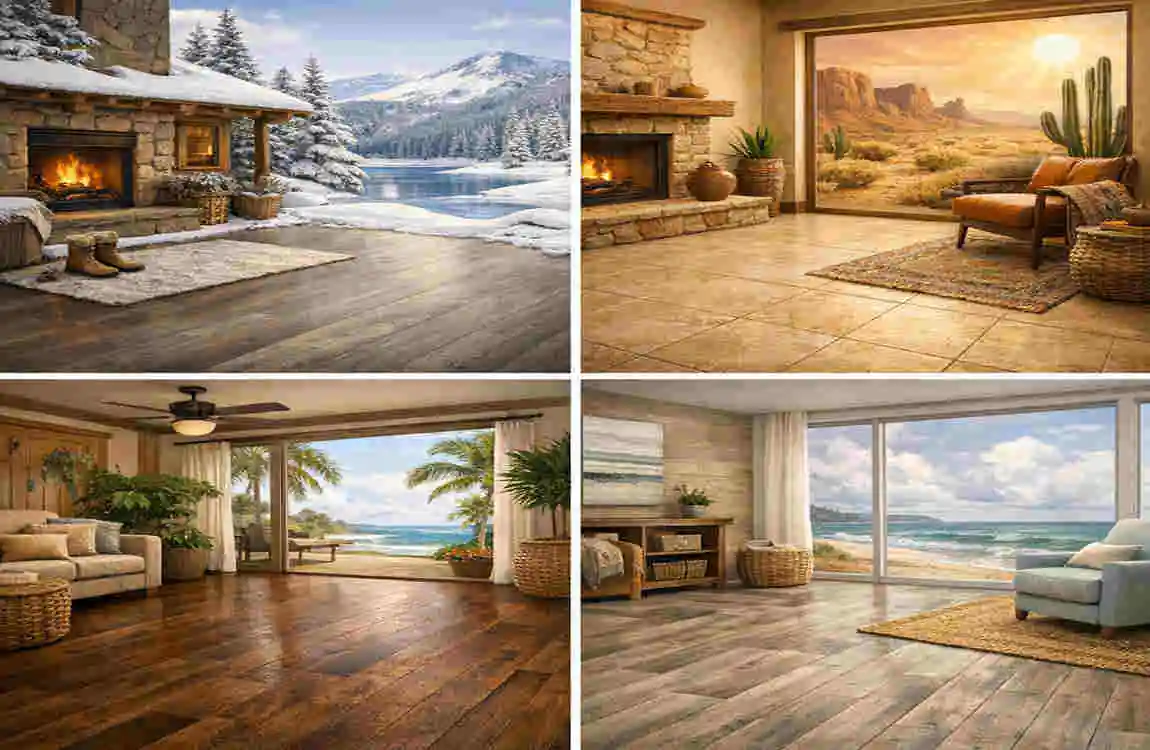
Rainy and humid areas
If your area gets a lot of rain or humidity, choose a floor that resists moisture well. Composite decking, concrete, and outdoor tile are often strong choices here.
In damp climates, wood needs more care, and indoor-style flooring usually does not perform well. You also need proper drainage so water does not sit under or around the porch.
Hot climates
In hot regions, flooring can get very warm in the sun. Some surfaces may fade or become uncomfortable to walk on.
Light-colored tile, composite, and sealed concrete may work well because they handle heat better than some other options. If you live in a very sunny area, try to choose a floor that stays cooler and resists fading.
Cold climates
Cold weather brings a different problem. Freezing and thawing can damage materials over time, especially if moisture gets into cracks.
Concrete must be installed carefully, and tile should be chosen with outdoor conditions in mind. Composite can also be a smart pick because it handles seasonal changes well.
Why drainage matters
Even the best flooring can fail if water has nowhere to go. A screened porch should be built with proper drainage and a solid base. Water should move away from the structure rather than collect beneath it.
Good drainage helps prevent:
- Mold and mildew
- Rot and swelling
- Cracks and surface damage
- Slippery buildup
How Much Does Screened Porch Flooring Cost?
Budget-friendly choices
If cost is your biggest concern, concrete is often one of the most affordable choices. Vinyl may also work for smaller projects, depending on the product and installation needs.
These options can help you save money upfront, but you should still consider long-term performance.
Mid-range choices
Composite decking often falls into the middle or higher range. It costs more than some basic materials, but it can save time and effort later because it needs less maintenance.
Outdoor tile can also land in this range, though premium tiles and proper installation can raise the price.
Higher-end choices
Some wood-floor and decorative-tile systems can be expensive, especially if you want a custom look. Premium materials and skilled installation will increase the total cost.
Think beyond the first price.
When comparing costs, ask yourself:
- How long will the floor last?
- How much cleaning will it need?
- Will it need sealing or repair?
- How likely is it to crack, fade, or warp?
A cheaper floor may not be the best value if you have to replace it sooner.
How to Maintain Screened Porch Flooring
Regular cleaning
Sweep the porch often to remove dirt, leaves, and small debris. This keeps the surface looking fresh and helps prevent scratches.
For deeper cleaning, use the method recommended for the specific flooring type. A simple cleaner and soft brush are often enough.
Prevent moisture damage
Moisture is a big enemy of porch flooring. Wipe up spills quickly and check for standing water after rain.
If your porch has gaps, drainage issues, or signs of dampness, fix them early. Small water problems can lead to greater damage if ignored.
Protect from furniture scratches.
Furniture legs can scratch or dent some flooring types. Use pads under chairs, tables, and plant stands.
This is a small step, but it can help the floor stay in better shape for longer.
Repair problems early
Do not wait too long if you notice:
- Cracks in concrete
- Loose tiles
- Soft spots in wood
- Warping boards
- Loose seams in vinyl
Early repair usually costs less and prevents bigger problems later.
Seasonal care tips
At the start of each season, check the porch for wear and tear. Look at the floor, corners, edges, and drainage areas.
This is a smart time to clean thoroughly, inspect for damage, and ensure the space is ready for changing weather.
Common Mistakes to Avoid When Choosing Porch Flooring
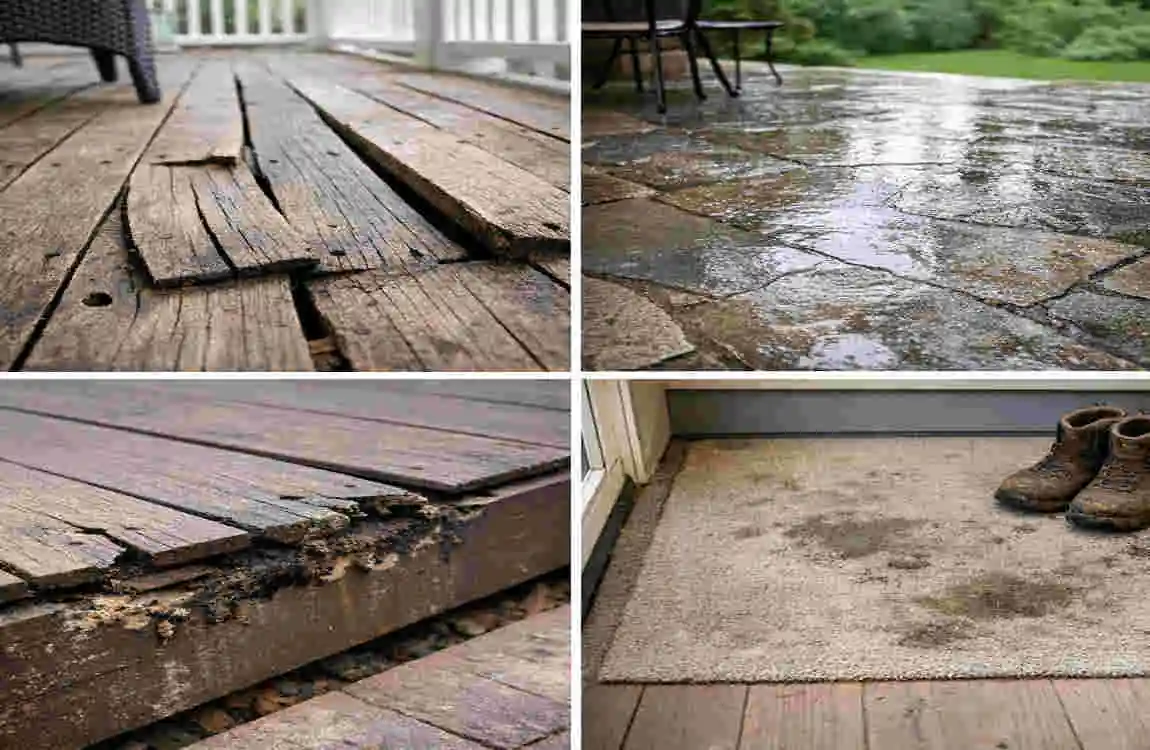
Choosing indoor-only flooring
This is one of the biggest mistakes. Indoor flooring is not designed for screened-porch conditions. It may warp, peel, or wear out too fast.
Always choose a material made for outdoor or semi-outdoor use.
Ignoring moisture and drainage
A porch floor can look great at first and still fail later if water management is poor. Moisture should always be part of the decision.
Choosing only by appearance
A beautiful floor is great, but looks should not be the only factor. The material also needs to fit your climate and lifestyle.
A floor that looks perfect but breaks down quickly will become a problem.
Forgetting long-term costs
Some homeowners focus only on installation price. That can lead to expensive upkeep later.
Think about cleaning, sealing, repairs, and replacement before making the final decision.
Skipping proper preparation
Even the right flooring can fail if the base is not ready. A screened porch needs a level, stable, and well-prepared surface before installation begins.
FAQ
What is the best flooring for a screened porch?
Composite decking, outdoor tile, concrete, and properly treated wood are among the best options, depending on climate and budget.
Can you put vinyl flooring on a screened porch?
Yes, outdoor-rated vinyl flooring can be used in some screened porches, especially when the space is protected from excessive moisture.
Is composite decking good for a screened porch?
Yes. Composite decking is durable, moisture-resistant, and requires less maintenance than natural wood.
What is the cheapest flooring for a screened porch?
Concrete is often one of the most affordable and durable options, while outdoor-rated vinyl may also suit smaller budgets.
| Flooring Type | Best For | Main Benefits | Key Consideration |
|---|---|---|---|
| Porcelain Tile | All-weather porches | Waterproof and durable | Can feel cold |
| Luxury Vinyl | Budget-friendly updates | Easy to clean and water-resistant | Choose outdoor-rated options |
| Composite Decking | Long-term durability | Low maintenance and moisture-resistant | Higher initial cost |
| Concrete | Strong, permanent floors | Very durable and affordable | May need sealing |
| Wood Decking | Natural appearance | Warm and attractive | Requires regular maintenance |
| Outdoor Carpet | Comfortable surfaces | Soft, affordable, and easy to install | Can retain moisture |
