
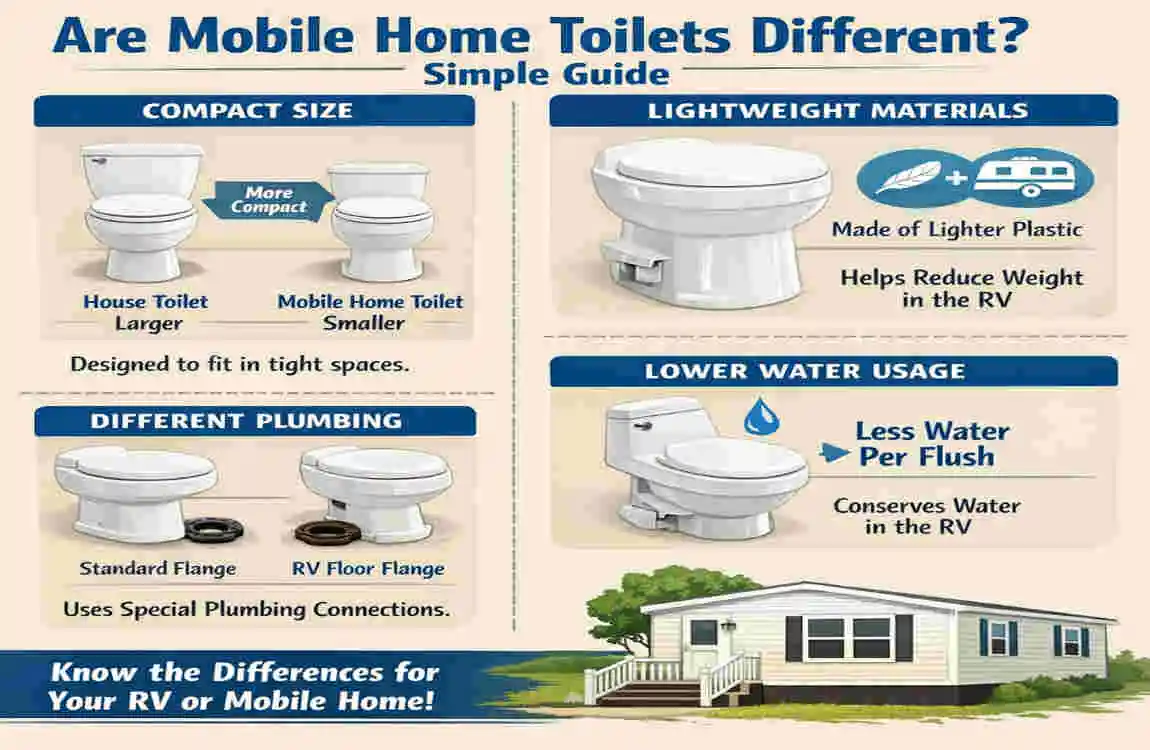
Many homeowners ask, “Are mobile home toilets different?” The short answer is yes, they can be. Mobile homes often have smaller bathrooms, different plumbing layouts, and rough-in measurements that may not match a standard house.
That does not mean every mobile home toilet is unusual. Some look and work very much like regular toilets. But the size, fit, and installation details can be different enough to matter when you buy a replacement.
What Is a Mobile Home Toilet?
Definition
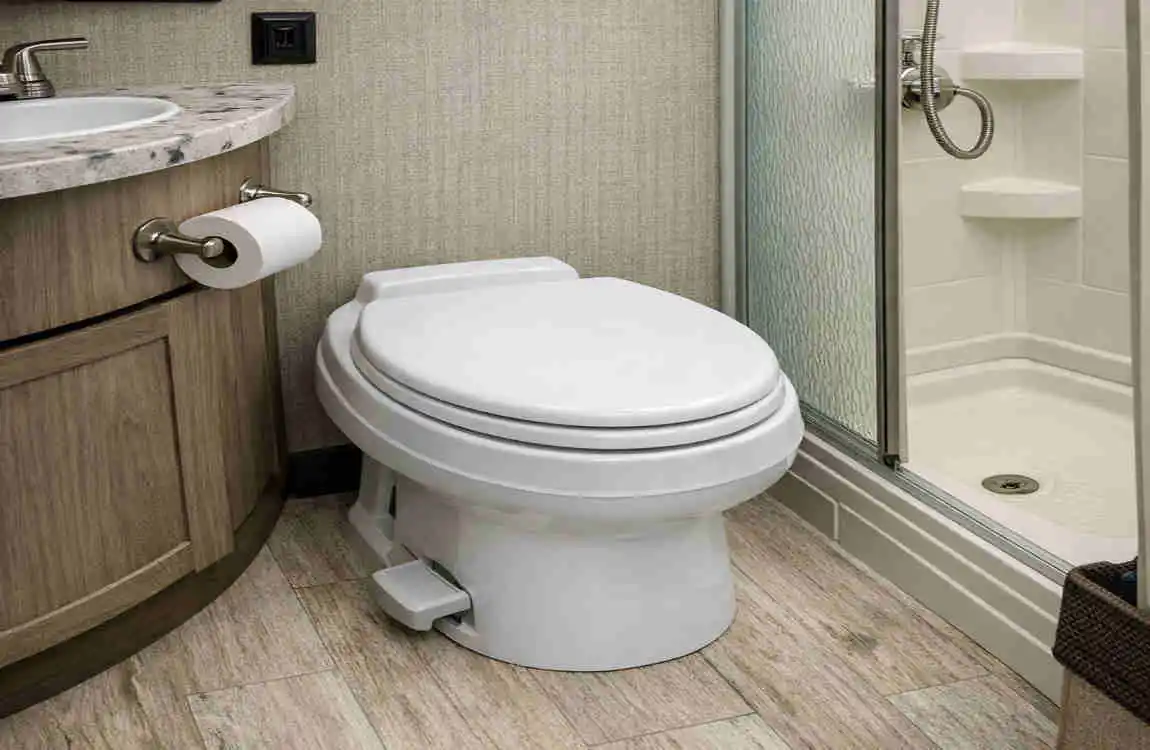
A mobile home toilet is designed to fit the smaller spaces and special plumbing setups often found in manufactured homes. It may be more compact, lighter, and designed to work with a different rough-in size than a standard toilet.
How It Works
The basic job is the same as any other toilet: it uses water to flush waste down the drain. The difference is mostly in the design and fit. Mobile homes may use a slightly different plumbing layout, so the toilet must closely match the space and connection point.
Are Mobile Home Toilets Different?
Short Answer
Yes, but not always. Some mobile home toilets are made specifically for manufactured homes, while others are standard toilets that happen to fit. The main difference is usually not how they flush, but how they fit the floor and plumbing.
Key Differences
Here are the most common differences you should know:
- Smaller dimensions to fit tight bathrooms
- Lighter construction for easier installation
- Different floor flange compatibility
- Lower water use in many models
- Different rough-in measurements, often 8 to 10 inches instead of 12 inches
Mobile Home Toilet vs Regular Toilet
Feature Mobile Home ToiletStandard Toilet
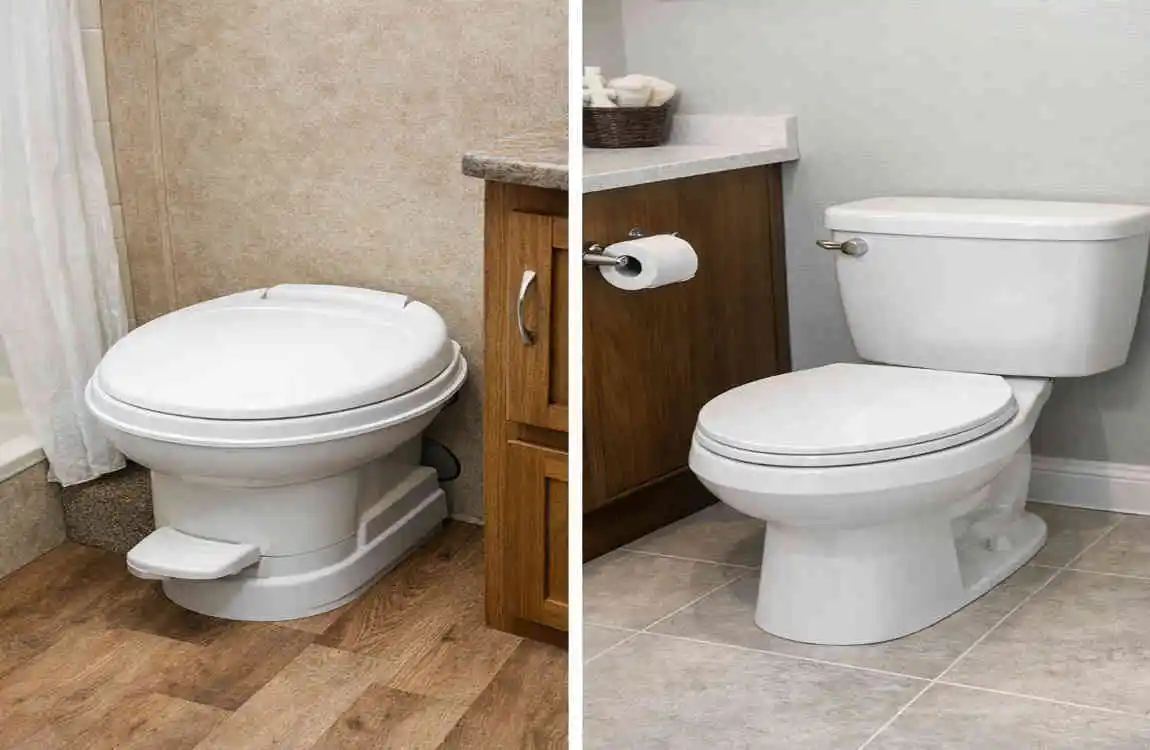
Size Smaller Larger
Weight Lightweight Heavier
Installation Mobile-home compatible Standard flange
Rough-In Often 8–10 inches Usually 12 inches
Water Usage Low-flow Varies
Replacement Options Limited Many choices
Common Types of Mobile Home Toilets
Gravity Flush Toilets
These are the most common type. They use gravity and water flow to remove waste. They are simple, reliable, and easy to maintain.
Pressure-Assisted Toilets
These toilets use extra air pressure to create a stronger flush. They can be useful if you want better flushing power, but they may cost more and sound a little louder.
Low-Flow Toilets
Low-flow toilets use less water per flush. They are a smart choice if you want to save water and lower utility costs.
Composting Toilets
These toilets use very little water. They are less common, but some people choose them for off-grid living or water-saving needs.
Portable Toilets
Portable toilets are not a permanent bathroom solution, but they can be helpful in temporary situations, repairs, or emergencies.
Why Mobile Homes Use Different Toilets
Space Limitations
Mobile home bathrooms are often smaller. A compact toilet helps save space and keeps the room more comfortable to use.
Lightweight Flooring
Some manufactured homes have flooring systems that are not built the same way as traditional houses. A toilet made for a mobile home can fit better and put less stress on the floor.
Plumbing Layout
The drain and water lines in a mobile home may sit in a different place than in a standard home. That means the toilet has to match the plumbing setup closely.
Water Efficiency
Many mobile home toilets are designed to use less water. This helps save money and can also support better water use overall.
Can You Replace a Mobile Home Toilet with a Regular Toilet?
When It’s Possible
You can sometimes install a regular toilet in a mobile home if the rough-in, flange, and bathroom size all match. Some bathrooms have enough room for a standard model.
When It Isn’t
A regular toilet may not fit if the rough-in is too short, the bathroom is too tight, or the floor flange is not compatible. In those cases, forcing the wrong toilet can lead to leaks or poor performance.
Things to Check Before Replacing
Before you buy, check these items:
- Rough-in distance
- Floor flange
- Bathroom space
- Water supply line
How to Measure for a Mobile Home Toilet
Measure the Rough-In
Measure from the wall behind the toilet to the center of the floor bolts or drain opening. This tells you the rough-in size. Many mobile homes use 8-inch or 10-inch rough-ins.
Check Bowl Shape
Some toilets have a round bowl, while others have an elongated bowl. Round bowls usually save space, while elongated bowls may feel more comfortable.
Measure Bathroom Clearance
Make sure the toilet will not crowd the sink, door, or shower. A toilet that is too large can make the bathroom feel cramped.
Verify Water Supply Location
Check where the water line enters the toilet. The connection point must align correctly for easy installation.
Installation Guide
Tools Needed
You usually need:
- Adjustable wrench
- Screwdriver
- Wax ring
- Bolts and caps
- Bucket and towel
Remove the Old Toilet
Turn off the water, flush the toilet, and carefully remove the old unit. Clean the area around the flange before installing the new one.
Install the Wax Ring
Place the wax ring on the drain opening. This helps create a seal and prevents leaks.
Position the Toilet
Lower the toilet straight down so it lines up with the bolts and sits evenly on the floor.
Tighten Bolts
Tighten the bolts carefully. Do not overtighten them, or the base may crack.
Connect Water Line
Attach the water supply line and slowly turn the water back on.
Test for Leaks
Flush the toilet several times and watch for leaks around the base and the water connection.
Common Problems with Mobile Home Toilets
Weak Flush
This may happen if the toilet is not the right size, has low water pressure, or has a clog.
Leaking Base
A leak at the base can indicate that the wax ring is damaged or that the toilet is not seated properly.
Rocking Toilet
If the toilet moves when you sit on it, it may need adjustment or new bolts.
Clogged Drain
A clog can happen if too much paper or non-flushable items go into the bowl.
Running Water
If the tank keeps running, the flapper or fill valve may need replacement.
Bad Odors
Bad smells often come from a poor seal, a drain issue, or a wax ring problem.
Maintenance Tips
Keep your toilet in good shape with these simple habits:
- Clean regularly
- Replace the wax ring when needed
- Avoid flushing wipes
- Check bolts once a year
- Inspect water connections
- Use gentle cleaners
Best Features to Look for in a Replacement Toilet
Compact Design
A smaller shape can help the toilet fit better in a mobile home bathroom.
WaterSense Certification
This means the toilet uses water efficiently while still flushing well.
Durable Ceramic Construction
Ceramic toilets last a long time and are easy to clean.
Comfortable Height
A comfort-height toilet may feel easier to use for many adults.
Easy Installation
A simple-to-install toilet can save time and reduce labor costs.
Average Cost of Mobile Home Toilets
Item Estimated Cost
Basic Toilet $100–$200
Mid-Range Model $200–$350
Premium Model $350–$600
Professional Installation $150–$400
Wax Ring & Hardware $10–$30
Mistakes to Avoid
- Buying the wrong rough-in size
- Ignoring bathroom dimensions
- Overtightening bolts
- Using the wrong wax ring
- Skipping leak testing
- Choosing an incompatible model
Benefits of Choosing the Right Mobile Home Toilet
When you choose the right toilet, you get several benefits:
- Better water efficiency
- Easier installation
- Improved comfort
- Fewer plumbing problems
- Longer lifespan
- Lower maintenance costs
FAQ
Are mobile home toilets different from regular toilets?
Yes. They are often smaller, lighter, and made with different rough-in measurements to fit manufactured homes.
Can I install a regular toilet in a mobile home?
Yes, if the rough-in size, floor flange, and available space are compatible.
What rough-in size do most mobile home toilets use?
Many use 8-inch or 10-inch rough-ins, while standard homes commonly use 12-inch rough-ins.
Are mobile home toilets smaller?
Many are compact to save space, though some full-size options are available.
How long does a mobile home toilet last?
With proper care, a good toilet can last 15–30 years.
Do mobile home toilets use less water?
Most modern models are low-flow and designed to save water while still flushing well.
| Feature | Mobile Home Toilet | Standard Home Toilet |
|---|---|---|
| Designed For | Manufactured and mobile homes | Traditional site-built homes |
| Flange Size | Often uses a 3-inch flange | Usually uses a 4-inch flange |
| Mounting Style | May have unique bolt spacing | Standard bolt spacing |
| Water Usage | Typically 1.28–1.6 GPF | Usually 1.28–1.6 GPF |
| Drain Connection | Designed for mobile home plumbing systems | Standard residential plumbing |
| Size | Often more compact to save space | Available in standard and comfort heights |
| Replacement | Some models require mobile-home-specific toilets | Wide variety of standard models |
| Installation | May need an adapter or compatible flange | Straightforward in most homes |
