
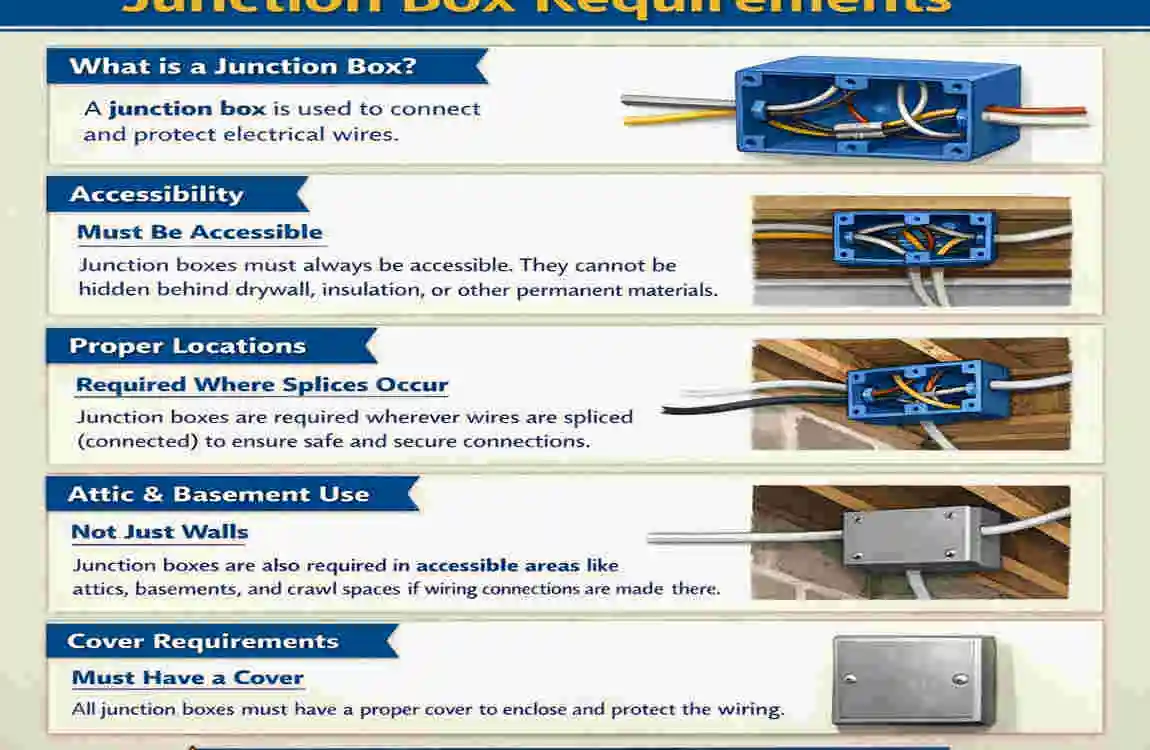
If you are asking whether junction boxes are normally used in first-floor wiring, the short answer is yes —sometimes—but not simply because the wiring is on the first floor. A junction box is used when wires need to be joined, branched, or protected inside an approved enclosure.
That means the real question is not the floor level. The real question is how the wiring is arranged. If a circuit has splices or multiple connections, a junction box may be needed. If the wiring runs straight through with no joins, it may not need one.
Are Junction Boxes Normally Used in Wiring the First Floor?
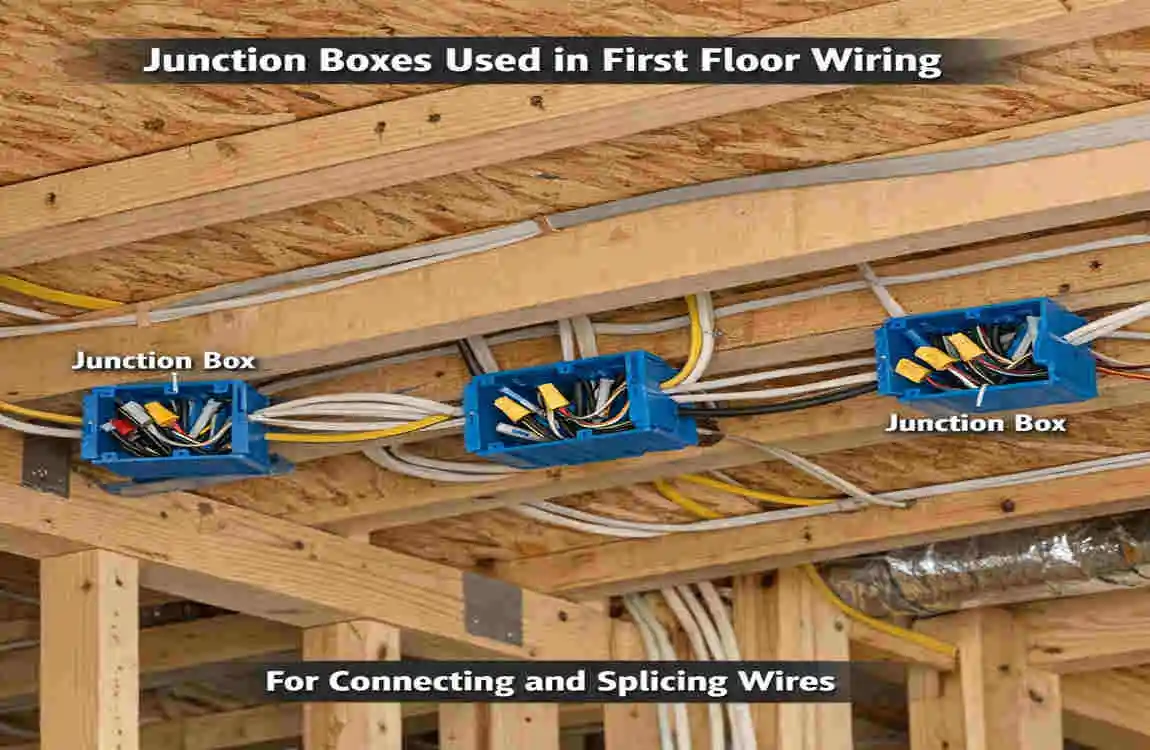
A junction box is a protective enclosure for electrical wire connections. It keeps wire splices safe, organized, and easier to inspect. It also helps reduce the risk of shock, loose wiring, or fire.
The Simple Answer
First-floor wiring does not automatically require junction boxes. Their use depends on the electrical layout, the type of circuit, and local code rules.
Junction Box vs. Outlet Box
People often mix these up. They are not always the same.
- A junction box mainly holds wire connections.
- An outlet box or device box holds a switch, outlet, or fixture connection.
Sometimes the same box does both jobs, but not always.
Why This Matters
If you are planning or checking first-floor wiring, focus on where wires join and whether those connections are properly enclosed. That is what really determines whether a junction box is needed.
Why Junction Boxes Are Used in First-Floor Wiring
Junction boxes are used for safety and organization. They are not just extra parts.
Protecting Electrical Connections
Wires must be joined properly so they do not come loose or get damaged. A box helps protect those connections from being bumped, pulled, or exposed.
Making Wiring Easier to Maintain
If wiring needs repair later, an accessible junction box makes the job easier. Electricians can inspect the connection without cutting open walls in many cases.
Improving Electrical Safety
Loose or exposed splices can be dangerous. A proper enclosure helps keep the connection contained, covered, and grounded where required.
Main Benefits of Junction Boxes
- Protects wire splices
- Improves safety
- Makes maintenance easier
- Helps meet electrical code
- Keeps wiring more organized
Where Junction Boxes May Be Installed on a First Floor
On the first floor, junction boxes can appear in several places depending on the wiring plan.
Inside Walls and Ceilings
Some junction boxes are placed inside wall or ceiling cavities, but they must remain accessible where code requires it. They should not be buried behind a finished surface if they need future access.
Near Lighting Circuits
If a single power source feeds multiple lights or branches, a junction box may be used to split the wiring safely.
Around Switches and Outlets
Sometimes the box behind a switch or outlet also serves as the connection point. In that case, a separate junction box may not be needed.
Attics, Crawlspaces, and Utility Areas
These areas often contain accessible wiring connections. They are common places for junction boxes because they are easier to reach and inspect.
First-Floor Wiring Without Junction Boxes: Is It Possible?
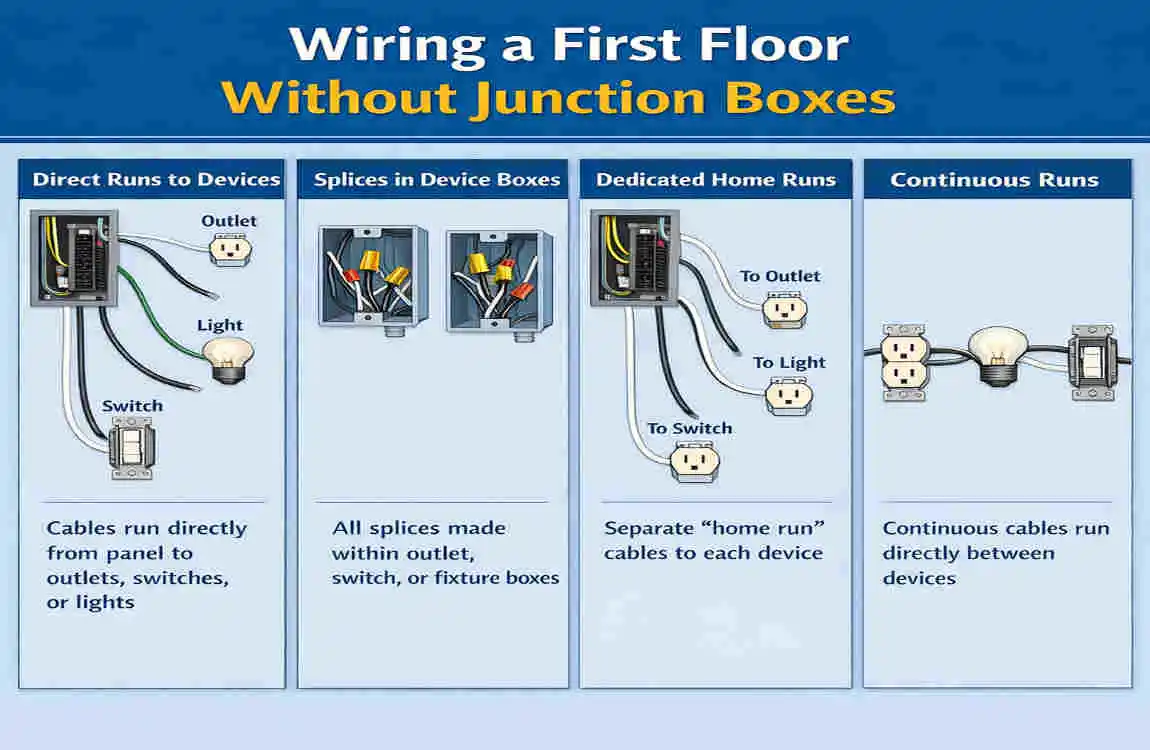
Yes, it is possible. Not every first-floor circuit needs a separate junction box.
Continuous Cable Runs
If a wire runs from one point to another with no splices along the way, a junction box may not be needed.
Device Boxes Can Handle Some Connections
Switches, outlets, and light fixtures already use approved electrical boxes. These boxes can sometimes handle the connections that would otherwise need a separate junction box.
Why Unnecessary Boxes Are Not Ideal
Adding boxes where they are not needed can make the system more complex. It can also create more places to inspect and more chances for mistakes.
Electrical Code and Safety Requirements
Electrical code matters a lot here. Even if a setup seems fine, it still has to meet local rules.
Approved Electrical Boxes
Any box used for wiring must be approved for the job. It should be the right size, type, and material for the circuit.
Box Fill Matters
If too many wires enter one box, it can become overcrowded. That creates heat, stress on wires, and a higher risk of loose connections.
Covers and Grounding
Boxes should have proper covers, and grounding must be handled correctly. These details are not optional. They are part of safe electrical work.
Accessibility Is Important
A junction box should not be permanently hidden behind drywall or other finished surfaces if it needs to remain accessible. That can cause problems during future repairs or inspections.
Safety note: Electrical wiring can cause shock, fire, or property damage. If you are unsure about a circuit, stop and call a qualified electrician.
Common First-Floor Junction Box Wiring Mistakes
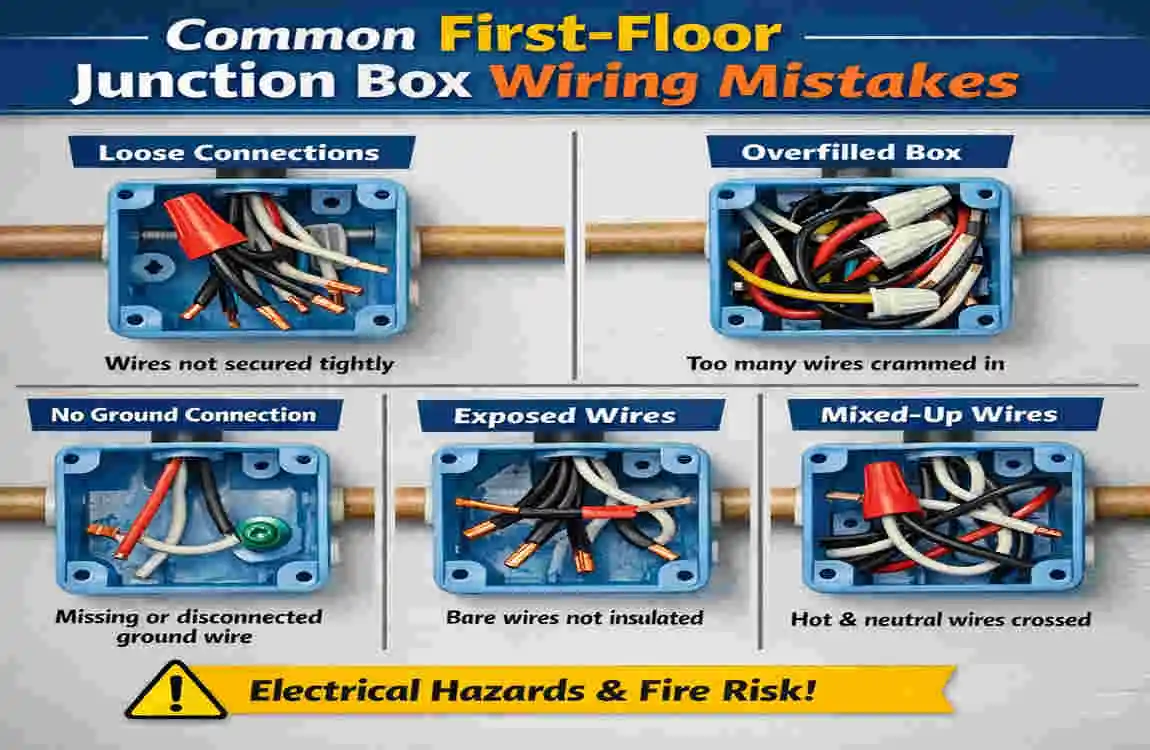
A few mistakes recur in home wiring.
Hiding Junction Boxes Behind Finished Walls
This is a big problem because inaccessible connections are hard to inspect or repair.
Overcrowding the Box
Too many wires in one box is unsafe and makes the wiring harder to manage.
Using the Wrong Box or Connector
Not every box works for every wiring setup. The box and connectors must match the cable size and system type.
Leaving Connections Exposed
Wire splices should never be left open. They need proper enclosure.
Ignoring Grounding
Grounding helps protect people and equipment. It should always be handled properly.
DIY Wiring Without Code Knowledge
Some electrical work is manageable for homeowners, but questionable wiring is better left to a licensed electrician.
FAQs About First-Floor Junction Boxes
Are junction boxes normally used in wiring the first floor?
They may be used when wiring needs connections or branches, but a first floor does not automatically require them.
Can a junction box be installed inside a wall?
Only if they remain accessible and comply with local code; hidden, unreachable boxes are often a problem.
Do all first-floor electrical circuits need junction boxes?
No. Continuous wiring runs may not need separate junction boxes.
Can a junction box be covered with drywall?
Usually no, if it becomes inaccessible. Local code should always be checked.
Are junction boxes required for lighting circuits?
Sometimes. It depends on how the circuit is wired and whether the fixture box already serves that purpose.
Can I install a junction box myself?
Basic DIY work may be possible, but if you are unsure, a licensed electrician is the safer choice.
How do I know if my first-floor wiring needs a junction box?
Check whether wires are being joined, whether the connection is accessible, and whether the setup meets electrical code.
| Wiring Aspect | Quick Explanation |
|---|---|
| Are junction boxes required? | They may be needed when electrical wires must be joined or redirected. |
| First-floor wiring | First-floor circuits can use junction boxes just like ground-floor circuits. |
| Main purpose | Junction boxes safely contain wire connections and protect them from damage. |
| Where used? | Common locations include ceilings, walls, attics, and accessible electrical areas. |
| Safety requirement | Boxes should remain accessible and properly covered; requirements vary by local electrical code. |
| When not needed | A continuous cable run with no connections may not require a junction box. |
| Key takeaway | The floor level itself does not determine whether a junction box is needed—the wiring layout and electrical code do. |
