
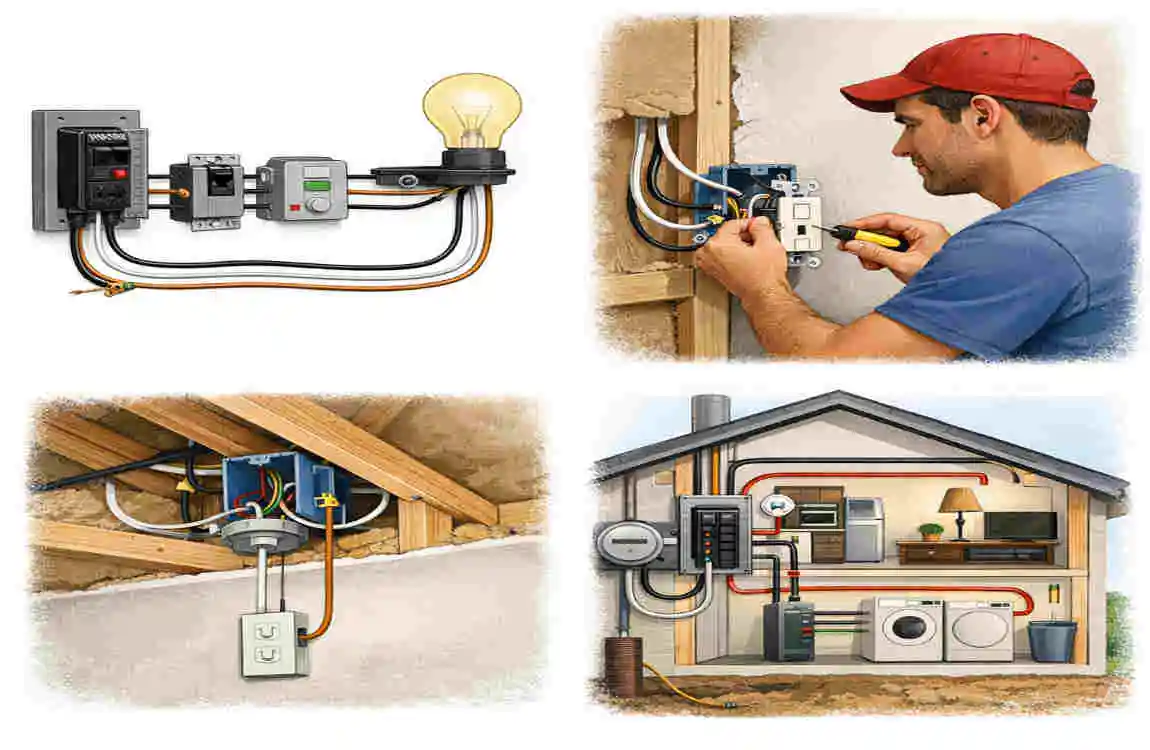
A household wiring system is the hidden network that keeps your home running every day. It powers your lights, outlets, appliances, fans, heating and cooling systems, and many of the devices you depend on without thinking.
If you are a homeowner, it helps to understand the basics of how this system works. You do not need to become an electrician. But knowing the main parts, the common problems, and the safety basics can help you protect your home and make better decisions.
What Is a Household Wiring System?
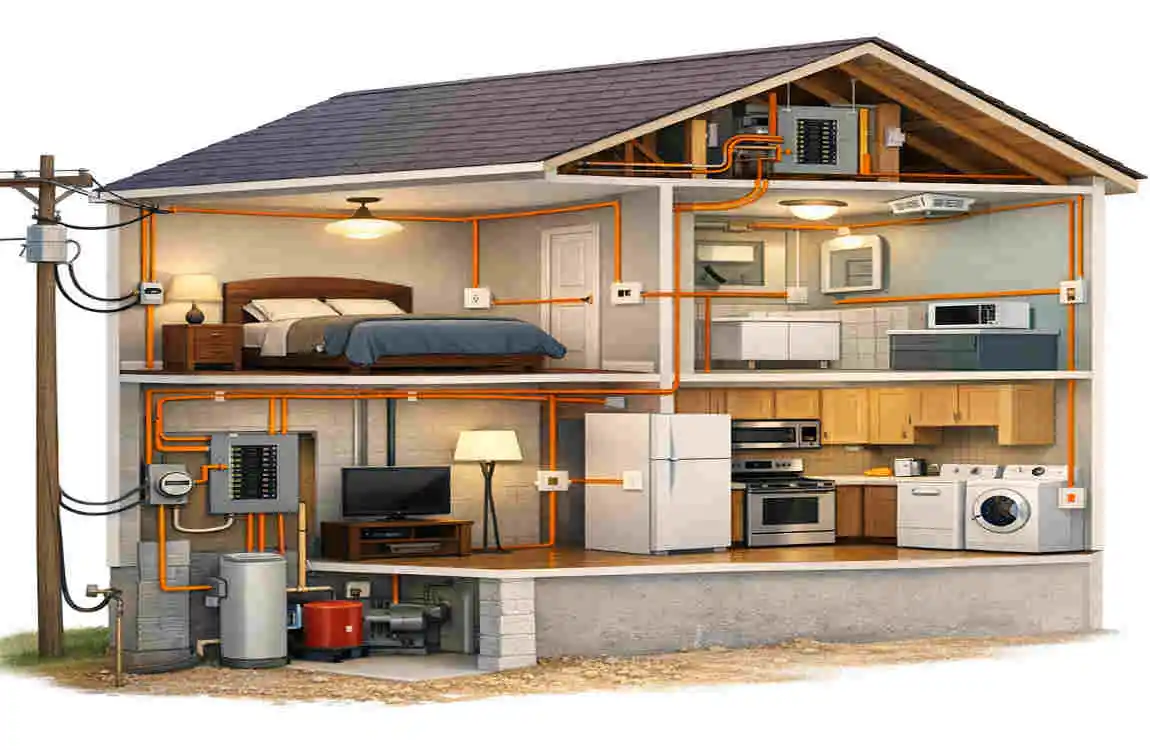
Definition of a Household Wiring System
A household wiring system is the full electrical setup inside a home that carries electricity from the power source to the places where you use it. That includes the breaker box, wires, switches, outlets, lighting, and appliance connections.
In simple terms, it is the system that safely carries electricity through your home. It starts where power enters the house and then spreads out through different circuits. Each circuit controls a specific area or type of appliance.
So when you turn on a lamp, plug in a phone charger, or run the washing machine, the wiring system is doing the work behind the scenes.
Why Is Proper Home Wiring Important?
Proper residential electrical wiring matters for several reasons.
First, it gives you reliable power. You want your lights to turn on when you flip the switch and your appliances to work without trouble.
Second, it helps prevent danger. Faulty wiring can lead to electric shocks, overheating, and even fires. That is why electrical safety is such a big deal in every home.
Third, a good system improves energy use. When wiring is done well, power flows more efficiently and with fewer problems.
Finally, modern homes need strong wiring support. Today’s homes use more devices than ever before, from kitchen appliances to smart home tools. A weak system may not keep up.
Main Components of a Household Wiring System
Electrical Service Panel (Breaker Box)
The electrical service panel, often called the breaker box, is the control center of your home’s electrical setup. Electricity enters the home, and the panel then sends it out through different circuits.
Inside the panel, you will find circuit breakers. These devices protect the home by stopping the flow of electricity when a circuit gets overloaded or short-circuits.
There are two main kinds:
- Main breaker: shuts off power to the entire home
- Individual circuit breakers: protect separate rooms or appliances
This part of the system is very important because it helps keep the entire house safe.
Electrical Wires and Cables
Wires carry electricity from one point to another. In a home wiring system, you usually hear about three basic wire roles:
- Hot wires: carry electricity to devices
- Neutral wires: send electricity back
- Ground wires: provide a safe path for extra electricity
These wires are covered with insulation, which is a protective layer that helps prevent shock and damage.
The insulation also helps the wire last longer and work safely inside walls, ceilings, and floors.
Switches and Outlets
Switches and outlets are the parts of the system you use every day.
A switch controls power to a light or fixture. When you flip it, you open or close the circuit.
An outlet gives you a place to plug in appliances and electronics. Different rooms may need different types of outlets depending on how they are used.
For example, GFCI outlets are important in wet areas like bathrooms, kitchens, garages, and outdoor spaces. They help reduce shock risk.
Light Fixtures and Appliances
Lighting is one of the most common uses of a house electrical system. Fixtures connect to wiring so that you can control lights with switches.
Large appliances often need their own circuits. That means your oven, dryer, water heater, or HVAC system may have separate wiring because they use more power than smaller devices.
This helps prevent overloaded circuits and keeps the system running smoothly.
Types of Household Wiring Systems
Traditional Wiring System
A traditional wiring system is often found in older homes. It usually uses older materials, simpler layouts, and fewer circuits than newer systems.
These systems may still work, but they can be less safe or less efficient if they have not been updated. Older homes sometimes need inspection because wiring can wear out over time.
Modern Electrical Wiring System
A modern household wiring system is designed to meet current power needs. It usually includes better safety devices, more circuits, and improved wire materials.
Modern systems are designed to handle more devices at once. They also support safer operation and better energy use.
If you live in a newer home, your electrical system is more likely to meet today’s safety and convenience standards.
Smart Home Wiring System
Smart homes need wiring that can support connected devices and automation. This includes smart lighting, security systems, sensors, and devices you can control through apps or voice commands.
A smart home wiring system often includes more low-voltage wiring and more planning for technology use.
This does not mean every home must be smart, but many homeowners now want the option. Good wiring makes that possible.
Common Types of Electrical Wires Used in Homes
Non-Metallic Cable (NM Cable)
NM cable is one of the most common types of wire used in residential electrical wiring. It is often used inside walls and ceilings in dry indoor areas.
It is popular because it is flexible, practical, and easy to install. But it is not the best choice for every situation, especially where extra protection is needed.
Armored Cable (BX Cable)
Armored cable has a metal jacket that provides extra protection. People often use it where wiring needs stronger shielding.
It can be useful in spaces where the cable might be exposed to more wear. The protective covering helps reduce damage.
Underground Feeder Cable
This type of cable is used for outdoor or underground electrical connections. It is made to handle moisture and soil conditions better than regular indoor wire.
It must be installed carefully because outdoor wiring has its own safety concerns. Water, digging, and weather can all affect it.
Low-Voltage Wiring
Low-voltage wiring carries less power and is often used for systems like:
- Internet and data lines
- Doorbells
- Security cameras
- Thermostat controls
This type of wiring does not power large appliances, but it is still an important part of many modern homes.
How Does a Household Wiring System Work?
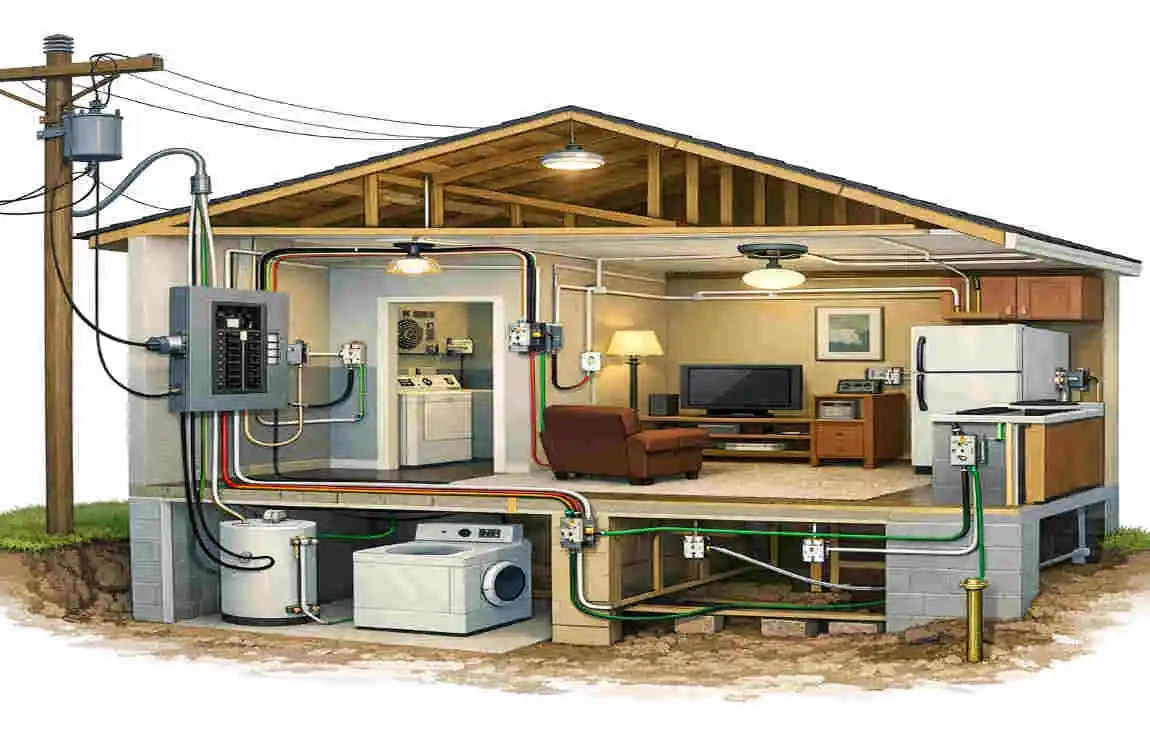
Electricity Flow From Power Source to Home
Electricity enters the house from the utility connection. From there, it moves to the meter, which tracks energy use.
Next, the electricity goes to the electrical panel. The panel then sends power through branch circuits to different rooms and devices.
This is how power gets from the outside source to your lights, outlets, and appliances inside the home.
Understanding Electrical Circuits
An electrical circuit is the path electricity follows. Homes mainly use parallel circuits, not series circuits.
In a parallel circuit, each part of the home gets its own path. That means one broken light or appliance does not shut down everything else.
This design works better for homes because it gives you more control and better safety.
Role of Grounding in Home Electrical Systems
Grounding is one of the most important safety features in any household wiring system.
It gives extra electricity a safe place to go if something goes wrong. That helps protect people from shocks and helps protect appliances from damage.
Without grounding, the risk of electrical danger would be much higher.
Basic Household Wiring Layout Explained
Main Electrical Circuit Layout
A typical layout begins with the service entrance, moves to the distribution panel, and then splits into individual circuits.
Each circuit serves a certain part of the home or a certain type of load. This keeps the system organized and easier to manage.
Lighting Circuit Wiring
Lighting circuits connect switches and fixtures. When you turn the switch on, you complete the circuit, allowing power to reach the light.
This is one of the most basic examples of how a house wiring system works in daily life.
Outlet Circuit Wiring
Outlet circuits bring power to the outlets in your walls. These circuits are planned so you can plug in electronics safely without overloading one single line.
Good outlet placement matters because it helps you use power more safely and conveniently.
Appliance Circuit Wiring
Large appliances often need their own dedicated circuit because they use more electricity than a lamp or phone charger.
Examples include:
- HVAC systems
- Water heaters
- Ovens
- Dryers
This helps reduce the risk of overload and keeps the appliance running as it should.
Electrical Safety Tips for Homeowners
Avoid Overloading Circuits
Overloading occurs when too many devices draw power from a single circuit. That can cause problems fast.
Watch for warning signs like:
- Flickering lights
- Tripped breakers
- Warm outlets
If you notice these signs, stop using the circuit heavily and get it checked.
Regularly Inspect Electrical Wiring
Check for signs of damage around outlets, cords, and visible wiring. Look for burning smells, loose connections, or discolored covers.
If something seems off, do not ignore it. Small warning signs can point to bigger problems with electrical wiring.
Use Safety Devices
Safety devices are there to protect your home.
Important ones include:
- Circuit breakers
- Surge protectors
- GFCI outlets
These tools help reduce the risk of fire, electric shock, and device damage.
Keep Electrical Areas Dry
Water and electricity do not mix. Keep outlets, cords, and devices away from sinks, tubs, and damp places.
This matters most in bathrooms, kitchens, laundry rooms, and outdoor areas.
Common Household Wiring Problems
Frequent Circuit Breaker Trips
If breakers trip often, the circuit may be overloaded or have a fault. This is one of the clearest signs of a problem.
The breaker is doing its job by cutting power, but the cause still needs attention.
Flickering or Dimming Lights
Lights that flicker or dim may point to loose wiring, weak circuits, or a failing fixture.
If it happens often, an electrician should check it.
Outdated Electrical Wiring
Older homes sometimes still use outdated systems that were not built for today’s power demands. That can create safety risks and performance issues.
Signs of outdated wiring include old panels, limited outlets, and frequent power issues.
Loose Electrical Connections
Loose connections are dangerous because they can heat up over time. That heat can damage wiring and increase the risk of fire.
This is not something to ignore or patch casually.
Household Wiring System Installation Process
Planning the Electrical Layout
Before installation begins, the wiring layout should be planned carefully. You need to know where power will be needed and how much the home will use.
This includes outlets, lights, appliances, and special features like smart devices.
Installing Electrical Boxes and Conduits
Electrical boxes hold switches and outlets. Conduits protect wiring in certain places and help guide cables safely.
Good placement makes future repairs and updates easier.
Running Electrical Wires
Wires must be routed correctly and protected along the way. This part must follow electrical rules and code requirements.
That helps keep the system safe and reliable.
Connecting the Electrical Panel
The panel is set up with breakers for each circuit. Each breaker needs to be labeled so you know what it controls.
Clear labeling makes the system easier to manage later.
Testing the Electrical System
Before the system is used, it should be tested for voltage, proper function, and safety.
Testing helps catch problems before they become serious.
Tools Used for Basic Electrical Work
Common Electrical Tools
A few basic tools are often used in electrical work:
- Wire cutters
- Wire strippers
- Voltage testers
- Screwdrivers
- Electrical tape
These tools help with simple electrical tasks and basic repairs.
Safety Equipment
Safety gear is just as important as the tools.
Useful items include:
- Insulated gloves
- Safety glasses
- Protective clothing
These help reduce risk when working near live electrical parts.
DIY Household Wiring vs Hiring a Professional Electrician
When DIY Electrical Work May Be Possible
Some small jobs may be manageable if you are experienced and careful. Examples include replacing a switch, changing a light fixture, or installing a cover plate.
But even small jobs need caution.
When You Need a Licensed Electrician
You should call a licensed electrician for major work like:
- New wiring installation
- Electrical panel upgrades
- Large repairs
- Rewiring older homes
These jobs involve real safety risks and should be done properly.
Benefits of Professional Electrical Work
A professional brings skill, safety, and code knowledge. That means better results and less risk of future problems.
You also get more confidence that the work will last.
How to Maintain a Household Wiring System
Schedule Electrical Inspections
Regular inspections help catch issues early. This is especially important in older homes.
An electrician can spot problems you might not notice on your own.
Upgrade Old Wiring Systems
If your system is outdated, upgrading can improve safety and help your home handle modern needs.
This is one of the smartest long-term home improvement moves you can make.
Monitor Electrical Usage
Watch how much power your home uses, especially in rooms with many devices.
Reducing waste and avoiding overload can help your system last longer.
Cost Factors for Household Electrical Wiring
Factors Affecting Wiring Costs
The cost of household electrical wiring depends on several things:
- Home size
- Number of circuits
- Material quality
- Labor costs
A larger home with more features usually costs more to wire.
Signs Your Home Needs Rewiring
You may need rewiring if you notice:
- Frequent electrical problems
- Old wiring systems
- Too few outlets
- Burning smells or tripping breakers
If these issues keep happening, the system may need an upgrade.
Benefits of a Modern Household Wiring System
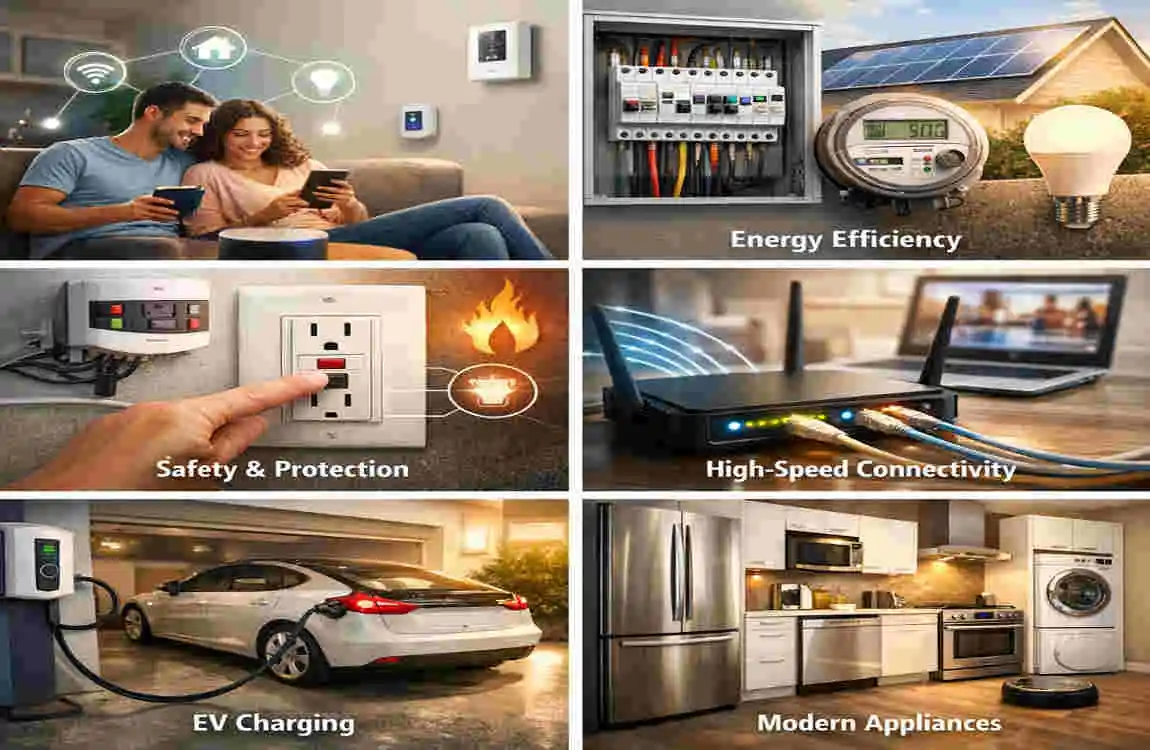
A modern wiring setup gives you many advantages.
It improves electrical safety and lowers the chance of dangerous failures. It also supports better energy efficiency, which can help manage utility use.
It gives your home better support for smart devices, new appliances, and future upgrades.
A newer system can also increase property value because buyers often prefer a home with updated electrical work.
Most of all, it gives you reliable power distribution, which is something every home needs.
Frequently Asked Questions
Q: What is a household wiring system?
A household wiring system is the network of wires, circuits, switches, outlets, and electrical panels that distribute electricity throughout a home.
Q: How long does household wiring last?
A properly installed system can last for decades, but older wiring should be inspected and may need replacement over time.
Q: Can I install a household wiring system myself?
Small tasks may be within the skill set of skilled homeowners, but a licensed electrician should usually handle full installation.
Q: What are the signs of faulty home wiring?
Common signs include burning smells, flickering lights, sparks, frequent breaker trips, and warm outlets.
Q: Why is grounding important in a household wiring system?
Grounding provides excess electricity with a safe path to follow and helps protect people from electric shock.
Q: How often should home electrical wiring be inspected?
Electrical inspections should be done regularly, especially in older homes or homes with ongoing electrical issues.
| Topic | Basic Information |
|---|---|
| What Is a Household Wiring System? | A network of wires, switches, outlets, and electrical devices that safely delivers electricity throughout a home. |
| Main Components | Includes electrical panels, circuit breakers, wires, switches, outlets, lighting fixtures, and grounding systems. |
| Electrical Panel | The central control point that distributes electricity to different circuits in the house. |
| Types of Wires Used | Common wires include live (hot), neutral, and ground wires, each serving a specific safety purpose. |
| Circuit Breakers | Safety devices that automatically shut off power when there is an overload or short circuit. |
| Common Wiring Types | Includes knob-and-tube (older homes), conduit wiring, and modern cable systems like NM (Romex). |
| Lighting Circuits | Separate circuits designed to power ceiling lights, lamps, and other lighting fixtures. |
| Outlet Wiring | Provides power connections for appliances and electronic devices through wall outlets. |
