
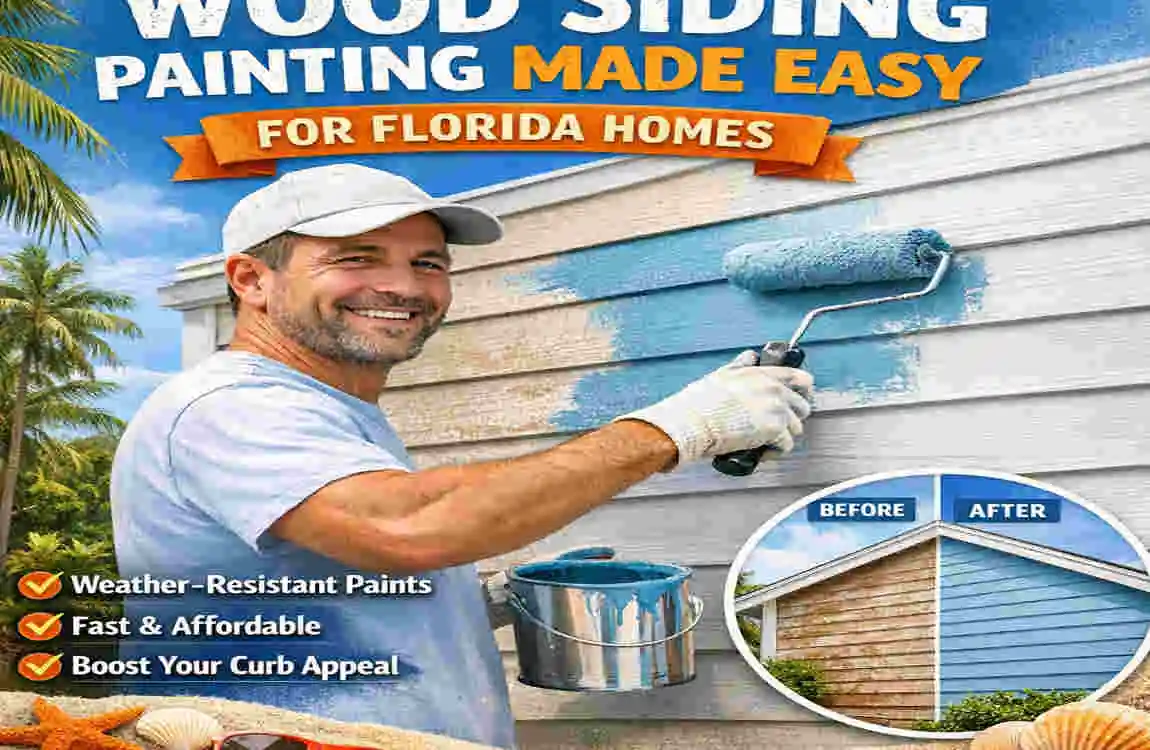
Painting the wood siding of a Florida home isn’t just a cosmetic upgrade— it’s a protective shield against the Sunshine State’s relentless elements. The hot sun, high humidity, sudden downpours, and occasional hurricanes all conspire to wear down wood faster than in most other states. A fresh coat of the right paint keeps water out, blocks harmful ultraviolet (UV) rays, and stops mold from taking root.
Why Florida Homes Need Special Wood Siding Care
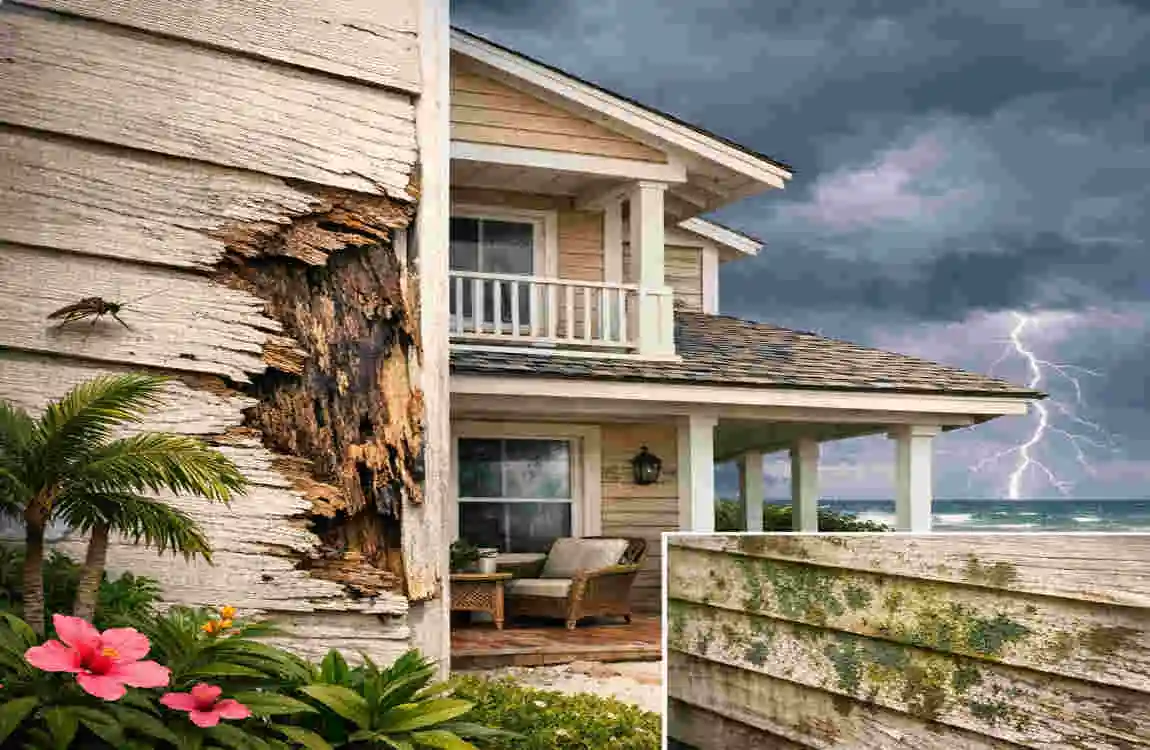
Effects of Humidity on Wood
Florida’s humidity is among the highest in the United States, often hovering around 70 % or more. When wood absorbs that moisture, it swells, warps, and can develop surface cracks. Over time, these cracks become entry points for rain, leading to rot.
- Swelling expands the grain, making paint peel easier.
- Drying cycles cause the wood to shrink, leaving gaps that trap water.
By painting wood siding promptly and using a moisture‑resistant coating, you limit the wood’s ability to soak up water, keeping it stable and strong.
UV Rays and Paint Damage
The Florida sun beats down with a UV index that can exceed 10 in summer months. UV radiation breaks down the pigments and binders in paint, causing fading, chalking, and loss of gloss.
A high‑quality UV‑resistant paint contains special additives that absorb or reflect UV light, extending the life of both color and protective film.
Mold, Mildew, and Moisture Problems
Warm, damp conditions create the perfect breeding ground for mold and mildew. If left unchecked, fungal growth can discolor wood, weaken its structure, and even affect indoor air quality.
A paint formulated with mold‑resistant coatings helps inhibit fungal spores from taking hold, especially when paired with proper surface cleaning before painting.
Benefits of Regular Repainting
Repainting on a regular schedule isn’t just about aesthetics; it’s proactive maintenance.
- Extended lifespan – Properly painted wood can last decades longer than untreated wood.
- Energy savings – Light‑colored, reflective paint reduces heat absorption, keeping homes cooler.
- Curb appeal – A fresh finish boosts resale value and makes the home more inviting.
Tools and Materials You’ll Need
Below is a quick reference list. Feel free to tick items off as you gather them.
CategoryTypical ItemsWhy It Matters
Paint Exterior acrylic latex (100 % acrylic) Stands up to humidity, UV, and mildew.
Primer Exterior oil‑based, or high‑performance latex primer Ensures paint adhesion and seals bare wood.
Application Tools Brushes (2‑in., 3‑in.), rollers (3‑in. nap), paint sprayer (optional) Different tools for trim, large areas, and speed
Cleaning Gear Pressure washer, garden hose, scrub brush Removes dirt, salt, and mildew before painting.
Surface Prep Sandpaper (80‑150 grit), putty knife, paint scraper Smooths rough spots and removes old paint.
Repair Supplies Wood filler, exterior caulk, backer rod Fills cracks, gaps, and seams.
Protection: Painter’s tape, drop cloths, plastic sheeting. Keeps landscaping and windows clean.
Safety: Gloves, goggles, respirator mask, sturdy shoes. Protects you from chemicals and debris.
Quick Checklist – Before you start, run through this short list:
- Verify you have all items in the table above.
- Check that the paint and primer are compatible (same base).
- Make sure your safety gear fits comfortably.
How to Prepare Wood Siding Before Painting
Inspect the Wood Siding
Walk the perimeter and look for rotted sections, loose boards, or nails that have popped out. Mark problem spots with a piece of chalk or a bright sticker. Early detection saves time later.
Remove Dirt and Mildew
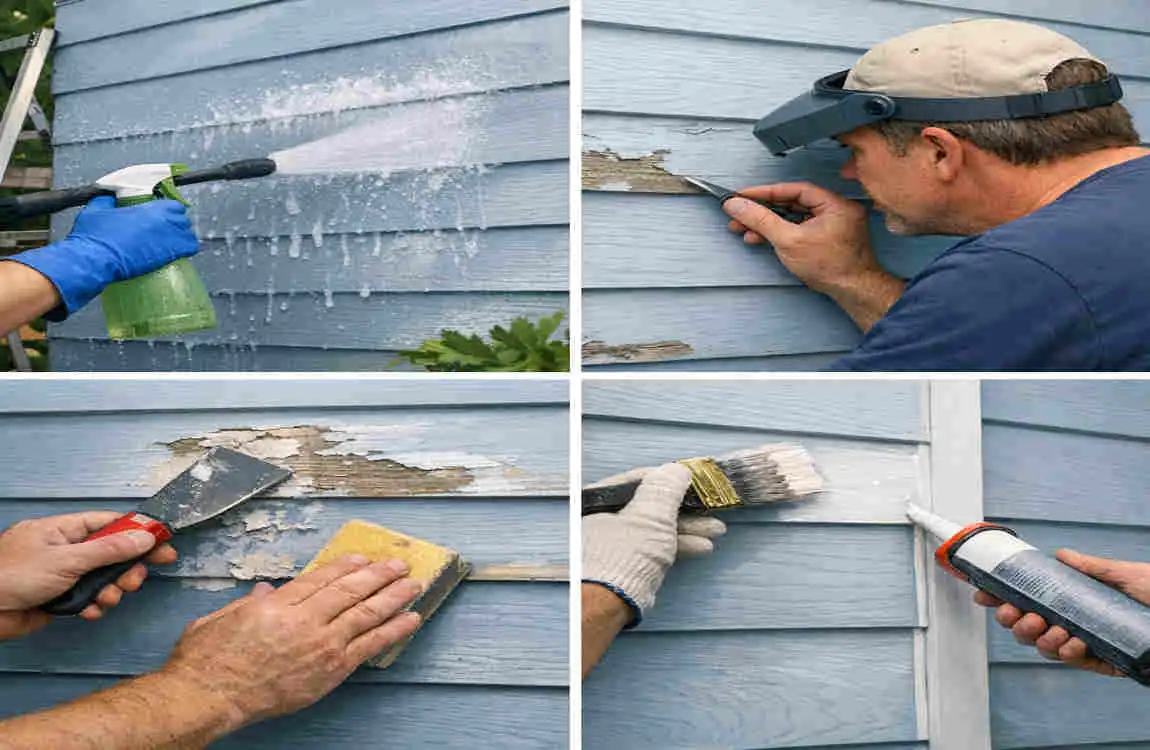
- Pressure-wash the entire wall at a low‑to‑medium pressure (around 1,500 psi).
- Use a mildew‑killing solution (½ cup bleach per gallon of water) for stubborn spots.
- Rinse thoroughly and let the surface dry completely—ideally for 24–48 hours, depending on humidity.
Scrape Loose Paint
A paint scraper or putty knife removes flaking or bubbling paint. Work from the bottom up so gravity doesn’t redeposit debris onto cleaned areas.
Sand Rough Areas
After scraping, sand the exposed wood to a smooth finish. Start with 80‑grit for heavy roughness, then finish with 120‑150 grit for a fine surface. Dust off the sanding residue with a tack cloth.
Repair Damaged Wood
- Fill cracks and small holes with exterior wood filler.
- For larger gaps, use caulk or a backer rod, then caulk.
- Replace any boards that are seriously rotted; paint over new wood as well.
Apply Exterior Caulk
Caulking around windows, doors, and trim seals gaps where water can seep behind the paint. Use a paint‑ready, mildew‑resistant silicone for the best durability.
Let the Surface Dry Completely
Even after the sun dries the exterior, moisture can linger deep in the wood. Use a moisture meter if you have one; aim for a reading below 12 % before priming.
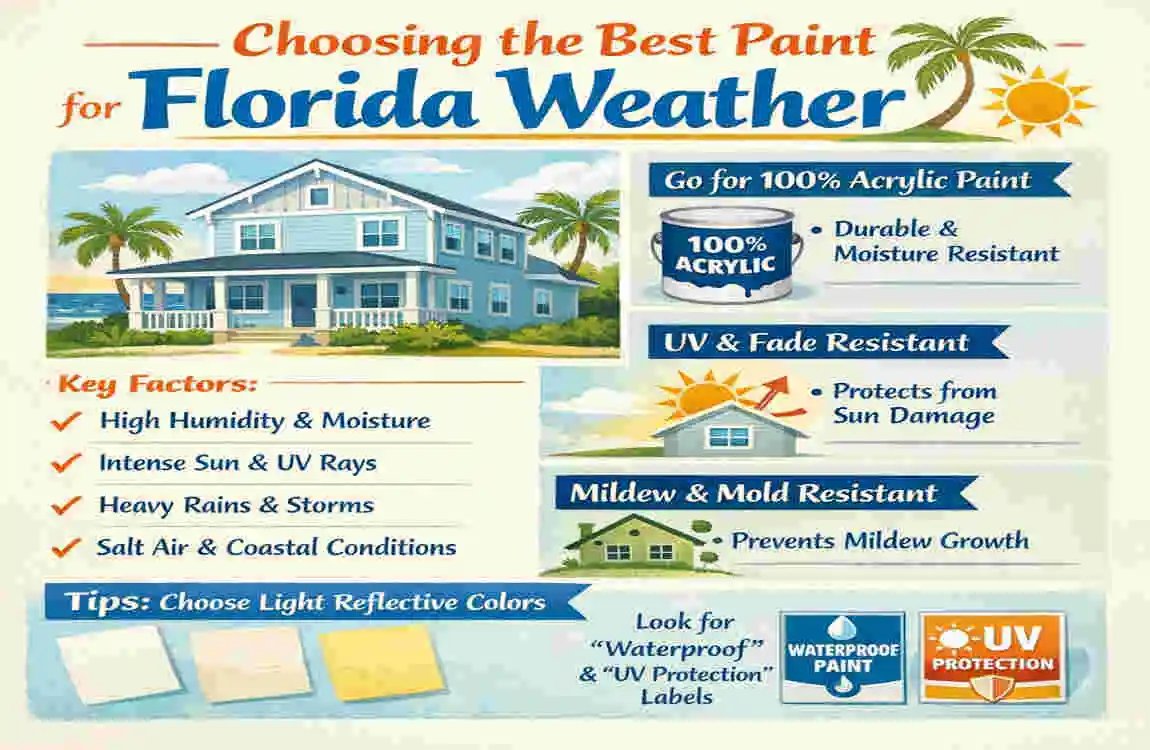
Choosing the Best Paint for Florida Weather
Acrylic Latex vs Oil‑Based Paint
Acrylic latex is the top choice in Florida because:
- It flexes with wood expansion and contraction.
- Dries quickly, reducing the window for mildew growth.
- Cleans up easily with water.
Oil‑based paints offer a harder finish but take longer to dry and emit stronger fumes—often more trouble than they’re worth in humid climates.
Satin vs Semi‑Gloss Finish
- Satin (around 30–40 % sheen) provides a soft look and hides minor surface imperfections.
- Semi‑gloss (50–70 % sheen) offers better water resistance and is easier to clean, making it ideal for high‑traffic trim and shutters.
Choose the finish based on the area: satin for large siding panels, semi‑gloss for trim and fascia.
UV‑Resistant Paint
Look for paint that lists UV inhibitors or UV‑blocking technology on the label. These additives absorb harmful rays, keeping colors vibrant for longer.
Mold‑Resistant Coatings
Some manufacturers add zinc pyrithione or similar agents that actively prevent mold spores from germinating. In Florida’s damp environment, this extra defense can be a lifesaver.
Popular Exterior Paint Colors
- Sun‑kissed Beige – blends with sandy surroundings.
- Coastal Aqua – fresh, light blue reminiscent of the Gulf.
- Classic White – reflects heat, keeping interiors cooler.
When selecting a color, consider the house’s architectural style and surrounding foliage. Test a small patch to see how the hue looks in midday sun versus shade.
Best Time to Paint Wood Siding in Florida
Ideal Temperature
Paint adheres best when the ambient temperature stays between 50 °F and 85 °F. Temperatures above 90 °F can cause the paint to skin too fast, leading to roller marks and poor film formation.
Avoid Rainy Days
Even a drizzle can trap moisture beneath the paint film, leading to blisters later. Check the local forecast for at least 24–48 hours of dry weather before you begin.
Morning vs Afternoon Painting
- Morning offers cooler temperatures and lower humidity, allowing the paint to level out nicely.
- Afternoon work can be useful for touch‑ups, but be mindful of the sun’s direct heat on the area you’re painting.
Seasonal Painting Tips
- Spring (March‑May) – Generally ideal; moderate temps and lower humidity.
- Fall (October‑November) – Another great window; cooler evenings help the paint cure slowly.
- Winter – Pick a warm day; avoid freezing nights.
- Summer – If you must paint, choose an early‑morning start, keep the job short, and have a rain‑plan ready.
How to Paint Wood Siding on House in Florida Step‑by‑Step
Protect Landscaping
Lay down drop cloths or plastic sheeting to shield plants, flower beds, and walkways. Secure edges with painter’s tape to prevent wind from lifting them.
Prime Bare Wood
- Stir the exterior primer thoroughly.
- Use a brush to cut in around trim, windows, and corners.
- Apply the primer with a roller (medium‑nap) for large panels, or a sprayer if you have one.
- Let the primer dry 2–4 hours (follow the manufacturer’s instructions) before moving on.
Cut In Around Trim
With a 2‑in. brush, paint a clean line along edges, corners, and any decorative trim. This “cut‑in” creates a crisp border and ensures no paint seeps under the siding.
Paint Large Sections
- Load the roller or sprayer evenly; avoid over‑loading to prevent drips.
- Work top‑to‑bottom in 4‑foot strips, overlapping each pass by about 6 in.
- If using a sprayer, maintain a 12‑in. distance and keep the nozzle moving to avoid buildup.
Apply a Second Coat
After the first coat dries (usually 4- 6 hours in Florida’s heat), apply a second coat for durability and even color. A second coat also seals any micro‑cracks left from the first application.
Final Inspection and Cleanup
- Walk the house with a bright flashlight in the evening; this reveals missed spots.
- Touch up any thin areas with a brush.
- Remove painter’s tape while the paint is still a bit tacky to avoid peeling.
- Clean brushes, rollers, and sprayer according to the paint manufacturer’s guidelines—usually warm, soapy water for latex paints.
Common Painting Mistakes to Avoid
Painting Wet Wood
Moisture trapped beneath paint causes bubbling and premature failure. Always verify the wood is dry with a moisture meter or, at the very least, give it a full 24‑hour drying period after cleaning.
Skipping Primer
Primer is the bridge between wood and paint. Without it, the paint can peel, flake, or fade much faster—especially on bare or patched wood.
Painting in Direct Sunlight
Sun‑bleached wood heats up quickly, causing the paint to dry too fast. This results in roller marks, uneven sheen, and reduced adhesion. Aim for shaded conditions whenever possible.
Ignoring Weather Forecasts
A sudden summer thunderstorm can ruin hours of work. Keep an eye on short‑term forecasts and have a tarpaulin or plastic sheeting ready to cover unfinished sections.
Applying Thick Paint Coats
Thick layers take longer to cure, trapping solvents that can cause blistering. Apply thin, even coats and let each dry fully before the next.
How Much Does It Cost to Paint Wood Siding in Florida?
Expense Estimated Cost
Exterior Paint $40–$90 per gallon
Primer $25–$60 per gallon
Brushes & Rollers $20–$80
Paint Sprayer Rental $50–$100/day
Professional Painting $2–$6 per sq. ft.
Total DIY Cost $300–$1,000+
Note: Costs vary based on house size, paint brand, and whether you already own tools. Hiring a professional generally raises the price but can save you time and ensure a flawless finish.
How to Maintain Painted Wood Siding
Annual Cleaning
- Use a garden hose with a soft‑spray nozzle.
- Add a mild detergent or the same bleach‑water mixture used for mildew removal.
- Rinse thoroughly and let dry before inspecting.
Inspect for Cracks
Walk the perimeter at least once a year. Fill any new cracks with exterior caulk to prevent water intrusion.
Remove Mold Quickly
If you spot mold, scrub it right away with a bleach solution. Let the area dry before touching up paint.
Touch Up Damaged Paint
Keep a small tin of leftover paint for touch‑ups. Small patches can be brushed on, then blended with a light sanding after drying.
Repaint Every 5–10 Years
Based on exposure and paint quality, schedule a full repaint or at least a re‑prime and topcoat every 5–10 years to keep the wood protected.
DIY vs Hiring a Professional Painter
DIY Painting Professional Painting
Lower cost Higher cost (but often worth it)
Time‑consuming (days‑to‑weeks) Faster (typically 1‑3 days)
Requires purchase or rental of tools Tools, scaffolding, and safety equipment provided
Good for small projects or touch‑ups Ideal for large homes, multi‑story properties
Learning curve, potential for mistakes Experienced crew, consistent finish
Bottom line: If you have a modest budget, enjoy the process, and only need to paint a single‑story home, DIY can be rewarding. For multi‑story homes, intricate trim, or when you need the job done quickly, a professional painter is the safer bet.
Frequently Asked Questions (FAQ)
What is the best paint for wood siding in Florida?
100 % acrylic latex exterior paint with UV and mold‑resistant additives is the top choice. It flexes with wood movement, dries quickly, and withstands moisture and sunshine.
When is the best time to paint wood siding in Florida?
Aim for dry days with temperatures between 50 °F and 85 °F. Spring, fall, and cooler winter days are usually ideal. Always check the forecast for at least 24–48 hours of rain‑free weather.
Do I need to prime wood siding before painting?
Yes. Primer seals bare wood, improves adhesion, and provides an even base for the topcoat, especially on patched or newly installed boards.
How often should wood siding be repainted in Florida?
Most homeowners repaint every 5–10 years, depending on sun exposure, paint quality, and how well the siding has been maintained.
Can I paint wood siding after pressure washing?
Absolutely—just be sure the siding dries completely (usually 24–48 hours) before you apply primer or paint. Painting on damp wood leads to poor adhesion.
| Topic | Information |
|---|---|
| Best Time to Paint | Spring, fall, or dry winter days with temperatures between 50°F–85°F (10°C–29°C). |
| Why Florida Needs Special Paint | High humidity, intense UV rays, heavy rain, and salt air can damage ordinary paint. |
| Recommended Paint | 100% acrylic exterior latex paint for excellent durability and moisture resistance. |
| Best Primer | Exterior bonding primer designed for wood and humid climates. |
| Surface Preparation | Wash siding, remove peeling paint, repair damaged wood, sand rough spots, and let the surface dry completely. |
| Painting Method | Use a brush for edges, a roller for flat sections, and a paint sprayer for large areas. |
| Number of Coats | Apply 1 coat of primer (if needed) and 2 coats of exterior paint for long-lasting protection. |
| Drying Conditions | Avoid painting before rain or during high humidity. Follow the paint manufacturer’s drying times. |
