
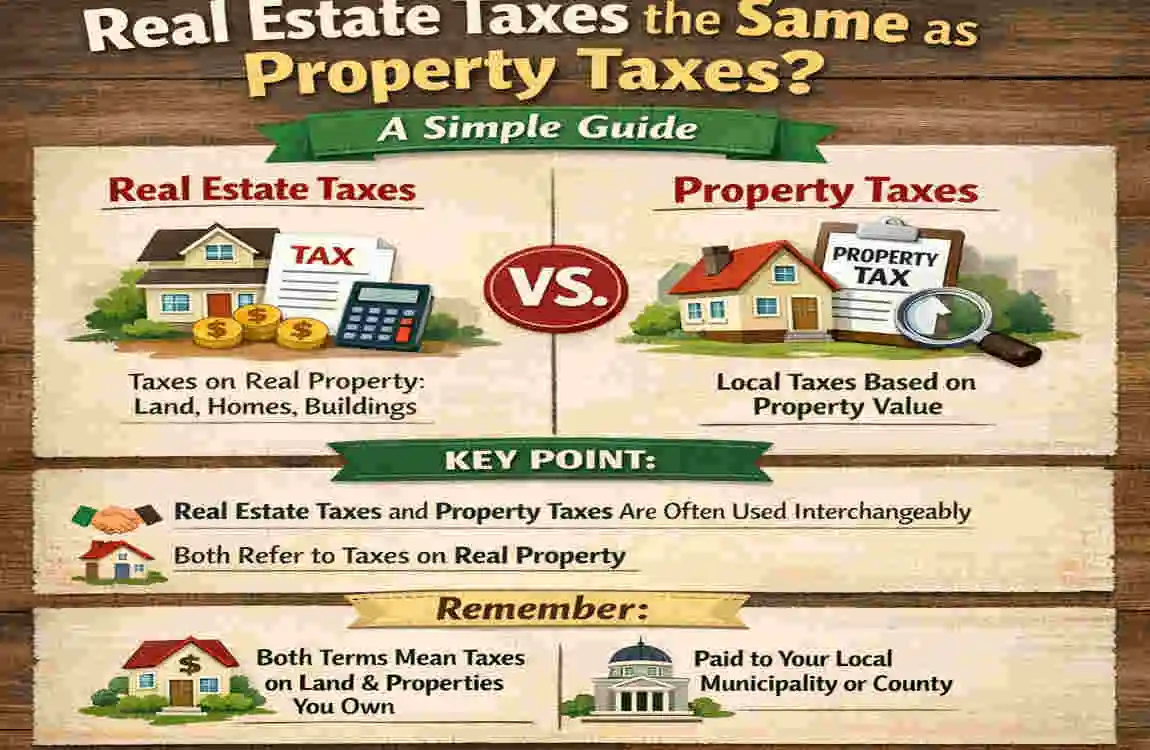
The short answer is this: in many U.S. situations, the terms are used interchangeably when people talk about land and buildings. But the exact meaning can still vary by location, local tax rules, and how a city, county, or lender uses the terms.
That is why it matters to understand what each term means. If you are a homeowner, buyer, seller, or investor, property taxes can affect your monthly payment, closing costs, and long-term affordability. A little clarity now can save you from a lot of confusion later.
Are Real Estate Taxes the Same as Property Taxes?
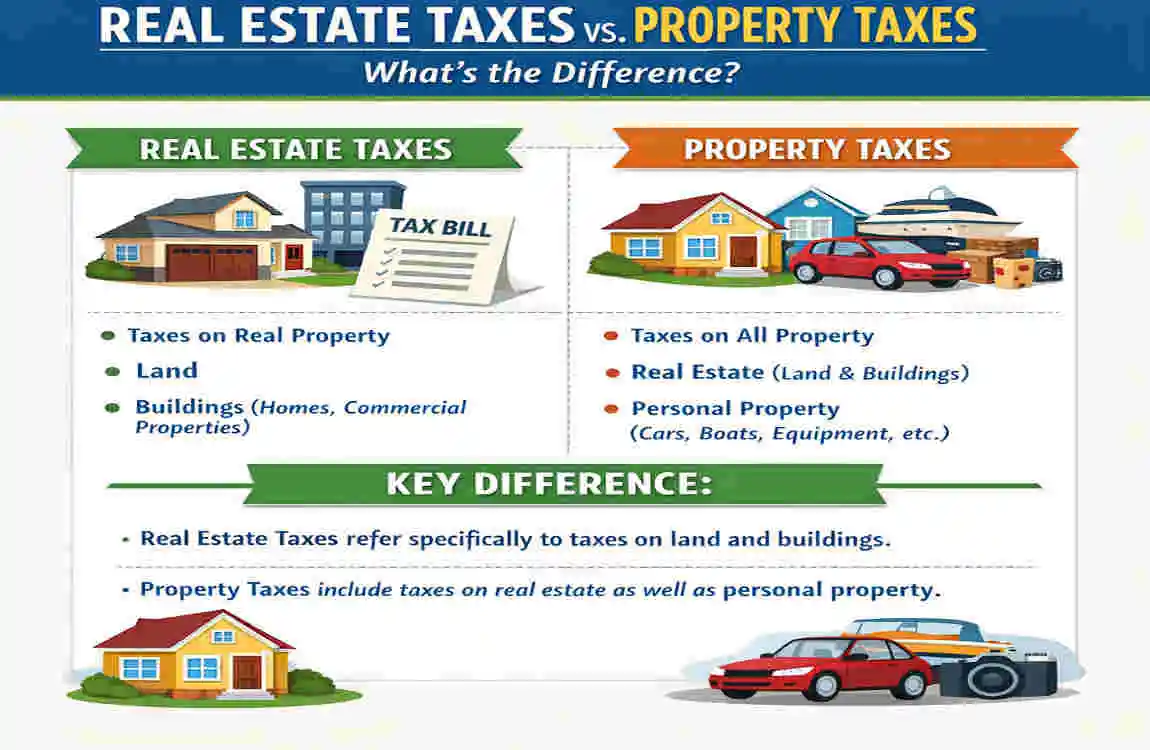
In everyday conversation, yes, they often mean the same thing when people are talking about a house, a piece of land, or a building.
Still, that does not mean the terms are always identical in every legal or tax setting. Some places use “real estate tax” to mean the tax on land and permanent structures. Other places use property tax as the broader term.
What real estate taxes usually mean
When people say real estate taxes, they usually mean taxes on real property. That means land and anything permanently attached to it, such as a house, garage, office building, or store.
So if you own a home, your real estate tax is usually the tax tied to that home and the land under it.
What property taxes usually mean
Property tax can be a broader phrase. In many places, it still refers to the tax on land and buildings. But in some jurisdictions, it can also include other forms of property subject to tax.
That is why the wording can feel different depending on where you live.
Why different people use different words
Government agencies, lenders, and real estate professionals may all use slightly different terms. A mortgage company might say property taxes. A county tax bill might say real estate taxes. A local assessor might use a more formal term.
The meaning is often the same, but the wording varies by office or document.
Why this distinction matters
If you are buying a home, the tax bill can change your monthly housing cost. If you are selling, the tax amount can affect closing adjustments. If you are investing, the tax expense can affect your return.
So yes, the terms are often close, but understanding the local meaning helps you avoid mistakes.
What Are Real Estate Taxes?
How real estate taxes work
Real estate taxes are local taxes charged on land and permanently attached structures. That usually includes houses, apartment buildings, commercial properties, and vacant lots.
Local governments assess the property’s value and apply a tax rate to that value. The result becomes the tax amount due.
Who collects them
In most cases, local governments collect real estate taxes. That may be a county, city, town, or other local authority, depending on where the property is located.
What the money pays for
Real estate taxes help fund important public services. These often include:
- Schools
- Roads and infrastructure
- Police and fire services
- Public parks
- Community programs
- Local government operations
So when you pay real estate taxes, you are helping support the services that keep the area running.
Who usually pays them
The people who normally pay real estate taxes include:
- Homeowners
- Commercial property owners
- Landowners
- Real estate investors
If you own the property, you are usually responsible for the tax bill, even if you also have a mortgage.
A simple way to think about it
Real estate tax is basically the local tax attached to your property ownership. If you own the land and building, you typically owe the tax.
What Are Property Taxes?
Simple definition of property tax
Property tax is a tax on property value. In many places, it means the same thing as when people talk about taxes on a home or land.
But the term can be broader than real estate tax, depending on the local law.
Real property vs personal property
This is where things can get a little more technical, but the idea is still simple.
Real property includes:
- Land
- Houses
- Buildings
- Permanent improvements
Personal property can include movable items. Depending on the state or local rule, that may include equipment, furniture, or business assets.
Not every place taxes personal property the same way so that the rules can differ.
Why tax treatment can vary
One state may tax only real property for homeowners. Another may tax both real property and certain personal property items for businesses. That is why you should not assume every tax office uses the same definition.
How property taxes are calculated
Property taxes are often based on a simple formula:
Property Tax = Assessed Property Value × Local Tax Rate
That sounds technical, but the idea is easy to follow.
Assessed value
The assessed value is the amount the tax authority assigns to the property for tax purposes. It may differ from the price you paid or from what you think the home is worth on the market.
Local tax rate
The tax rate is the percentage the local government applies to the assessed value.
Exemptions and deductions
Some owners qualify for exemptions or deductions. These can lower the amount they owe.
Assessment frequency
Some properties are reassessed every year. Others are reassessed on a different schedule. That is one reason tax bills can change even if you did nothing to the home.
A simple example
If a home has an assessed value of $200,000 and the local tax rate is 1%, the tax would be about $2,000 for that period, before any exemptions or other adjustments.
The exact math will depend on local rules.
Real Estate Taxes vs Property Taxes: Key Differences
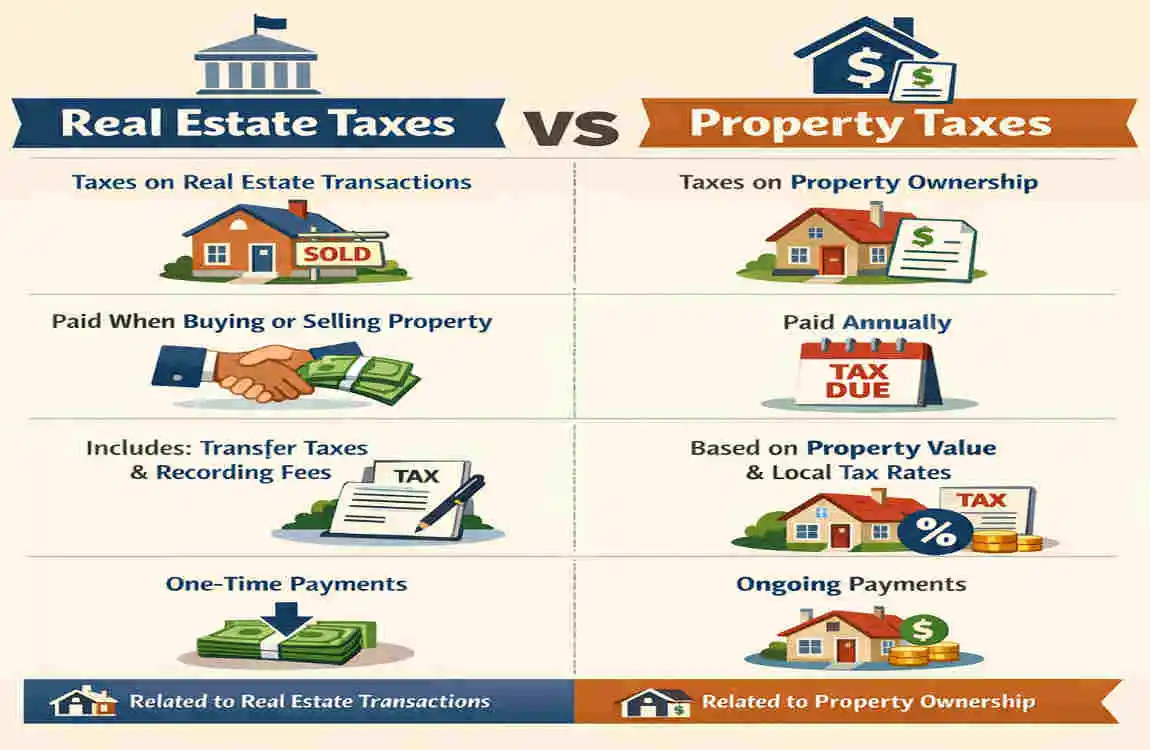
Here is a simple comparison to make the difference easier to see.
Feature Real Estate Taxes Property Taxes
Common meaning Tax on land and buildings Tax on property, often including real property
Applies to: Real estate. Depends on local laws.
Usually collected by Local government Local/state government, depending on the tax.
Based on value Usually Usually
Terminology Common in real estate and lending More widely used term
Rules Vary by jurisdiction Vary by jurisdiction
Are they actually different taxes?
In many places, not really. When people talk about a home, real estate tax is usually just a property tax on land and buildings.
But the legal meaning can still vary. That is why you should not assume the words always mean the same thing everywhere.
Why terminology matters
The wording matters because it may show up differently on:
- Tax bills
- County records
- Mortgage statements
- Closing documents
- Real estate contracts
If you know the local wording, you can read those documents more confidently.
The safest rule
If you are unsure, check the local tax authority. Their definition is the one that matters most for your property.
How Real Estate and Property Taxes Affect Homeowners
Impact on monthly housing costs
Property taxes are a real part of the cost of owning a home. Even if you pay them once or twice a year, they still affect your overall monthly budget.
If your mortgage lender collects taxes through escrow, that cost gets folded into your monthly payment. So your housing bill may be higher than principal and interest alone.
How escrow works
An escrow account lets your lender collect money each month for taxes and insurance. Then the lender uses that money to pay the bills when they are due.
This helps homeowners avoid a single large tax bill, but it also means the tax amount can affect monthly affordability.
Impact on buying a home
If you are buying a home, do not just look at the sale price. Check the current property tax amount too.
A home that looks affordable at first may become more expensive once taxes are added. This is especially important if the property will be reassessed after the sale.
Impact on selling a home
When you sell, property taxes are often prorated at closing. That means the buyer and seller each pay their share based on the time they owned the home during the tax period.
Closing practices can vary, so this is something to confirm with the title company or closing agent.
Impact on real estate investors
For investors, property taxes are one of the most important operating expenses. They affect cash flow, net income, and long-term return.
If taxes rise, profitability can drop. If the property is reassessed at a higher value, the investment numbers may change quickly.
What happens if taxes are not paid
If property taxes are not paid, the owner may face:
- Late fees
- Interest charges
- Tax liens
- Collection actions
- Foreclosure or tax sale consequences, depending on local law
That is why tax bills should always be taken seriously.
How homeowners can stay prepared
A smart homeowner does not wait until the bill is due. Instead, they plan for taxes as part of the yearly cost of ownership.
That makes the tax less stressful and easier to manage.
How to Calculate and Manage Property Taxes
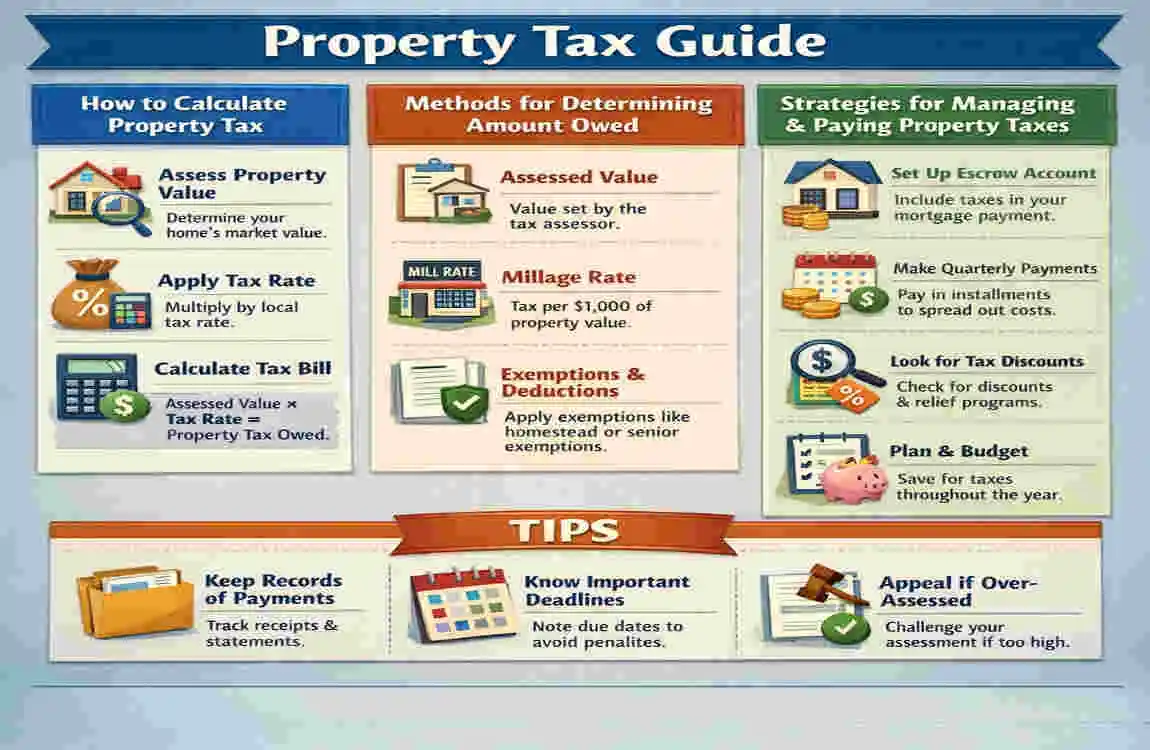
Basic property tax formula
Here is the simple idea again:
Property Tax = Assessed Property Value × Local Tax Rate
That is the core formula, but the actual bill may also include exemptions, special assessments, or local add-ons.
A simple hypothetical example
Let’s say a property is assessed at $250,000 and the local tax rate is 1.2%.
The estimated tax would be:
$250,000 × 0.012 = $3,000
That gives you a rough idea of what the owner might owe before exemptions or other adjustments.
How homeowners may reduce their tax burden
There are a few common ways homeowners may lower their taxes, depending on local rules.
Check for exemptions
Some areas offer exemptions for homeowners, seniors, veterans, or primary residences.
Review assessment notices
If the assessed value seems too high, review the notice carefully. Mistakes can happen.
Appeal if needed
If the assessment looks wrong, you may be able to appeal it. The process varies by location.
Keep records
Keep documents that support exemptions or accurately reflect property details. Good records can help if you need to question a tax bill.
What happens if taxes are not paid
If property taxes go unpaid, the situation can get serious fast.
You may face:
- Late charges
- Interest
- Tax liens
- Collection steps
- Possible foreclosure, depending on the law in your area
Why tax management matters
Managing taxes well is part of responsible ownership. It keeps your budget stable and helps you avoid costly problems later.
A home may be a great investment, but taxes are part of the real cost of owning it.
FAQ: Real Estate Taxes and Property Taxes
Are real estate taxes the same as property taxes?
Usually, yes. The terms are often used interchangeably to refer to taxes on land and buildings, but their exact meanings can vary by jurisdiction.
Is property tax the same as real estate tax?
Most of the time, yes, when you are talking about a house or land. Still, local definitions can differ.
Are real estate taxes paid monthly or yearly?
They are usually billed annually or semiannually. If you have a mortgage, your lender may collect the money monthly through escrow.
Who determines property tax rates?
Local taxing authorities usually set the rates. The exact office depends on the city, county, or state rules.
Can property taxes increase?
Yes. Taxes can increase because of reassessments, higher local rates, new improvements, or changes in local rules.
Do renters pay property taxes?
Renters usually do not pay the tax bill directly. However, the landlord may pass some of that cost into the rent.
Are property taxes deductible?
That depends on your personal tax situation and current tax law. Always check the rules that apply to you.
How can I find out how much property tax I owe?
Check your property tax bill or contact the local assessor or tax collector’s office.
| Term | Simple Meaning | What It Covers |
|---|---|---|
| Real Estate Taxes | Taxes charged on real estate you own | Land and buildings |
| Property Taxes | A broader term for taxes on property | Real estate and, in some places, personal property |
| Who Pays? | Usually the property owner | Homeowners, landlords, or businesses |
| How Calculated? | Based on assessed property value | Local tax rate × assessed value |
| Where Used? | Commonly funds public services | Schools, roads, police, and local services |
| Are They the Same? | Often used interchangeably | The exact meaning depends on local laws |
