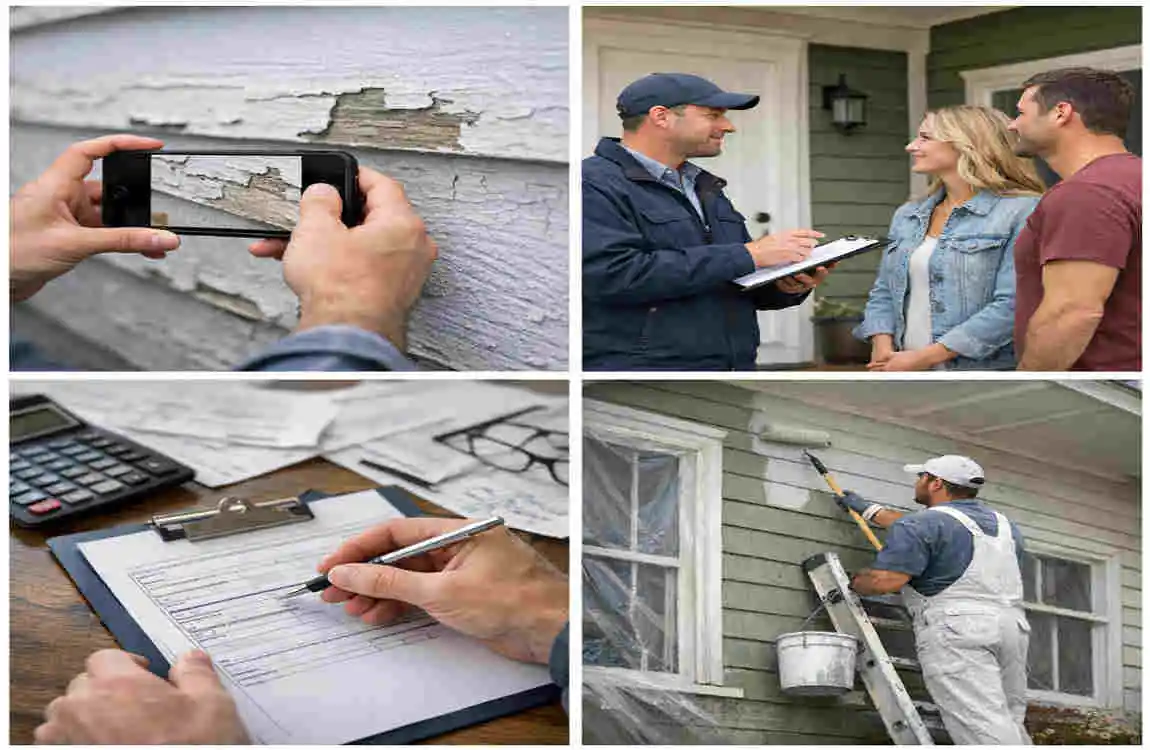
You walk outside the morning after a hard storm, coffee in hand, expecting to see a few leaves on the lawn and maybe a loose branch near the driveway. Instead, you notice something else. The exterior paint on your home is peeling, cracking, or scuffed in spots that were fine a day ago.
Your first thought is usually simple: Will my insurance pay for this?
That question has become even more important in 2026, when home maintenance costs are still climbing. Labor is more expensive. Paint materials cost more than they used to. Even a standard exterior repaint can run into the thousands. So it makes sense that many homeowners are searching for the same answer: Does home insurance cover exterior painting?
The short version is this: usually not for normal upkeep, but sometimes yes when the paint damage comes from a covered event. That difference matters more than most people realize.
Many homeowners assume that if the outside of the house is damaged, the policy should automatically step in. But insurance does not work like a home maintenance plan. It is designed mainly for sudden, accidental damage, not for aging, fading, or routine repainting. That is where confusion starts, especially after storms, hail, wind, falling tree limbs, or vandalism.
What Home Insurance Typically Covers

Before you can answer whether paint damage is covered, it helps to understand what a standard homeowners policy is actually built to do.
Dwelling Coverage: The Part Most Relevant to Exterior Paint
The most important section for this topic is dwelling coverage. This protects the physical structure of your home, including the roof, walls, attached garage, and other built-in features.
If a covered peril damages the siding or exterior wall surface, the insurer may also pay for related painting work needed to repair that covered damage. The key point is this: insurance usually covers the damage caused by the event, not painting as a routine improvement.
Covered perils often include things like:
- Fire
- Windstorm
- Hail
- Lightning
- Vandalism
- Falling objects
- Damage from vehicles or aircraft
So if hail damages your siding and the repair requires repainting part of the exterior, the painting may be included in the broader covered repair.
Personal Property, Liability, and Loss of Use
A homeowner’s policy does more than protect the structure.
Personal property coverage helps replace belongings inside the home if a covered event damages them. This does not usually affect exterior painting, but it is still part of the full policy package.
Liability coverage may help if someone gets hurt on your property and you are legally responsible. In rare situations, peeling exterior paint could become part of a liability issue, especially if it creates a safety problem. That said, if the issue came from long-term neglect, the insurer may push back.
Loss of use coverage helps cover temporary living expenses if your home becomes uninhabitable after a covered loss. This also does not directly cover painting costs. Still, it matters when major exterior damage is tied to a larger insurance claim.
Why Policy Type Matters
Most homeowners have an HO-3 policy, which is the most common form. It generally covers the dwelling on an open-perils basis, meaning the structure is covered unless a peril is specifically excluded.
An HO-5 policy offers broader protection and is often considered more comprehensive. That can matter when a repainting issue is tied to a structural loss and the coverage language is more favorable.
Policy Type Coverage Scope Exterior Paint Relevance
HO-3 (Special Form) Open perils on dwelling, Possible for storm-related or accidental damage tied to a covered claim
HO-5 (Comprehensive) Broader all-risk style protection on dwelling and often contents. Broader chance of repaint-related coverage when damage is linked to a covered loss
What Insurance Does Not Treat as Coverage
This is where many claims fall apart.
Home insurance does not usually cover:
- Paint is fading from sun exposure
- Peeling caused by age
- Chipping from poor prep work
- Routine repainting every few years
- Deferred maintenance
That means if your house looks worn and needs fresh paint, that is usually your responsibility as a homeowner.
So when people ask, ” Does home insurance cover exterior painting, the real answer often depends on one thing: Did a covered, sudden event cause the paint damage, or is it just ordinary maintenance?
Does Home Insurance Cover Exterior Painting? The Direct Answer
The Straight Answer
In most cases, standard home insurance does not cover exterior painting when the job is purely cosmetic or part of regular upkeep.
Insurance companies generally treat exterior painting as maintenance, not as a covered repair. Homes age. Paint fades. Surfaces crack over time. Weather exposure slowly wears down almost every exterior. Those conditions are expected, so insurers usually exclude them.
When the Answer Can Change
There are important exceptions.
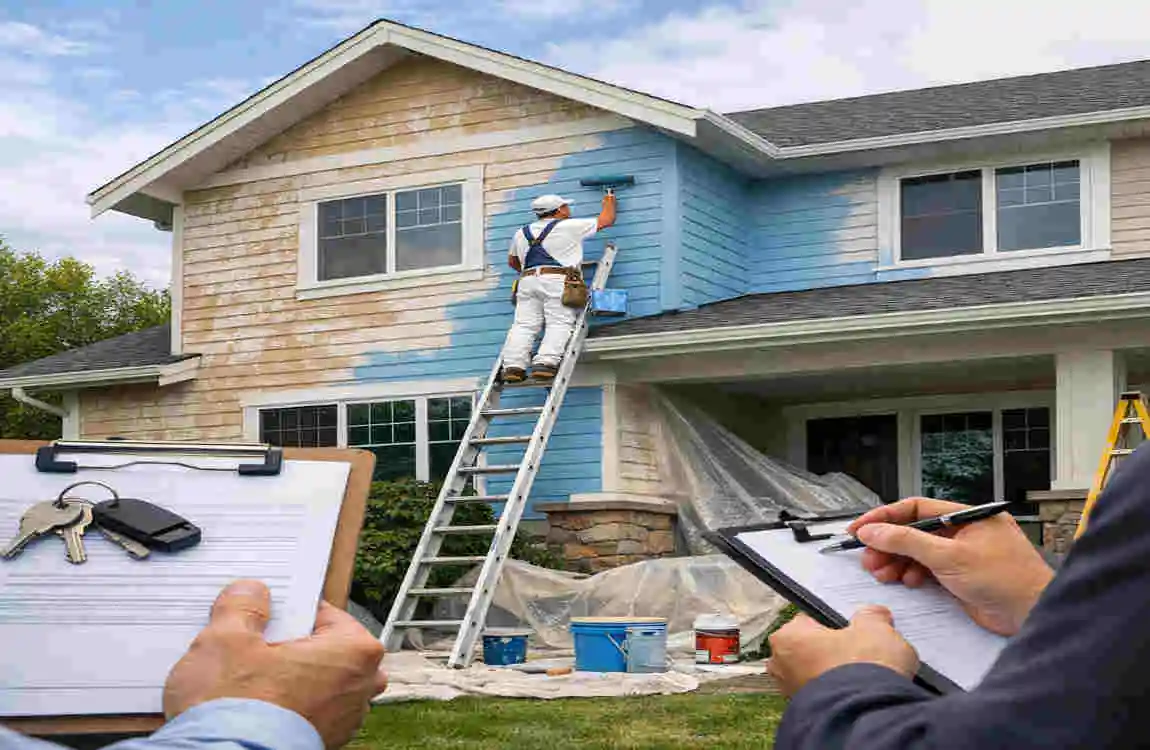
If the paint damage happens because of a covered peril, your policy may pay for the paint work that is necessary to restore the damaged area. In other words, the insurer is not paying because your home “needs paint.” It is paying because a covered event damaged part of the structure, and repainting is part of the repair.
Here are some real-world triggers that can sometimes lead to covered paint-related claims:
- Vandalism or malicious mischief
- Falling objects, such as tree limbs during a storm
- Vehicle impact into the house or attached structure
- Hail or wind damage that cracks, chips, or strips the painted surface
- Fire or smoke damage affecting exterior finishes
Why Policy Language Matters So Much
This is the part you do not want to skip.
Two homeowners can have very similar paint damage and get different outcomes based on:
- Their policy form
- Their deductible
- Their insurer’s adjuster’s findings
- State matching rules
- Whether the damage is considered cosmetic or functional
For example, one policy may cover repainting only the visibly damaged area. Another may pay to repaint an entire side of the home if a patch would look obviously different, and state law supports a matching requirement. But you cannot assume that will happen automatically.
If you are asking, “Does home insurance cover exterior painting?” always tie the question back to your policy wording. The phrase to focus on is not just “painting.” It is a painting required because of covered property damage.
That small distinction is often the difference between an approved claim and a denial.
Common Exclusions for Exterior House Painting
Even when homeowners believe their exterior painting claim is reasonable, insurers often deny it because the issue falls under a standard exclusion.
Wear and Tear Is the Biggest Exclusion
The most common reason for denial is simple: normal wear and tear.
Paint naturally fades, cracks, and peels over time. Sun exposure, seasonal temperature swings, moisture, and age all contribute to the breakdown of exterior finishes. Insurance companies expect this to happen eventually, so they do not treat it as sudden damage.
If your house has not been painted in many years and the finish is failing slowly, that is almost always considered a maintenance issue.
Neglect and Poor Upkeep Can Hurt a Claim
If the insurer believes the damage worsened due to neglect, that can also lead to a denial.
For example, if you knew water was getting behind old siding or that caulking had failed, but never addressed it, the insurer may say the paint damage was preventable. Home insurance is designed for accidents and sudden losses, not for problems that build up when maintenance is postponed.
Pests, Rot, and Hidden Moisture Problems
Paint damage is a symptom of another issue.
If termites, carpenter ants, wood rot, or trapped moisture are causing the paint to bubble or peel, your insurer may reject the claim. That is because these are usually seen as ongoing conditions rather than sudden perils.
The same logic often applies to mold, mildew, and gradual water intrusion.
Earth Movement, Flooding, and Separate Policy Risks
Some homeowners are surprised to learn that major natural events are not always included in a standard homeowners policy.
Flood damage usually requires a separate flood policy.
Earthquakes and earth movement often require separate endorsements or policies.
If floodwater or shifting ground damages your exterior finish, your standard policy may not cover the damage unless you add the right protection in advance.
This matters especially in coastal states and high-risk weather regions, where policy terms can be stricter and storm-related exclusions may be broader.
Common Myths About Painting Claims
A lot of confusion comes from misunderstandings like these:
- “Any weather damage qualifies.”
- False. The damage must usually come from a sudden covered event, not from ordinary exposure over time.
- “If one wall is damaged, the insurer must repaint the whole house.”
- Usually false. Many policies pay only for the affected area, unless state-matching rules or policy language support broader replacement.
- “If paint looks bad after a storm, that proves the storm caused it.”
- Not necessarily. The insurer may say the storm only exposed existing wear rather than caused new damage.
- “Cosmetic damage is always covered if it happened suddenly.”
- Not always. Some policies limit or exclude purely cosmetic damage, especially if the function was not affected.
Could Endorsements Help?
Sometimes, yes.
Some insurers offer endorsements or add-ons that expand how repairs are handled. A matching endorsement, roof/siding appearance coverage, or a broader dwelling option can improve the odds that paint-related repairs are covered after a loss.
The details vary by insurer, so it is worth checking your declarations page and asking whether you have any endorsements related to:
- Matching materials
- Extended replacement cost
- Ordinance or law coverage
- Special wind/hail provisions
- Cosmetic damage coverage
If you only remember one takeaway from this section, let it be this: home insurance is not a repainting plan. It is there for covered losses; exclusions define the line.
When Insurance Might Pay for Exterior Painting
Let’s look at the situations where insurance may help.
Storm Damage That Affects Painted Surfaces
This is the most common approved scenario.
A windstorm, hail event, or falling branch damages siding, trim, stucco, or another painted exterior surface. Once the damaged material is repaired or replaced, repainting may be necessary to restore that area.
In this case, the insurer is not paying for a voluntary color refresh. It is paying because the painting is part of the restoration of covered structural damage.
For example, hail may leave cracks or chips in painted fiber cement siding. If the siding panels need replacement, the insurer may also cover the labor and materials to paint the new panels, ensuring the repair is complete.
Vandalism and Intentional Damage
If someone sprays graffiti on your home, scratches painted surfaces, or causes other intentional exterior damage, vandalism coverage may apply.
This can include repainting or cleaning, if needed, to fix the covered damage. As always, the event must be documented and reported promptly.
Falling Objects and Accidental Impact
A large tree limb, ladder, sign, or other object that strikes the house can cause exterior damage that includes scraped or cracked paint.
The same idea applies to a vehicle impact, even if the vehicle belongs to a guest, delivery driver, or a household member. The main issue is whether the policy recognizes the impact as a covered event and whether the paint damage is part of the structural repair.
Fire, Smoke, and Related Exterior Repairs
Fire claims can involve more than obvious burn marks.
Smoke, heat, and extinguishing efforts may damage parts of the exterior finish. If the exterior surface needs repair and repainting due to a covered fire loss, that painting work may be included.
The Matching Issue: One Area or a Whole Side?
This is where many homeowners get frustrated.
Suppose one portion of your siding is damaged, repaired, and repainted. If the new paint does not match the rest of the home, will the insurer pay to repaint everything to make it look consistent?
The answer depends on:
- Your policy wording
- Your state’s insurance rules
- Whether the mismatch is considered significant
- Available materials and paint matching options
- Any endorsements you purchased
In some states, insurers may need to pay for a reasonable uniform appearance, especially when matching the old material is impossible. In other places, they may only pay for the directly damaged section.
So yes, you may hear that insurers “cover the whole side” in some situations. But treat that as a possibility, not a guarantee.
Less Common Liability Scenarios
There is also a narrower path through liability coverage.
Imagine severely peeling exterior paint flakes that contribute to an injury or property damage claim. Liability coverage might respond if you are legally responsible. But if the condition existed because of obvious neglect, your insurer may argue that you failed to maintain the property properly.
This is less common than a storm claim, but it shows that paint issues can sometimes be covered under other parts of the policy.
Hypothetical Claim Payout Examples
The numbers below are only broad examples, but they illustrate how insurers often view paint-related damage as part of a larger covered repair.
Damage Type Avg. PayoutPaint Coverage Likelihood
Hail $8,000 High when siding or trim repair requires repainting
Wind $5,500 Medium to high, depending on direct structural damage
Falling Tree Limb $6,700 High if impact damages painted exterior materials
Vandalism $3,200 Medium if repainting is needed to remove/repair damage
How to File a Painting-Related Insurance Claim
If your case qualifies, move quickly and stay organized.
Document the Damage Right Away
Take clear photos and videos from several angles.
Get close-up images of cracked, chipped, or stripped paint, but also take wider shots showing where the damage sits on the house. If there was a storm, save weather reports, timestamps, and anything else that supports the date of loss.
Try not to clean, scrape, or repaint anything before the insurer has a chance to inspect it unless emergency measures are necessary to prevent further damage.
Review the Policy Before You Call
Look at the declarations page and the section explaining covered perils, exclusions, deductibles, and endorsements.
You do not need to become an insurance expert overnight. You want to understand whether the issue appears tied to a covered event and whether your deductible is lower than the likely repair cost.
Notify the Insurer Within the Required Timeframe
Most policies require prompt notice of a claim. In some cases, state law or policy allows longer reporting windows, but waiting remains risky.
Call your insurer, use the carrier’s mobile app, or file online if that is available. Be factual and calm. Explain what happened, when you noticed it, and why you believe the damage is connected to a specific event.
Get Professional Estimates
Ask a licensed contractor or qualified exterior painter to inspect the damage and provide a written estimate.
If the problem involves siding, stucco, brick coating, or specialty finishes, choose someone who understands both repair and repainting. A solid estimate demonstrates that the paintwork is not just cosmetic but part of a necessary repair.
Review the Adjuster’s Findings Carefully
When the adjuster issues a decision, read it line by line.
If the claim is approved only in part, check whether the insurer is paying for surface prep, primer, and matching work. If the claim is denied, look for the exact reason. It may cite wear and tear, pre-existing damage, or lack of direct physical loss.
If you disagree, you can usually appeal by submitting more photos, contractor opinions, and weather documentation.
Real-Life Examples and Case Studies
Sometimes it helps to see how these claims play out in the real world.
Approved After Hail Damage
A homeowner in a storm-prone area noticed dents and chipped paint on the fiber-cement siding after a severe hailstorm. The siding panels on one side of the home were cracked, and the surface coating had failed in several places.
The insurer sent an adjuster, confirmed storm damage, and approved the repair. Because the damaged siding had to be replaced, the insurer also paid for the repainting needed to finish the job. The homeowner did not have the entire house repainted, but the damaged side was covered under the claim.
This is a classic example of insurance covering paint work because it was tied to structural damage from a covered peril.
Denied for Sun-Faded Paint
Another homeowner filed a claim after noticing that the home looked patchy, chalky, and badly faded. The owner believed a recent heat wave and seasonal storms had caused the problem.
The insurer inspected the property and denied the claim. The report stated that the paint deterioration showed signs of long-term weathering, not sudden accidental damage. There were no impact marks, no hail strikes, and no evidence of a covered event damaging the surface.
The homeowner still needed to repaint, but the cost came out of pocket.
Partial Approval After a Fallen Branch
In another situation, a large branch hit the trim and scraped the painted wood siding during a windstorm. The claim was approved, but only for the directly affected area. The owner wanted the entire front exterior repainted so the finish would match evenly.
The insurer refused to pay for the full front elevation because local rules did not require broader matching, and the adjuster believed a professional painter could blend the repair acceptably.
These examples show the same pattern again and again: documentation, cause of loss, and policy wording drive the outcome.
many siding-related repairs tied to moderate claims can easily reach $5,000 or more, especially once labor, materials, paint, and setup costs are included. That is why careful documentation matters. A few clear photos and a prompt filing can make a major difference.
Cost of Exterior House Painting vs. Insurance Coverage
Even if insurance does not cover your paint issue, you still need to know what the job may cost.
Average Repainting Costs
For a typical 2,000-square-foot home, exterior painting in 2026 often falls between $3,000 and $10,000. The wide range comes from several factors:
- Home size and height
- Paint quality
- Surface condition
- Local labor rates
- Prep work required
- Material type, such as wood, stucco, brick, or fiber cement
If the old paint is failing badly, prep work alone can add a lot to the bill. Scraping, sanding, priming, repairing trim, and sealing gaps all take time.
How Deductibles Change the Math
Now compare that with your homeowner’s deductible.
A common deductible is around $1,000, though many homeowners carry more. If a covered storm loss results in $5,500 in repair costs and your deductible is $1,000, the insurer may pay the remaining $4,500, subject to policy terms.
But if the issue is routine repainting and not covered at all, you are likely paying the full amount yourself.
That is why many homeowners ask, “Does home insurance cover exterior painting ?” before starting repairs. The difference between a covered loss and a maintenance project can mean thousands of dollars.
Preventive Sealing Has a Real Return
One of the best ways to avoid higher repainting costs later is to stay ahead of moisture entry. Good caulking, regular washing, touch-up work, and sealing exposed areas can extend the life of your exterior coating.
It may not feel exciting, but preventive care usually costs much less than a full repaint.
Alternatives If Insurance Doesn’t Cover It
If your insurer says no, you still have options.
Hire a Licensed Painter Instead of Gambling on a Cheap Fix
It can be tempting to choose the lowest bid, especially when insurance isn’t covering. But poor surface prep and low-grade paint often lead to an earlier-than-expected repaint.
A licensed and insured contractor gives you more protection. Ask for references, proof of insurance, a written scope of work, and details about prep, primer, and finish coats.
DIY Can Save Money, But It Comes With Risks
Doing the job yourself can cut labor costs, but exterior painting is harder than it looks.
Ladder safety, proper prep, weather timing, and paint compatibility all matter. A rushed DIY job can peel early, trap moisture, or create a patchy finish that hurts curb appeal rather than enhancing it.
If you go this route, use the right safety gear and be realistic about your skill level.
Financing and Other Budget Options
Some homeowners pay for repainting through:
- Home equity funds
- Personal savings
- Contractor financing
- Local maintenance grants in limited areas
If the repainting is part of a larger renovation, you can plan the project in stages rather than doing every side at once.
Tax Deductions: Usually Limited
For a primary residence, exterior painting is usually considered a personal home maintenance expense and is not generally tax-deductible.
There can be exceptions in cases involving:
- Rental property
- A qualifying home office situation
- Capital improvements tied to larger renovations
Because tax rules can change, it is smart to ask a tax professional before assuming any repainting expense is deductible.
Consider Better Coverage Going Forward
If you live in a high-risk area, review whether endorsements might help in the future. Ask your insurer about broader dwelling options, matching-related endorsements, or special weather-related add-ons that may improve claim outcomes after a loss.
How to Lower Painting-Related Risks and Costs

The best claim is often the one you never need to file.
Inspect the Exterior Twice a Year
Walk around your home in spring and fall. Look for:
- Bubbling or peeling paint
- Soft wood trim
- Cracked caulk
- Gaps around windows and doors
- Water stains under gutters
- Overhanging limbs near the house
Catching these issues early can keep a small problem from becoming a major repaint.
Keep Water Away from Painted Surfaces
Water is one of the biggest enemies of exterior paint.
Clean the gutters, fix downspouts, and make sure runoff moves away from the walls. If water keeps splashing onto the same area of siding, the paint will wear out much faster.
Trim Trees Before Storm Season
Branches that hang over the roof or scrape against the siding can damage painted surfaces and lead to claims after storms.
Routine trimming is a simple way to reduce both physical damage and maintenance costs.
Choose Higher-Quality Paint Systems
Not all paint jobs age the same way.
A better primer, proper prep, and a durable exterior finish can stretch the life of the project by years. That means fewer repaints and fewer arguments with insurers about whether damage is really old wear.
Review Your Policy Every Year
Insurance coverage is not something to check only after damage happens.
Once a year, ask your insurer:
- Do I have an HO-3 or HO-5 policy?
- Are wind and hail handled differently where I live?
- Do I have any limitations on cosmetic damage?
- Are matching issues addressed in my policy or endorsements?
- Is my deductible still realistic for today’s repair costs?
Those questions can save you a lot of frustration later.
FAQs on Home Insurance and Exterior Painting
Does renters’ insurance cover exterior painting?
No, renters’ insurance generally does not cover painting the outside of the building. Exterior maintenance is usually the landlord’s responsibility because the landlord owns the structure.
If a tree falls on my siding, will insurance pay to repaint it?
Possibly yes. If the tree fall is a covered event and damages siding or trim, repainting may be included in the repair. Coverage still depends on your policy, deductible, and the cause of the loss.
Will insurance cover faded or chalky paint?
Usually no. Fading, chalking, peeling, and aging from normal exposure are typically treated as wear and tear, which homeowners’ insurance excludes.
If one section of the house is damaged, will the insurer pay to repaint the entire house?
Usually not automatically. Some insurers only pay for the affected section. Broader repainting may depend on state matching rules, policy wording, or endorsements.