
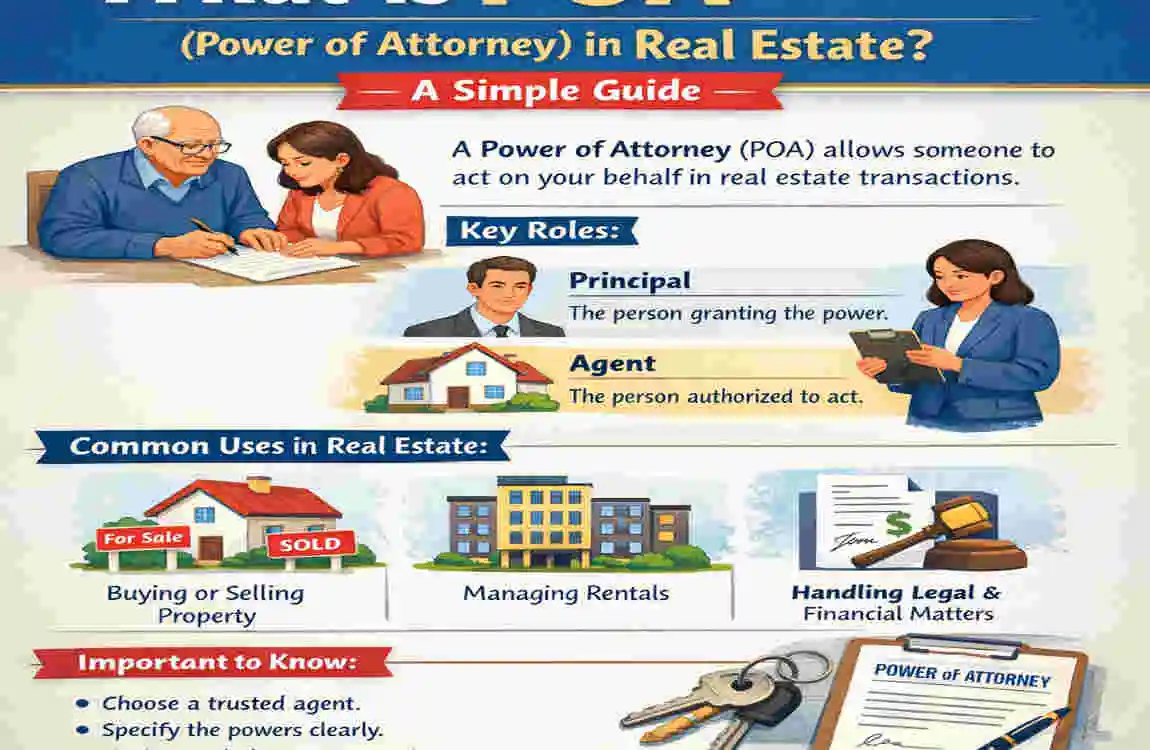
If you are asking what POA is in real estate, the short answer is simple: it means Power of Attorney. It allows one person to grant another the legal right to act on their behalf in a property matter.
This is useful when the owner cannot be present in person. Maybe they are out of the country, dealing with illness, traveling, or unable to attend a closing. In those cases, a POA can help keep the transaction moving.
What Is POA in Real Estate?
What Does POA Stand For?
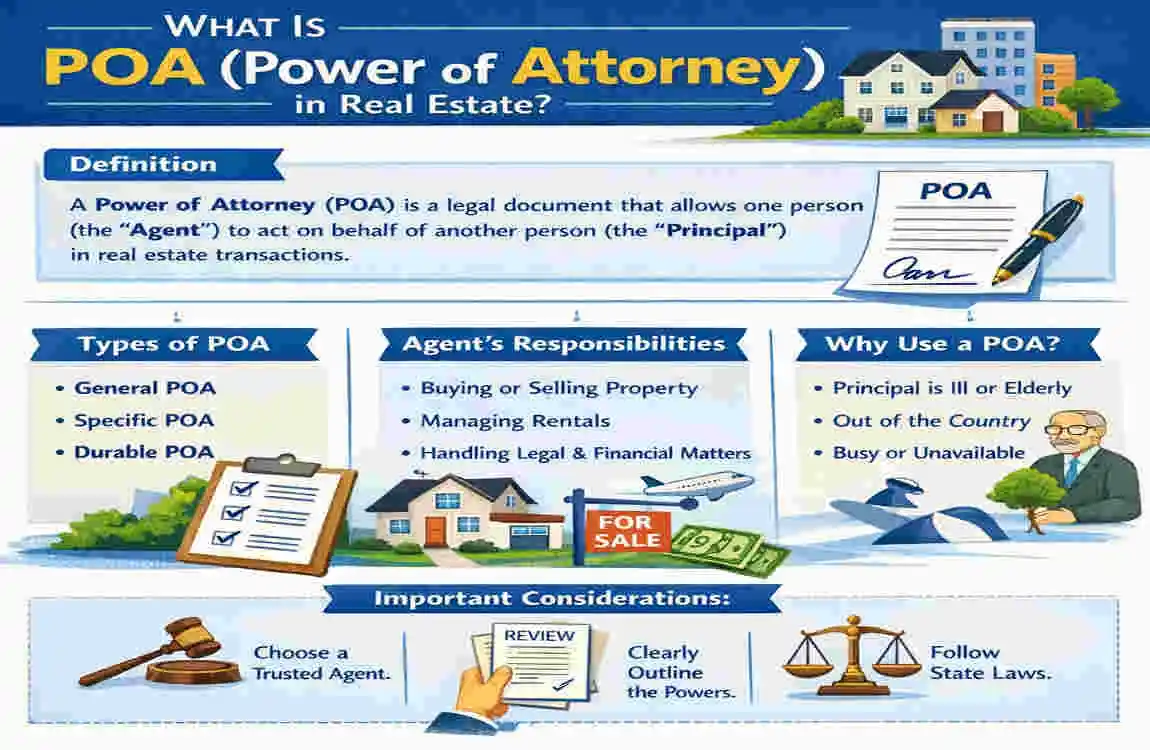
POA stands for Power of Attorney.
It is a legal document that allows one person, called the principal, to authorize another person, called the agent or attorney-in-fact, to act on their behalf.
How Does a Real Estate POA Work?
In real estate, the agent may be allowed to sign papers, handle closing documents, or manage other property-related tasks. But the exact power depends on the wording in the document.
That means a POA is not one-size-fits-all. Some grant broad authority, while others allow only one specific action.
Why Is POA Used in Property Transactions?
A POA is often used when someone needs help with:
- Buying property remotely
- Selling a home when they cannot attend closing
- Signing legal or financial documents
- Handling property matters for a family member
It makes transactions easier when the owner cannot act personally.
How Does a Power of Attorney Work in Real Estate?
Choosing an Agent
The principal should choose someone trustworthy, responsible, and capable.
This matters because the agent may be handling important legal and financial duties. If the wrong person is chosen, it can create serious problems.
Defining the Agent’s Authority
The document should clearly say what the agent can and cannot do.
For example, it may allow the agent to sell one specific house, sign closing papers, or work with a title company. In other cases, it may give broader powers over several property matters.
Clear wording helps avoid confusion.
Signing Real Estate Documents
Once the POA is valid, the agent may sign certain documents on behalf of the principal. However, lenders, title companies, and government offices may have their own rules.
That is why the POA should be reviewed early, before closing day.
Types of POA Used in Real Estate
General Power of Attorney
A general POA gives wide authority. It can cover many kinds of financial or property tasks.
This can be useful, but it may be more power than needed if the person only wants help with one transaction.
Special or Limited Power of Attorney
A special or limited POA is narrower. It only gives authority for a specific property or task.
This is often the better choice for real estate because it gives more control and reduces unnecessary risk.
Durable Power of Attorney
A durable POA may remain valid even if the principal becomes incapacitated, depending on local law and how the document is written.
This can be important in long-term planning, but the legal effect can vary by location.
POA Types at a Glance
Type of POA What It DoesBest ForMain Caution
General POA Gives broad authority Ongoing or wide property matters Can be too broad.
Special/Limited POA Covers one specific task or property Selling or buying one home Must be written clearly.
Durable POA May continue if the principal becomes unable to act Planning for illness or incapacity Rules vary by jurisdiction.
Other Important POA Considerations
POA rules are not the same everywhere. Some places require notarization, witnesses, or recording before the POA can be used in real estate.
Always check local requirements before relying on one.
When Should You Use a POA for Real Estate?

Buying or Selling Property From Another Location
If you are away from the property, a POA can let someone handle the closing for you.
This is especially helpful if you live in another city or country and cannot attend in person.
Real Estate Investment and Property Management
Investors sometimes use a POA to authorize a trusted person to handle specific tasks, such as signing paperwork or managing a sale.
This can save time and keep deals moving.
Managing Property for an Elderly or Incapacitated Person
A POA may also help when a family member needs support with property matters.
In these cases, the person acting under the POA should always act in the principal’s best interests.
Why Timing Matters
A POA should be prepared before the transaction gets urgent.
If it is done too late, the title company or lender may reject it, which can delay closing.
Benefits and Risks of Using POA in Real Estate
Benefits of a Real Estate POA
A POA can make life easier in many ways:
- Allows remote transactions
- Reduces the need for travel
- Helps when the owner is unavailable
- Supports property management
- Keeps closings from being delayed
Potential Risks
A POA also comes with risks.
The main concerns are:
- Misuse of authority
- Fraud or unauthorized actions
- Confusion about what the agent can do
- Rejection by a lender or title company
- Problems if the document is outdated or unclear
How to Reduce the Risks
You can lower the risk by:
- Using clear language
- Choosing a reliable agent
- Limiting the authority when possible
- Keeping the document current
- Asking a qualified real estate attorney for help when needed
A careful POA is much safer than a vague one.
How to Create and Use a POA for Real Estate
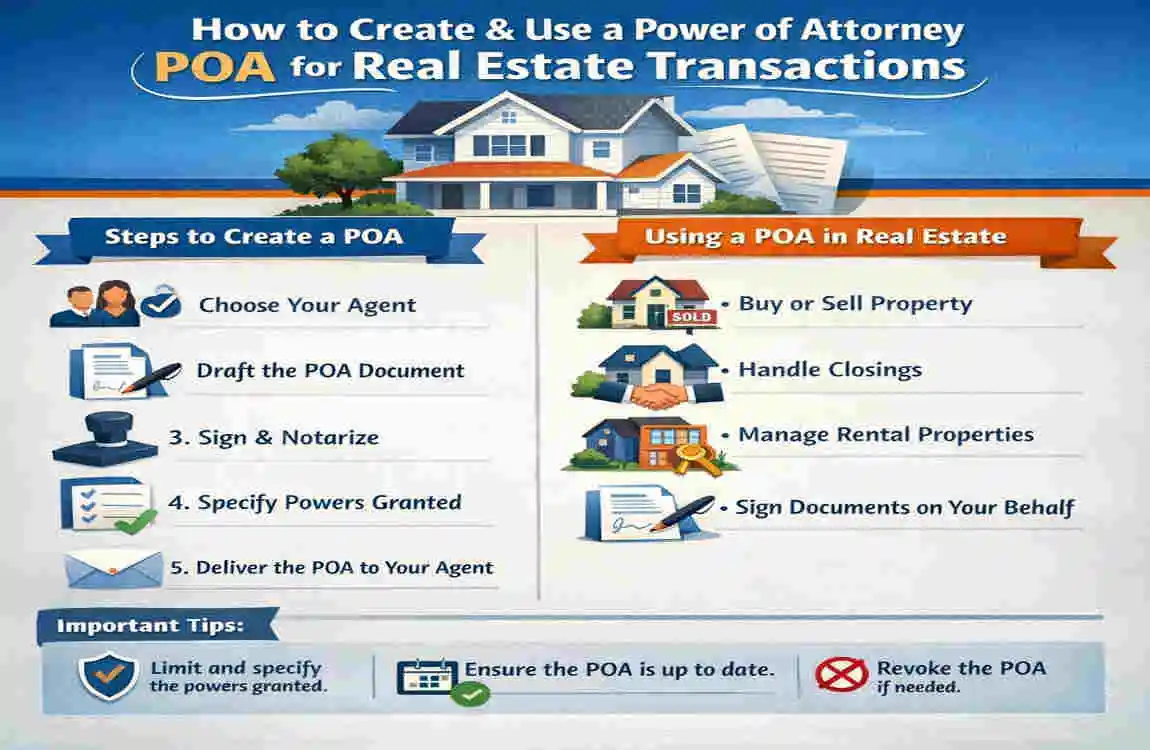
Identify the Purpose
Start by deciding exactly why you need the POA.
Is it for a single sale, a single purchase, or broader property management? The purpose should be clear from the start.
Choose the Agent
Pick someone you trust.
They should understand legal and financial responsibility, because they may need to act quickly and accurately.
Prepare the Document
Use the correct legal form and wording.
If the POA is for a single property, include the address and the exact powers granted. That helps avoid confusion.
Sign and Authenticate the POA
Many real estate POAs require additional formal steps, such as notarization, witnesses, or recording. The rules depend on your location and the type of transaction.
Provide It to the Relevant Parties
The lender, title company, real estate agent, or closing office may need to review the document before it can be used.
Send it early so there is time to fix any issues.
Revoke or End the POA When Appropriate
A POA can usually be revoked under the law, and it may also terminate upon completion of the task.
If you no longer want someone to act on your behalf, make sure the revocation is handled properly.
FAQ: What Is POA in Real Estate?
What is POA in real estate?
It means Power of Attorney. It authorizes an authorized person to act on behalf of a property owner in certain real estate matters.
Can someone sell my house with a POA?
Yes, if the POA gives that person the legal authority and all other requirements are met.
Can a POA be used to buy a house?
Yes, a properly drafted POA can authorize an agent to assist with a purchase.
Does a real estate POA need to be notarized?
Often yes, but the exact rule depends on the location and the transaction.
Can I give someone POA for only one property?
Yes. A limited or special POA can be written for a single property or deal.
Can a POA expire?
Yes, it can expire based on the document terms, local law, or the completion of the task.
Can a real estate POA be revoked?
Yes, in many cases it can be revoked, but the proper legal process should be followed.
Is a POA safe for real estate transactions?
It can be safe when written clearly and given to someone trustworthy. Limiting the authority also helps.
| POA Term | Meaning in Real Estate | Common Use |
|---|---|---|
| POA | Power of Attorney | Allows someone to act on another person’s behalf |
| Property POA | Authority to manage property matters | Buying, selling, renting, or managing property |
| Real Estate Agent POA | Limited authority for specific tasks | Handling documents or transactions |
| General POA | Broad legal authority | Managing multiple financial or property matters |
| Special POA | Authority for a specific transaction | Selling or purchasing a particular property |
