
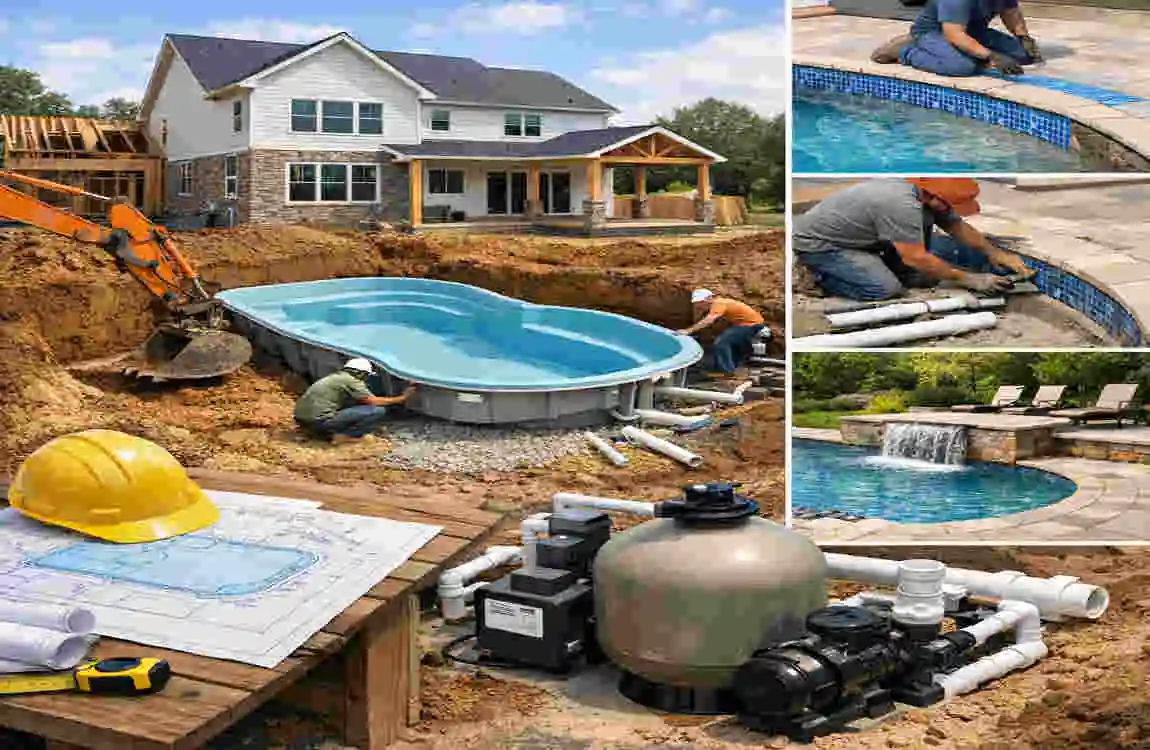
A swimming pool can make a new home feel more complete, more fun, and more valuable. Many homeowners start wondering whether they can add a pool to a new-construction home as soon as they begin planning their build.
The short answer is yes, you can. But the best results come from planning early. When you consider the pool during the home design stage, you can save time, reduce stress, and avoid costly changes later.
Can You Add a Pool to a New Construction Home?
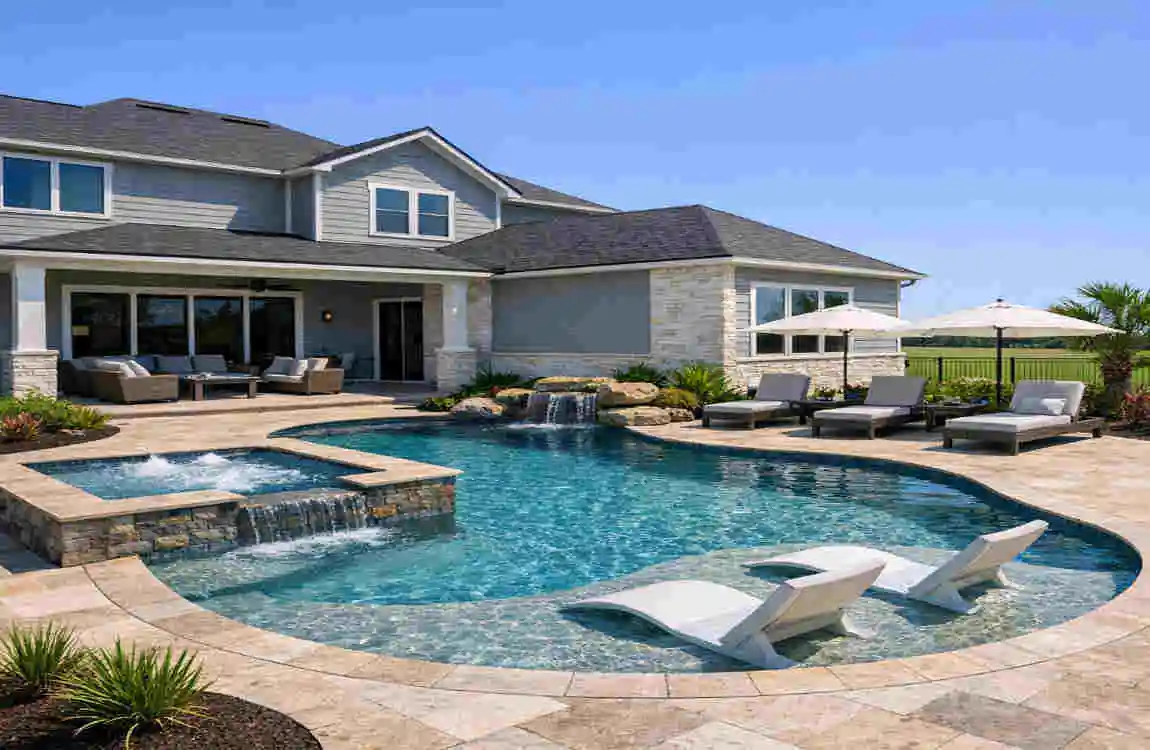
Understanding Pool Installation During New Home Construction
Yes, a swimming pool can be added during or after the home-building process. Many homeowners choose to include it in the overall plan, so the house and yard work together from the start.
This approach often makes the project run more smoothly. The builder, pool contractor, and landscaper can coordinate the work more easily.
Adding a Pool Before Construction Begins
Planning the pool before construction starts gives you more control. It helps with backyard layout, equipment access, and landscaping.
It can also reduce future disruption because the heavy work happens before the yard is fully finished.
Adding a Pool After the Home Is Built
You can also install the pool after moving in. This gives you more time to save money and decide what you want.
The downside is that it may be harder for machinery to reach the backyard, and your landscaping may get damaged during the work.
Best Time to Add a Swimming Pool to a New Construction Home
During the Home Design Stage
This is usually the best time to plan a pool. At this stage, you can work with:
- Home builders
- Architects
- Pool contractors
- Landscape designers
When everyone works together early, the pool fits the property better, and the full design looks more natural.
During Construction
Some homeowners prefer to install the pool while the house is still being built. This can help with scheduling because utilities and site work are already happening.
It is a smart option if the builder and pool contractor can coordinate well.
After Moving Into the Home
This is a good choice if you want more time to budget or are not yet sure about the final design.
It may take longer and cost more in some cases, but it gives you flexibility.
Types of Swimming Pools for New Construction Homes
In-Ground Pools
In-ground pools are the most popular choice for many new homes. They look polished and can be designed to match the house style.
Common materials include:
- Concrete
- Fiberglass
- Vinyl liner
Concrete pools offer the most design freedom. Fiberglass pools are quicker to install. Vinyl liner pools are often more budget-friendly.
Above-Ground Pools
Above-ground pools are usually cheaper and faster to install. They can be a good choice if you want a pool without a major construction project.
They may not blend into the landscape as naturally as in-ground pools, but they are practical and affordable.
Luxury Pool Designs
If you want a more high-end look, you can consider:
- Infinity pools
- Resort-style pools
- Spa and pool combinations
- Custom-shaped pools
These options create a strong visual impact, but they usually cost more and take longer to complete.
How Much Does It Cost to Add a Pool to a New Construction Home?
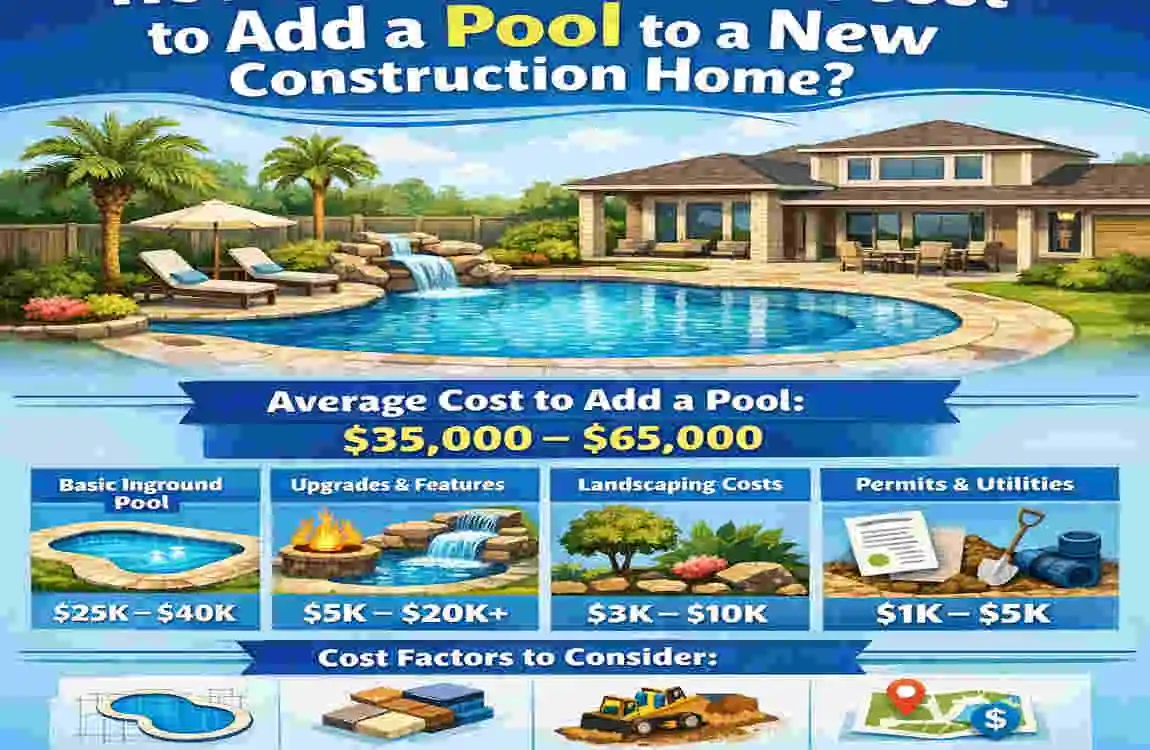
Average Pool Installation Costs
The cost to add a swimming pool depends on size, materials, labor, and design features.
Feature Impact on Cost
Pool size Larger pools require more materials and labor
Pool type Concrete pools usually cost more than fiberglass
Landscaping Adds design and finishing expenses
Pool equipment Pumps, filters, heaters increase costs
Custom features Waterfalls, lighting, and spas raise prices
Additional Expenses to Consider
The pool itself is not the only cost. You should also budget for:
- Pool fencing
- Decking
- Cleaning tools and maintenance equipment
- Heating systems
- Outdoor living areas
- Higher insurance costs
These extra items can add up quickly, so it is better to plan for them early.
Steps to Add a Pool to a New Construction Home
Check Your Property Space
Start by considering the backyard’s size, soil conditions, drainage, sunlight, and privacy.
You want enough room for the pool, safety space, and any seating or landscaping you want around it.
Choose the Right Pool Design
Think about the shape, depth, features, and placement.
A pool should fit the way you live. For example, a family with children may want a simple, shallow design, while a luxury homeowner may want a custom shape with added features.
Review Local Building Requirements
Most areas require permits and inspections before pool construction can begin.
You may also need to follow HOA rules, safety standards, and property restrictions. Checking these early can save you serious delays.
Hire a Professional Pool Contractor
Choose someone with real experience. Look at past projects, compare quotes, and confirm licensing and insurance.
A good contractor helps keep the project safe and on schedule.
Coordinate Pool and Home Construction
The best results come when the builder, pool installer, electrician, plumber, and landscaper all stay in communication.
That teamwork helps the project move smoothly and prevents avoidable problems.
Benefits of Adding a Pool to a New Construction Home
Increased Home Value
A well-designed pool can improve curb appeal and attract future buyers, especially in areas where pools are common and desirable.
Better Outdoor Living Space
A pool turns the backyard into a real living area. It becomes a place for family time, relaxing, and entertaining guests.
Custom Design Opportunities
If you plan the pool from the beginning, it can better match the home’s architecture. You can also coordinate landscaping and outdoor features more easily.
Challenges of Adding a Pool to a New Construction Home
Higher Construction Costs
A pool adds to the overall budget. The more custom the design, the higher the cost usually becomes.
Longer Construction Timeline
Permits, weather, and material delays can slow the project. If the pool is complex, the timeline can stretch even more.
Maintenance Requirements
Once the pool is finished, it needs regular care. That includes cleaning, chemical balancing, equipment checks, and seasonal maintenance.
Pool Planning Tips for New Homeowners
Plan the Pool Location Carefully
Think about privacy, sun exposure, access, and how the pool will fit into the backyard flow.
Consider Future Maintenance
Leave space for equipment access and storage. A pool should look great, but it should also be easy to maintain.
Think About Energy Efficiency
You can reduce long-term costs by using:
- Energy-efficient pumps
- Solar heating
- Pool covers
- LED lighting
Small choices can make a big difference over time.
Common Mistakes to Avoid When Adding a Pool
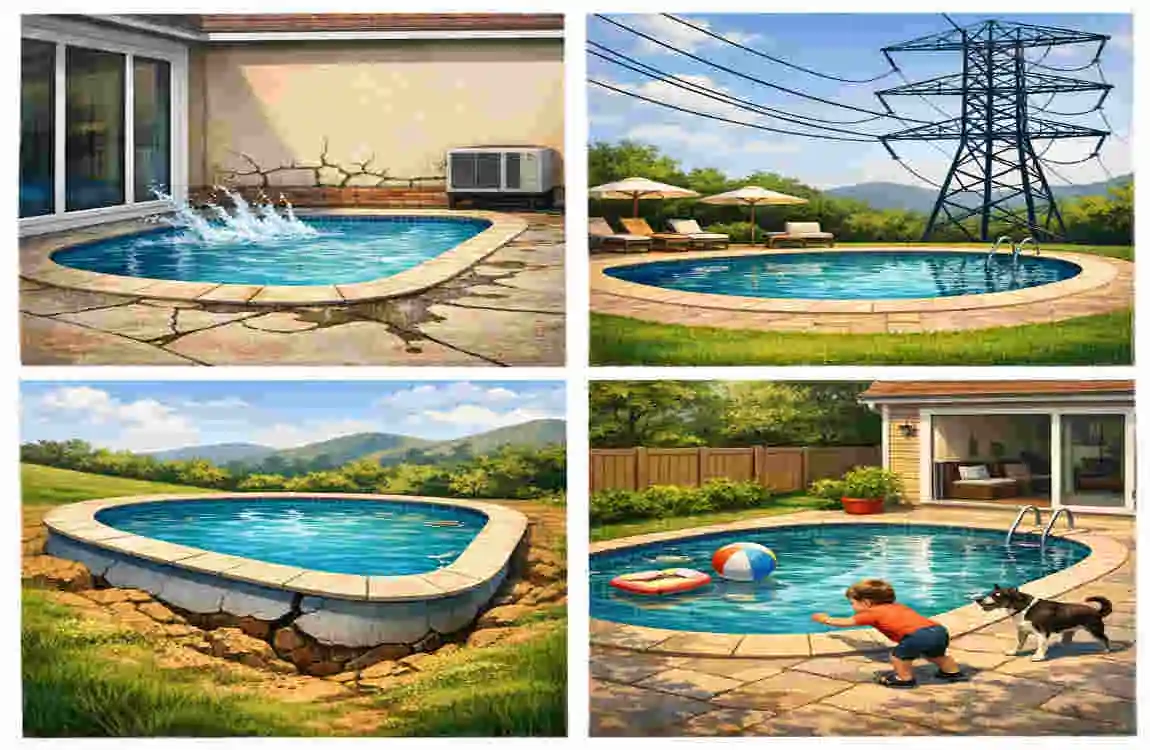
Waiting Until the Last Minute
If you delay pool planning, you may lose access to easy options, better design options, and cost savings.
Ignoring Local Regulations
Skipping permits or safety rules can cause expensive delays and problems later.
Choosing the Wrong Pool Size
A pool should fit both your budget and your yard. Too large can overwhelm the space, while too small may not meet your needs.
Forgetting Additional Costs
Many homeowners focus only on the pool shell and forget fencing, landscaping, and equipment.
Should You Add a Pool Before or After Building Your Home?
OptionAdvantagesDisadvantages
Before construction: Easier planning, better design coordination; requires early decisions.
During construction Efficient scheduling Requires multiple contractors
After construction More flexibility More disruption and possible extra costs
Frequently Asked Questions
Can you add a pool to a new construction home?
Yes, you can add a pool during the build or after the home is finished.
Is it cheaper to add a pool while building a house?
Often yes, because contractors can coordinate access, utilities, and landscaping more easily.
How long does it take to install a pool?
It can take several weeks to a few months, depending on the design and permits.
Does adding a pool increase home value?
It can, especially if the pool is well designed and fits the local market.
What type of pool is best for a new construction home?
The best pool depends on your budget, yard size, and maintenance preferences.
| Topic | Information |
|---|---|
| Best Time to Add a Pool | The ideal time is during new home construction because planning, excavation, plumbing, and landscaping can be completed more efficiently. |
| Main Benefits | Adds outdoor entertainment space, increases home appeal, and creates a relaxing backyard environment. |
| Pool Types | Common options include in-ground concrete pools, fiberglass pools, and vinyl liner pools. |
| Average Cost | A new residential pool can typically cost around $30,000–$100,000+ depending on size, materials, features, and location. |
| Planning Requirements | Consider backyard size, soil conditions, drainage, permits, safety rules, and access for construction equipment. |
| Design Features | Popular upgrades include waterfalls, lighting, spas, tanning ledges, automatic covers, and smart pool systems. |
| Construction Advantages | Adding a pool with a new build reduces future yard disruption and allows better coordination with builders. |
| Maintenance Needs | Pools require regular cleaning, water balancing, filtration system care, and seasonal maintenance. |
