
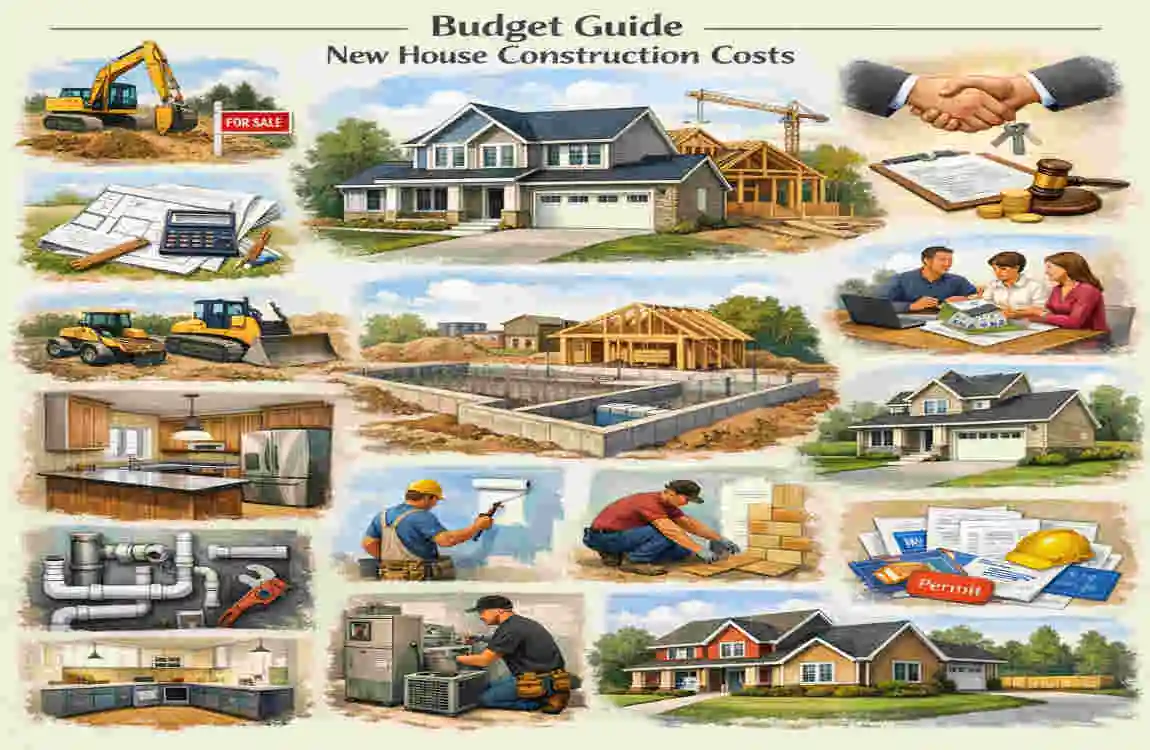
Understanding the cost of new house construction is one of the most important steps before you start building. A new home can look simple on paper, but the final price often varies due to land conditions, house size, design choices, materials, labor, and local permitting rules.
That is why many homeowners are surprised by the full cost of building a house. The number you first hear is often only a starting point. The real budget usually includes site work, foundation, framing, plumbing, electrical, HVAC, finishes, and extra costs that appear along the way.
How Much Does It Cost to Build a New House?
There is no single answer to the average cost to build a house. The final price changes from one project to another because every home is different.
A small basic home may cost far less than a large custom house with premium finishes. That is why builders often use the cost per square foot of a house as a quick starting point.
Average New House Construction Cost
In simple terms, a new house can fall into one of these categories:
- Basic construction: Lower-cost materials and simple design
- Mid-range construction: Balanced quality and comfort
- High-end construction: Custom features and premium materials
A larger home almost always costs more because it requires more materials, labor, and time.
New House Construction Cost Per Square Foot
A simple formula is often used to estimate cost:
Total construction cost = House size × Cost per square foot
This gives you a rough idea, but it does not include every project expense. It is best used as a first estimate only.
Example Construction Cost by Home Size
House SizeBasic ConstructionMid-Range ConstructionHigh-End Construction
1,000 sq. ft. Lower estimate Moderate estimate Higher estimate
1,500 sq. ft. Lower-mid estimate Moderate estimate Higher estimate
2,000 sq. ft. Mid estimate Higher-mid estimate High estimate
2,500 sq. ft. Higher estimate High estimate Very high estimate
3,000 sq. ft. High estimate Very high estimate Premium estimate
What Is Included in New House Construction Cost?
A lot of people focus only on the house itself. But the complete budget includes several major parts.
Site Preparation
Before the home can be built, the land usually needs work. This may include:
- Clearing trees or brush
- Excavating the ground
- Grading the lot
- Preparing drainage
- Making space for a driveway
If the site is uneven or rocky, these costs can rise quickly.
Foundation
The foundation is one of the biggest parts of the build. It supports the entire home, so it must be done right.
Common foundation costs may include:
- Concrete
- Footings
- Slabs
- Basement work
- Waterproofing
- Labor
A basement usually adds more cost than a simple slab.
Framing
Framing gives the house its shape. It includes floors, walls, roof structure, and support parts.
Framing costs depend on:
- Home size
- Number of floors
- Roof design
- Lumber prices
- Architectural complexity
A simple layout is usually cheaper than a home with many corners, vaulted ceilings, or complex roof lines.
Roofing and Exterior
The outside of the house also affects the budget. This includes:
- Roof structure
- Shingles or metal roofing
- Siding
- Brick or stucco
- Windows
- Exterior doors
The more premium the materials, the higher the final cost of new home construction.
Plumbing, Electrical, and HVAC
These systems are essential for comfort and safety. They may not be as visible as flooring or cabinets, but they take a large share of the budget.
They cover:
- Water pipes
- Drains
- Wiring
- Outlets
- Lighting
- Heating and cooling systems
These are not areas where you want to cut corners too much.
Major Factors That Affect New House Construction Cost
House Size
The bigger the house, the more it usually costs. A larger home needs more:
- Materials
- Labor
- Flooring
- Roofing
- Plumbing
- Electrical work
- HVAC capacity
Even a small increase in square footage can significantly raise the total cost.
Location
Location matters more than many people expect. Costs can change based on:
- Labor rates
- Material delivery
- Permit fees
- Local building rules
- Utility connection costs
- Land preparation
A home built in an expensive city area will usually cost more than one built in a lower-cost region.
House Design and Layout
A simple floor plan is usually cheaper than a complex one. Homes with extra corners, large open spaces, tall ceilings, or custom roof shapes take more work.
If you want to control construction costs for a new home, a smart layout can save money.
Construction Materials
Materials come in three general levels:
- Budget materials
- Standard materials
- Premium materials
For example, laminate counters cost less than stone counters. Vinyl flooring costs less than hardwood. Choosing where to spend and where to save can make a big difference.
Labor Costs
Labor is a major part of the budget. Skilled workers such as electricians, plumbers, roofers, and finish carpenters all add to the total.
Labor costs can rise if the project takes longer than planned or needs specialized work.
Finishes and Fixtures
A home can look simple or high-end depending on the finishes you choose. These include:
- Cabinets
- Countertops
- Flooring
- Paint
- Lighting
- Bathroom fixtures
- Interior doors
- Appliances
This is where many budgets grow fast, especially if buyers upgrade every room.
New House Construction Cost Breakdown
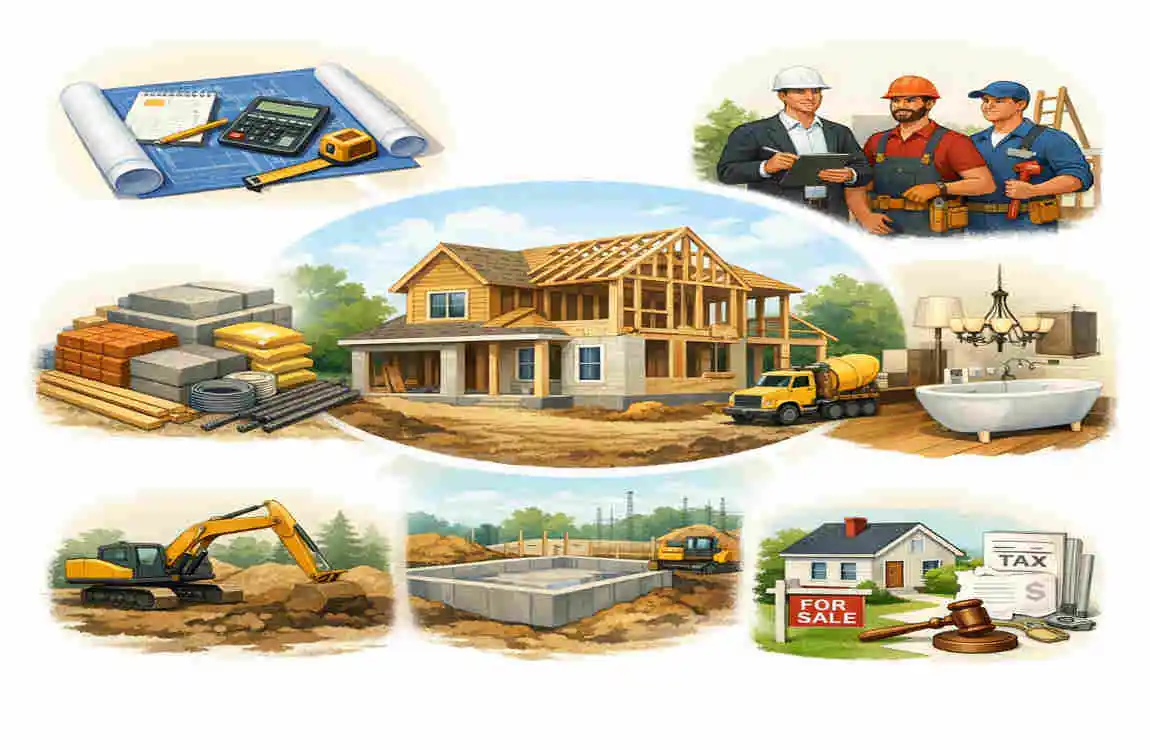
Here is a simple view of where the money often goes.
Construction Category What It Covers
Site Work Clearing, grading, excavation
Foundation Footings, slab, basement
Framing Walls, floors, structural parts
Roofing Roof structure and covering
Exterior Siding, brick, stucco, windows
Plumbing Pipes, fixtures, water systems
Electrical Wiring, outlets, lighting
HVAC Heating and cooling systems
Interior Drywall, paint, flooring
Kitchen Cabinets, counters, appliances
Bathrooms Fixtures, tile, vanities
Final Work Cleanup, inspections, finishing
This breakdown helps you see that new house building costs are spread across many stages, not just the visible parts.
Hidden Costs to Include in Your Construction Budget
Some costs do not always appear in the first estimate. These hidden expenses can affect your final budget.
Permits and Inspections
Most new homes require permits and inspections at various stages of construction. These are required to keep the project legal and safe.
Architectural and Engineering Fees
If you need house plans, structural drawings, or design changes, those professional services add to the cost.
Utility Connections
Hooking up water, sewer, gas, electricity, and internet can be expensive, especially if the lot is far from existing lines.
Landscaping and Outdoor Improvements
You may also need to budget for:
- Lawn work
- Trees and plants
- Fencing
- Walkways
- Patios
- Outdoor lighting
Driveway and Garage Costs
These are sometimes left out of the first estimate, so ask clearly before signing anything.
Contingency Fund
A contingency fund is extra money kept for unexpected costs. This is important because construction often brings surprises.
How to Estimate Your New House Construction Cost
A simple process can help you build a realistic budget.
Determine the Home’s Size
Start with your planned square footage.
Choose Your Construction Quality
Decide if your home will be basic, standard, premium, or luxury.
Research Local Rates
Look at local builder pricing. Rates can vary a lot by area.
Add Site and Professional Costs
Do not forget permits, plans, utilities, and site preparation.
Add a Contingency
Keep extra funds aside so you are ready for changes or unexpected issues.
How to Reduce New House Construction Cost
If you want to control your budget, focus on smart choices early.
Useful Cost-Saving Tips
- Choose a simple floor plan
- Build only the space you truly need
- Compare material options
- Avoid frequent design changes
- Get several builder quotes
- Prioritize structure over decoration
A home with a smart layout and solid materials can still look beautiful without pushing the budget too far.
New House Construction Cost vs. Buying an Existing Home
Building and buying both have pros and cons.
FactorBuild a New HouseBuy an Existing House
Customization High Limited
Upfront Planning More Less
Construction Risk Higher Lower
Maintenance Usually lower at first May need repairs
Design Control Excellent Limited
Timeline Longer Usually faster
Unexpected Costs Possible Possible
Energy Efficiency Can be designed well Depends on age
The better option depends on local land prices, house prices, and how much control you want over the design.
Common Mistakes When Budgeting for a New Home
Focusing Only on Square Foot Price
This number helps with early planning, but it does not include every cost.
Forgetting Land Expenses
Site work, drainage, and utility hookups can significantly affect the budget.
Picking the Cheapest Contractor
The lowest price is not always the best value.
Underestimating Finishes
Kitchens, bathrooms, flooring, and lighting can cost more than expected.
Not Keeping Emergency Funds
A contingency reserve helps protect your budget if something goes wrong.
Frequently Asked Questions About New House Construction Cost
What is the average new house construction cost?
It depends on size, location, materials, labor, and design. There is no one fixed number.
How much does it cost to build a 2,000-square-foot house?
You can estimate it by multiplying the size by local cost per square foot, then adding site work, permits, and finishing costs.
What is the biggest expense when building a house?
Labor, foundation work, framing, and interior finishes are often the largest cost areas.
Does new house construction cost include land?
Usually not. Land is often a separate cost unless the builder says otherwise.
How can I reduce the cost of building a new house?
Choose a simple design, compare quotes, avoid unnecessary changes, and plan your materials early.
How much should I budget for unexpected costs?
A contingency fund is a smart idea because surprises are common in construction projects.
| Cost Factor | Typical Cost Range | What It Includes |
|---|---|---|
| Land Preparation | $5,000–$20,000+ | Clearing, grading, excavation, and site preparation |
| Foundation | $10,000–$40,000+ | Concrete slab, crawl space, or basement |
| Framing | $20,000–$60,000+ | Walls, floors, roof structure, and labor |
| Roofing | $8,000–$25,000+ | Roofing materials, underlayment, and installation |
| Plumbing & Electrical | $15,000–$40,000+ | Pipes, wiring, fixtures, outlets, and panels |
| HVAC System | $8,000–$20,000+ | Heating, ventilation, and air conditioning |
| Windows & Doors | $8,000–$25,000+ | Exterior doors, interior doors, and windows |
