
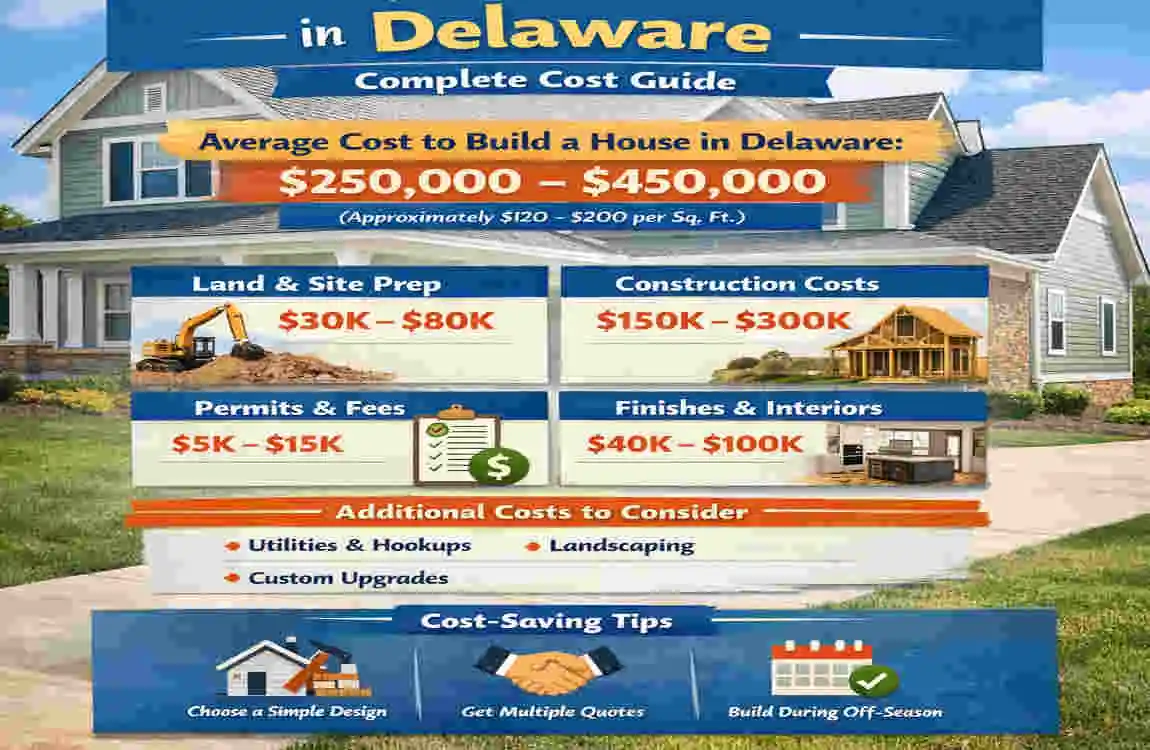
The final price changes based on the size of the home, the lot, the design, the materials, the contractor, and even the county where you build. A simple home on an easy lot will cost far less than a custom home on difficult land with high-end finishes.
That is why it helps to look at the full picture before you start. The land, permits, utilities, site work, and finishing touches all affect the final budget.
How Much Does It Cost to Build a House in Delaware?
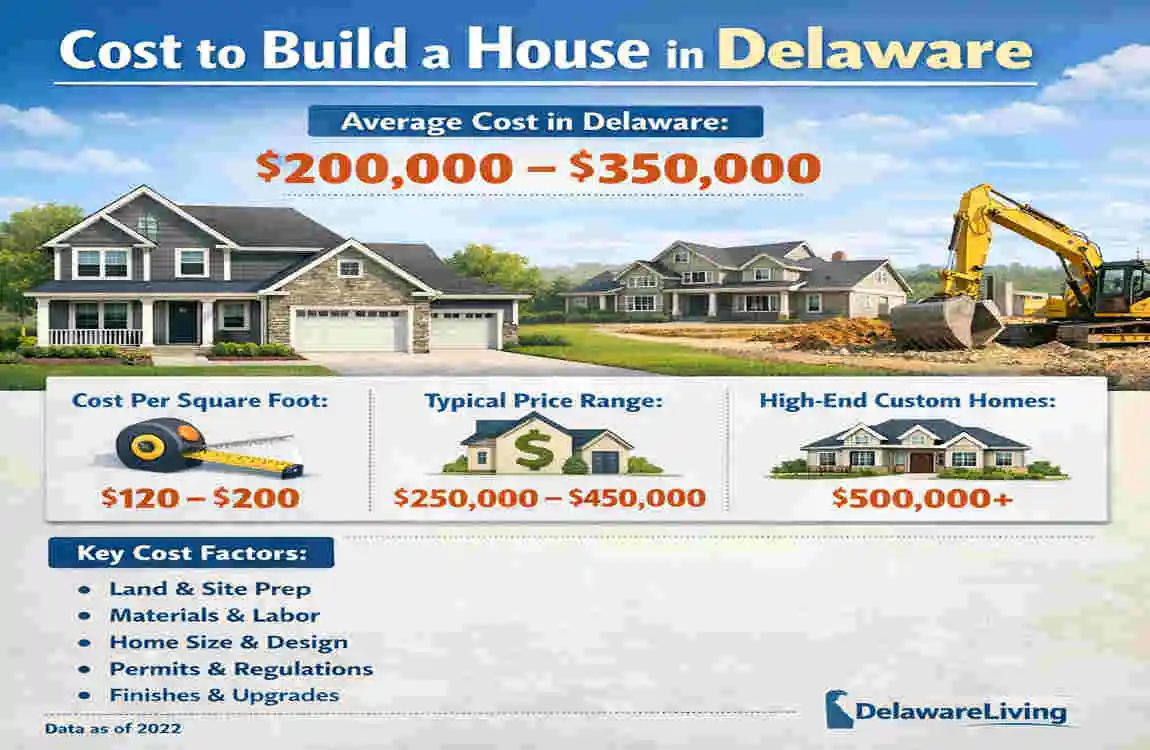
The short answer
There is no single fixed price for building a house in Delaware. Some projects remain relatively simple, while others become much more expensive due to custom details or site conditions.
If you are only considering the house’s structure, you are not looking at the full cost. You also need to count land, permits, design work, utility connections, and unexpected expenses.
Why the price changes so much
A few major things affect the total cost:
- Home size
- Location
- Land price
- Materials
- Labor
- Design and finishes
- Site conditions
Even two homes with the same square footage can cost very different amounts if one has a simple layout and the other has custom features.
Construction cost vs total project cost
This is one of the most important ideas to understand.
Construction cost usually refers to the cost of building the house itself. That includes framing, roofing, plumbing, electrical work, insulation, drywall, flooring, and finishes.
Total project cost includes much more. It also covers the land, permits, engineering, utility hookups, and any extra work needed to make the site ready.
If you budget only for construction, you may end up short once other expenses arise.
Average Cost to Build a House in Delaware
Estimated cost per square foot
Builders often estimate price by cost per square foot. This is a quick way to compare different home sizes and quality levels.
A basic home usually costs less per square foot because it uses standard materials and a simpler design. A mid-range home may include better finishes and more features. A luxury home will usually cost the most because it may include custom architecture, larger rooms, upgraded materials, and special design details.
In Delaware, a planning estimate for many homes may fall into a broad range such as:
- Basic builds: lower cost per square foot
- Mid-range builds: moderate cost per square foot
- Luxury builds: much higher cost per square foot
These are only planning numbers. The real price depends on your lot, contractor, and design choices.
Example home-building budgets
Home SizeBasic BuildMid-Range BuildLuxury Build
1,500 sq. ft. Estimate only Estimate only Estimate only
2,000 sq. ft. Estimate only Estimate only Estimate only
2,500 sq. ft. Estimate only Estimate only Estimate only
3,000 sq. ft. Estimate only Estimate only Estimate only
Why the same square footage can cost more or less
A 2,000-square-foot home with a simple box shape will usually cost less than a 2,000-square-foot home with roof changes, custom windows, and detailed finishes.
So when you compare numbers, remember that square footage is only part of the story—the layout and the quality level matter just as much.
Major Expenses When Building a Delaware Home
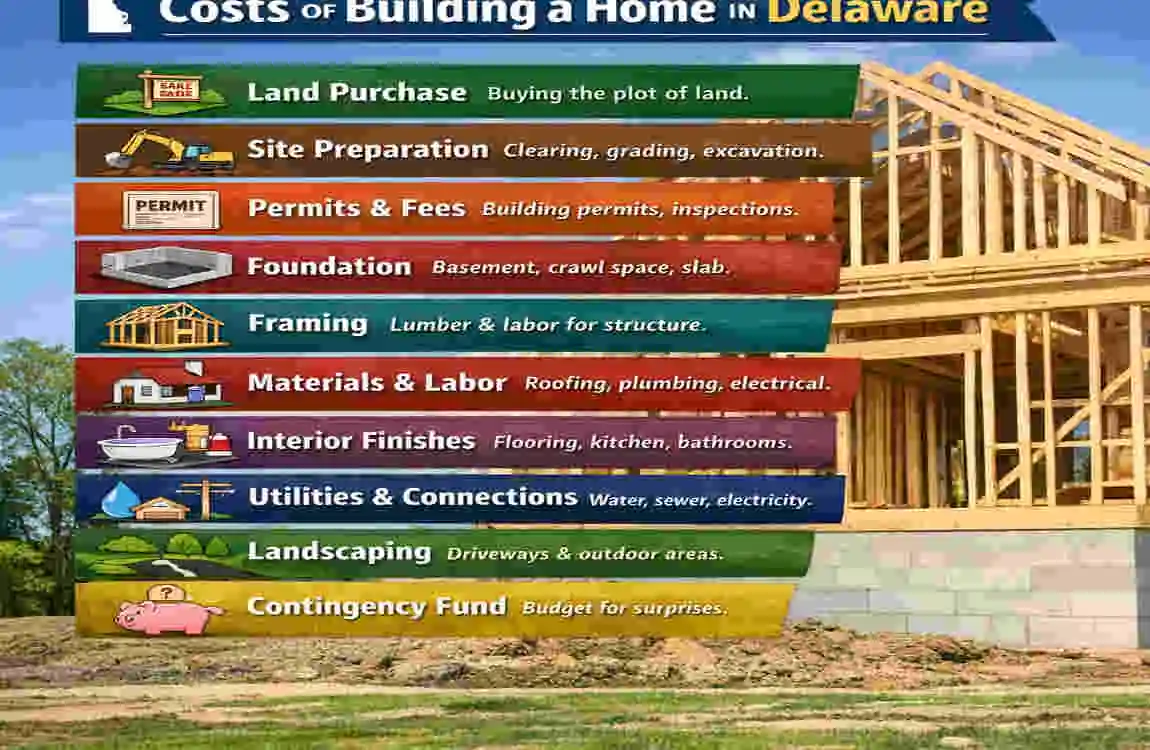
Land and lot preparation
Before construction begins, you need land. In many cases, that is one of the biggest parts of the budget.
Once you have the lot, you may still need to pay for:
- Clearing trees or brush
- Grading the land
- Excavation
- Driveway preparation
- Drainage improvements
If the lot is rough or uneven, site work can become expensive very quickly.
Design, architecture, and engineering
You may need help from:
- An architect
- A designer
- A structural engineer
- A surveyor
If you are building a custom home, these costs can be higher because the plans are tailored to your specific lot and personal needs.
Construction and materials
The main construction budget often includes:
- Foundation
- Framing
- Roofing
- Windows and doors
- Plumbing
- Electrical work
- HVAC
- Insulation
- Drywall
This is the core of the home-building process, and it usually makes up a large share of the overall cost.
Interior and exterior finishes
After the house structure is complete, the finishing stage begins. That includes:
- Flooring
- Cabinets
- Countertops
- Paint
- Appliances
- Landscaping
These items may seem like small choices at first, but they can change the total budget more than people expect.
Delaware Location and Land Costs
Why location matters
Where you build in Delaware can have a big effect on the final price. Some areas are more expensive because of land demand, access to services, and proximity to developed communities.
New Castle, Kent, and Sussex counties
Each county can bring different building conditions.
New Castle County often has stronger demand in certain areas due to its proximity to larger population centres and established infrastructure.
Kent County may offer some balance between land cost and access, depending on the location and lot type.
Sussex County can be attractive to many buyers, but coastal influence, rural lots, and land-preparation needs can affect the overall price.
Rural vs suburban lots
A suburban lot may already have more available utility access, easier road connections, and a smoother build process.
A rural lot can sometimes offer more space, but it may also require extra costs for wells, septic systems, long utility runs, or access roads.
Utility access matters
If the lot is not already connected to major utilities, you may need to budget for:
- Water service
- Sewer or septic
- Electricity
- Gas
- Internet access
Some of these can be costly if the property is far from existing service lines.
Road access and site conditions
A lot that is hard to reach can also cost more to build on. Contractors may need more time and equipment to bring in materials, which adds to the budget.
Permits, Utilities, Financing, and Other Hidden Costs
Permits and inspections
You will likely need permits before and during construction. These can include:
- Building permits
- Electrical permits
- Plumbing permits
- Mechanical permits
- Inspections
Permit costs vary depending on the project and local requirements. You should not treat them as minor details, because they are often required before work can move forward.
Utility connections
Even after the home is framed, you still need the systems that make it livable.
That may include connection costs for:
- Electricity
- Water
- Sewer
- Gas
- Internet
These costs can be modest in some neighbourhoods and much higher in others.
Financing costs
If you are using a construction loan, you also need to budget for financing-related expenses such as:
- Loan fees
- Interest
- Insurance
- Draw inspections
Construction loans are different from a normal mortgage, so it is important to understand how payments work during the build.
Unexpected expenses
This is where many budgets get off track. Hidden or surprise costs can come from:
- Poor soil
- Drainage issues
- Design changes
- Material price increases
- Construction delays
- Utility surprises
A builder quote may look good at first, but it may not include everything. That is why the first quote is often not the final cost.
How to Reduce the Cost of Building a House in Delaware
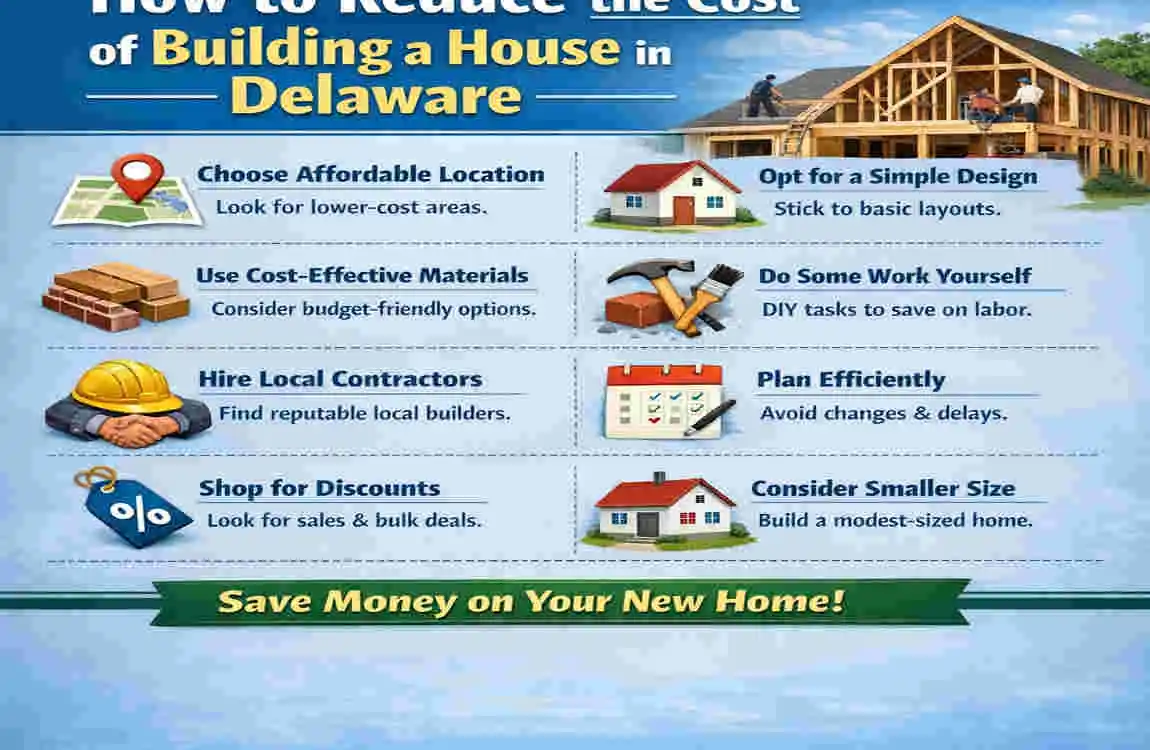
Choose a practical floor plan.
A simple layout usually costs less to build than a complex one. Straight lines, fewer corners, and a moderate roof design can save money.
Build the right size home.
Do not build more square footage than you really need. A smart, efficient home is often better than a larger home that strains your budget.
Compare multiple contractors
Always speak with more than one licensed contractor. This gives you a better feel for the market and helps you compare value, not just price.
Get detailed written estimates.
Ask for clear, written estimates that show what is included and what is not. That way, you can spot missing items before construction starts.
Choose durable but affordable materials.
You do not need to choose the cheapest materials everywhere, nor do you need every upgrade. Focus on materials that last and make sense for daily use.
Avoid big changes during construction.
Changing the design after work starts often costs more. Try to finalise the plans, finishes, and layout before the build begins.
Keep a contingency fund.
A contingency fund gives you a backup plan if something unexpected happens. It is one of the smartest ways to protect your budget.
Think long term
Cutting too many corners can create expensive repairs later. Sometimes spending a little more on key items saves you money over time.
Delaware Home-Building Cost FAQs
How much does it cost to build a house in Delaware?
The cost varies based on land, size, materials, labour, permits, and site conditions. There is no single fixed number.
Is it cheaper to build or buy a house in Delaware?
It depends on the property and the market. Sometimes buying is cheaper upfront, while building can make more sense if you want a custom home.
How much does it cost to build a 2,000-square-foot house in Delaware?
The cost depends on location, finishes, and site prep. A simple home will usually cost less than a custom or high-end build.
What is the most expensive part of building a house?
Labour, materials, site work, and high-end finishes often account for the largest share of the budget.
Does the cost of land come with the construction price?
No. Land is usually a separate expense from the cost of building the home.
How much money should I save for unexpected construction costs?
It is wise to maintain a contingency reserve so you are ready for surprises such as soil issues, design changes, or delays.
Can I build a custom home in Delaware on a budget?
Yes, if you keep the design efficient, choose smart materials, and avoid unnecessary changes.
What factors increase the cost of building a house in Delaware?
The biggest cost drivers are location, land, size, custom design, site conditions, materials, labour, and permits.
| Cost Factor | Typical Cost Range | What It Includes |
|---|---|---|
| Land | $50,000–$200,000+ | Lot purchase and location |
| Construction | $150–$350+ per sq. ft. | Materials and labor |
| Site Preparation | $10,000–$40,000 | Clearing, grading, excavation |
| Permits & Fees | $5,000–$15,000+ | Building permits and approvals |
| Utilities | $10,000–$30,000 | Water, sewer, electric, and gas connections |
| Interior Finishes | $20,000–$80,000+ | Flooring, cabinets, fixtures, and paint |
| Landscaping | $5,000–$20,000 | Lawn, trees, drainage, and outdoor work |
| Estimated Total | $250,000–$600,000+ | Varies by home size, land, location, and finishes |
