
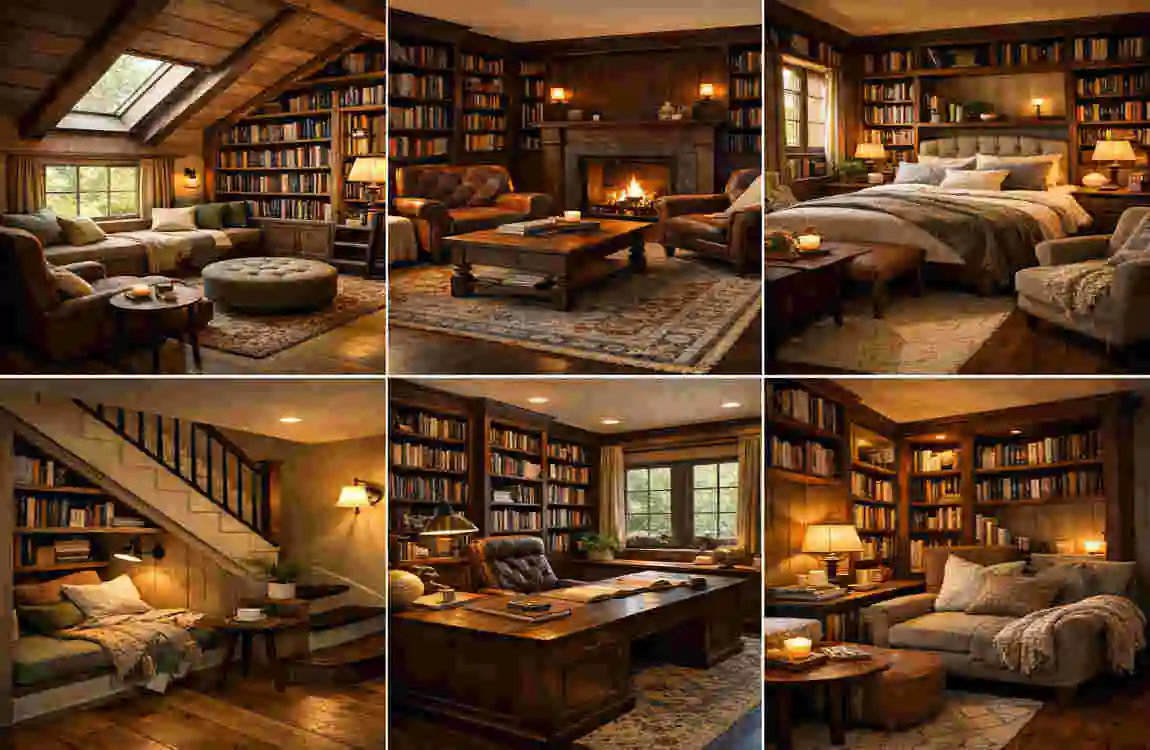
Imagine coming home after a long, chaotic day at work. You step through your front door, leave the endless noise of the outside world behind you, and sink into a plush, comfortable armchair. All around you are the familiar, comforting spines of your favorite books. You grab a warm cup of tea, open a novel, and finally breathe. Sounds like an absolute dream, doesn’t it?
In the midst of the ongoing remote work boom of 2026, creating this kind of personal escape is more important than ever. We are spending more time at home, and the lines between our work and personal lives are constantly blurring. This is exactly where the magic of room-by-room library interior design comes into play. You do not need a massive, dusty mansion with a dedicated study to enjoy the benefits of a home library. By tailoring small reading spaces to each room’s unique vibe, you can massively boost your daily productivity, improve your mental health, and even increase your home’s overall value.
This year, interior design is all about breaking the rules. We are seeing a huge shift toward multifunctional spaces that work hard for you. Eco-friendly materials are taking center stage, bringing a calming, natural vibe indoors. Smart home technology is seamlessly blending with classic bookshelves to create the ultimate reading experience.
Why Room-by-Room Library Interior Design is Trending
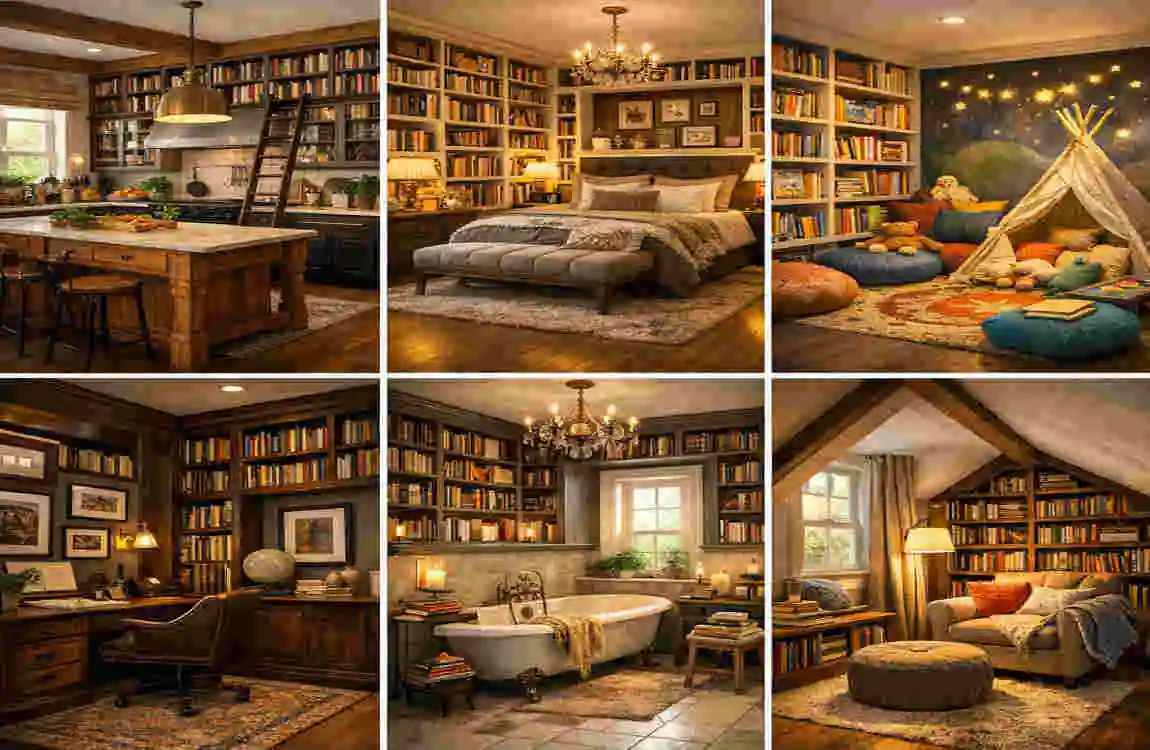
To understand why everyone is suddenly obsessed with bookshelves, we have to look at how our homes have changed. The rise of the hybrid work model has completely transformed the way we view our living spaces. A house is no longer just a place to sleep and eat; it is an office, a gym, a classroom, and a sanctuary. Because of this, homeowners are actively seeking out ways to create distinct, cozy zones within their existing floor plans.
Implementing a thoughtful, room-by-room library interior design strategy offers incredible benefits. First and foremost, it enhances your focus. Having a dedicated spot for reading trains your brain to slow down and concentrate the moment you sit there. Second, these spaces promote wonderful family bonding. A cozy reading nook invites parents and children to unplug from their screens and share a quiet moment. Finally, beautifully built-in shelving and curated library spaces add serious resale appeal. Real estate experts consistently note that homes with custom storage and dedicated lifestyle spaces sell faster and for higher prices.
As we navigate through 2026, several major trends are shaping these reading spaces. We are seeing a massive push toward biophilic design, which means bringing elements of nature indoors to reduce stress. Modular furniture is also huge right now, allowing you to rearrange your library as your book collection grows. Furthermore, AI-powered lighting is revolutionizing how we read at night, automatically adjusting to reduce eye strain.
Whether you want to build a grand book wall or tuck a few minimalist shelves into a corner, flexibility is the name of the game. Let’s explore how you can apply these exciting concepts to every single room in your house.
Living Room Library Interior Design: Open and Inviting Spaces
Your living room is the beating heart of your home. It is where you entertain guests, host family movie nights, and relax on the weekends. Therefore, your living room library interior design should focus on creating a highly social, open, and inviting atmosphere.
The Social Library Concept
Gone are the days when libraries were silent, stuffy rooms hidden away behind closed doors. Today, the goal is to transform your living space into a social library. You want your books to serve as conversation starters. When guests walk in, your customized book displays should invite them to browse, pick up a novel, and ask you about your favorite authors.
Top Trends for the Living Room
To achieve this open-plan library design, floating shelves are your best friend. They create a sleek, modern look that keeps the floor space clear, making the room feel larger. Another massive trend for 2026 is the illuminated accent wall. By installing hidden LED strips behind your bookshelves, you cast a warm, sophisticated glow over your collection. Additionally, look for multifunctional furniture. A sturdy, oversized coffee table with built-in storage underneath is the perfect place to display your heavy art and photography books.
Materials and Color Palettes
When selecting materials, prioritize sustainable wood like bamboo or reclaimed oak. These materials add incredible warmth and texture to the room. For seating, nothing screams “cozy reading nook” quite like a deep, velvet armchair.
For your color palette, lean heavily into grounding earth tones. Deep forest greens, warm terracottas, and soft beige walls create a calming backdrop that makes the vibrant colors of your book spines pop.
Step-by-Step Living Room Setup
- Assess your space: Identify an empty wall or an awkward corner that is currently gathering dust.
- Zone the area: Use a large, plush area rug to separate your reading nook from the main television-watching area visually.
- Install the shelving: Mount your floating shelves securely, ensuring they can handle the weight of heavy hardcovers.
- Style the shelves: Do not just cram books together. Mix stacks of books with small potted plants, framed family photos, and decorative objects to give the shelves some breathing room.
Bedroom Library Interior Design: Serene Retreats for Nighttime Reading
Your bedroom is your ultimate personal sanctuary. It is the one place in the house dedicated entirely to rest and rejuvenation. Therefore, your bedroom library interior design must focus on creating an intimate, sleep-friendly environment that helps you wind down after a long day.
The Sleep-Friendly Concept
Bringing books into the bedroom is a brilliant way to improve your sleep hygiene. Scrolling through your smartphone in bed exposes your eyes to blue light, which tricks your brain into thinking it is daytime. Reading a physical book, however, naturally tires your eyes and prepares your body for deep sleep. The goal here is to create a serene reading retreat right next to your pillow.
Top Trends for the Bedroom
One of the most popular 2026 trends for small bedrooms is the headboard-integrated shelf. Instead of a traditional fabric headboard, opt for a custom wooden headboard that features built-in cubbies for your current reads.
Lighting is absolutely critical in this room. You must incorporate dimmable smart lights. The focus this year is on circadian lighting—smart bulbs that automatically shift from a bright, cool white in the morning to a soft, amber glow in the evening. This ensures your reading light never disrupts your natural sleep cycle. Furthermore, if you live in a noisy household, consider installing decorative acoustic panels behind your shelves to absorb sound and ensure a quiet reading environment.
Materials and Comfort Hacks
Keep the materials in your bedroom library soft and inviting. Think natural fibers, linen throw blankets, and chunky knit pillows.
If you live in a small apartment and lack floor space, wall-mounted, invisible bookshelves are a fantastic hack. They make your books look like they are floating in mid-air, saving precious square footage. If you have the room, a slim, freestanding bookshelf placed at the foot of the bed works beautifully.
Kitchen or Dining Room Library Interior Design: Functional and Stylish
Keeping books near food and water is a recipe for disaster. However, integrating a library into your culinary space is one of the year’s most charming and functional trends. Your kitchen or dining room library’s interior design should blend your reading habits with the busy, daily hub of your home.
The Functional Culinary Concept
The kitchen is naturally where the family gathers. It makes perfect sense to keep your beloved cookbooks, nutritional guides, and quick-read magazines right where the action happens. A well-designed kitchen library makes meal planning a joy rather than a chore, and it gives you something wonderful to read while waiting for a pot of water to boil.
Top Trends for the Kitchen
Space is usually tight in a kitchen, so you have to get creative. One of the most innovative 2026 trends is the magnetic knife-block shelf. These are strong, wall-mounted magnetic strips that hold your metal kitchen tools on the bottom, with a slim, wooden ledge on top specifically designed to display your most-used cookbooks facing outward.
If you have a kitchen island, consider swapping your standard seating for bar stools with backrest pockets. These clever little pouches are perfect for sliding a magazine or a novel into for easy access during breakfast.
Materials and Durability
Because kitchens are prone to spills, steam, and grease, durability is your top priority. Avoid raw, untreated wood here. Instead, opt for high-quality, waterproof laminates or metal shelving. Brass accents and hardware are highly trending right now and add a touch of vintage elegance to a functional space.
Step-by-Step Kitchen Setup
- Find the dead space: Look for the awkward gap between the top of your cabinets and the ceiling, or the blank wall at the end of a kitchen peninsula.
- Install pull-out shelves: If you are remodeling, build a slim, pull-out pantry library. It slides out like a spice rack but is sized perfectly for recipe books.
- Add greenery: Combine your books with a vertical gardening shelf. Books look beautiful situated next to fresh pots of basil, mint, and rosemary.
Home Office Library Interior Design: Productivity Powerhouses
For the millions of people who now work from home permanently, the home office is the most important room in the house. Your home office library interior design needs to strike a delicate balance between a professional background for video calls and a comfortable space for deep, focused research.
The Productivity Concept
An office library should be a true productivity powerhouse. Surrounding yourself with industry books, reference materials, and inspiring biographies can massively boost your motivation. However, if the shelves become cluttered and messy, they will only serve as a visual distraction.
Top Trends for the Office
Ergonomics and tech integration rule the home office in 2026. Standing desk integrations are incredibly popular. You can now buy shelving units that physically attach to motorized standing desks, moving up and down with you as you work, so your reference books are always at arm’s length.
Because households can be loud, noise-canceling panels seamlessly built into the sides of bookshelves are a lifesaver for taking important calls. We are also seeing the very beginning of the VR reading setup wave. If you read digital manuals or use virtual reality headsets for work, modern office libraries now include dedicated charging docks and display stands for this tech.
Materials and Organization
To reduce eye strain from computer screens, use anti-glare glass on any cabinet doors in your office. Your shelving must be highly adjustable. You will need tall shelves for binders and short shelves for paperbacks.
Cable management is non-negotiable here. Choose bookcases with pre-drilled holes in the back panels to hide your phone chargers, lamp cords, and laptop cords. A tangled mess of cables will instantly ruin the professional look of your room.
Pro Tips for the WFH Library
Consider adopting a dual-monitor bookcase setup, where your computer screens sit perfectly inside a customized alcove within your library wall. Finally, look into basic Feng Shui principles. Place your desk in the “command position,” facing the door, with your beautiful, organized library wall serving as a strong, supportive backdrop.
Hallway or Entryway Library Interior Design: Unexpected Gems
Hallways and entryways are typically the most neglected spaces in any home. We treat them as simple walkways to get from point A to point B. However, applying room-by-room library interior design to these areas turns dead space into an unexpected, breathtaking gem.
The Unexpected Concept
When guests walk through your front door, what do they see? A blank wall? A pile of shoes? Imagine greeting them with a stunning, floor-to-ceiling display of your favorite literature instead. Hallway library shelves immediately communicate that your home is a place of warmth, intellect, and comfort.
Top Trends for Transitions Spaces
Because hallways are narrow, you must make use of vertical space. Slim, towering bookshelves are the way to go. To reach the books at the very top, slimline rolling ladders are making a massive comeback, adding a touch of classic “Beauty and the Beast” charm to modern homes.
If your hallway feels dark and cramped, use mirror-backed shelves. Placing custom-cut mirrors behind the books bounces light around the narrow space, creating an optical illusion that makes the hallway feel twice as deep.
Materials and Step-by-Step Setup
Since you do not want heavy furniture dominating a narrow walkway, use lightweight composite materials for the shelving.
- Measure carefully: Ensure you have at least 36 inches of clear walking space after the shelves are installed.
- Use recessed space: If you have the budget, carve niches directly into the drywall between the structural studs to create flush, built-in shelves that take up zero floor space.
- Add wallpaper: Line the back of the entryway reading nooks with a bold, patterned wallpaper to make the space pop.
By utilizing these tricks, you give your guests an immediate dose of inspiration the second they cross your threshold.
Kids’ Room or Playroom Library Interior Design: Fun and Educational
Fostering a love of reading in children is one of the greatest gifts you can give them. A kids’ room library interior design should never feel like a boring, strict classroom. It should be a vibrant, magical space that sparks their endless imagination.
The Fun and Educational Concept
Children interact with their environment much differently than adults do. A child’s library needs to be highly durable, incredibly safe, and completely accessible at their eye level. The goal is to make grabbing a book as appealing as grabbing a toy.
Top Trends for the Kids’ Room
Flexibility is key, as children grow incredibly fast. Modular storage cubes are the perfect trend for playrooms. You can stack them low to the ground for toddlers, and reconfigure them into a taller desk-and-shelf combo as they hit elementary school.
To make the space magical, incorporate themed wall decals around the reading nook, like a giant tree with the shelves as branches. For the tech-savvy kids of 2026, interactive storybook projectors are a huge hit. Designate one blank wall above a low bookshelf to project animated stories right before bedtime.
Materials and Safety First
Safety is your number one priority. Every single bookshelf must be securely anchored to the wall to prevent tipping. Choose furniture with rounded edges to prevent bumps and bruises. For the seating area, use washable fabrics and outdoor-grade floor cushions that can easily survive juice spills and sticky fingers.
Pro Tips for Children’s Libraries
Ditch the traditional spine-out shelving method. Kids choose books based on the cover art. Use shallow, forward-facing display ledges to show off the beautiful covers. Rotate the books on display every single week to keep their interest piqued and make the library feel fresh and exciting.
Advanced Tips for Room-by-Room Library Interior Design
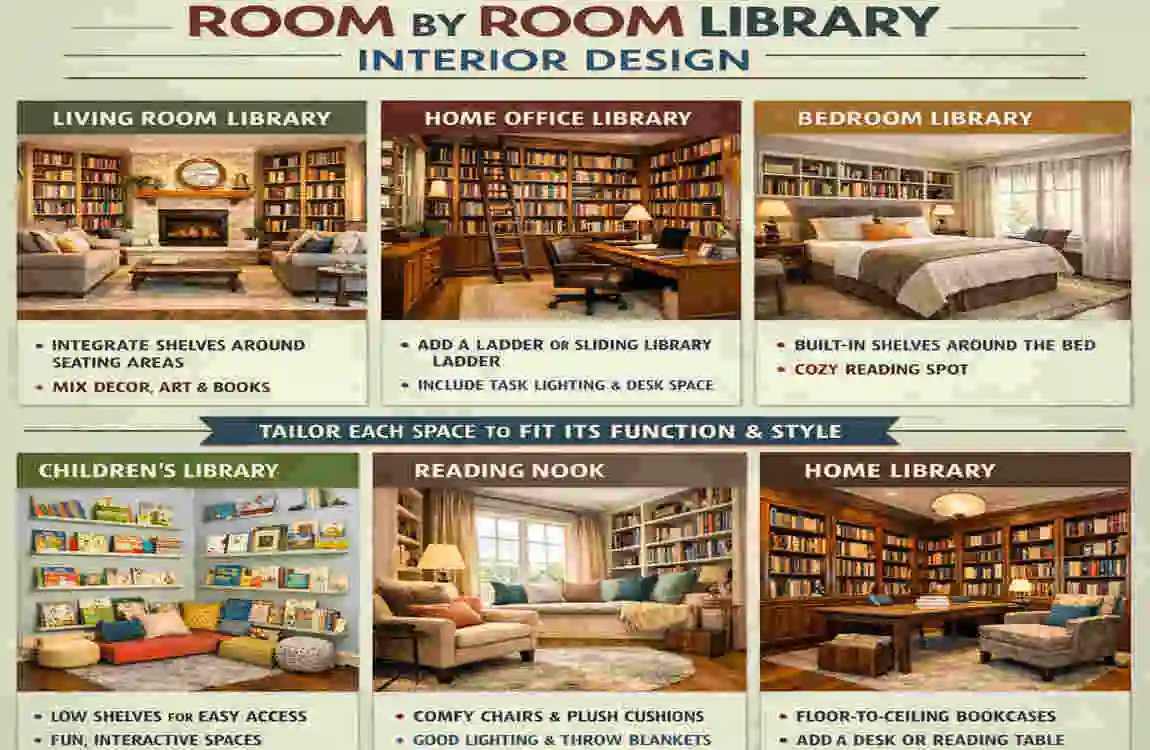
Now that we have covered the specific rooms, let’s look at some advanced strategies that apply to your entire home. Mastering these finer details is what separates a basic DIY project from a truly professional-looking space.
Layered Lighting and Tech
Never rely on a single overhead ceiling light to illuminate your books. You must use layered lighting. Combine natural light from windows with warm LED strip lights hidden under shelves, and top it off with an adjustable, targeted reading lamp by your chair.
As for tech, the home library of 2026 is smarter than ever. If you love physical books but also read digitally, install built-in E-reader charging docks directly into your shelving. You can also integrate voice-activated smart blinds near your reading nook, allowing you to easily block out the harsh afternoon sun without leaving your comfortable chair.
The Push for Sustainability
Eco-conscious design is not just a fad; it is the new standard. When building your library, source upcycled wood from local salvage yards for a unique, rustic look. When painting the room or your shelves, strictly use low-VOC (Volatile Organic Compounds) paints to ensure the air quality in your reading space remains pure and healthy.
Avoiding Common Mistakes
To ensure your project goes smoothly, avoid these common pitfalls:
- Overcrowding: Do not pack every inch of the shelf. Leave at least 20% of the shelf empty to provide visual relief.
- Ignoring Scale: Do not put a tiny, delicate chair next to a massive, chunky bookshelf. Ensure your furniture proportions match.
- Forgetting to Edit: Your library should only house books you love, plan to read, or need for reference. Donate the rest!
Here is a quick breakdown of what you can expect to spend based on your approach:
Budget Tier: Estimated Cost (Per Room)What You Get
DIY Enthusiast $200 – $500 Paint, floating shelves, thrifted chairs, and basic LED strips.
Semi-Custom $800 – $1,500 Store-bought modular units (like IKEA) customized with trim and smart lighting.
Professional $3,000+ Custom floor-to-ceiling carpentry, Premium wood, and integrated wiring.
Frequently Asked Questions: Mastering Your Room-by-Room Library Interior Design
Do you still have a few questions about setting up your perfect reading spaces? You are certainly not alone! We have gathered the most common questions homeowners ask when they start planning their book displays. Let’s clear up the confusion so you can start designing today.
How much space do I actually need to create a home library?
You might think you need a massive, dedicated room with a roaring fireplace to build a proper library. The truth is, you only need a few feet of empty wall space! The true beauty of room by room library interior design is that it perfectly adapts to your exact floor plan.
You can easily tuck a cozy reading nook into an empty bedroom corner, or you can transform a narrow hallway using slim floating shelves. Do not let a small apartment stop you. Just look for dead space, like the blank wall above your television or the empty corner next to your bed.
Is it safe to put books in high-traffic areas like kitchens?
Absolutely! Kitchens and dining rooms are fantastic, functional spots for your cookbook collections. Having your recipes right where you need them makes cooking much more enjoyable.
However, you must protect your books from grease and moisture. Never place your bookshelves directly above the stove or right next to the kitchen sink. Instead, tuck them into a safe pantry corner, or use high-quality, closed glass cabinets to keep the sticky kitchen elements away from your beautiful covers.
What is the best way to light my reading spaces in 2026?
Lighting completely makes or breaks your reading experience. You want to avoid harsh, overhead fluorescent lights at all costs, as they quickly cause eye strain and headaches. Instead, you need to layer your light sources to create a warm, inviting glow.
In 2026, smart LED lighting is the absolute best choice. You can easily adjust the warmth of the light using your smartphone, ensuring your eyes stay comfortable no matter what time of day you decide to read.
How do I style my shelves so they do not look cluttered?
Styling your shelves is the most creative part of the process! If you simply shove every single book you own onto a shelf, the room will quickly feel messy and visually overwhelming. You need to give your beloved collection some breathing room.
Here is a quick list of easy styling tricks you can use right now:
- Mix up your stacking: Stand some of your books vertically like normal, but lay others flat in small, horizontal stacks. This breaks up the monotonous lines and creates instant visual interest.
- Bring in nature: Place small, low-maintenance indoor plants—like a trailing pothos or a snake plant—next to your favorite novels to bring vibrant life to the shelves.
- Show off your personality: Do not just display books! Mix in framed family photos, beautiful travel souvenirs, or small art pieces right between your bookends.
