
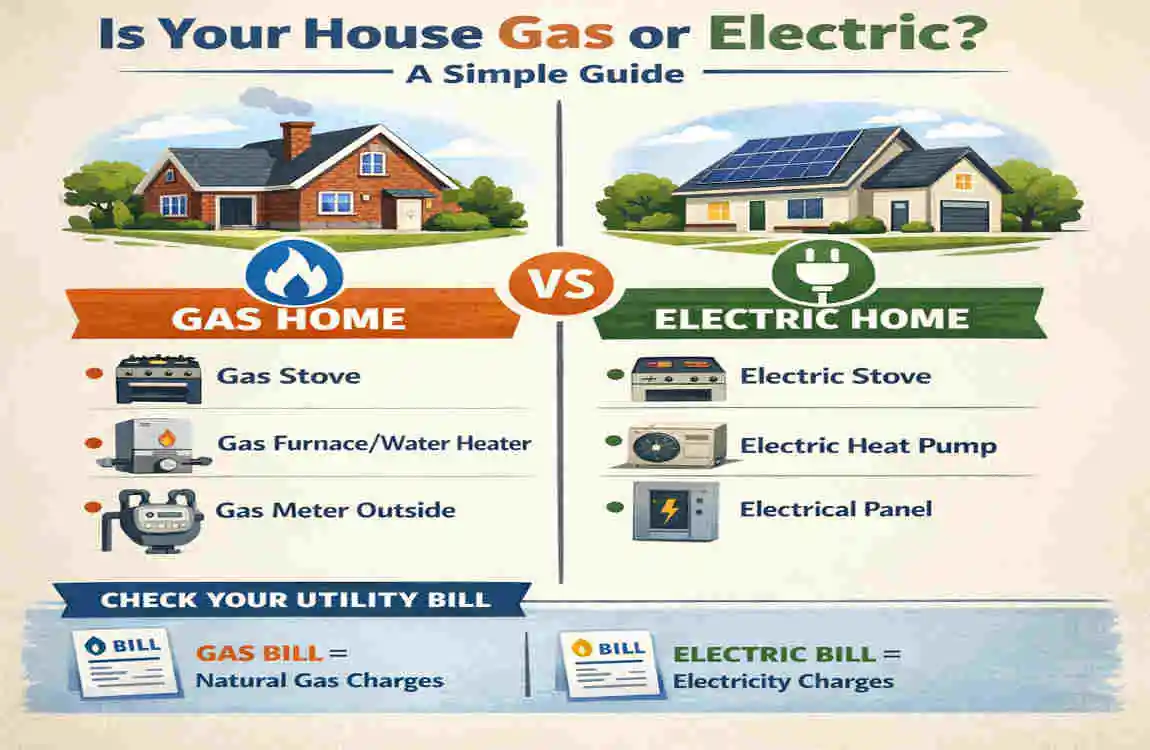
If you’ve ever asked yourself, “Is my house gas or electric?”, you’re not alone. Many homeowners are unsure at first, especially if they just moved in or if the home has mixed systems.
The good news is that it is usually easy to figure out. You can check your utility bills, meters, appliances, heating system, and water heater to get a clear answer. And in many homes, the real answer is actually both.
Is My House Gas or Electric? Understanding the Difference
A gas-powered home uses natural gas for some systems, usually heating, cooking, or hot water. An electric-powered home relies on electricity for those same needs.
But here’s the important part: many homes use a mix of both. For example, a house may have a gas furnace and an electric water heater. Another home may have a gas stove but an electric dryer.
Knowing which utilities your home uses matters because it helps you:
- Understand your monthly bills
- Identify the right appliance type
- Plan repairs or replacements
- Compare energy costs more easily
- Stay safer when dealing with home systems
If you are trying to answer “Is my house gas or electric”?, start by looking at the biggest clues.
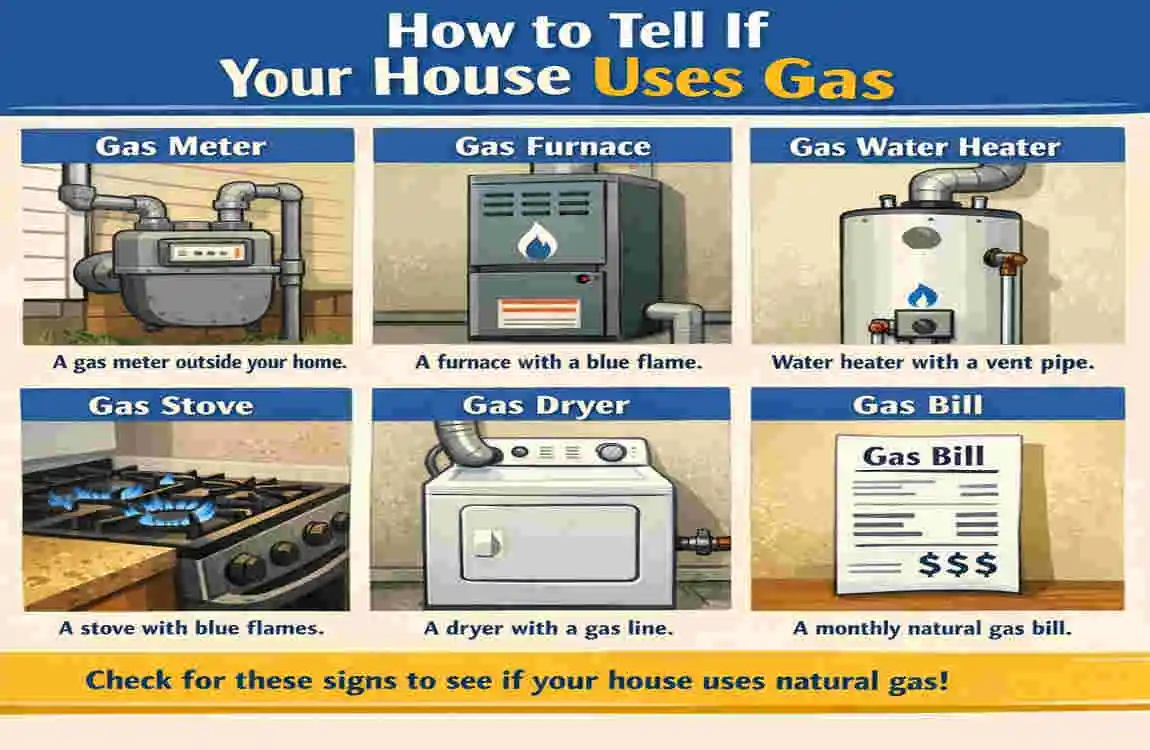
How to Tell If Your House Uses Gas
Check for a Gas Meter
A gas meter is one of the easiest signs that your home gets gas service. It is usually outside the house, often near the side wall, basement area, or in a utility box.
A residential gas meter is often a round or boxy device with numbers on it. It may be connected to a pipe that runs into the home. If you see one, that is a strong clue that your house uses gas.
Look for Gas Appliances
Gas homes often have appliances that burn natural gas for heat or cooking. Common examples include:
- Gas stove or cooktop
- Gas furnace
- Gas water heater
- Gas dryer
- Gas fireplace
If you spot one or more of these, your home likely uses gas.
Check Your Utility Bills
Another simple way to confirm gas service is to look at your utility statements. A gas bill may mention terms like natural gas, therms, or gas usage.
If you receive separate bills for gas and electricity, that is a clear sign that your house uses both.
How to Tell If Your House Is All Electric
Check Major Appliances
An all-electric home uses electricity for most or all major systems. Common electric appliances include:
- Electric range
- Electric water heater
- Electric furnace or heat pump
- Electric dryer
If your stove plugs into the wall or your water heater does not have a gas line, that often points to an electric setup.
Look at the Electrical Panel
Your breaker panel can also give clues. In many electric homes, large appliances are connected to dedicated breakers with higher amperage ratings. This includes the water heater, stove, HVAC system, or dryer.
You do not need to open or alter anything. Just look for labels that mention appliances or rooms. The panel may help you understand how the home is powered.
Check Utility Statements
If your home only has an electricity bill and no gas bill, that is another strong sign of an all-electric home. Some all-electric homes still have a gas meter from a previous setup, so bills are often the safest clue.
Can a House Be Both Gas and Electric?
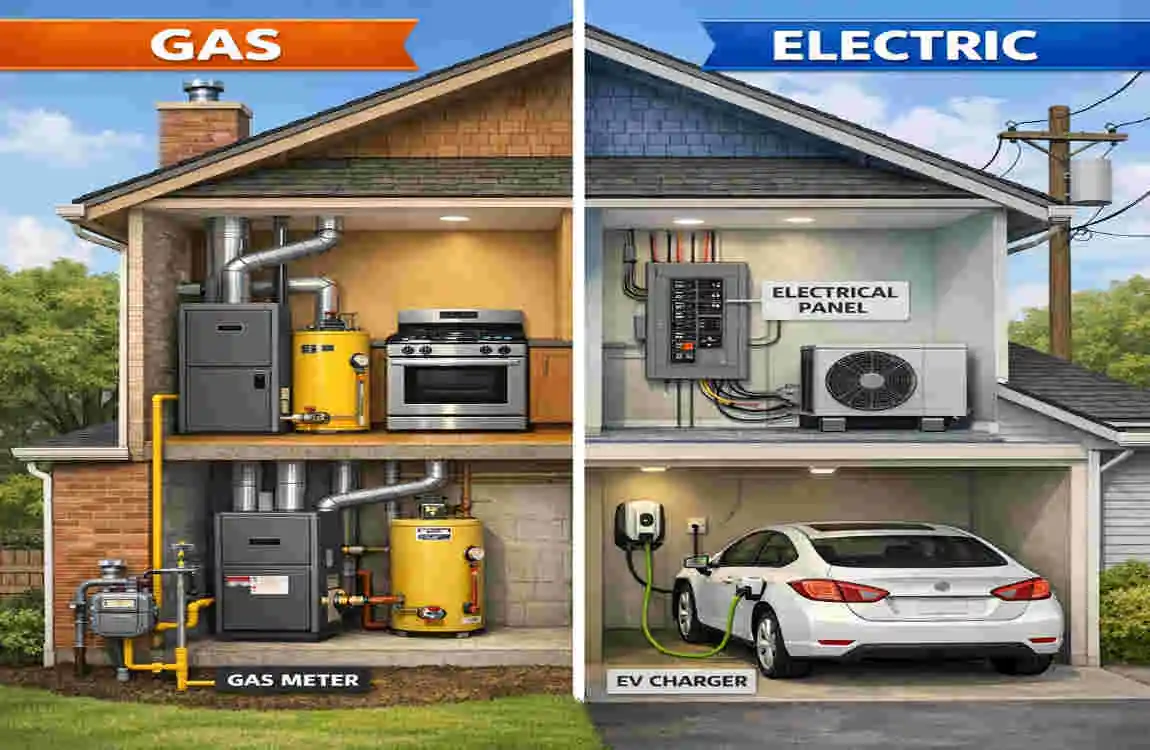
Yes, absolutely. In fact, dual-energy homes are very common.
Many homes use gas for one part of the house and electricity for another. This setup gives homeowners flexibility and can vary depending on the home’s age, climate, and installed appliances.
Common Mixed Energy Setups
A home may have:
- Gas furnace + electric water heater
- Gas stove + electric HVAC
- Gas fireplace + electric dryer
- Electric heat pump + gas cooking range
Even if your home uses gas, it still needs electricity. Electricity powers lights, outlets, fans, thermostats, refrigerators, computers, and many control systems.
Where to Look for Clues About Your Home’s Energy Source
If you still feel unsure, check these places around your home. They usually give the clearest answer.
Quick Clue Checklist
- Utility meters: Look for both gas and electric meters
- Breaker panel: Check labels for major appliances
- Appliance labels: Many appliances list the fuel type
- HVAC equipment: Find out if you have a furnace or heat pump
- Water heater: Look for a gas line or electric connection
- Home inspection report: Helpful if you bought the home recently
- Utility bills: Often the fastest and clearest proof
Gas vs. Electric Home: Which Is Better?
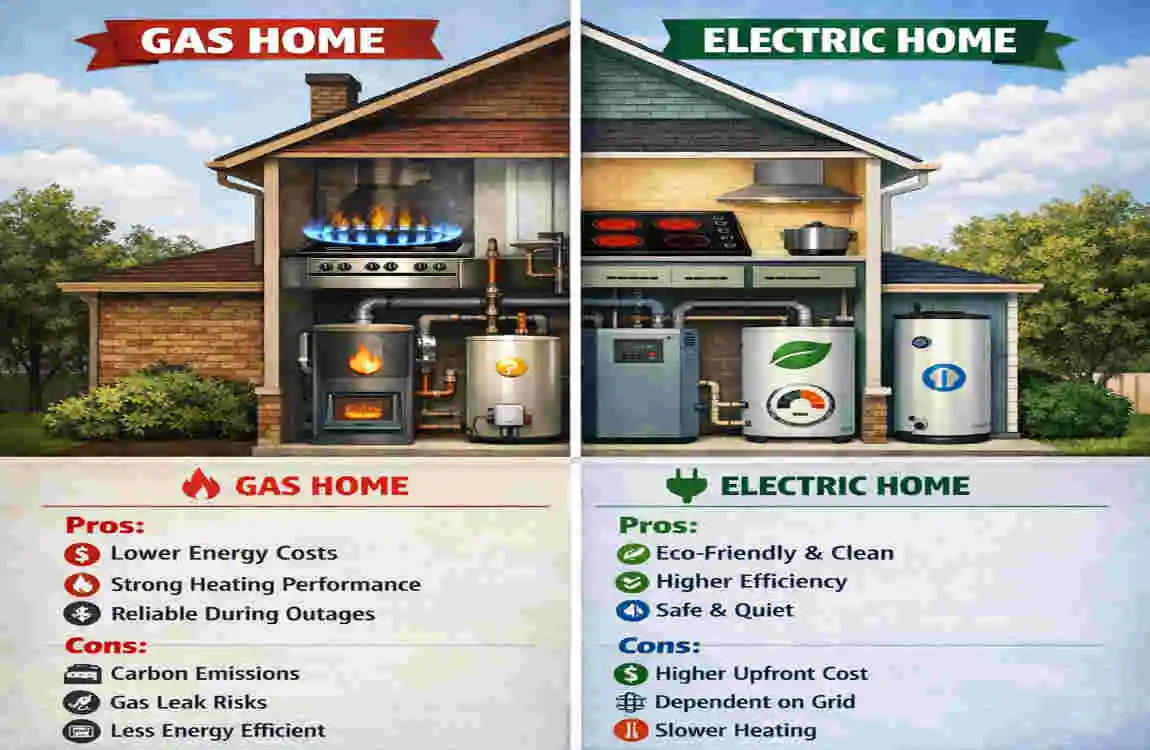
There is no single best answer. The right choice depends on your home, your budget, and your local utility rates.
Gas Homes
Gas homes can be appealing because many people like gas for cooking and heating. Gas systems may also heat quickly, which some homeowners prefer.
But gas homes also depend on gas service and require proper maintenance and ventilation. That means safety checks matter.
Electric Homes
Electric homes are often simpler in design and may be easier to maintain. Many modern electric systems, especially heat pumps, can also be very efficient.
Still, electric heating costs can be higher in some areas, especially in colder climates or where electricity rates are high.
Which One Costs More?
That depends on several factors, such as:
- Local energy prices
- Appliance efficiency
- Climate
- Home size
- How much energy your household uses
So it is better to compare your own bills instead of assuming gas or electricity is always cheaper.
FAQ: Is My House Gas or Electric?
How can I tell if my house is gas or electric?
Check your utility bills, meters, appliances, HVAC system, and water heater. These usually tell you the answer quickly.
Does a gas house still use electricity?
Yes. Most gas homes still rely on electricity for lighting, outlets, fans, controls, and many appliances.
How do I know if my water heater is gas or electric?
Look for a gas line and burner if it is gas. If it has an electrical connection and heating elements, it is electric.
Does a gas stove need electricity?
Sometimes. A gas stove may not need electricity for the burners, but ignition, displays, lights, and extra features may still use power.
Can my house have both gas and electric?
Yes, very easily. Many homes are built this way.
How do I find out what type of heating my house has?
Check the furnace, thermostat, utility bill, and HVAC paperwork.
Is an electric house safer than a gas house?
Both can be safe when properly installed and maintained. Gas systems need extra attention for ventilation, gas leaks, and carbon monoxide safety.
| Checkpoint | Gas Home | Electric Home |
|---|---|---|
| Heating | Gas furnace or boiler | Electric furnace, heat pump, or baseboard |
| Water Heater | Gas-fired tank or gas tankless | Electric tank or heat pump water heater |
| Kitchen Stove | Visible gas flame | Electric coils or smooth glass surface |
| Utility Meter | Often has a gas meter | Usually only an electric meter |
| Utility Bills | Gas + electricity bills | Mainly electricity bill |
| Outdoor Equipment | Gas meter and gas line may be visible | No gas meter or gas line |
