
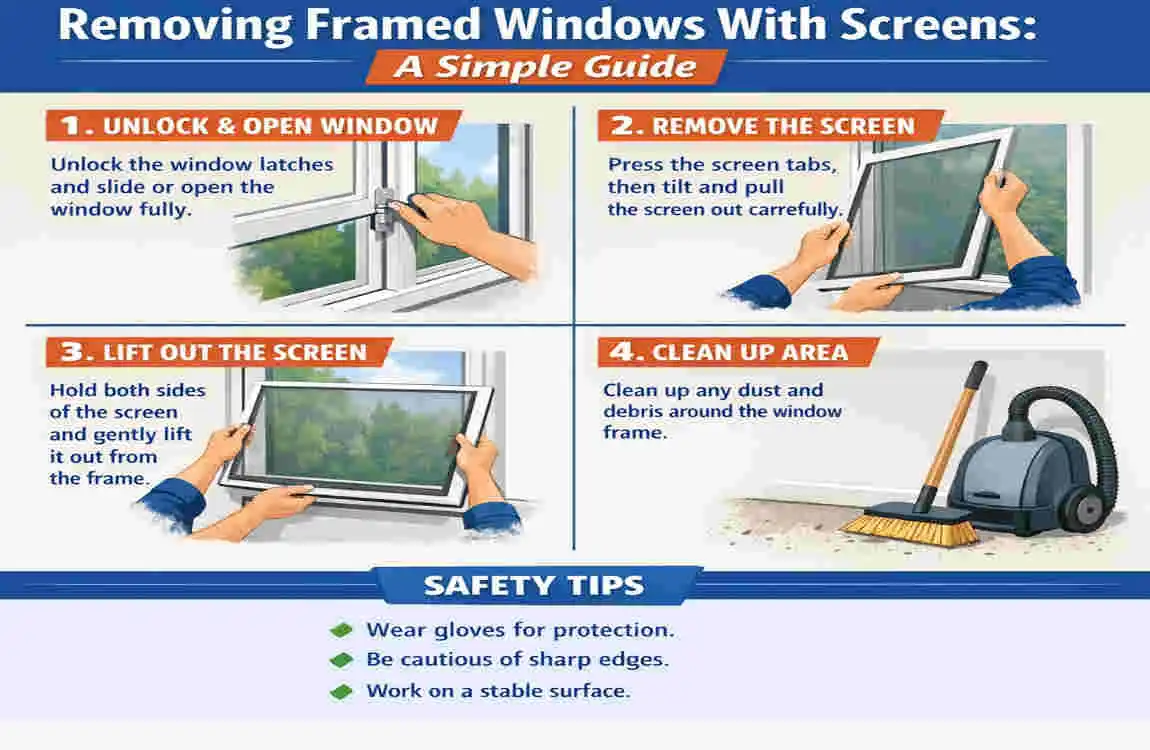
If you are learning how to remove framed windows with screens, the good news is that the process is often manageable with the right tools and a little patience.
The exact steps can change depending on the window style, the frame, and how the window was installed. Some windows come out fairly easily. Others are held in place with screws, trim, caulk, clips, or paint buildup.
How to Remove Framed Windows With Screens: An Overview
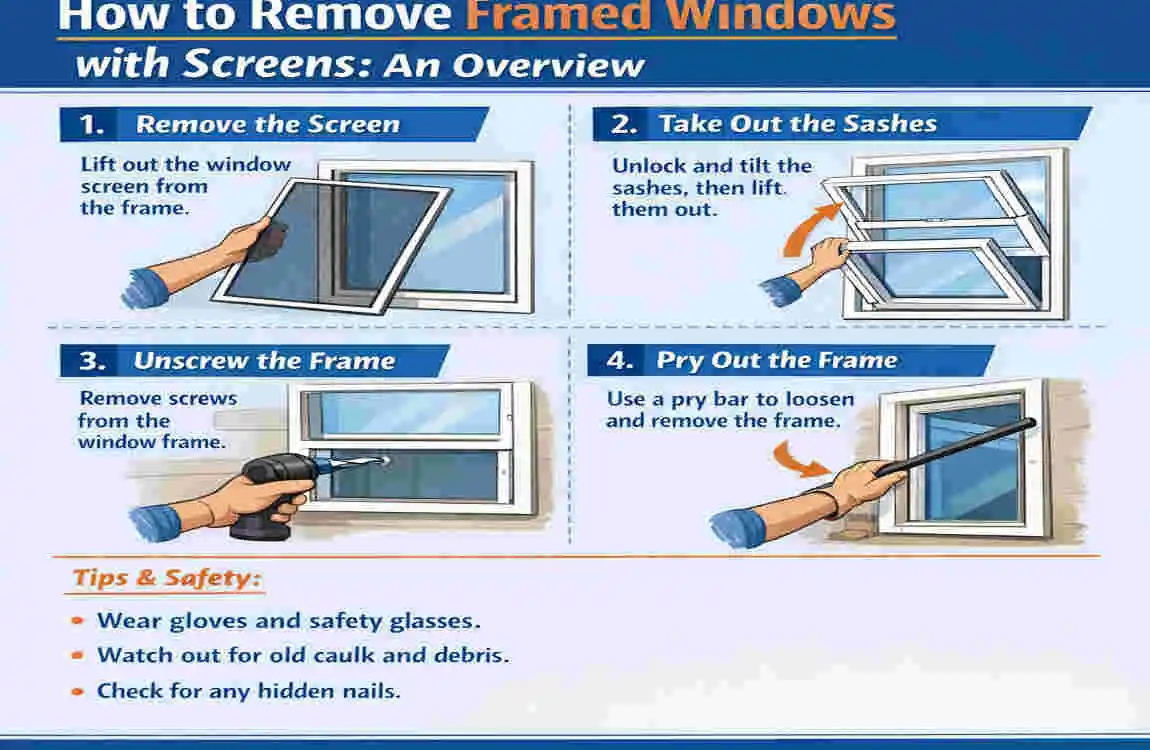
A framed window with a screen usually means the window has a removable screen fitted into the frame. The screen helps block bugs and debris while still allowing airflow.
People remove these windows for different reasons:
- Replacing old glass or the full window
- Painting or repairing the frame
- Cleaning hard-to-reach areas
- Fixing damage from weather or wear
- Preparing for a new window installation
The key thing to remember: not all framed windows are removed the same way. Some are designed to lift out easily. Others are fixed more firmly.
That is why it helps to check the manufacturer’s design or at least inspect the frame before forcing anything.
Tools and Safety Equipment You’ll Need
You do not need a big tool kit for most basic window removal jobs. A few simple tools are usually enough.
Basic Tools
- Screwdriver
- Utility knife
- Pliers
- Putty knife
- Work gloves
- Safety glasses
Safety Precautions
Window removal can be simple, but it can also be risky if glass or old fasteners break unexpectedly.
Keep these safety habits in mind:
- Protect your hands and eyes
- Do not force the glass
- Ask for help with large or heavy windows
- Keep children and pets away from the area
If the window is oversized or feels unstable, don’t rush. Slow and careful is always better here.
How to Remove the Window Screen First
In most cases, remove the window screen first. That makes the window lighter and easier to handle.
Find the Screen Clips or Tabs
Start by looking around the edge of the screen frame.
You may see:
- Small tabs
- Spring-loaded clips
- Retaining hooks
- Tiny locking pieces
Some screens are installed from inside the house. Others may be removed from the outside. Check both sides if you do not see an obvious release point.
Release and Remove the Screen
Once you find the retention point, gently loosen it.
Then:
- Hold the screen frame with both hands
- Release the clips or tabs
- Pull the screen toward you slowly
- Set it on a flat surface
This helps keep the screen from bending. A warped screen can be harder to reinstall later.
If it feels stuck, do not yank it. Look again for hidden fasteners or paint buildup.
How to Remove Framed Windows Step by Step
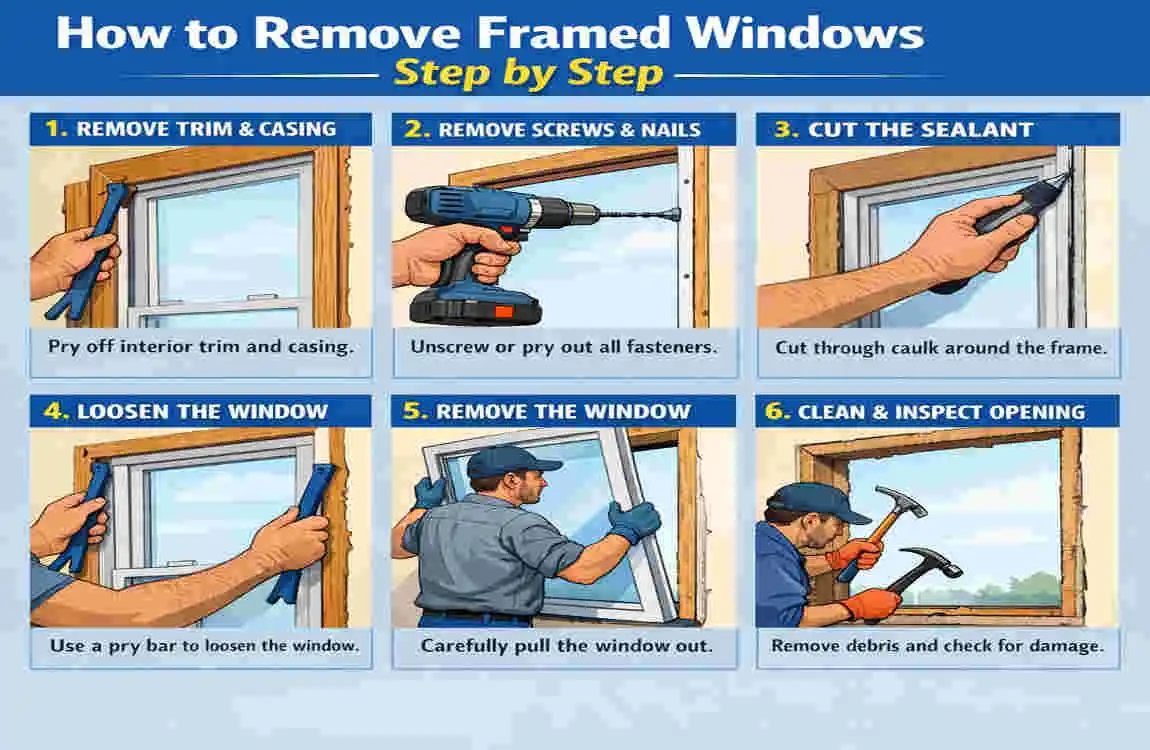
Once the screen is out, you can work on the framed window itself.
Inspect the Window Frame
Look closely at the frame edges.
Check for:
- Screws
- Fasteners
- Clips
- Stops
- Trim pieces
- Caulk or sealant
This tells you what is actually holding the window in place.
Remove Interior or Exterior Trim
Trim pieces around the inside or outside edge hold some windows.
If the trim blocks access to screws or fasteners, remove it carefully with a putty knife or screwdriver.
Work slowly so you do not crack the trim or damage the wall around it.
Remove Screws and Fasteners
Use the correct screwdriver for the screws you find.
Keep all small parts together in a bowl or bag so they do not get lost.
If the screws are painted over, you may need to score around the head with a utility knife first. That helps prevent stripping.
Cut Through Old Sealant
Many windows are sealed with caulk or adhesive around the edge.
Use a utility knife to cut through the sealant carefully.
This helps break the bond between the frame and the wall. Do not dig too deep, or you may damage nearby surfaces.
Loosen the Window
After removing the fasteners and sealant, gently work around the frame.
Loosen it little by little from several points instead of pulling hard on just one corner.
A putty knife can help separate tight spots, but use light pressure.
Lift Out the Window
When the frame is loose, lift it out with care.
If the window is large, get another person to help. A second set of hands makes the job safer and easier.
Place the window on a padded or stable surface to avoid damage.
Common Problems When Removing Framed Windows
Sometimes window removal is not as simple as expected. That is normal.
Problems You May Run Into
- Stuck or painted-over screws
- Hardened caulk
- Bent screen frames
- Rusty fasteners
- Heavy or oversized windows
- Windows that look removable but are not
When Not to Force It
Do not force the window if:
- It does not move after all fasteners are removed
- The glass starts to flex or crack
- The frame seems welded by old caulk or paint
- You cannot find how it was installed
Forcing it can break the glass, damage the wall, or make the opening harder to repair.
If the frame will not budge, stop and reassess. Sometimes a professional is the safer choice.
What to Do After Removing the Window and Screen
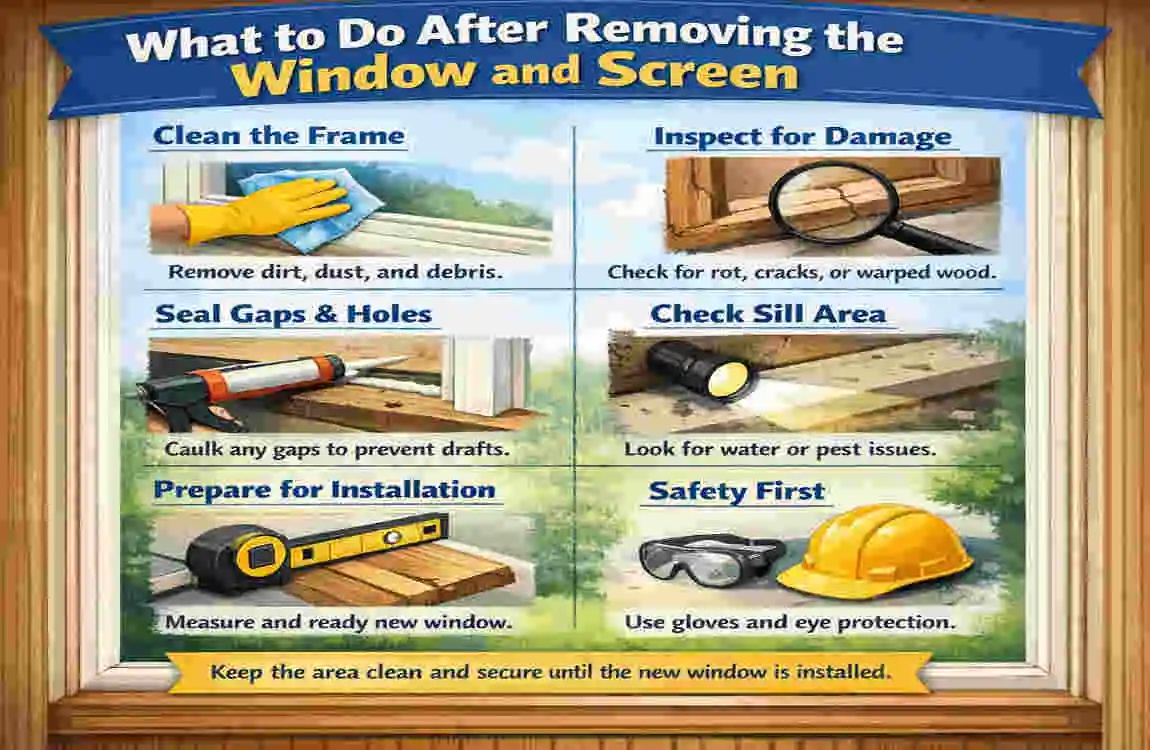
Once you remove the window and screen, take a moment to inspect the opening before moving forward.
Inspect the Opening
Look for:
- Soft or rotted wood
- Moisture damage
- Old sealant
- Dust, debris, or broken hardware
- Warped framing
This is the best time to spot hidden issues that may need repair.
Prepare for Replacement or Repair
If you are replacing the window, measure the opening carefully.
Also:
- Keep reusable screws and hardware organised
- Clean out old caulk and dirt
- Protect the opening if the new window is not going in right away
A clean, measured opening makes the next step much easier.
When to Call a Professional
Call a professional if:
- The framing is damaged
- The window is very large or heavy
- The glass seems unstable
- You suspect structural issues
- The installation is sealed in a way you do not understand
That is especially smart if the window is part of an older home or a custom setup.
FAQs About Removing Framed Windows With Screens
Can I remove a window screen without removing the window?
Yes. In most cases, the screen can come out on its own. It is usually designed to be removed separately from the window.
How do I remove a window screen that is stuck?
Look for hidden clips, springs, or tabs. If the screen still will not move, check for paint or debris holding it in place. Do not bend the frame too hard.
Do all framed windows come out the same way?
No. Removal methods vary depending on the window style, fasteners, and installation method.
Should I remove the screen before removing the window?
Usually, yes. Removing the screen first makes the window easier and safer to handle.
Can I remove a framed window by myself?
Small windows may be possible for one person, but two people can best handle larger windows.
What if the window frame will not move?
Stop and check for hidden screws, clips, trim, or sealant. Do not force it. You could damage the window or the surrounding wall.
Is removing a framed window difficult?
Some windows are easy to remove, while others are harder. Older windows and heavily sealed frames usually take more care.
| Step | What to Do | Helpful Tip |
|---|---|---|
| Prepare | Gather a screwdriver, pry bar, utility knife, and gloves. | Wear safety glasses and gloves. |
| Remove the Screen | Carefully lift the screen from its tracks or clips. | Avoid bending the frame. |
| Take Off Trim | Remove interior or exterior trim around the window. | Keep screws for reinstallation. |
| Cut Sealant | Use a utility knife to cut through caulk around the frame. | Work slowly to avoid wall damage. |
| Remove Fasteners | Unscrew or remove nails securing the window frame. | Check all sides before pulling. |
| Take Out Window | Gently pull the framed window from the opening. | Have another person help with larger windows. |
| Clean Opening | Remove leftover caulk, debris, and damaged material. | Inspect for moisture or rot before installing a replacement. |
