
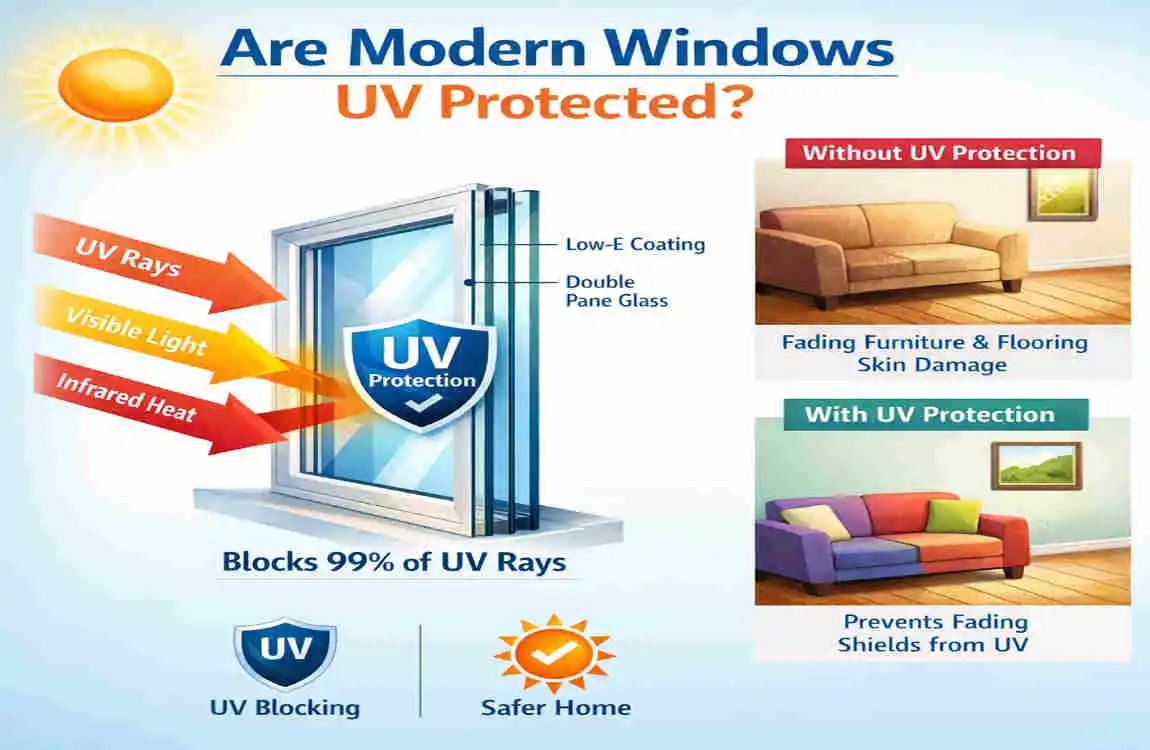
Many modern windows block a good amount of UV radiation, but the exact level depends on the glass type, coatings, and how the window is built. Some windows are made to reduce fading, improve comfort, and support energy efficiency. Others offer only basic protection.
Are Windows UV Protected? Understanding the Basics
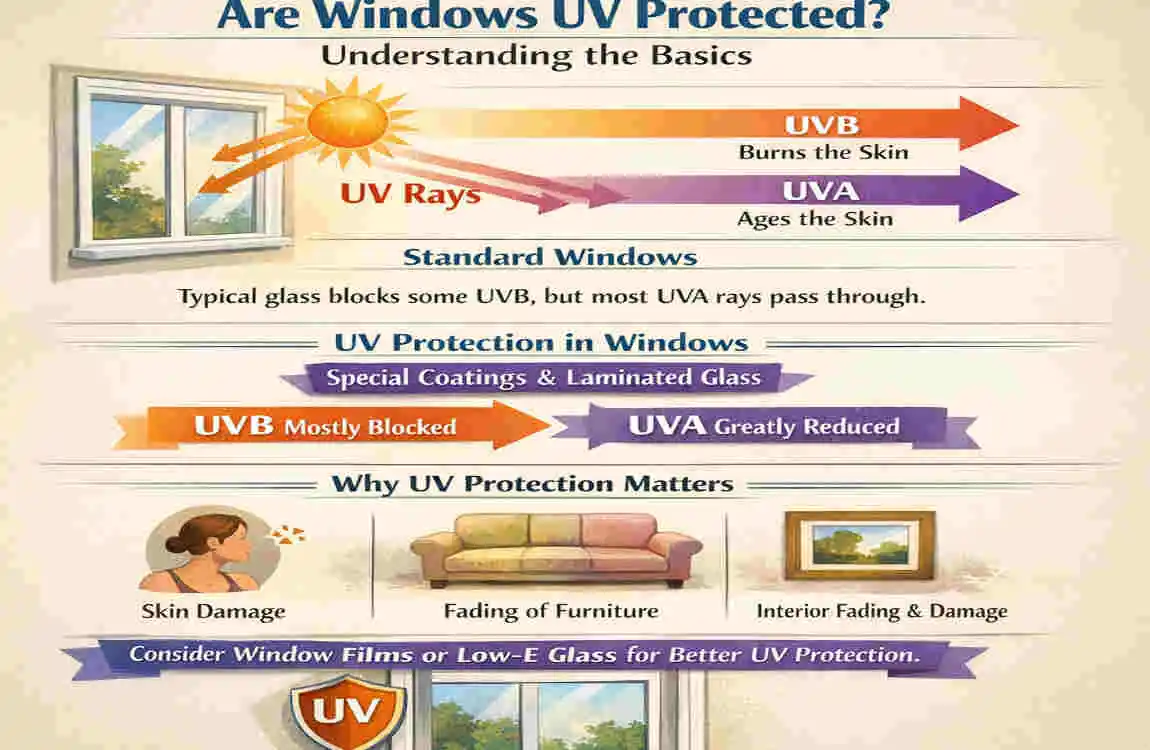
What UV radiation means
UV stands for ultraviolet radiation. It comes from the sun and reaches your home through daylight.
There are two main types you will hear about:
- UVA rays
- UVB rays
UVA rays are longer and can pass through more materials. UVB rays are stronger at the surface and are often blocked more easily by glass and coatings.
Why UV matters indoors
UV rays may not feel as strong as heat, but they can still affect your home over time. They can fade fabrics, dull flooring, and wear down furniture finishes.
That is why UV protection is not just about comfort. It is also about preserving the things you already own.
Are all windows UV protected?
Not exactly. Ordinary residential windows may block some UV rays, but they are not all designed for maximum UV control.
Some windows offer only basic filtering, while others use special coatings or layered glass to block much more.
The main point to remember
When people ask whether windows are UV-protected, the best answer is this: modern windows often provide some UV protection, but the amount varies widely.
So if you want real protection, you need to look beyond the word “window” and check the glass type and product details.
How Much UV Radiation Do Different Windows Block?
Standard glass and UV protection
Basic window glass blocks some UV radiation naturally, but not all of it. That means a room can still get enough UV exposure to cause fading over time.
This is why you may notice sun damage on a rug or chair even when it sits behind a closed window.
Double- and triple-glazed windows
Double- and triple-glazed windows use more than one pane of glass. That improves insulation and can also help reduce UV exposure when combined with the right coatings.
The extra panes alone do not guarantee excellent UV protection, but they often help support better overall performance.
Low-E glass
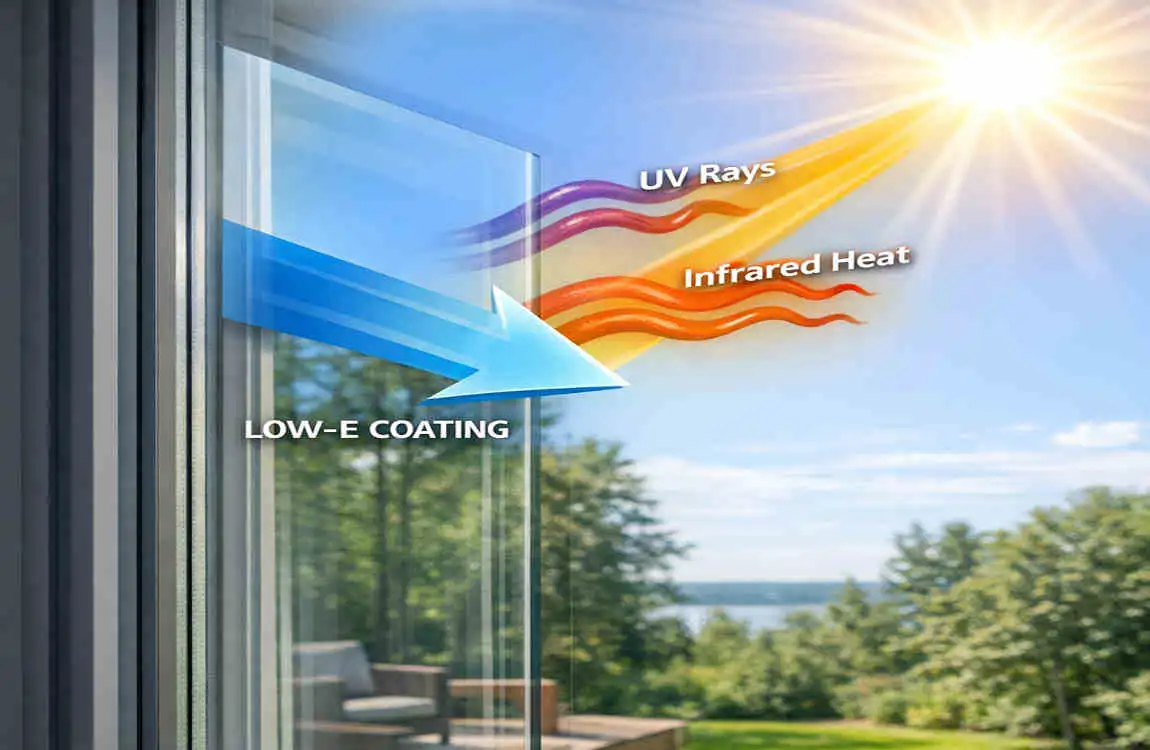
Low-E glass is one of the most important modern window options for UV control. It has a special coating that reflects heat and helps reduce the amount of UV that comes through.
It also improves energy efficiency, which makes it a popular choice for many homeowners.
Not all Low-E products are the same, though. Some are built mainly for heat control, while others do a better job of reducing UV too.
What Types of Modern Windows Offer the Best UV Protection?
Low-E coated glass
Low-E-coated glass is often one of the best choices if you want strong UV reduction and improved indoor comfort. The coating helps manage solar energy before it enters the home.
This makes it useful for rooms with strong sunlight or for rooms with valuable furnishings.
Laminated glass
Laminated glass contains a layer that helps hold the panes together. It can also provide very high UV protection.
This makes it a smart option for homes with artwork, wood floors, delicate fabrics, or other items that fade easily.
Tinted glass
Tinted glass can reduce brightness and lower UV transmission. It can also help with glare.
Still, tint alone does not always equal the highest UV protection. The actual level depends on the tint and the rest of the window system.
Double-pane windows
Double-pane windows offer better energy performance than single-pane windows, and they may provide moderate UV reduction. But again, the glass and coatings matter more than the number of panes alone.
Triple-pane windows
Triple-pane windows add another layer of glass and insulation. That can improve comfort and overall performance, including some UV control.
But more panes do not automatically mean the best UV protection. The coatings and materials still matter most.
Speciality UV-filtering glass
Some windows are made specifically for maximum UV reduction. These are often used where sunlight control is a top priority.
They can be a great choice for rooms with high-end interiors or strong, direct sunlight.
What matters most
If you want the best protection, do not choose a window just because it looks modern. Check the glass type, coating, and performance rating.
Those details tell you much more than the style alone.
Why UV Protection Matters Inside Your Home
Protecting furniture and fabrics
UV rays can slowly fade couches, curtains, throw pillows, and chairs. Even materials that look durable can lose colour over time when exposed to direct sunlight.
If your room gets a lot of sun, UV protection can help those items last longer.
Protecting floors and rugs
Wood floors, area rugs, and carpet can also change colour when exposed to sunlight. Some finishes dry out or lose their original look.
That does not happen overnight, but it can become noticeable over months or years.
Protecting artwork and decor
Framed photos, paintings, and wall hangings can fade too. This matters especially if you have items that you want to keep looking fresh for a long time.
UV-blocking windows can help slow that damage.
Comfort and energy benefits
UV protection often goes hand in hand with better solar control. That means less glare, less heat buildup, and a more comfortable room.
So while UV protection is not the same as insulation, the two often work together to improve the home.
Not a full replacement for other protections
Even good UV-protected windows should not be your only defence. Curtains, shades, and smart furniture placement can still help a lot.
The best results usually come from combining a few simple methods.
How to Tell If Your Windows Have UV Protection
Check the window specifications.
The easiest place to start is the product information. Look for glass performance details, window labels, or manufacturer specifications.
These should tell you whether the window has Low-E coating, laminated glass, or another UV-reducing feature.
Look for common terms.
You may see terms like:
- Low-E
- UV-blocking
- Solar control
- Laminated glass
- Tinted glass
- Energy-efficient glazing
These words can give you clues about performance, but they do not all mean the same thing.
Ask a window professional.
If you are unsure, ask a window professional to explain the product ratings. This is especially useful if you are comparing several options and want real numbers instead of marketing language.
The best approach is to compare UV transmission ratings whenever possible.
Do not rely on appearance alone.
A window can look clear and still offer decent UV protection. Another window can look slightly tinted but still not provide the level of protection you want.
That is why specifications matter more than looks.
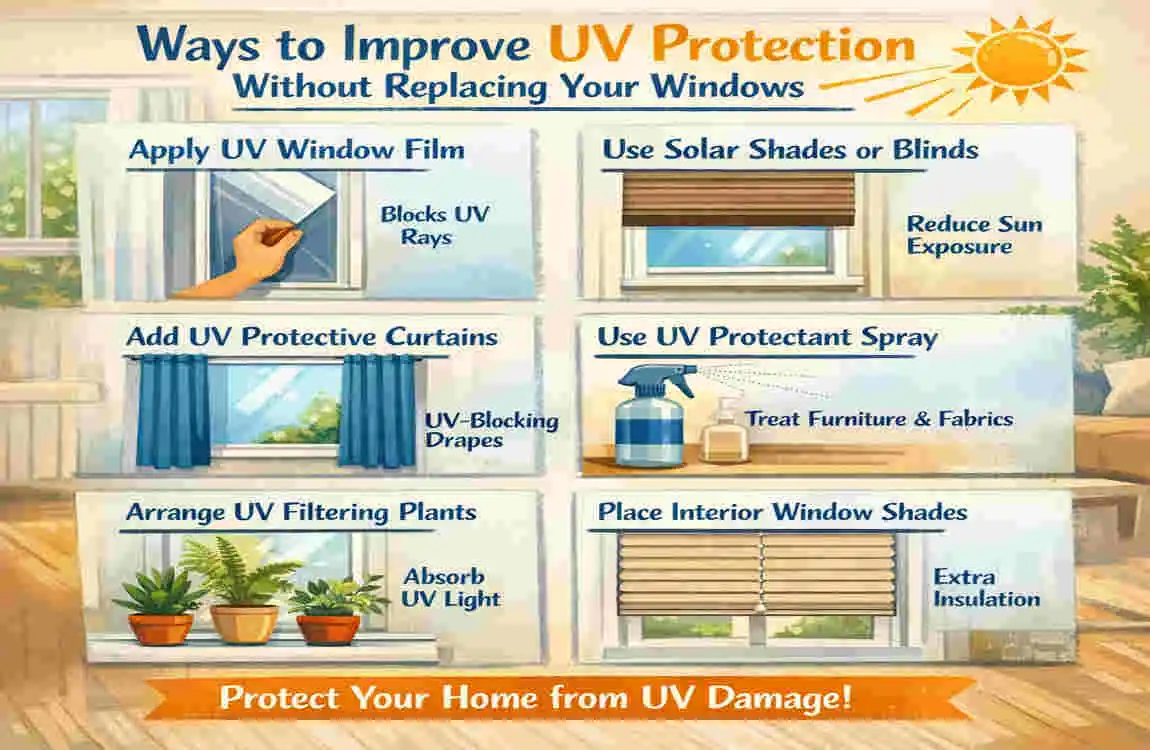
Ways to Improve UV Protection Without Replacing Your Windows
UV-control window films
Window films are one of the easiest ways to improve UV protection without installing new windows. They are applied directly to the glass and can block a large amount of UV.
The main benefit is cost and convenience. The downside is that not every film works with every window, so compatibility should always be checked first.
Solar shades
Solar shades reduce glare and help filter sunlight. They can make a room more comfortable while still letting some light in.
They are useful for living rooms, offices, and any space that gets strong sun.
Curtains and blinds
Curtains and blinds remain one of the simplest options. When closed during the sunniest hours, they can protect furniture and floors from direct light.
They also give you more control over brightness throughout the day.
Exterior shading
Outside shading can be very effective. Awning-style covers, overhangs, and exterior shades block sunlight before it reaches the glass.
This can reduce heat and UV exposure before it even enters the room.
Smart furniture placement
Sometimes the easiest solution is just moving things around. If sunlight hits one area of the room every afternoon, do not place valuable furniture or artwork there.
A few small layout changes can make a big difference.
Practical tips for protecting interiors
Here are a few simple ways to protect your home:
- Rotate rugs and furniture occasionally
- Use UV-resistant curtains in bright rooms
- Keep artwork away from direct sun
- Add films or shades to the strongest windows
- Use layered window treatments for more control
FAQs About UV-Protected Windows
Are windows UV protected by default?
Not always. Some windows block a portion of UV rays, but the level of protection depends on the glass and coatings used.
Do double-pane windows block UV rays?
Yes, they can block some UV rays, but the exact performance depends on the glass type and whether coatings are included.
Does Low-E glass protect against UV rays?
Yes. Low-E glass UV protection is one of the best common options for reducing UV transmission while also improving energy efficiency.
Can UV rays pass through house windows?
Yes, some UV rays can pass through ordinary glass. That is why fading can still happen indoors.
Do tinted windows block UV rays?
Tinted windows can reduce UV exposure, but the amount varies. Tint helps, but it is not always the strongest solution on its own.
Are triple-pane windows better for UV protection?
They can help, but more panes do not automatically mean the best UV protection. Coatings and glass type are still very important.
How can I make my existing windows UV protected?
You can use UV-control films, solar shades, curtains, blinds, or exterior shading to improve protection without replacing the windows.
Is UV-protective glass worth it?
Yes, especially if you have expensive furniture, artwork, wood floors, or rooms with strong sunlight. It can help reduce fading and improve comfort.
| Window Type | UV Protection | Main Benefit |
|---|---|---|
| Low-E Glass | High | Reduces UV and heat transfer |
| Double-Glazed Windows | Moderate–High | Better insulation and UV reduction |
| Laminated Glass | Very High | Blocks most UV rays and improves safety |
| Tinted Glass | Moderate–High | Reduces UV, glare, and solar heat |
| Triple-Glazed Windows | High | Excellent energy efficiency and UV control |
| Standard Clear Glass | Low | Offers limited UV protection |
